
Rick Wakeman didn’t just play keyboards-he built entire worlds with them. While many know him as the dazzling Hammond organ and Moog wizard from Yes, his solo career is where he truly became a one-man orchestra. Over five decades, he released more than 100 solo albums, turning historical tales, mythic legends, and even Christmas carols into sprawling, orchestral rock epics. This isn’t just a career-it’s a legacy carved in synthesizers, pianos, and sheer ambition.
From Session Player to Concept Album King
Before he was a rock icon, Wakeman was a go-to session musician in London’s bustling 1970s music scene. He played on David Bowie’s Hunky Dory, backing up the future legend with haunting piano lines. But his real breakout came in 1972 when he joined Yes mid-recording of Close to the Edge. His playing didn’t just fit-it defined the band’s sound. The soaring arpeggios on ‘Close to the Edge’? That was him. The swirling textures on ‘The Gates of Delirium’? Also him.
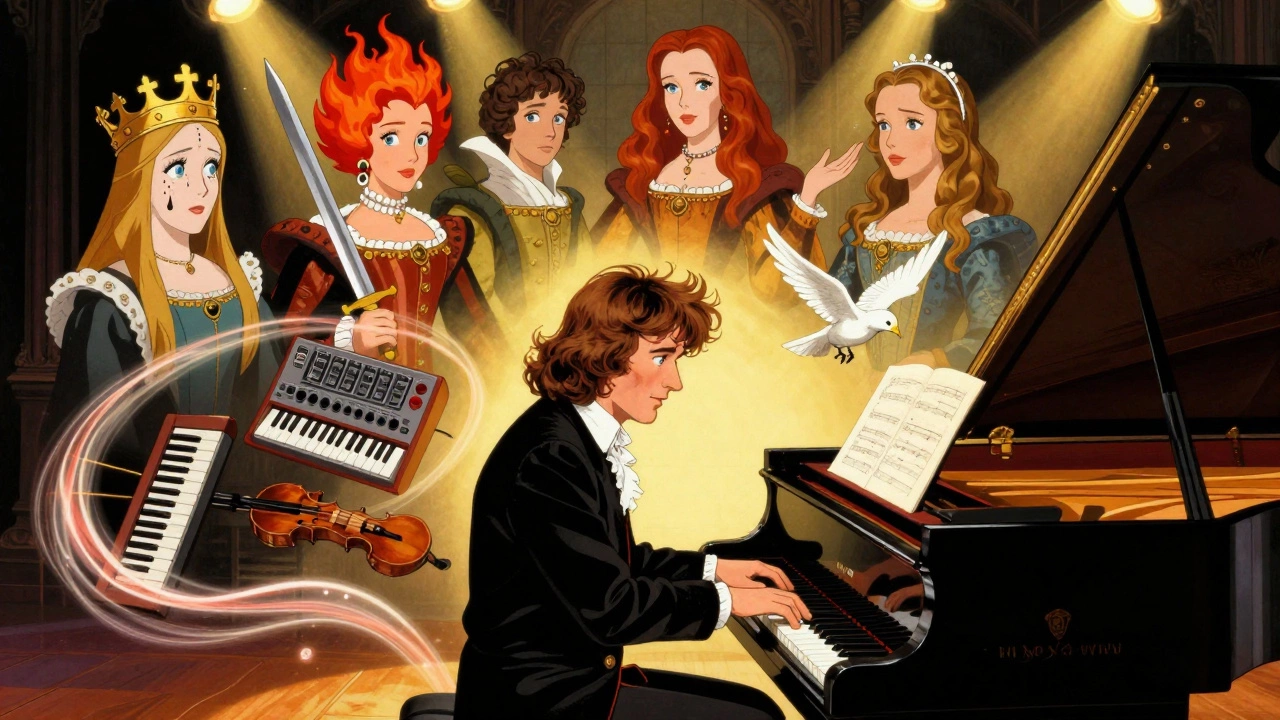
But while touring with Yes, he was already working on something bigger. In between rehearsals, he recorded his first solo album: The Six Wives of Henry VIII. Each track was a musical portrait of one of Henry’s wives-Catherine of Aragon’s sorrow, Anne Boleyn’s fire, Jane Seymour’s calm. No lyrics. Just orchestras, synths, and piano telling stories. It wasn’t just a solo debut. It was a statement: rock could be grand, cinematic, and deeply personal all at once.
The Three Masterpieces That Changed Everything
1973 to 1975 was Wakeman’s golden run. Three albums. Three monumental achievements.
- The Six Wives of Henry VIII (1973) - A concept album before the term was common. It sold over 200,000 copies in the UK alone.
- Journey to the Centre of the Earth (1974) - Based on Jules Verne’s novel, this album hit No. 1 in the UK. It featured a full orchestra, choir, and spoken word narration by actor Bernard Cribbins. Live performances included a 40-piece orchestra on stage.
- The Myths and Legends of King Arthur and the Knights of the Round Table (1975) - A 40-minute epic split into seven movements. It sold over 500,000 copies in the UK and became a staple of progressive rock radio.
These weren’t just albums. They were events. Fans lined up for tickets to hear them live. Critics called them overblown. Fans called them genius. Either way, Wakeman proved you could sell out arenas with a 20-minute keyboard suite.
The English Rock Ensemble: Making the Impossible Live
How do you play an album with orchestras, choirs, and five different keyboards on stage? You build a band that can handle it. In 1974, Wakeman formed the English Rock Ensemble-a rotating group of top-tier musicians who could translate his studio wizardry into live power.
By 1975, they were touring Europe and North America with full orchestras. Imagine a rock concert where the drummer is also playing timpani, the guitarist switches to harp, and the keyboardist switches between a grand piano, a Moog, and a Mellotron-all in one song. That was a Wakeman show. He didn’t just perform music-he staged it.
Decades later, the ensemble still tours. In 2025, they played Journey to the Centre of the Earth in full across 17 cities. Fans in their 60s sat next to teens who discovered Wakeman through TikTok clips of his wild hair and even wilder solos.
From Rock to Rebirth: The 1980s and Beyond
The 1980s didn’t kill Wakeman-they just changed his palette. He signed with President Records and started releasing albums faster than most artists release singles. White Rock (1977) blended rock with classical themes. 1984 (1981) was his take on George Orwell’s dystopia. Rock n Roll Prophet (1982) was pure, unapologetic glam-rock.
He even scored films. The Burning (1981) had a haunting synth theme that still gets played in horror film retrospectives. He didn’t chase trends-he bent them to his will.
By the 1990s, he was revisiting his past. Return to the Centre of the Earth (1999) wasn’t a remake-it was a reimagining. He used modern synths, added new orchestral layers, and brought in his son Adam on guitar. The result? A fresh take on a classic that felt both nostalgic and forward-looking.
Piano, Prayer, and Christmas
Wakeman never stopped evolving. In 2018, he released Piano Odyssey-a solo piano album recorded in a cathedral. No drums. No synths. Just him, a Steinway, and 45 minutes of haunting, emotional melodies. It was his most intimate record yet.
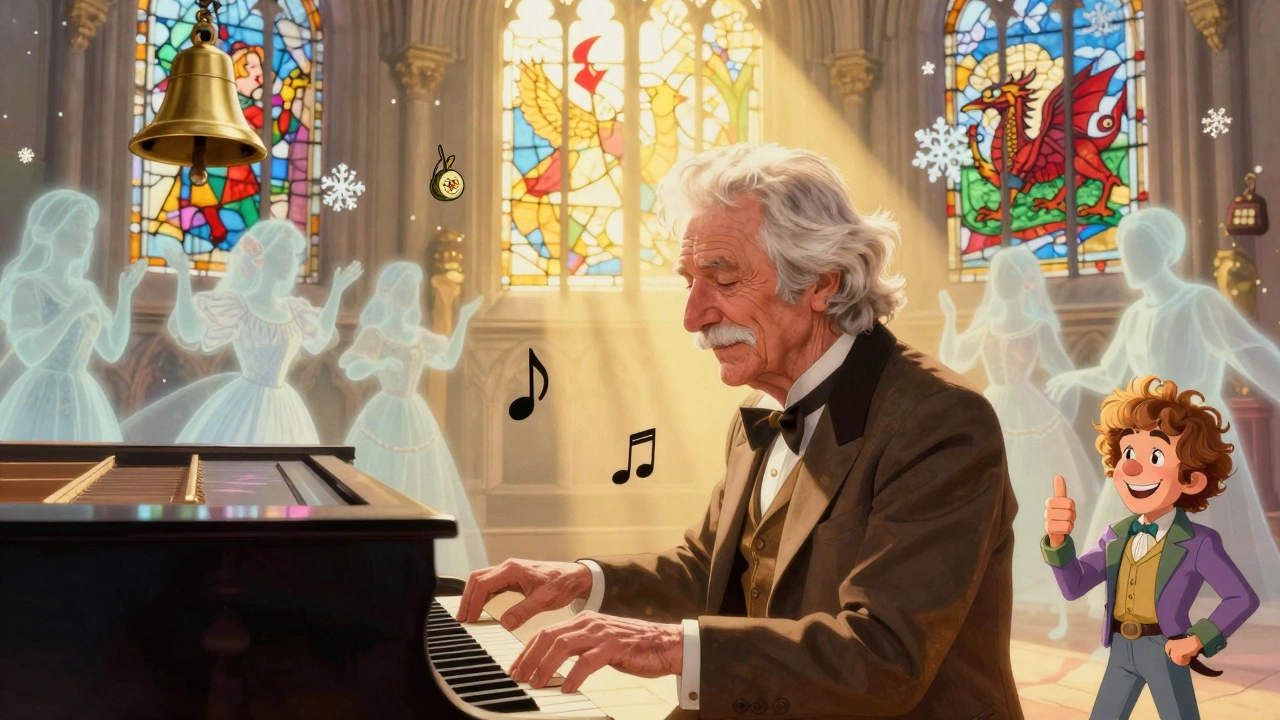
Then came Christmas Portraits (2019). Not carols. Not covers. Original compositions inspired by Christmas traditions from around the world: a Polish folk melody, a Russian bell chime, a Welsh lullaby. All arranged with his signature harmonic depth.
He’s not just a rock musician. He’s a storyteller who uses music as his language. Whether it’s a 10-minute prog epic or a 3-minute piano piece, every note has purpose.
Legacy: More Than a Band Member
Wakeman was inducted into the Rock and Roll Hall of Fame in 2017 as part of Yes. But his solo work? That’s where he became immortal. He didn’t wait for permission. He didn’t wait for the right moment. He just kept creating.
He’s one of the few artists who turned concept albums into a full-time job. He’s the only rock keyboardist to have a CBE (Commander of the Order of the British Empire) for services to music and broadcasting. He’s hosted radio shows, written memoirs, and still tours at 76 years old.
When you listen to The Six Wives of Henry VIII today, you’re not just hearing 50-year-old music. You’re hearing the blueprint for what progressive rock could be-and still is.
What was Rick Wakeman’s first solo album?
Rick Wakeman’s first solo album was The Six Wives of Henry VIII, recorded in 1972 during the Close to the Edge sessions with Yes. It was released in 1973 and became a landmark in progressive rock for its orchestral arrangements and thematic storytelling.
Did Rick Wakeman ever leave Yes?
Yes, Wakeman left Yes multiple times. He first departed after Tales from Topographic Oceans in 1974 to focus on solo work. He returned for Going for the One (1977), left again after Tormato (1978), and rejoined for Union (1991). His relationship with the band has always been fluid-driven by creative needs, not loyalty.
How many solo albums has Rick Wakeman released?
Rick Wakeman has released over 100 solo albums as of 2026. This includes concept albums, piano recordings, live performances, Christmas-themed works, and collaborations with his son Adam. His productivity has been unmatched among progressive rock artists.
What is the English Rock Ensemble?
The English Rock Ensemble is Rick Wakeman’s long-standing touring band, formed in 1974 to perform his complex solo material live. It includes orchestral musicians, rock instrumentalists, and vocalists who adapt his studio productions for stage. The ensemble still performs today, keeping his music alive for new generations.
Why is Rick Wakeman considered a progressive rock legend?
Wakeman is considered a legend because he redefined what keyboards could do in rock music. He combined classical orchestration, avant-garde composition, and rock energy into immersive concept albums that pushed genre boundaries. His solo work, especially Journey to the Centre of the Earth and The Myths and Legends of King Arthur, became benchmarks for progressive rock ambition and scale.
What’s Next?
At 76, Wakeman shows no signs of slowing down. He’s working on a new album based on Norse mythology. He’s planning a tour of South America for the first time. And he’s still writing-daily. He doesn’t make music to stay relevant. He makes it because he can’t imagine doing anything else.
If you want to understand progressive rock, don’t just listen to Yes. Listen to Rick Wakeman alone. The man didn’t follow the genre-he built it, one note at a time.


