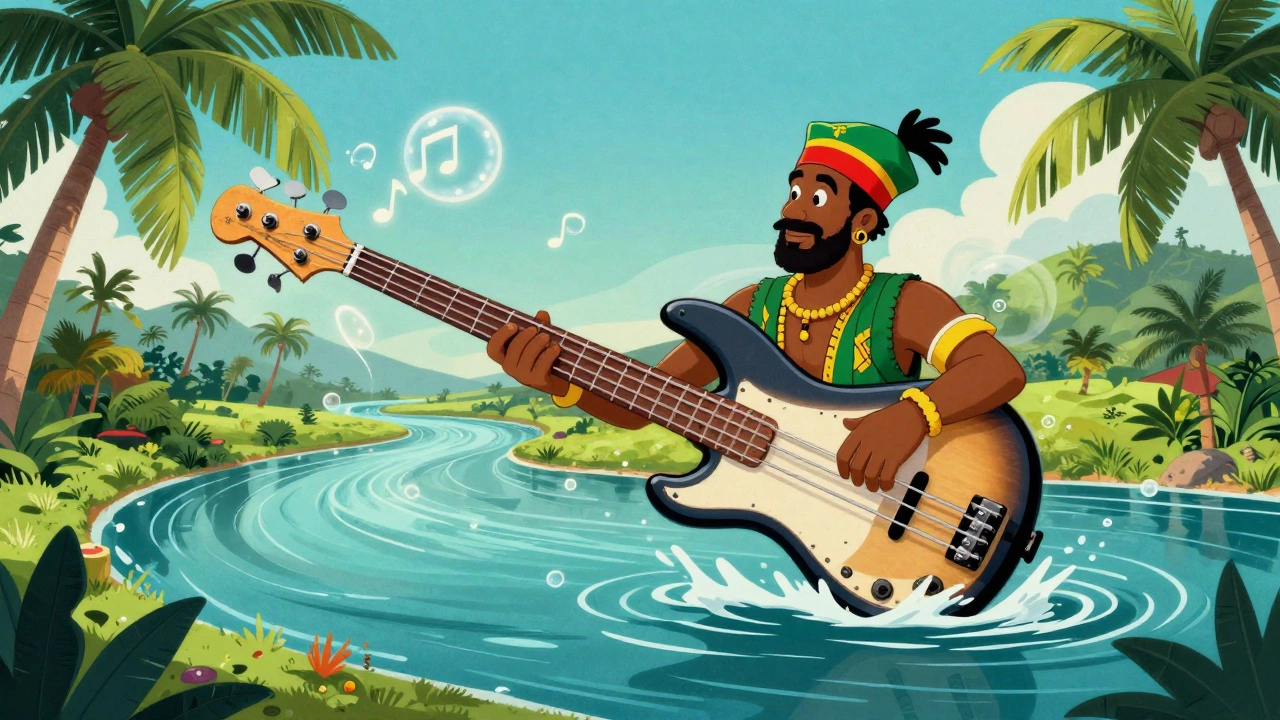

Reggae isn’t just music-it’s a pulse. You feel it in your chest before you hear it. That deep, rolling bassline. The skank of a guitar on the upstroke. The tick of a shaker like rain on a tin roof. And beneath it all, the steady heartbeat of hand drums that trace back to African rituals and Rastafarian ceremonies. If you’ve ever wondered why reggae sounds so different from rock, pop, or even ska, the answer isn’t in the lyrics-it’s in the bass, the percussion, and the Caribbean sounds that shaped them.
The Bass: The Foundation That Moves the World
The bass guitar in reggae isn’t just an instrument-it’s the lead voice. While rock bands let guitars scream and pop songs push vocals to the front, reggae flips the script. The bass carries the melody, the groove, and the emotion. Listen to any classic Bob Marley track-"No Woman, No Cry," "Redemption Song," "One Love"-and you’ll hear how the bass doesn’t just follow the drums. It leads them.
Most reggae basslines are built on simple patterns: root notes and fifths, played with a relaxed, floating feel. But don’t be fooled by their simplicity. The magic is in the space between the notes. As one bassist on Reddit put it: "It’s not about playing more notes. It’s about the right notes with the right timing." That space? That’s where the soul lives. The bassist doesn’t rush. They don’t overplay. They let the silence breathe.
The Fender Jazz Bass dominates this sound. Why? Because of its warm, round tone that cuts through without being sharp. It’s not about volume-it’s about presence. A 2023 survey of 350 reggae musicians found that 87% named the bass as the most essential instrument. And it’s not just about gear. The playing style matters too. Bassists like Aston "Family Man" Barrett, who played with Bob Marley & The Wailers, made the bass walk like a slow, confident man-steady, deep, and unshakable. You can’t replicate that with a synth. You have to feel it.
Percussion: The Heartbeat of the People
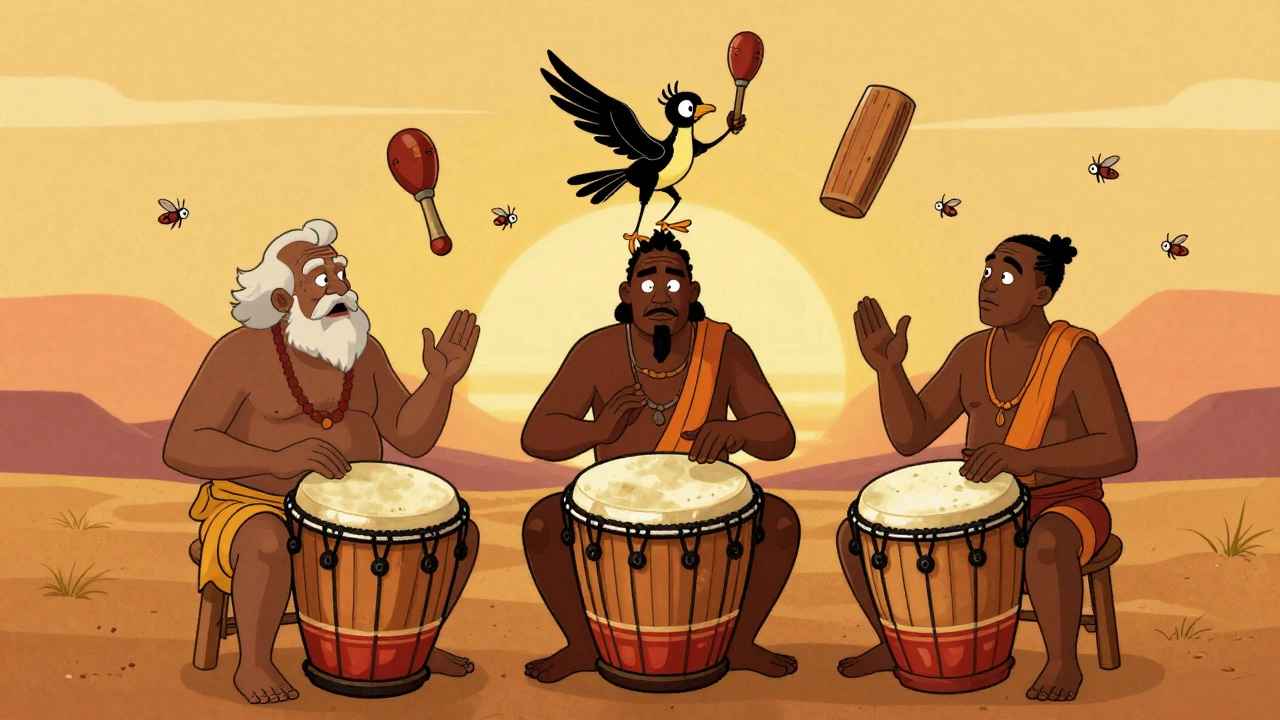
While the bass holds down the low end, percussion gives reggae its swing. It’s not just a snare and kick. It’s tambourines, woodblocks, shakers, congas, and the sacred Nyabinghi drums. These aren’t just instruments-they’re spiritual tools. Nyabinghi drumming comes from Rastafarian gatherings, where drums are used in prayer and meditation. The three drums-Thunder, Funde, and Repeater-each have a role. The Thunder (18-22 inches) pounds like a heartbeat. The Funde (14-16 inches) answers with rhythm. The Repeater (10-12 inches) dances on top, like a bird in flight.
What sets reggae percussion apart from other Caribbean styles? It’s the restraint. In Cuban or Brazilian music, drums pile up in layers. In reggae, less is more. One shaker. One tambourine. One hand drum. Each one is placed like a brushstroke on a painting. The percussion doesn’t drive the song-it lifts it. It’s why you can feel the music even if you’re not dancing. It’s in the air.
Arthur "Bunny" Robinson, one of Jamaica’s most sought-after studio percussionists in the 70s, played on hundreds of tracks at Studio One and Black Ark. His touch was light but precise. He didn’t just play rhythms-he shaped moods. A woodblock here. A shaker there. A single tap on a cowbell. These tiny sounds are what make a reggae track feel alive. And they’re still used today. In fact, 42% of new reggae releases in 2023 featured live Nyabinghi drums, up from just 28% in 2018. The roots are coming back.
The Skank and the Organ-Shuffle: The Sound That Defines the Groove
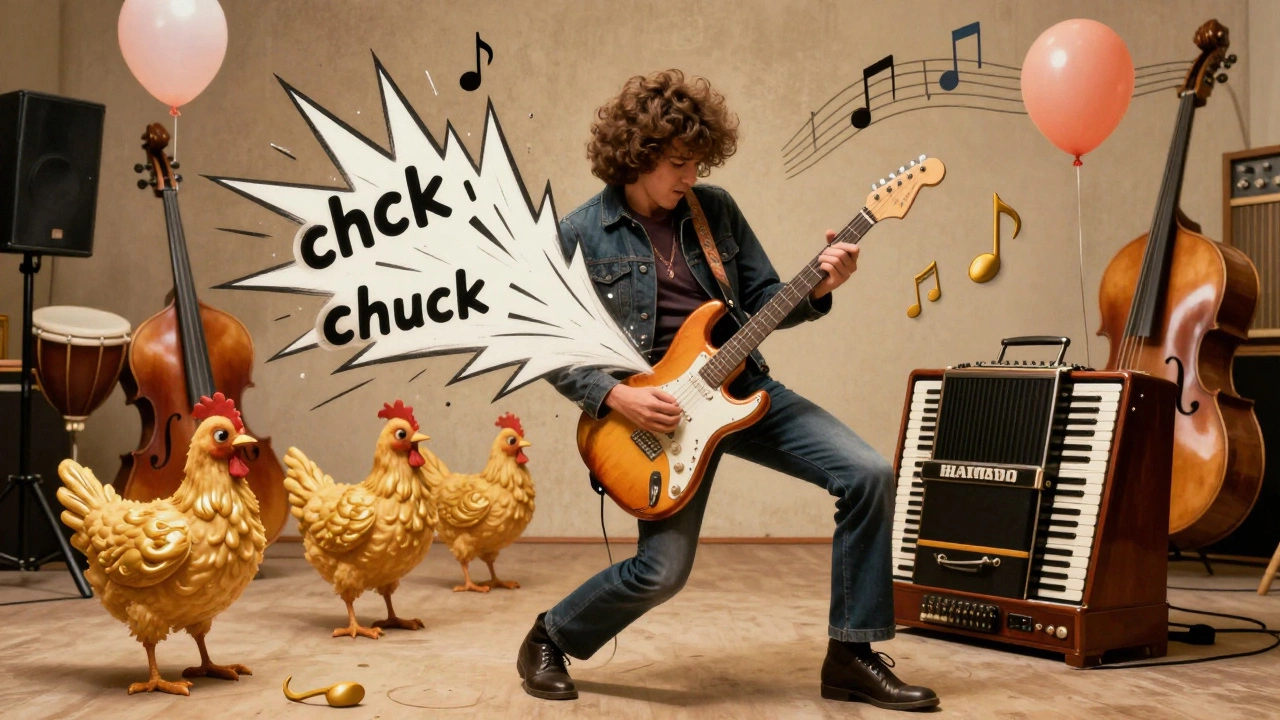
Reggae’s rhythm isn’t just in the bass and drums-it’s in the guitar. That sharp, muted strum on the upstroke? That’s the "skank." It’s played on the 2nd and 4th beats, the "upbeats," which is the opposite of most rock and pop music. You’ll hear it in "I Shot the Sheriff"-that quick, choppy sound that snaps the groove into place. Guitarists use Fender Stratocasters or Telecasters, often with light strings and a light touch. The trick? Muting the strings with the palm of your hand right after you strum. That’s the "chuck." It turns a chord into a percussive click.
Then there’s the organ-shuffle. It’s one of the most underrated sounds in reggae. A Hammond organ, played with syncopated chords, creates a rhythmic "chicken scratch" that weaves between the bass and guitar. It’s not loud. It’s not flashy. But it’s everywhere. In "Stir It Up," in "Waiting in Vain," in "Exodus." The keyboard doesn’t play melodies-it plays time. And because it can mimic pianos, strings, horns, and even bass, it’s become the Swiss Army knife of reggae studios. Modern producers use digital keyboards to recreate the warm, wobbly tones of 1970s organs. But purists still say: "You can’t replace the natural sound of a milked piano with a keyboard."
How Reggae Differs From Other Genres
Compare reggae to ska. Ska is fast-120 to 140 BPM-with horns blaring and bass walking like a jazz solo. Reggae? Slower. 70 to 100 BPM. The bass doesn’t walk-it sinks. The guitar doesn’t strum-it skanks. The drums don’t hit hard-they drop. That’s the "one drop" rhythm: snare on beat three, kick on one, and silence everywhere else. It’s a groove that makes you sway instead of jump.
Rocksteady, reggae’s immediate predecessor, had more vocal harmonies and simpler basslines. But reggae deepened the bass, slowed the tempo, and gave space to the percussion. It turned music into meditation. And unlike dancehall or reggaeton, which use electronic beats and auto-tune, roots reggae still relies on acoustic instruments played by hand. Even today, 73% of professional musicians in Jamaica play reggae or reggae-influenced music. The tradition isn’t fading-it’s being carried.
What It Takes to Play Reggae Right
Learning reggae isn’t about speed. It’s about patience. Bassists say it takes 6 to 12 months just to get the timing right. Guitarists spend three months practicing the "chuck" before they even play a full song. Percussionists? They need one to two years to master the Nyabinghi three-drum pattern. Why so long? Because reggae isn’t played-it’s felt. You can’t count it out. You have to internalize it.
The biggest mistake new producers make? Burying the bass. In authentic reggae, the bass should be as loud-or louder-than the vocals. If you can’t feel it in your chest, it’s not reggae. The same goes for percussion. A shaker that’s too quiet is invisible. Too loud? It’s noise. The balance is everything.
And don’t be fooled by digital plugins. Many keyboard patches fail to capture the organ-shuffle. It’s not just the sound-it’s the slight delay, the warmth, the way the notes breathe. That’s why producers still hunt down vintage Hammond organs. It’s not nostalgia. It’s science.
The Future of Reggae Instruments
Reggae isn’t stuck in the past. Artists like Chronixx and Kabaka Pyramid are blending traditional Nyabinghi drums with modern production. Producers like Stephen "Di Genius" McGregor are layering live percussion over digital beats. But the core stays the same: bass first, percussion second, space third.
The market reflects this. Reggae-specific bass guitars bring in $18.7 million a year. Nyabinghi drum sets, handcrafted in Jamaica, sell for $450 to $1,200 each. And global listenership? Over 128 million people stream reggae-influenced music monthly. The genre isn’t dying. It’s evolving-while staying true.
At its heart, reggae is about connection. Connection to rhythm. Connection to ancestors. Connection to the earth. The bass isn’t just a string-it’s a voice. The drums aren’t just wood and skin-they’re prayers. And the skank? That’s the heartbeat of a people who turned struggle into song.


