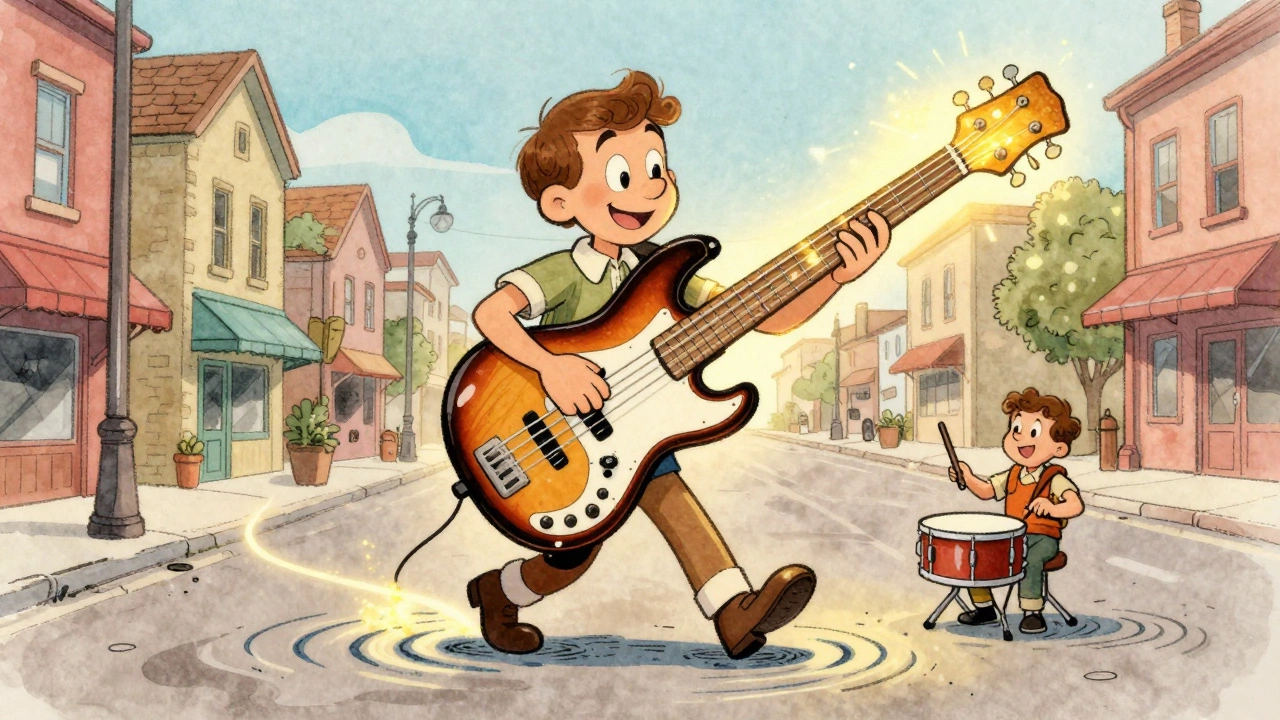

Reggae isn’t just about the drums or the vocals. The real heartbeat? It’s the bass. Not the kind that thumps hard and fast, but the kind that moves - slow, deep, and deliberate. Think of it like a tide rolling in: not loud, not rushed, but impossible to ignore. That’s the reggae bass line. It doesn’t just support the song. It is the song.
It Starts with Space, Not Notes
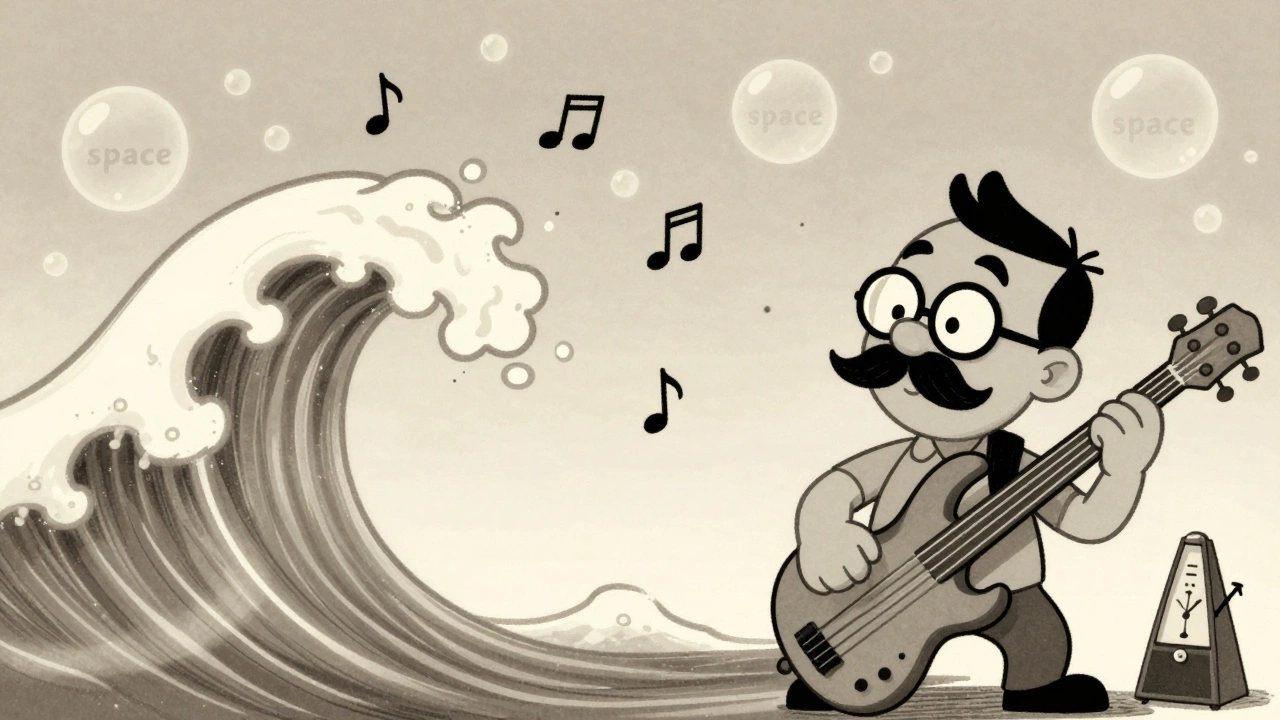
Most bass players learn to play on the beat. Reggae bass players learn to play around it. The magic isn’t in how many notes you play - it’s in how many you don’t. In reggae, silence is as important as sound. The classic groove often leaves the first beat of the bar completely empty. Instead of hitting the root on beat one, the bass waits. It slides in on the ‘and’ of two, or lands right after the snare on beat three. That tiny delay? That’s where the groove lives.It’s not sloppy. It’s intentional. Guitar World calls it “sitting slightly behind the beat.” Think of it like walking with your hands in your pockets - you’re not rushing. You’re feeling the ground. This isn’t about precision. It’s about feel. One bassist on TalkBass said it best: “Reggae bass is deceptively simple - the notes are easy, but getting that right feel takes years.”
The Question and Answer
Reggae bass lines don’t just repeat. They talk. They ask a question, then answer it. This is called call-and-response phrasing. A two-bar phrase might start on the fifth of the chord, slide down to the root, then pause. The next two bars answer it - maybe by hitting the third, then resolving to the root again. These phrases usually loop in groups of two, four, or eight bars. It’s like a conversation between the bass and the rest of the band.That’s why reggae bass lines feel so melodic. They’re not just outlining chords - they’re singing. Bassist Aston “Family Man” Barrett didn’t just play notes. He played hooks. Listen to “Stir It Up” or “One Love.” The bass line is as memorable as the vocal. That’s not an accident. It’s the design.
Why the Low End Feels Like an Earthquake
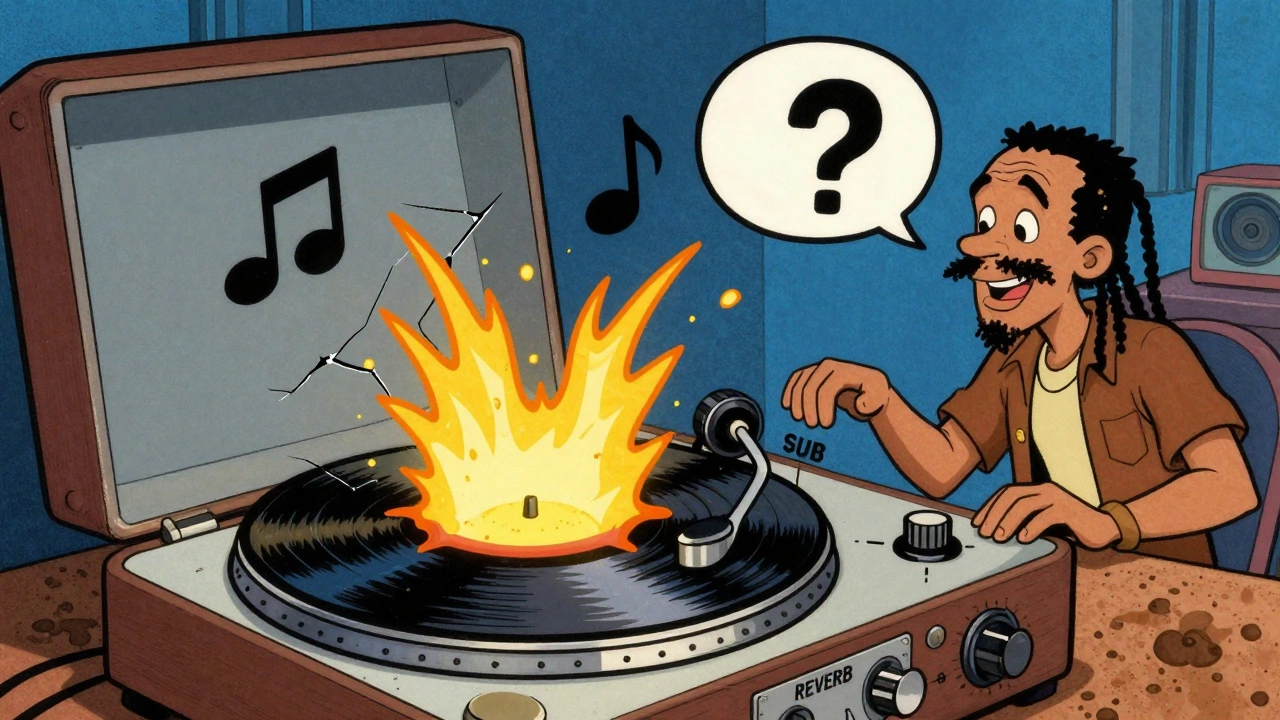
The term “earthquake low end” doesn’t come from hype. It comes from the studios of Kingston in the 1970s. Producers like Lee “Scratch” Perry and King Tubby didn’t just record bass - they amplified it. They turned the bass into a physical force. By boosting frequencies below 50Hz and using heavy reverb, they made the bass feel like it was shaking the floor. You didn’t just hear it. You felt it in your chest.Modern reggae bassists still use this trick. But now they have tools: sub-octave generators, envelope filters, and digital EQs that sculpt the deepest tones. Even so, the foundation hasn’t changed. It’s still the same principle: let the bass breathe. Don’t clutter it. Let it hit hard and stay low. That’s what makes a reggae bass line feel like it’s lifting the whole room.
How It’s Different From Rock or Funk
Rock bass locks tight with the kick drum. Funk bass dances with it, syncopating, sliding, popping. Reggae bass? It walks beside it - never matching. The kick drum hits on one and three. The bass hits on two and four. Or sometimes it skips those entirely and lands on the off-beats. That’s why reggae grooves feel so unique. The bass and drums aren’t in sync. They’re in conversation.And while funk bass often uses complex chords and rapid changes, reggae bass thrives on simplicity. Most lines stick to the root, third, and fifth. Pentatonic scales. Triads. That’s it. No walking bass lines. No chromatic runs. Just a few notes, played with perfect timing and tone. The bassist’s job isn’t to show off. It’s to hold the groove like a foundation.
The Feel Is Everything
You can play every note perfectly. You can nail the rhythm on a metronome. But if you don’t have the lag, it won’t sound like reggae. That lag is the heartbeat. It’s the slight delay between when the snare hits and when the bass answers. It’s the way the thumb picks the string just a little softer than you’d expect. It’s the palm mute that barely touches the strings - not to kill the sound, but to soften it.Practice this: set your metronome to click only on beats two and four. Play your bass line, but make sure every note lands just after the click. Feel how the space between the notes gives the groove room to breathe. Play with your thumb. Don’t use a pick. Let your fingers rest lightly on the strings after you pluck - that’s how you get that muted, rounded tone. And don’t rush. Even if the song feels slow, your timing should feel even slower.
How to Start Playing Reggae Bass
If you’re new to this, here’s how to begin:- Start with a simple I-IV-V progression in G major: G, C, D. That’s the classic reggae chord sequence.
- Play only the root and fifth of each chord. Keep it minimal.
- Use your thumb. Don’t pluck hard. Let it sound warm, not sharp.
- Don’t play on beat one. Wait until the ‘and’ of two.
- After four bars, add a slide from the fifth to the third. That’s your first melodic move.
- Record yourself. Listen back. If it feels stiff, you’re trying too hard. Relax. Let the groove find you.
Try playing along with “No Woman, No Cry” by Bob Marley. Don’t try to copy it note-for-note. Just match the space. Notice how the bass lingers after each note. That’s the key.
How Reggae Bass Changed Music
You hear reggae bass in more places than you think. The bass in “Message in a Bottle” by The Police? That’s Sting studying Barrett. The sub-bass in dubstep? That’s King Tubby’s legacy. Even hip-hop producers sample reggae bass loops because they carry weight without clutter. The “earthquake low end” became the blueprint for how deep bass should feel - not just loud, but physical.Today, artists like Gorillaz, Major Lazer, and even electronic acts like Flume use reggae bass principles to ground their tracks. They don’t use sixteenth-note runs. They use space. They use silence. They use the third. That’s the reggae way.
What Makes It Last
Reggae bass doesn’t rely on speed. It doesn’t need flashy techniques. It survives because it’s honest. It’s patient. It lets the music breathe. It doesn’t compete. It invites. That’s why, decades after it was born, it still moves people. You don’t have to be a virtuoso to play it. You just have to feel it.Why doesn’t reggae bass play on beat one?
Reggae bass avoids beat one to create a laid-back, off-kilter groove. Instead of anchoring the rhythm on the downbeat, it often starts on the ‘and’ of two or lands on beat three. This leaves space for the snare drum to hit on two and four, creating a push-pull feel that makes people sway. It’s not about missing the beat - it’s about redefining where the beat lives.
Do I need to use a pick to play reggae bass?
No. Most reggae bassists use their thumb. It produces a warmer, rounder tone that blends better with the drums and the overall vibe. Using a pick can make the sound too sharp or aggressive. The thumb also lets you lightly mute the strings after plucking, which is key to that classic reggae muted sound.
What scales are used in reggae bass lines?
Reggae bass lines mostly use major and minor pentatonic scales, along with simple triads (root, third, fifth). You rarely hear complex chord tones or chromatic passing notes. The focus is on melodic movement using the most essential notes - the ones that connect emotionally, not technically. Sliding into the third of the chord is one of the most common and effective moves.
How do I get that “earthquake low end” sound?
Start with tone: use a bass with a warm, full-bodied sound and play with your thumb. Then, in recording or processing, boost frequencies below 60Hz and cut midrange clutter (around 300-500Hz). Add a touch of saturation or sub-harmonic generation to reinforce the lowest notes. But remember - the real power comes from rhythm. A well-timed, simple note with space around it will always hit harder than a muddy, over-processed one.
Can I learn reggae bass if I only play rock or metal?
Absolutely. The biggest shift isn’t technique - it’s mindset. Rock and metal bass often plays to drive energy. Reggae bass plays to hold space. Start by slowing down. Play fewer notes. Focus on timing over complexity. Practice with a metronome set to clicks on two and four. Listen to Bob Marley, Peter Tosh, or Burning Spear. Let the groove sink in before you try to play it. You don’t need to unlearn your skills - just expand them.


