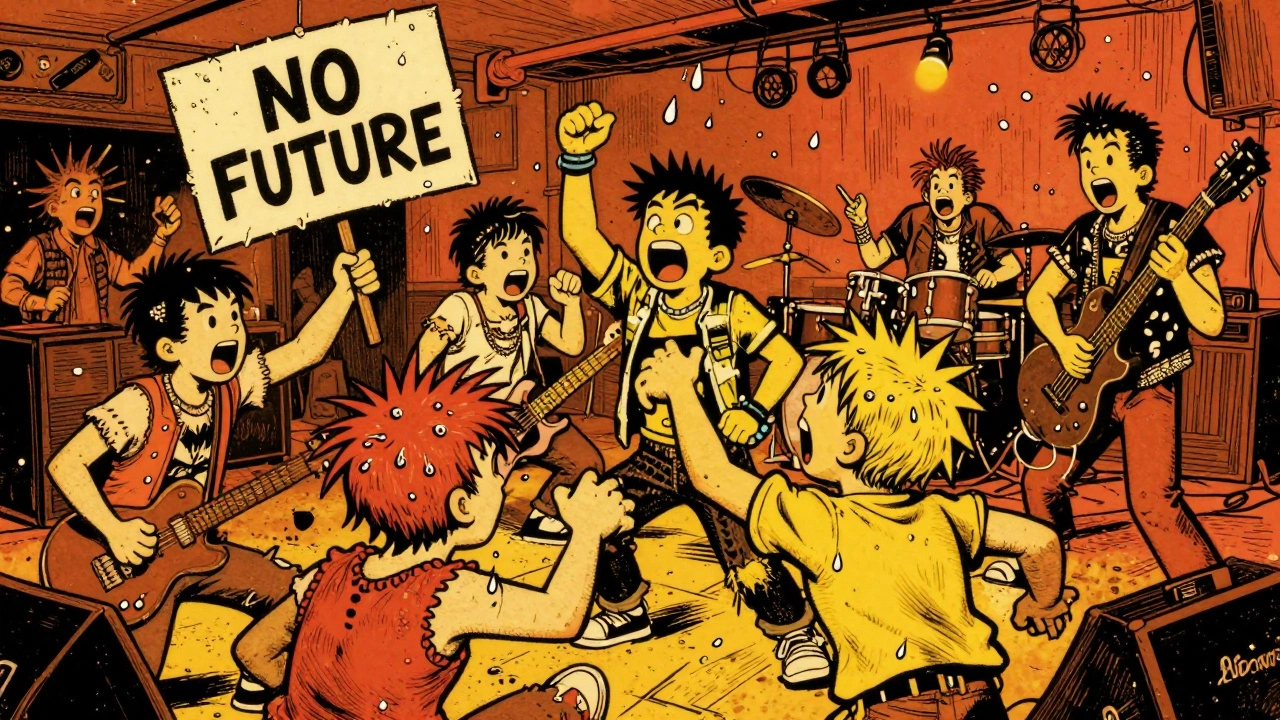

On the surface, punk and heavy metal look alike: loud guitars, angry vocals, and kids in leather. But dig deeper, and you’ll find two very different ways of saying no to the world. One screams it in a three-chord shout. The other builds it in a six-minute symphony of distortion. Both were born from frustration. Both were hated by the mainstream. But they didn’t just react to the same problems-they fought them in completely different ways.
Sound: Simplicity vs. Complexity
Punk didn’t need fancy gear or years of practice. You could pick up a guitar, learn three chords, and start a band in a week. That was the point. Bands like The Ramones and Black Flag didn’t play to impress. They played to explode. Their songs were short, fast, and raw. No solos. No key changes. Just a rush of adrenaline. As music historian Clinton Heylin put it, punk was rock stripped down to its most basic, brutal form. It wasn’t about skill-it was about urgency. Heavy metal went the other way. While punk was about getting it out fast, metal was about getting it right. Guitar solos weren’t just noise-they were technical masterpieces. Time signatures shifted. Harmonies layered. Songs stretched past seven minutes. Bands like Metallica, Slayer, and Judas Priest didn’t just play loud-they played hard. Every note had to be perfect. Every riff had to be memorized. You didn’t just join a metal band-you trained for it. A beginner might spend a year just learning to play one metal song cleanly. Punk? You could be onstage in three months.Message: Politics vs. Mythology
Punk didn’t just make noise. It made statements. Lyrics weren’t about dragons or demons-they were about unemployment, police brutality, and capitalism. Anarcho-punk bands like Crass and Conflict wrote songs that read like protest flyers. Skateboarders, squatters, and vegan activists showed up at shows not just to mosh, but to organize. The message was clear: this system is broken, and we’re not waiting for it to fix itself. Metal? Its rebellion was quieter, but no less real. Instead of shouting about politics, metal screamed about power, pain, and the dark side of human nature. Iron Maiden sang about war and ancient myths. Black Sabbath twisted biblical imagery into nightmares. Even the most aggressive thrash metal didn’t talk about tax reform-it talked about nuclear annihilation, corruption, and madness. The rebellion wasn’t in the lyrics-it was in the sound. The sheer weight of the music said: I refuse to be silent.Scene: Chaos vs. Control
Go to a punk show, and you’ll get punched. Not by accident. That’s the point. Mosh pits weren’t just dancing-they were controlled chaos. People threw themselves into the crowd. Bodies collided. No one apologized. It was raw, physical, and totally unscripted. The crowd didn’t care if you looked cool. They cared if you were there for the right reason. As one fan put it: “In punk, you don’t care if you get hurt. You care if you care.” Metal shows were different. Headbanging. Standing. Respect. Even the wildest thrash metal crowd didn’t try to knock people down. They moved in rhythm. They raised their fists. They didn’t need to crash into strangers to feel part of something. Metalheads showed their loyalty by knowing every lyric, every solo, every album release date. You didn’t earn your place by how hard you slammed-you earned it by how deep you knew the music.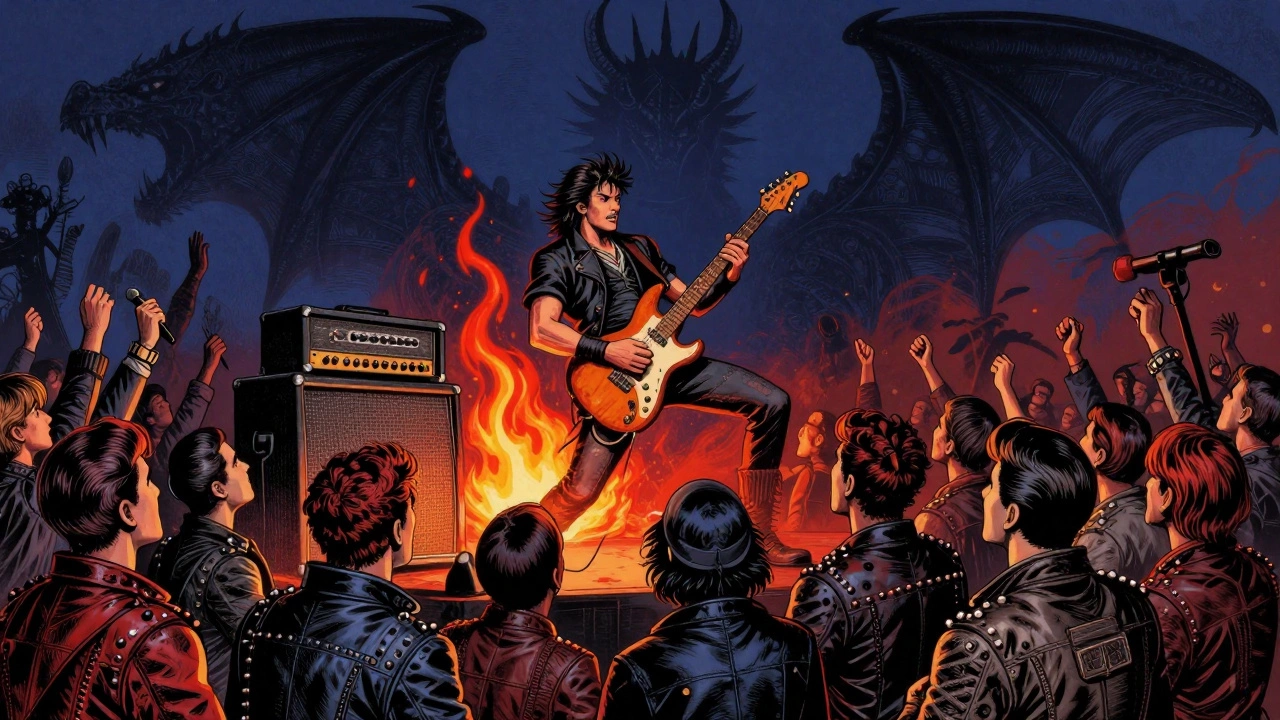
The Bridge: When Punk and Metal Became One
The myth that punk and metal were enemies? That’s not true. They borrowed from each other constantly. Motörhead, formed in 1975, didn’t fit neatly into either camp. Lemmy’s voice was a snarl, his bass was thunder, and his songs were faster than anything punk had done. He didn’t care about genre labels-he just played loud. And millions loved him for it. By the early 1980s, hardcore punk bands like Black Flag started adding slower, heavier riffs. Their 1984 album My War was half punk, half metal. Around the same time, Metallica and Slayer, sick of the glittery glam metal taking over LA, started speeding up their songs, adding punk’s aggression, and ditching the solos. They created thrash metal-the sound of punk’s rage fused with metal’s power. Then came crossover thrash. Bands like Stormtroopers of Death (S.O.D.) and later Power Trip didn’t just mix the two-they made a new language. Their songs had punk’s speed, metal’s riffing, and lyrics that called out cops, politicians, and hypocrisy. These weren’t hybrids. They were evolution.Who Gets In? Who Gets Shut Out?
Punk prided itself on being open. If you had a message, you belonged. Even if you played badly. Even if you were 15. Even if your shirt had a cartoon on it. The only rule? Don’t sell out. That’s why bands like Fugazi were sacred, and bands like Falling in Reverse were called traitors. Punk didn’t care if you looked the part. It cared if you felt it. Metal? It had its own gatekeepers. “Is this real metal?” became a battle cry. If you used synths? “Not metal.” If you screamed instead of sang? “Too pop.” If you were too young? “You don’t understand the history.” Metalheads argued over subgenres like black metal, death metal, doom metal-each with its own rules, its own codes. It wasn’t about rebellion anymore. It was about purity. But here’s the twist: punk’s openness made it vulnerable. By the 2000s, pop-punk exploded. Blink-182, Paramore, and Green Day became radio hits. Suddenly, the rebellion was in the Top 40. Purists cried foul. But the truth? Punk had always been about feeling something. If a kid in Ohio felt that rage in a pop-punk song, was that really less real?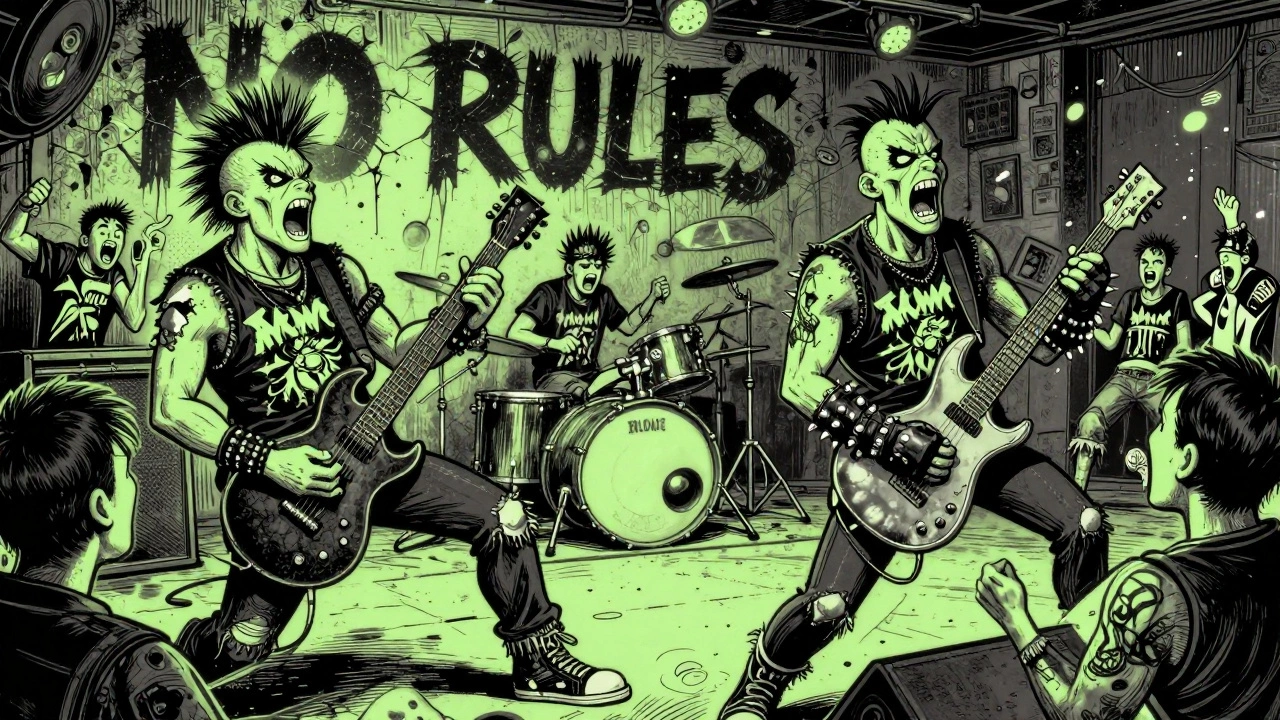
Today: Still Alive, Still Fighting
In 2026, both scenes are still breathing. Punk’s revival isn’t about nostalgia-it’s about urgency. Bands like IDLES and Turnstile are playing to packed rooms, screaming about mental health, inequality, and climate collapse. Their fans aren’t just listening-they’re organizing. DIY venues like ABC No Rio in New York are still running. Zines are still printed. Shows are still in basements. Metal’s growth is quieter but no less powerful. Extreme subgenres like blackened death metal and sludge are growing fast. Bands like Batushka and Zeal & Ardor blend metal with spirituals, folk, and punk, proving the genre still has room to break. Festivals like Wacken Open Air draw 75,000 fans every year. Metal isn’t just surviving-it’s expanding. The biggest change? The lines keep blurring. Crossover thrash is back. Bands like Power Trip and Spiritbox mix punk’s energy with metal’s heaviness. Fans don’t care about labels anymore. They care about intensity. If a song makes your chest shake and your fists clench, who cares what you call it?What’s the Real Difference?
Punk says: Here’s the problem. Let’s fix it now. Metal says: The world is broken. Let’s scream until it cracks. One is a hammer. The other is a sledgehammer. Both break things. But only one asks you to rebuild. You don’t have to pick a side. You don’t need to hate the other. The best thing either genre ever gave us wasn’t the music-it was the permission to be angry. To be loud. To refuse to be ignored.Can punk and metal fans get along?
Absolutely. Many fans listen to both. The idea that punk and metal fans hate each other is mostly a myth pushed by outsiders. In reality, crossover thrash bands, shared DIY venues, and mutual respect for raw energy have kept the communities connected for decades. People who say you have to choose are the ones who never went to a real show.
Is metal more complex than punk?
Yes, in structure-but not in spirit. Metal songs often use complex time signatures, layered harmonies, and extended solos. Punk uses three chords and a fast beat. But complexity doesn’t mean depth. A punk song like “Anarchy in the U.K.” can hit harder than a 10-minute metal epic if it speaks to the moment. The difference isn’t skill-it’s intention.
Why did punk reject metal in the 1980s?
Because metal got flashy. Glam metal bands in LA wore makeup, had long hair, and sang about partying. Punk saw that as selling out. But the rejection wasn’t about metal itself-it was about losing authenticity. Thrash metal bands like Metallica and Slayer responded by going faster, meaner, and more political-bringing punk energy back into metal. That’s when the real bridge formed.
Is pop-punk still punk?
If the music makes you feel something, it’s punk. Purists say no-but punk was never about sounding like a band from 1977. It was about speaking truth. Bands like IDLES and Turnstile are doing that today. Pop-punk kids who grew up on Blink-182 are now starting bands with political lyrics. That’s not betrayal. That’s evolution.
Which genre is more popular today?
In streaming, punk genres (including pop-punk and hardcore) hit 8.1 billion streams in 2023, while metal hit 6.9 billion. But metal still draws bigger crowds at festivals. Popularity doesn’t mean power. Punk’s strength is in its accessibility. Metal’s strength is in its depth. Both are thriving-just in different ways.
Can I start a band if I don’t know how to play?
Yes-if you’re doing punk. You don’t need to be perfect. You just need to be real. Punk was built on the idea that anyone with a message can make noise. Metal? It takes practice. But if you want to start with punk, grab a guitar, learn three chords, and write a song about something that pisses you off. That’s all it takes.