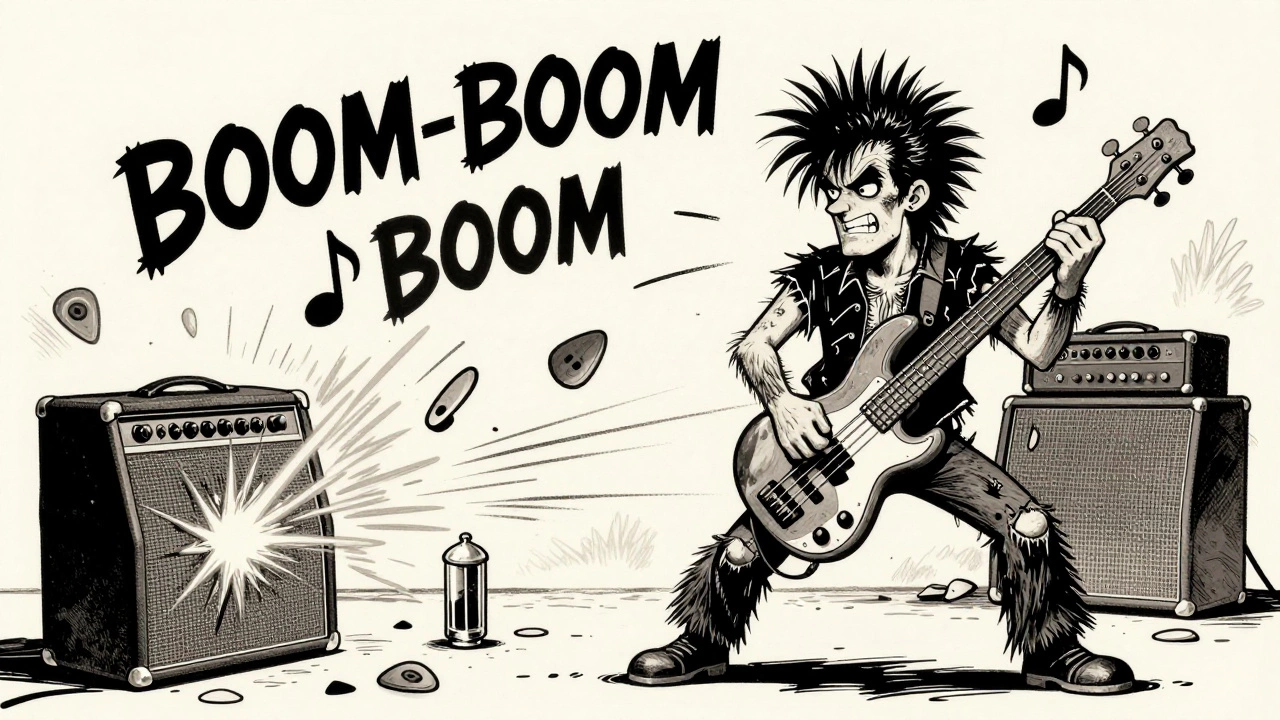

When you think of punk music, you probably picture fast guitars, shouted lyrics, and smashed amps. But the real heartbeat of punk? It’s the bass. Not the flashy solos or the complex runs. Just a simple, relentless pulse - down, down, up - driving every song like a fist to the chest. In the mid-1970s, bass players in New York and London didn’t just play support roles. They became the engine. And they did it with almost no technique, zero polish, and maximum attitude.
The Bass That Didn’t Ask for Permission
Before punk, rock bass was all about showing off. Chris Squire from Yes played intricate, melodic lines that danced around the guitars. Larry Graham from Sly & the Family Stone slapped and popped like a drum solo on strings. Punk said no. Punk bass wasn’t about complexity. It was about control. Or rather, controlled chaos. Take The Ramones. Dee Dee Ramone didn’t know much about music theory. He didn’t need to. His bass line in "Blitzkrieg Bop"? Just root notes. Downstrokes. No fancy slides, no hammer-ons, no harmonics. Just boom-boom-boom at 170 BPM. That’s it. And yet, it’s unforgettable. Why? Because it didn’t try to be anything else. It was the heartbeat. The pulse. The thing that made you move before you even heard the vocals. In London, The Clash’s Paul Simonon took a different path. He didn’t just play root notes. He played grooves. His bass line in "London Calling"? It’s got reggae sway, Motown soul, and punk energy all rolled into one. It doesn’t just follow the chords - it leads them. Rolling Stone called it "the song," not just part of it. And they weren’t exaggerating. That line carries the whole track. It’s why the song still hits like a sledgehammer 45 years later.How Punk Bass Was Built - No Studio Tricks Needed
Punk bass didn’t need expensive gear. In fact, it often sounded better with broken equipment. JJ Burnel from The Stranglers played his bass through a guitar amp. Not a bass amp. A guitar amp. Why? Because it made the tone brighter, meaner, more aggressive. It cut through the mix like a knife. That’s the sound of punk: raw, unfiltered, and slightly out of control. The Ramones’ tone? They boosted the midrange - around 500 to 600 hertz - to make the bass sound "angry," as one technician put it. No compression. No EQ wizardry. Just a cheap amp, a heavy pick, and a bass with thick strings (.045-.105). That’s all it took. You didn’t need a studio. You didn’t need lessons. You just needed to hit the strings hard and keep time. The Buzzcocks’ "Why Can’t I Touch It?" flipped the script again. Instead of just root notes, they used arpeggios - plucking out the individual notes of a chord - and turned them into a hook. It wasn’t a melody you’d hum. It was a rhythm you’d feel in your chest. And that’s the punk bass philosophy: make the bass the thing you remember, not the guitar.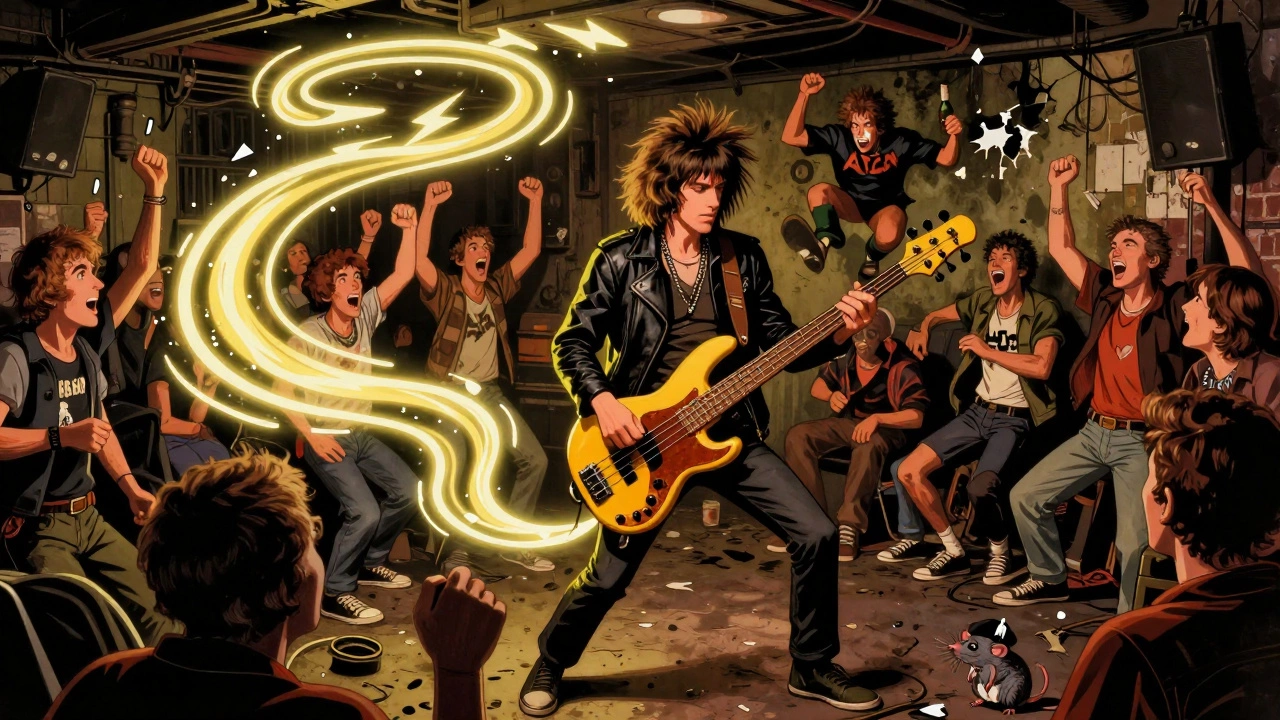
Why Punk Bass Was Revolutionary - And Why It Still Matters
In the 1970s, music was becoming more polished. Prog rock stretched songs to 10 minutes. Disco had orchestras. Punk said: enough. Punk bass was the sound of rebellion made audible. It didn’t require years of training. A 16-year-old kid with a $50 bass and a borrowed amp could learn "I Wanna Be Sedated" in a weekend. That’s why it exploded. It wasn’t just music - it was a door kicked open. And it worked. A 2022 survey by Bass Musician Magazine found that 78% of bassists under 25 started with punk lines. Reddit threads like "Best Punk Bass Lines for Beginners" have over 2,400 upvotes. Ultimate Guitar shows 42,000 monthly searches for "I Wanna Be Sedated" bass tabs. Why? Because punk bass gives instant satisfaction. You play three notes. You sound like a band. You feel like you belong. But it wasn’t just about accessibility. It was about power. Dr. Simon Frith, in his 2021 book "Art versus Commerce," argues punk bass redefined the relationship between rhythm and melody. The bass didn’t just keep time - it shaped the song’s emotion. The bass line in "Damaged Goods" by The Slits? It’s simple. It’s repetitive. But it’s also haunting. That’s the genius. You don’t need complexity to be moving. You just need truth.The Critics and the Converts
Not everyone loved it. Jazz bassist Marcus Miller called punk bass "throwing paint at a canvas." He wasn’t wrong - it was messy. But he missed the point. Punk wasn’t trying to be art. It was trying to be real. And reality has a way of winning. Steve Harris from Iron Maiden admitted Lemmy’s bass playing shaped how he approached his own. Modern bands like Protomartyr’s Matt Armstrong say he starts every song with a Dee Dee Ramone-style pulse. Why? Because it sets the mood instantly. It’s emotional shorthand. Even electronic producers are stealing it. Four Tet built entire tracks around sampled punk bass lines, warped through synths. That’s right - a 1977 bass line from a garage band in Queens is now part of a dance track in Berlin. The ethos didn’t die. It evolved.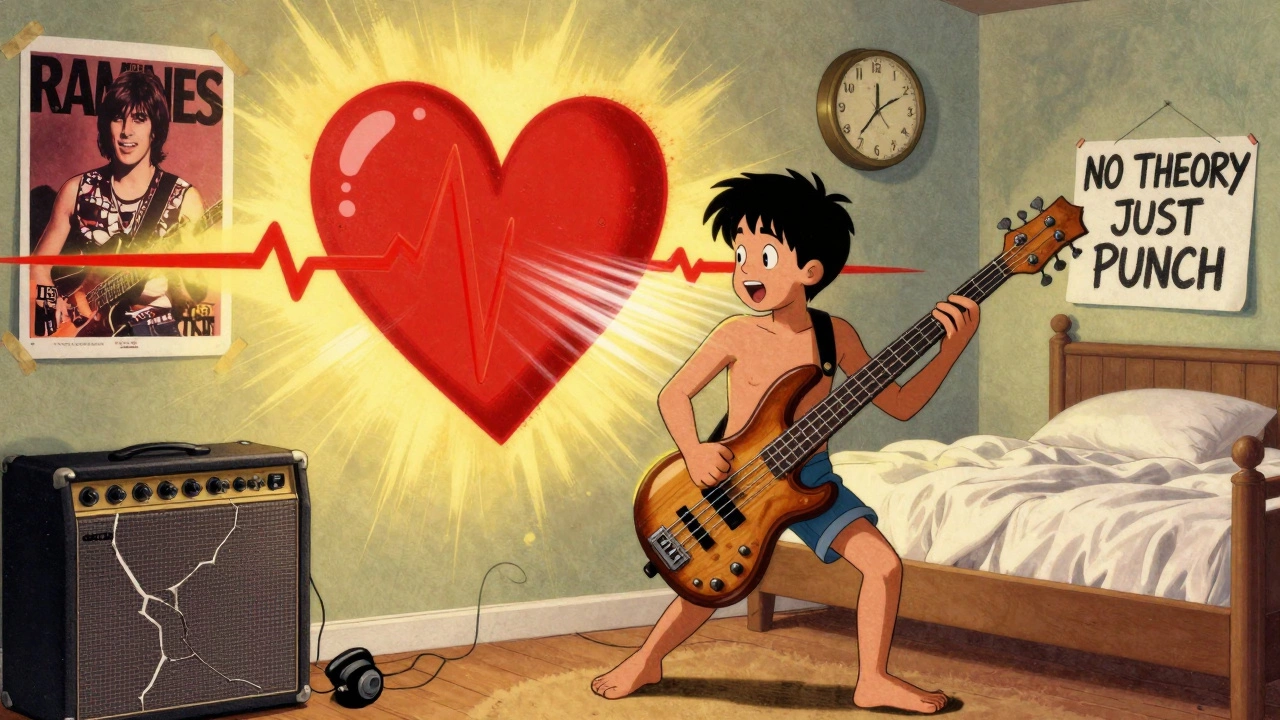
How to Play Punk Bass - No Experience Needed
If you want to learn punk bass, forget theory. Forget scales. Start here:- Grab a bass. Any bass. Even a used one.
- Put on thick strings - .045 to .105. They give you the punch you need.
- Set your amp to boost the 500-600 Hz range. That’s where the "angry" lives.
- Learn "Blitzkrieg Bop" by The Ramones. Play it slow. Then fast. Then faster.
- Use only downstrokes. No upstrokes. No fingers. Just the pick. Slam it into the strings.
- Play with a drummer who’s fast. If you’re not sweating, you’re not doing it right.
The Lasting Impact
Punk bass didn’t just change rock. It changed how music is made. Today, bedroom producers use DAWs to layer bass lines that sound like they came from a 1977 rehearsal space. They don’t need a studio. They don’t need a label. They just need a bass, a beat, and the guts to play it loud. Streaming data shows a 42% rise in 1970s punk bass tracks between 2020 and 2023 - mostly from listeners under 25. That’s not nostalgia. That’s recognition. People are hearing what the bass was always saying: you don’t need perfection to be powerful. You just need rhythm. And heart. The 1970s punk bass line wasn’t a technique. It was a declaration. And it’s still echoing.What made punk bass different from other 1970s bass styles?
Unlike funk or prog rock, punk bass stripped away complexity. It didn’t use slap techniques, syncopation, or extended chords. Instead, it focused on root notes, aggressive downstrokes, and steady eighth-note pulses at high tempos (160-220 BPM). The goal wasn’t to impress - it was to drive. Bassists like Dee Dee Ramone and Paul Simonon made the bass the main force of the song, not just the foundation.
Why did punk bassists use guitar amps instead of bass amps?
Guitar amps emphasized midrange frequencies, giving the bass a brighter, more cutting tone. This helped it cut through the wall of distorted guitars without clashing. JJ Burnel of The Stranglers famously used a modified Fender Precision Bass through a guitar amp, creating a signature snarling sound that became a punk staple. It was a DIY solution that turned a limitation into a signature.
Can beginners really learn punk bass quickly?
Yes. Songs like "Blitzkrieg Bop" and "I Wanna Be Sedated" use only root notes and downstrokes. Most beginners can play them confidently in 30-45 days with just 8-10 hours of practice. The simplicity is intentional - punk bass was designed to be accessible. You don’t need theory, just rhythm and attitude.
How did punk bass influence modern music?
Punk bass shaped alternative rock, post-punk, and even electronic music. Modern bands like Protomartyr and producers like Four Tet use its raw, rhythmic pulse as a foundation. Its philosophy - that emotion trumps technicality - aligns with today’s DIY music scene. Over 68% of alternative rock bass lines since 1990 trace back to punk’s minimalist approach.
Is punk bass still relevant today?
More than ever. With the rise of bedroom producers and streaming platforms, the punk bass ethos - simple, loud, honest - resonates stronger than ever. A 2024 MIDiA Research report predicts punk-inspired bass elements will appear in 25-30% of alternative releases by 2026. It’s not a relic. It’s a blueprint.
When the world felt broken, punk bass didn’t try to fix it. It just made you feel it. And sometimes, that’s enough.


