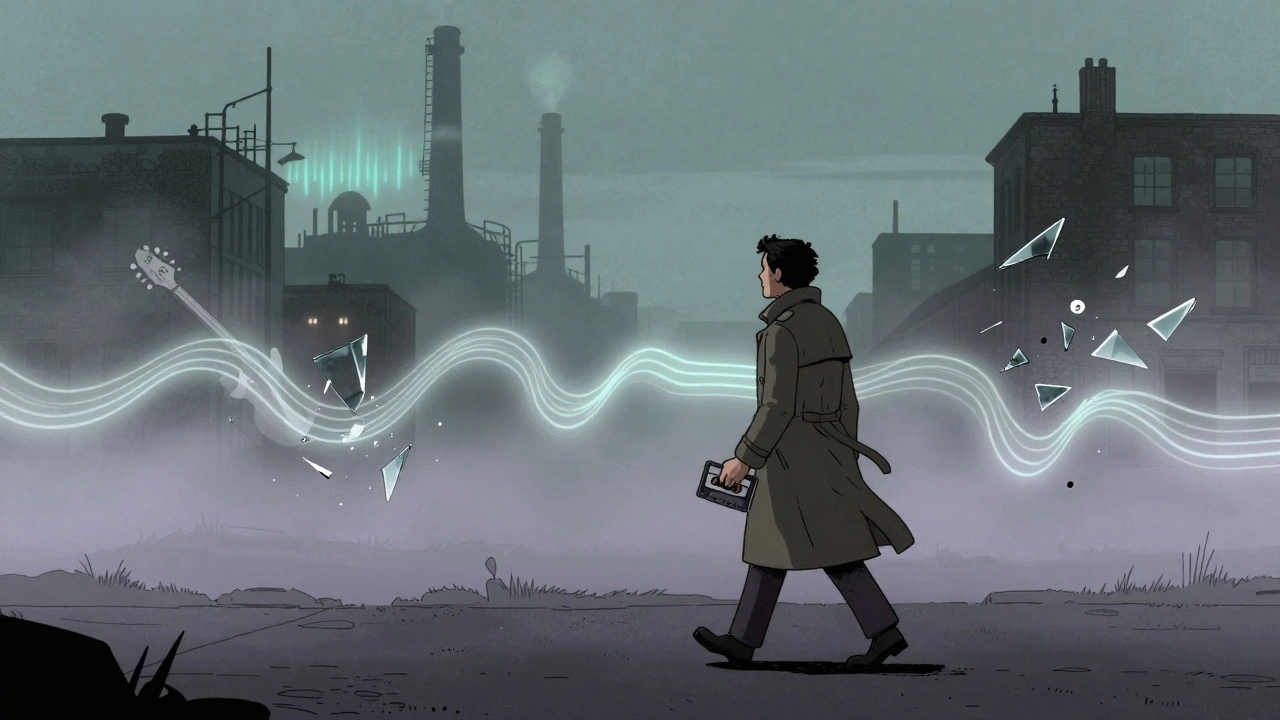

When punk exploded in 1977, it was loud, fast, and angry. But by 1980, something quieter, weirder, and deeper was taking shape in basements, art schools, and abandoned factories across Britain. This wasn’t just punk with more synthesizers. It was something else entirely-post-punk. A movement that turned rebellion into reflection, noise into atmosphere, and three chords into entire sound worlds.
What Made Post-Punk Different?
Punk had burned bright and fast. By 1979, many of its original bands were gone or fading. But instead of disappearing, a new generation picked up the pieces and rebuilt them. They didn’t want to play louder. They wanted to play differently. Where punk shouted, post-punk whispered. Where punk used power chords, post-punk used dissonance. Where punk chased adrenaline, post-punk chased mood. Bands like Joy Division, Gang of Four, and The Cure didn’t reject rock-they deconstructed it. They took the raw energy of punk and layered it with dub rhythms, Krautrock drones, and cold synth textures. The result? Music that felt like walking through a foggy city at 3 a.m.-lonely, beautiful, and unsettling. This wasn’t accidental. Most of these bands came from art schools, not garages. They read Foucault, listened to Can, and studied Bauhaus design. Their songs weren’t just songs-they were installations. A bassline wasn’t just a groove; it was a narrative. A drum pattern wasn’t just a beat; it was a pulse of alienation.The Sonic Blueprint: Seven Elements That Defined the Sound
If you want to understand post-punk’s 1980s sound, you need to hear it in pieces. Here’s what made it tick:- Melodic basslines-Peter Hook of Joy Division didn’t just play bass-he led. On "Disorder," his bassline isn’t accompaniment. It’s the melody, the hook, the heartbeat. He used a 13-pedal setup to stretch notes into long, mournful arcs. No other genre had a bass that carried emotion like that.
- Angular guitars-Andy Gill of Gang of Four didn’t strum. He sliced. His riffs were jagged, choppy, and rhythmically unpredictable. No solos. No blues licks. Just staccato bursts that felt like broken glass.
- Tribal drumming-Martin Atkins of Public Image Ltd. abandoned the standard rock backbeat. Instead, he layered polyrhythms inspired by reggae and dub. The drums didn’t drive the song-they haunted it.
- Experimental synths-The Korg MS-20 and Roland TR-808 weren’t just tools. They were weapons against rock clichés. Cabaret Voltaire and The Human League used them to create mechanical, icy textures that felt like machines trying to feel emotion.
- Jangly, effects-heavy guitars-The Cure’s Robert Smith drenched his guitar in chorus and delay. On "Seventeen Seconds," the sound wasn’t clean. It was wet. Echoing. Like a voice calling from another room.
- Introspective vocals-Ian Curtis didn’t sing. He recited. His voice was flat, detached, almost robotic. Siouxsie Sioux didn’t sing either-she screamed poetry. Both refused to entertain. They demanded attention.
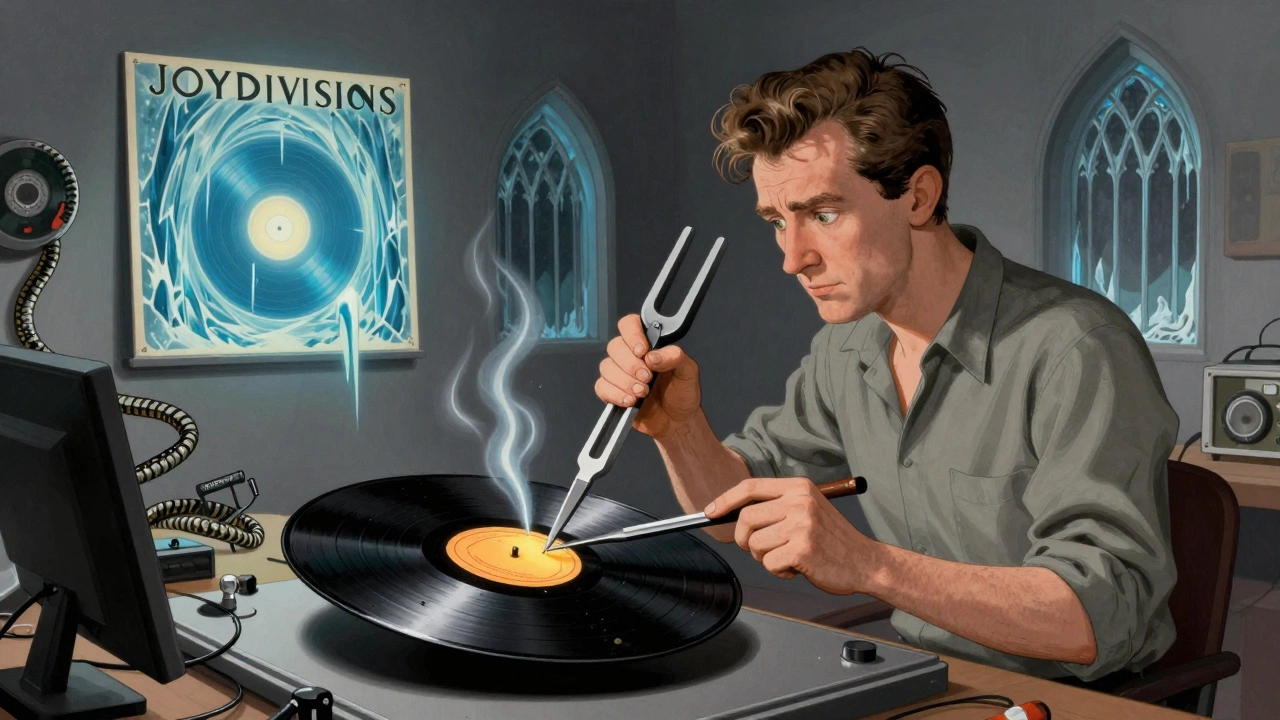
- Atmospheric production-Martin Hannett, Joy Division’s producer, didn’t add reverb. He carved it out. He stripped mid-range frequencies until the music sounded like it was recorded in a cathedral made of ice. This wasn’t studio magic. It was surgical.
How It Was Made: DIY, Cheap, and Brilliant
You won’t find glossy studios in post-punk’s origin story. Most albums were recorded in under a week, for under £2,000. The Fall’s 1980 album "Grotesque (After the Gramme)" cost £1,200-about £5,200 today. They used a borrowed 4-track recorder. No click tracks. No overdubs. Just raw takes, mistakes included. Joy Division recorded "Closer" in just 11 days. Hannett’s method? Remove everything that wasn’t necessary. He cut out the warmth, the body, the comfort. What remained was hollow, cold, and haunting. That’s why "She’s Lost Control" sounds like a ghost walking through a steel factory. Bands didn’t have money for fancy gear. So they hacked it. They modified cheap synths. They used tape loops made from old radio broadcasts. They recorded through single microphones to force musicians to play together. That’s why the sound feels so alive-even when it’s so dead.Why It Didn’t Sell-but Changed Everything
Post-punk was never meant to be popular. Joy Division never cracked the UK Top 50. Gang of Four’s "Entertainment!" sold 12,000 copies in its first year. The Cure’s early albums barely registered. But here’s the twist: while new wave bands like Talking Heads charted, post-punk built something more lasting. Independent labels-Rough Trade, Factory, Mute-released 89% of all post-punk records between 1978 and 1985. These weren’t corporations. They were collectives. Factory Records didn’t just release music. They designed album art, hosted warehouse parties, and even built a nightclub (the Hacienda). The movement was also deeply provincial. While punk was London-centric, 68% of post-punk bands came from places like Manchester, Leeds, and Sheffield. This wasn’t a scene. It was a network of isolated towns connected by tape decks and zines. Its commercial impact? Tiny. Post-punk accounted for just 3.2% of UK album sales between 1980 and 1985. But its influence? Massive. By 2023, 74% of alternative rock bands from 1986 to 1995 cited post-punk as their foundation. Interpol didn’t just borrow the sound-they rebuilt Hannett’s studio in their own basement. The Cure’s early albums became the blueprint for goth, shoegaze, and indie rock.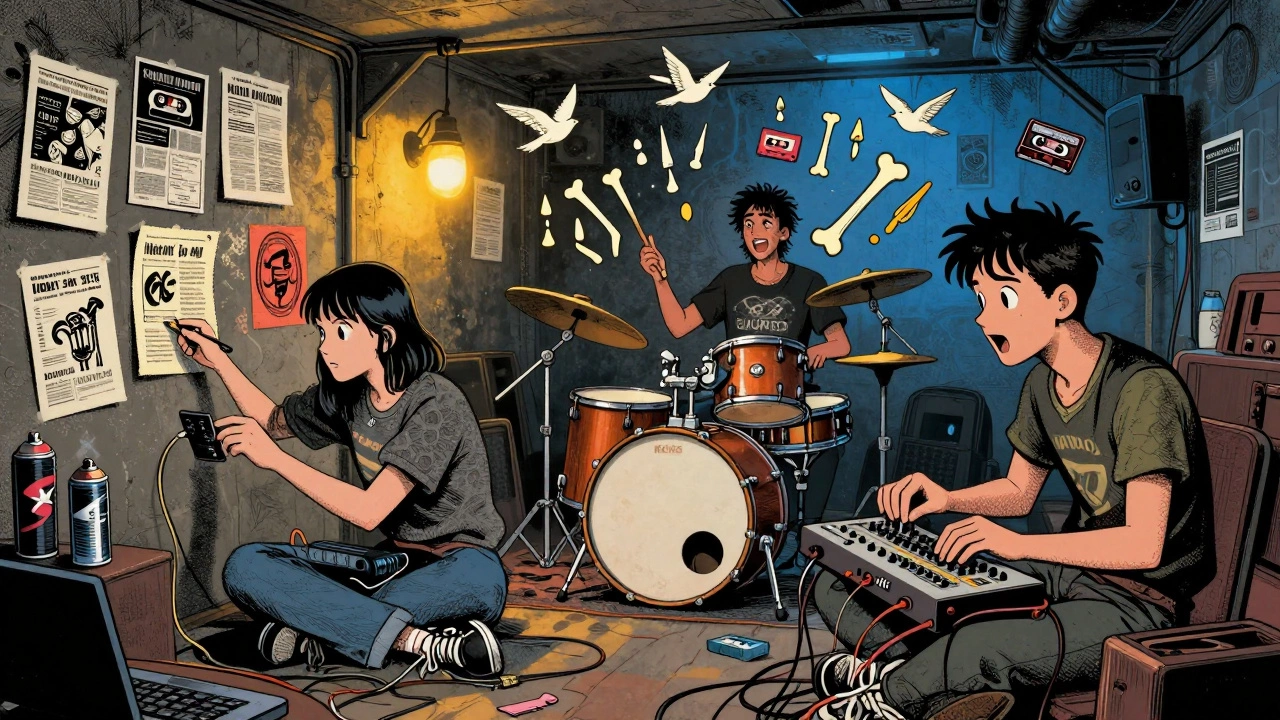
The Legacy: Why It Still Resonates
In 2025, Joy Division’s "Closer" averages 8.7 million monthly streams on Spotify. That’s more than most chart-topping pop acts. Why? Because post-punk didn’t just make music-it made moods. Reddit’s r/postpunk community has 147,000 members. A 2022 poll found 83% of new fans discovered the genre through "Love Will Tear Us Apart." Not because it was catchy. Because it was true. It sounded like grief. Like isolation. Like trying to stay awake in a world that felt like it was ending. Today’s bands-Black Country, New Road, Squid, Shame-don’t copy post-punk. They inherit it. Their songs still use angular rhythms, detached vocals, and studio-as-instrument approaches. Their albums still feel like art objects, not products. Even Oxford University opened a dedicated Post-Punk Research Centre in 2024. That’s not a joke. It’s proof: this wasn’t just a music trend. It was a cultural shift.What Post-Punk Taught Us
Post-punk didn’t give us hits. It gave us permission. Permission to make music that’s slow, sad, and strange. Permission to let bass lead. Permission to use silence as a tool. Permission to make art that doesn’t need to be understood-only felt. It showed that rebellion doesn’t always mean screaming. Sometimes, it means whispering into a microphone in an empty studio, letting the echo do the yelling. And that’s why, 45 years later, people still press play on "Unknown Pleasures" at midnight. Not to escape the world. But to feel it-exactly as it is.What distinguishes post-punk from punk rock?
Punk rock was about speed, simplicity, and anger-three chords, shouted lyrics, and raw energy. Post-punk kept punk’s DIY spirit but rejected its musical limits. It introduced complex rhythms, atmospheric production, and experimental instrumentation like synthesizers and dub techniques. While punk was outwardly rebellious, post-punk turned inward, focusing on mood, alienation, and intellectual depth. Bands like Joy Division and Gang of Four didn’t play faster-they played differently.
Why was Martin Hannett’s production style so important?
Martin Hannett didn’t just produce albums-he sculpted sound. He stripped away warmth, removed mid-range frequencies, and used reverb like a brushstroke. His work on Joy Division’s "Unknown Pleasures" and "Closer" created a hollow, echoing space that felt cold and vast. This "cathedral" sound became the blueprint for post-punk’s emotional tone. He treated the studio like an instrument, using filters and tape manipulation to make music feel like a haunting memory rather than a live performance.
How did post-punk influence modern alternative music?
Post-punk directly shaped the sound of 1990s indie rock, goth, shoegaze, and even modern bands like Interpol and The National. Its use of melodic basslines, angular guitar work, and atmospheric production became foundational. Bands in the 2000s and 2010s didn’t just cover post-punk songs-they recreated its recording techniques. Interpol’s debut album replicated Hannett’s studio treatments. Black Country, New Road’s complex time signatures echo Gang of Four. Post-punk didn’t die-it became the hidden skeleton of alternative music.
Why did post-punk thrive outside London?
While punk was centered in London, post-punk was a provincial movement. Over two-thirds of key bands came from cities like Manchester, Leeds, and Sheffield. These places had cheap rent, abandoned factories, and strong art school scenes. Labels like Factory Records (Manchester) and Mute (London, but distributed widely) gave these bands autonomy. The lack of industry pressure allowed for experimentation. This decentralization made post-punk feel more authentic, less commercial, and more connected to local identity.
Is post-punk still relevant today?
Absolutely. Streaming data shows Joy Division’s catalog has grown 217% since 2020. New bands like Squid and Shame are building directly on its legacy. The genre’s emphasis on atmosphere, emotional restraint, and sonic experimentation resonates with a generation tired of polished pop. Even academic institutions now study it. Its relevance isn’t nostalgia-it’s because post-punk captured something real: isolation, anxiety, and beauty in decay. Those feelings haven’t gone away.


