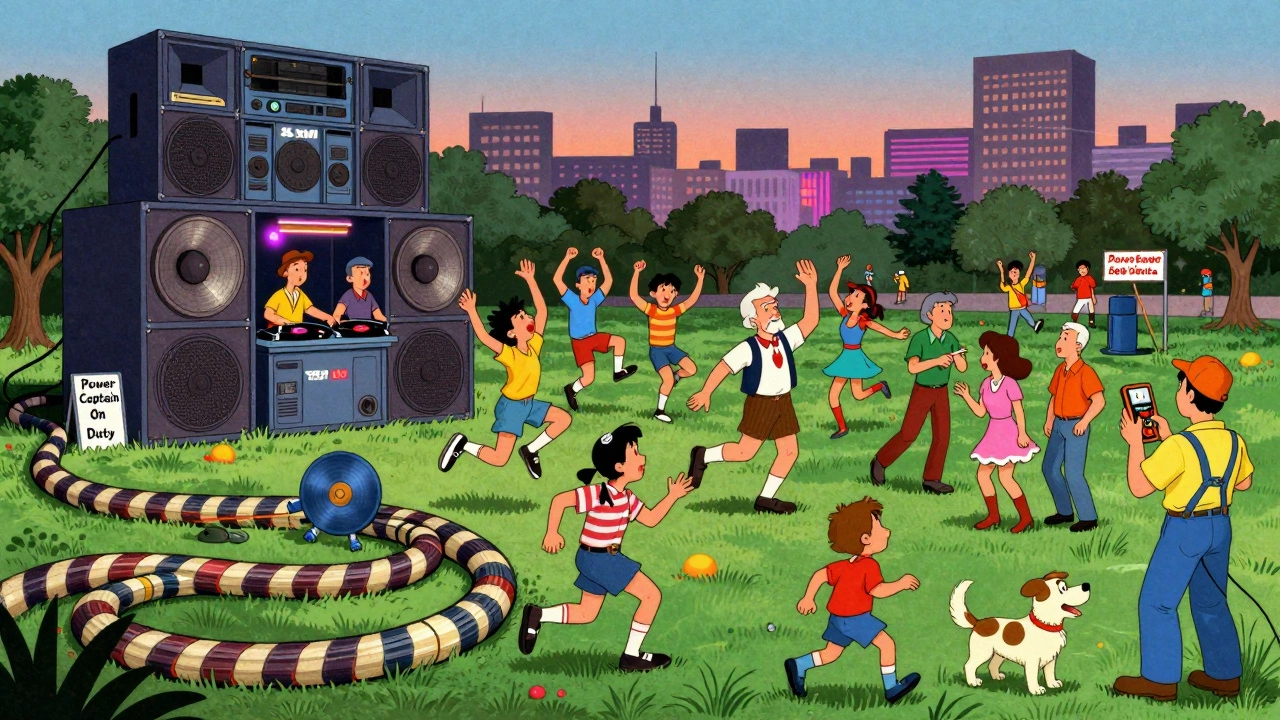

When you think of a park jam, you picture concrete under your sneakers, bass shaking loose change in your pocket, and a crowd so thick you can’t tell who’s dancing and who’s just there to watch. But behind that raw, street-level energy is a quiet, complex machine-electricity. Not just any electricity. The kind that keeps a 10,000-watt sound system running, lights up a stage in the middle of a city park, and doesn’t trip the neighborhood’s power grid. This isn’t a festival you book at a venue. This is a park jam. And it’s got rules you don’t find in any handbook.
Power Isn’t Just Plug-and-Play
You can’t just roll up with a generator from Home Depot and expect it to handle a full hip-hop set. A single DJ booth with two turntables, a mixer, two subwoofers, and four mid-range speakers pulls around 3,000 to 5,000 watts continuously. Add in lighting, a small video screen, and a food truck’s fridge? You’re looking at 12,000 watts or more. That’s not a wall outlet. That’s not even a single extension cord. That’s a generator-and not just any one.
Most outdoor events in city parks use diesel-powered industrial generators. Why? Because they handle sustained loads better than gasoline models. A 15-kilowatt generator is the bare minimum. Most seasoned crews go with 20-30 kW, just to be safe. These aren’t quiet machines. They’re loud. That’s why timing matters. Load-in starts at 8 a.m., not midnight. You don’t want your neighbor’s dog barking all night because you’re cranking up the diesel at 2 a.m.
Electrical safety isn’t optional. Every wire is run through GFCI-protected outlets. Every extension cord is rated for outdoor use. Every connection is checked with a multimeter before the first beat drops. One shorted line and you’re not just killing the party-you’re risking lives. City inspectors don’t care if it’s hip-hop. They care if the wiring meets NFPA 70 (National Electrical Code). That’s the law. No exceptions.
Where the Power Comes From
Parks rarely have the infrastructure to handle this kind of draw. Most have 100-amp service, max. That’s enough for a few streetlights and a water fountain-not a 10,000-watt sound system. So organizers don’t rely on the grid. They bring their own.
Companies like AV Alliance and Event Power Solutions specialize in moving this gear. They don’t just deliver generators. They deliver systems. A full setup includes:
- Two 25-kW diesel generators (one as backup)
- Three-phase power distribution panels
- 100 feet of 4/0 gauge cable (thick enough to handle 200 amps)
- Grounding rods driven 8 feet into the earth
- Weatherproof junction boxes with locking lids
Delivery isn’t a pickup truck. It’s a flatbed with a crane. The generator alone weighs over 1,200 pounds. You need a forklift. You need trained operators. You need a site plan that shows exactly where the cables run-no tripping hazards, no crossing paths with food vendors, no kinking under tents.
And you don’t just show up. You test. Two days before the event, the crew runs a full load test. They crank every speaker, every light, every pump. They watch the voltage. If it dips below 115V, they adjust the load. If the generator overheats, they swap in the spare. No guesswork. No "it’ll be fine."
The Park Is a Living Thing
Most city parks have rules. No amplified sound after 9 p.m. No more than 200 people without a special permit. No generators within 50 feet of picnic areas. You can’t ignore these. Not if you want to come back next year.
Organizers in Portland, Chicago, and Atlanta all tell the same story: community trust is the real infrastructure. You don’t just get a permit. You sit down with neighbors. You hand out flyers. You tell them when the generators will start, when they’ll shut off, and what kind of noise to expect. You offer to cover a neighbor’s lawn repair if the generator leaks oil. You don’t wait for complaints. You prevent them.
One crew in Philadelphia learned this the hard way. They threw a park jam in 2023. No notice. No permits. The generator ran all night. The police showed up. The park got fined. The next summer? They got banned from every city-owned green space for two years. That’s not a setback. That’s a death sentence for any outdoor hip-hop event.
Now? They work with the Philadelphia Hip Hop Foundation. They hold monthly community meetings. They hire local teens as event monitors. They give away free water and snacks. They turn a party into a neighborhood event. And guess what? The permits come faster. The neighbors bring chairs. The cops even clap.
Load-In and Load-Out: The Silent Battle
Think about this: a 10,000-watt sound system takes 12 people, four pallets of gear, and three hours to set up. Break it down? Half that time. But only if you plan it.
Here’s how the pros do it:
- Day before: Trucks arrive between 7 a.m. and 2 p.m. No night deliveries. Ever.
- Load-in: Equipment is staged by zone-sound, lighting, vendor, trash. No mixing.
- Power: Generators are set up last, after all cables are laid. No tripping. No sparks.
- After the event: Takedown starts at 11 p.m. sharp. No dragging gear. No yelling. No lingering.
- By 1 a.m., the park is empty. No trash. No broken wires. No oil stains.
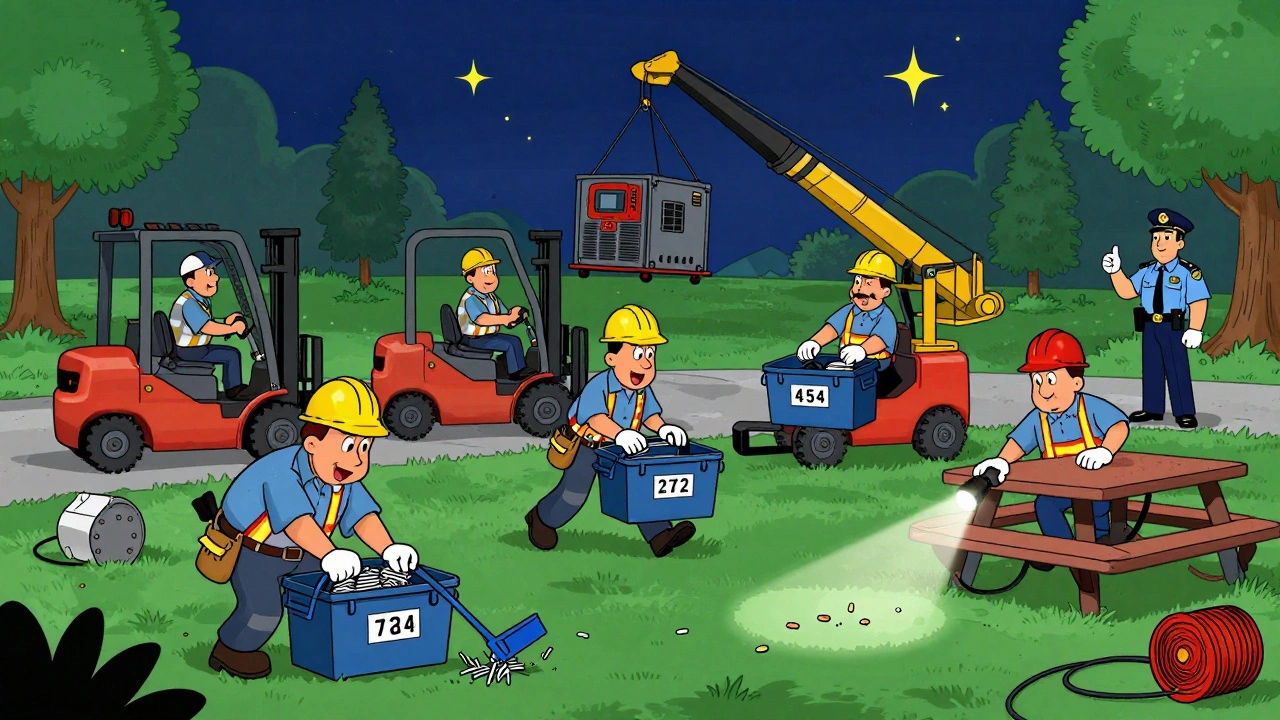
Every piece of gear goes into labeled, waterproof, reusable plastic bins. No loose cables. No unmarked boxes. If you can’t find it in the inventory list, it doesn’t get loaded. This isn’t just organization. It’s accountability.
And the cleanup? It’s not just sweepers. It’s a team. One group handles trash. Another checks for dropped wires. A third uses a magnetic sweeper to pick up nails and screws. One crew even uses a UV light to find hidden cigarette butts. Because if you leave one, the next event might not happen.
Why the Music Needs More Than Speakers
Hip-hop didn’t start in a club. It started on street corners, in parks, in the Bronx, where the only power came from a car battery and a borrowed amp. But those days are gone-not because the culture changed, but because the world did.
Today’s park jam isn’t just a party. It’s a public event with permits, insurance, liability, and zoning codes. The music is still raw. The dancers are still wild. But now, there’s a crew in the back, checking voltage, monitoring fuel levels, and making sure the lights don’t flicker when the DJ drops the beat.
That’s the real hip-hop. Not just the rhyme. The resourcefulness. The hustle. The way you make something from nothing-except this time, you’re not just making music. You’re making infrastructure.
What Happens When It All Goes Wrong
It’s not if something breaks. It’s when.
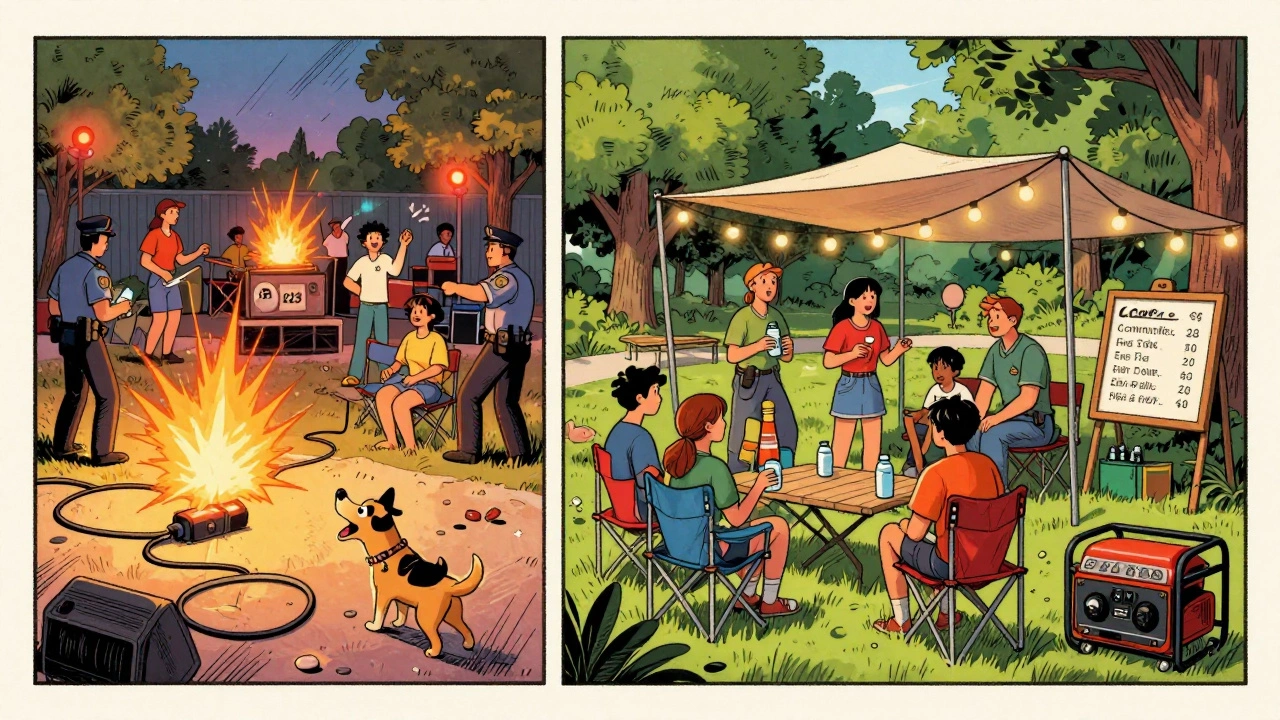
One event in Atlanta had a generator fail mid-set. The crowd didn’t know. The DJ kept spinning. The lights dimmed. The bass faded. The crowd started chanting, "Turn it up!" The crew had a backup generator ready-but it was 300 feet away. They ran the cable through a flowerbed. No one got hurt. The music came back. The crowd cheered. The next day? The park sent a thank-you note.
Another event in Chicago had a power surge. It fried two mixers. The crew had spare gear, but no way to connect it fast. They used a car battery and a 12V-to-120V inverter. It wasn’t perfect. But it played. The DJ didn’t miss a beat. And the next week? They bought three backup inverters.
These aren’t lucky breaks. They’re backups. Planning. Experience. The same thing that made hip-hop survive in the ’70s is what keeps it alive today: adaptability.
How to Do It Right
If you’re thinking of throwing a park jam, here’s the real checklist:
- Get a permit before you book the DJ.
- Call the city’s parks department. Ask about noise limits, power access, and generator rules.
- Use a licensed electrician to design your power setup. No DIY.
- Rent a 20-30 kW diesel generator with a 12-hour fuel tank.
- Bring a second generator as backup. Always.
- Use GFCI outlets. No exceptions.
- Notify neighbors. At least two weeks in advance.
- Assign a "power captain"-one person who controls every wire, every plug, every breaker.
- Test everything 48 hours before the event.
- Have a trash team. A cleanup team. A security team. And a backup plan for rain.
It’s not about how big the crowd is. It’s about how clean you leave the park. How quiet you are at night. How much you respect the place you’re borrowing. That’s the real hip-hop legacy.
Can I use a regular generator from a hardware store for a park jam?
No. Most consumer generators max out at 5,000 watts and aren’t built for sustained loads. A full hip-hop setup needs 12,000-20,000 watts continuously. Industrial diesel generators from event logistics companies are the only safe, reliable option. Using a small generator risks overheating, power surges, or fire.
Do I need a permit for an outdoor hip-hop party in a city park?
Yes. Every city requires permits for amplified sound, large crowds, and temporary power setups. Skipping this risks fines, bans, or even criminal charges. Permits also give you legal access to park infrastructure and insurance coverage. Always apply at least 60 days in advance.
How do I avoid upsetting neighbors during setup and teardown?
Notify neighbors at least two weeks ahead. Share exact times for truck arrivals, generator start-up, and takedown. Offer to cover minor damage like lawn scuffs. Keep heavy noise to daylight hours-no work after 9 p.m. or before 7 a.m. Many cities have noise ordinances that make this mandatory.
What’s the biggest mistake people make with electricity at park jams?
Running extension cords across walkways or under tents. This causes tripping hazards and overheating. Always use cable ramps, mark paths with tape, and route wires along walls or fences. Never daisy-chain power strips. Use a single, properly rated distribution panel with GFCI protection.
Can I use solar panels instead of a generator?
Not for a full-scale event. Solar panels can power small LED lights or phone charging stations, but they can’t sustain a 10,000-watt sound system. Batteries don’t hold enough charge, and solar input is too slow. Generators are still the only practical solution. Some crews use solar to charge backup batteries-but not as the main power source.
What Comes Next
More cities are starting to see park jams not as noise complaints, but as cultural assets. San Francisco now has a "Street Sound Permit" for hip-hop events. Atlanta’s Parks Department partners with local collectives to host monthly jams. Even small towns are starting to ask: "How do we do this right?"
The answer isn’t just more power. It’s more respect. More planning. More listening. The music always came first. But the party? That’s built on something quieter-the ground beneath it, the people around it, and the electricity that keeps it alive.


