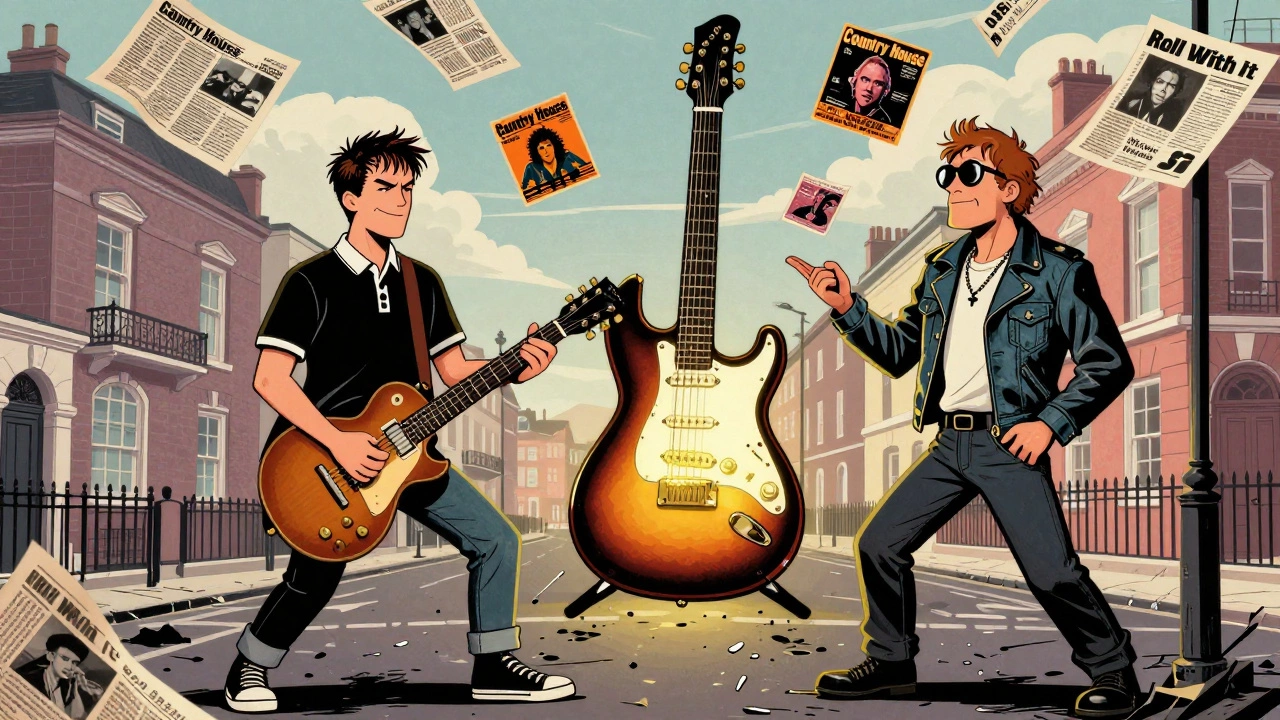

On August 14, 1995, two singles hit UK record shops at the same time. One was Blur’s "Country House," a cheeky, jangly tune about a rich man fleeing the city for a country estate. The other was Oasis’s "Roll With It," a swaggering anthem of working-class pride and stubborn resilience. Neither band expected it to become a national event. But by the end of the week, over half a million people had bought one or the other. And Britain didn’t just listen-it picked a side.
The Rivalry Wasn’t Just Music, It Was Identity
Blur came from London. Damon Albarn, Graham Coxon, Alex James, and Dave Rowntree were university grads who quoted British pop art and wore Fred Perry polos. They made music that sounded like the Kinks and The Jam, but with a dry, ironic twist. To many, they were the smart kids in the back of class-clever, a little pretentious, maybe a little out of touch. Oasis, on the other hand, were from Manchester. Liam Gallagher’s voice cracked with raw emotion. Noel Gallagher wrote songs that felt like anthems carved into stone. Their look? Denim, leather jackets, and a permanent sneer. They didn’t care about art school. They cared about loud guitars, big choruses, and telling the truth-even if it was ugly. This wasn’t just a band rivalry. It was North vs. South. Working class vs. middle class. Grit vs. style. And when Blur’s label suddenly moved "Country House" to drop on the same day as "Roll With It," it wasn’t just a marketing move-it was a declaration of war.The Chart Battle That Made the News
The week before the release, newspapers ran headlines like "Britpop Showdown: Who Will Win?" TV news anchors talked about it. Even the BBC’s main evening bulletin covered the upcoming chart clash. People didn’t just buy singles-they debated them at work, at pubs, in schoolyards. Blur’s label, Food Records, released two versions of "Country House"-one with live tracks, another with remixes. They wanted to boost sales. Oasis, meanwhile, stuck to one simple CD single. No gimmicks. Just the song and a live B-side. Their fans didn’t need options. They just needed to show up. On August 20, 1995, the Official Charts Company released the results. Blur sold 274,000 copies. Oasis sold 216,000. Blur won the battle. By 58,000 copies. But here’s what nobody expected: the celebration was awkward. At the Top of the Pops performance, Blur’s bassist Alex James wore an Oasis T-shirt. Not as a peace offering-as a middle finger. Guitarist Graham Coxon looked like he wanted to be anywhere else. Later, at a party in Soho, he got so drunk he thought about jumping out a window.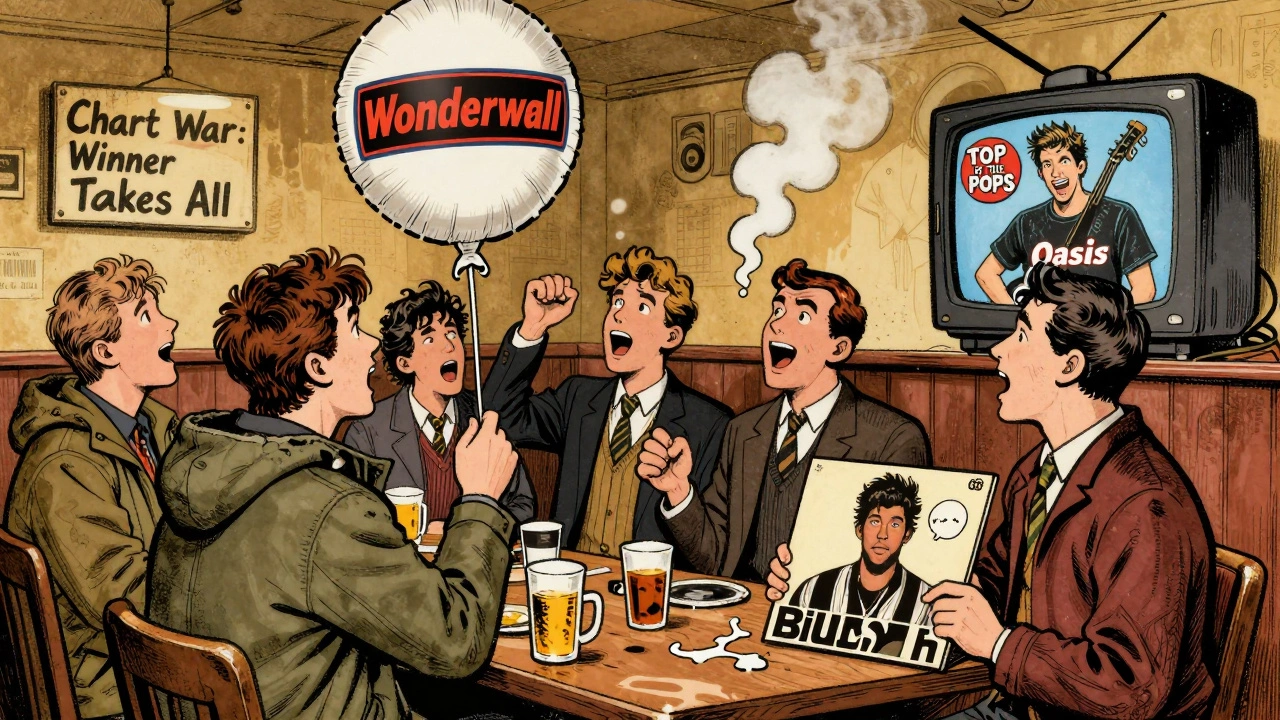
Then Came the Album War
Blur’s victory felt hollow by October. Oasis dropped (What’s The Story) Morning Glory? on October 2, 1995. It wasn’t just an album. It was a cultural earthquake. "Wonderwall," "Champagne Supernova," "Don’t Look Back in Anger"-these weren’t songs. They were rituals. People sang them at football matches. They played them at weddings. They cried to them. The album hit No. 1 in the UK and stayed there for 10 weeks. It sold over 4 million copies in Britain alone. Worldwide? More than 20 million. It’s still one of the best-selling albums in UK history. Blur’s follow-up, The Great Escape, came out just a week earlier. It sold over a million copies. Triple platinum. But it didn’t feel like a triumph. It felt like a reaction. The songs were clever, but they didn’t stick. No one sang "The Ballad of the Mighty I" at a pub. No one got married to it.Who Really Won?
Blur’s bassist Alex James summed it up perfectly: "Blur won the battle. Oasis won the war. Then Blur went on to win the whole campaign." What did he mean? Blur won the one-week chart fight. But Oasis won the hearts of a generation. "Roll With It" faded. "Wonderwall" didn’t. Oasis played two shows at Knebworth in 1996. Four percent of the entire UK population applied for tickets. That’s 1.7 million people trying to get in. No band before or since has come close. Blur, meanwhile, started changing. Their next album, 13, sounded nothing like Britpop. It was moody, experimental, influenced by American alt-rock like Pavement and Beck. They didn’t want to be the voice of a movement anymore. They wanted to be something else. Oasis didn’t change. They doubled down. And that’s why, 30 years later, you still hear "Wonderwall" in every karaoke bar in the UK. You still see Oasis hoodies in Manchester. You still hear people argue about whether Liam’s voice is genius or just loud.