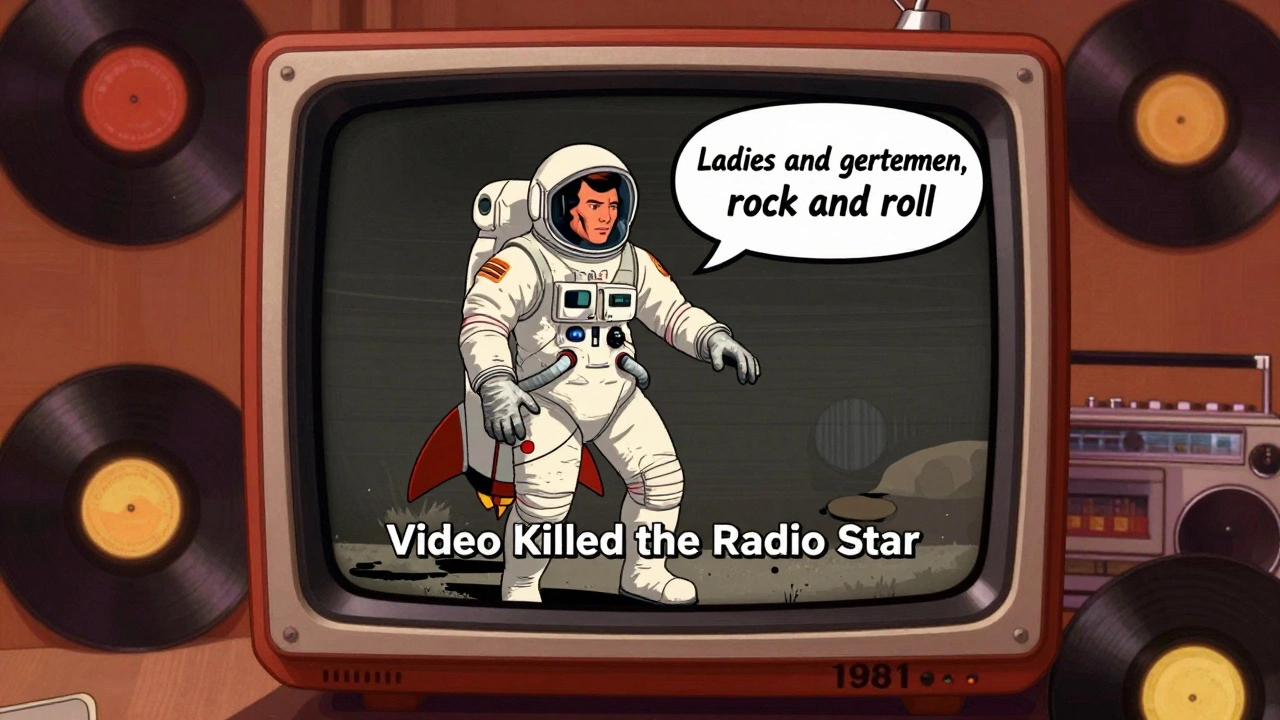

On August 1, 1981, at exactly 12:01 a.m., a man in a spacesuit stepped out of a rocket on a screen and said, "Ladies and gentlemen, rock and roll." Then came the first music video ever aired on MTV: "Video Killed the Radio Star" by the Buggles. That moment didn’t just launch a TV channel - it changed how the world heard music.
Before MTV, you had to wait for radio DJs to play a song, or hope a music video showed up on a late-night TV special. But MTV turned music into a visual experience. It didn’t just play songs - it told stories, built stars, and made you feel like you were part of something new. And at the heart of it all were the VJs, the countdown shows, and the way videos were chosen to air.
The VJs: More Than Just Hosts
MTV didn’t hire announcers. It hired personalities. The original five VJs - Nina Blackwood, Mark Goodman, Alan Hunter, J. Jackson, and Martha Quinn - weren’t just reading scripts. They were young, energetic, and relatable. They talked like your friend who knew every lyric. They laughed at awkward video moments, made fun of bad haircuts, and got excited about new releases like you would.
Nina Blackwood, with her punky style, introduced heavy metal bands. Mark Goodman brought a sharp, sarcastic edge that made rock fans nod along. Martha Quinn had this warm, girl-next-door vibe that made viewers feel like she was talking just to them. These weren’t TV stars from Hollywood. Most of them had worked in college radio. That authenticity was key. People trusted them because they sounded like real people who loved music as much as the viewers.
By 1983, MTV’s VJs were becoming celebrities. They appeared on magazine covers, got fan mail, and even had their own merchandise. When Martha Quinn left in 1986, fans wrote letters. When she came back in 1989, it felt like a homecoming. The VJs weren’t just introducing videos - they were the glue holding the whole channel together.
How the Countdown Shows Worked
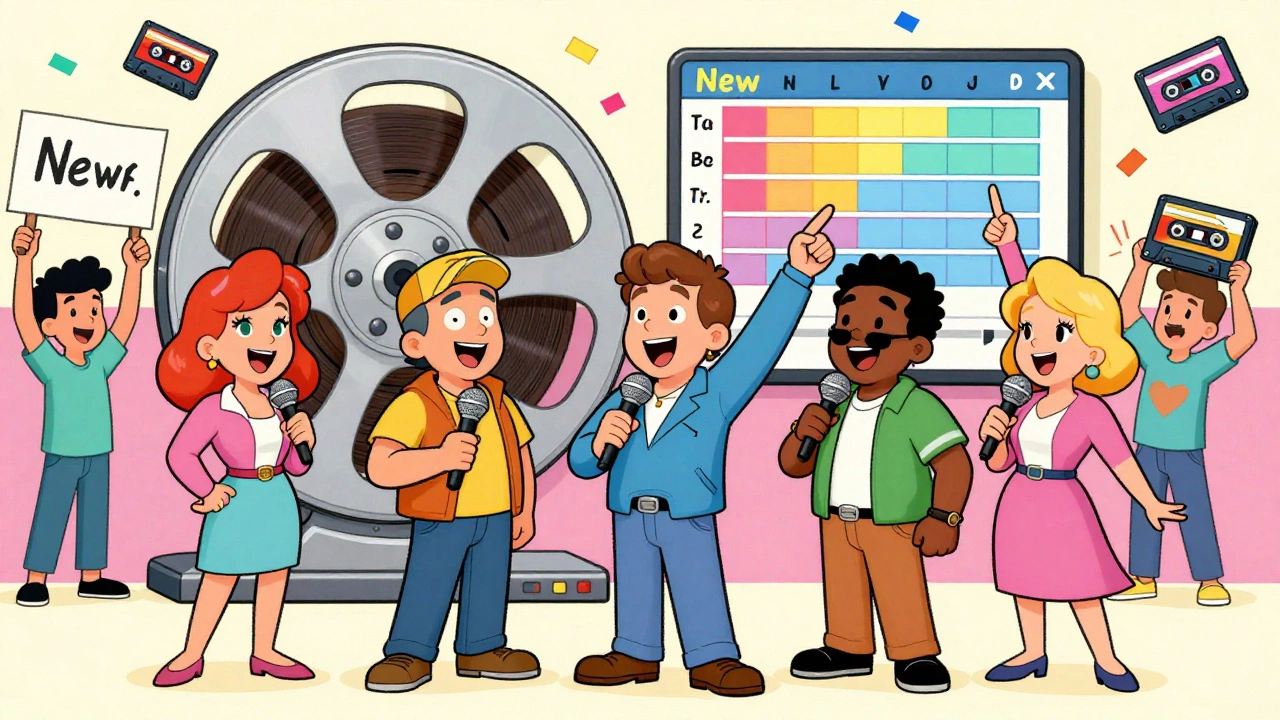
MTV didn’t play videos randomly. It had a system - strict, cold, and brutally effective. In 1984, the network switched from three rotation categories to seven: New, Light, Breakout, Medium, Active, Heavy, and Power.
"New" was for videos that had just been submitted. If a label pushed hard enough, a video could jump into "Breakout" - meaning it was gaining traction. "Medium" was the sweet spot for songs climbing the charts. "Heavy" meant you were getting played every hour. "Power"? That was reserved for the biggest hits - the ones that were breaking records.
This system didn’t just reflect popularity - it created it. If a video landed in Heavy rotation, sales would spike. Record labels started making music videos not just as afterthoughts, but as essential marketing tools. A single video in Heavy rotation could turn an unknown band into a household name. Def Leppard’s "Photograph" didn’t just get airplay - it exploded because MTV kept playing it. Same with Culture Club’s "Karma Chameleon."
The countdowns weren’t just rankings - they were events. Viewers waited for Friday night to see which video had climbed, which had fallen, and which had vanished entirely. If your favorite song dropped out of Heavy rotation, you might call the network. People cared that much.
The First Video Premieres
Before YouTube, before Vevo, before TikTok - MTV was the only place to see a brand-new music video. And when a video premiered, it wasn’t just a broadcast. It was a cultural moment.
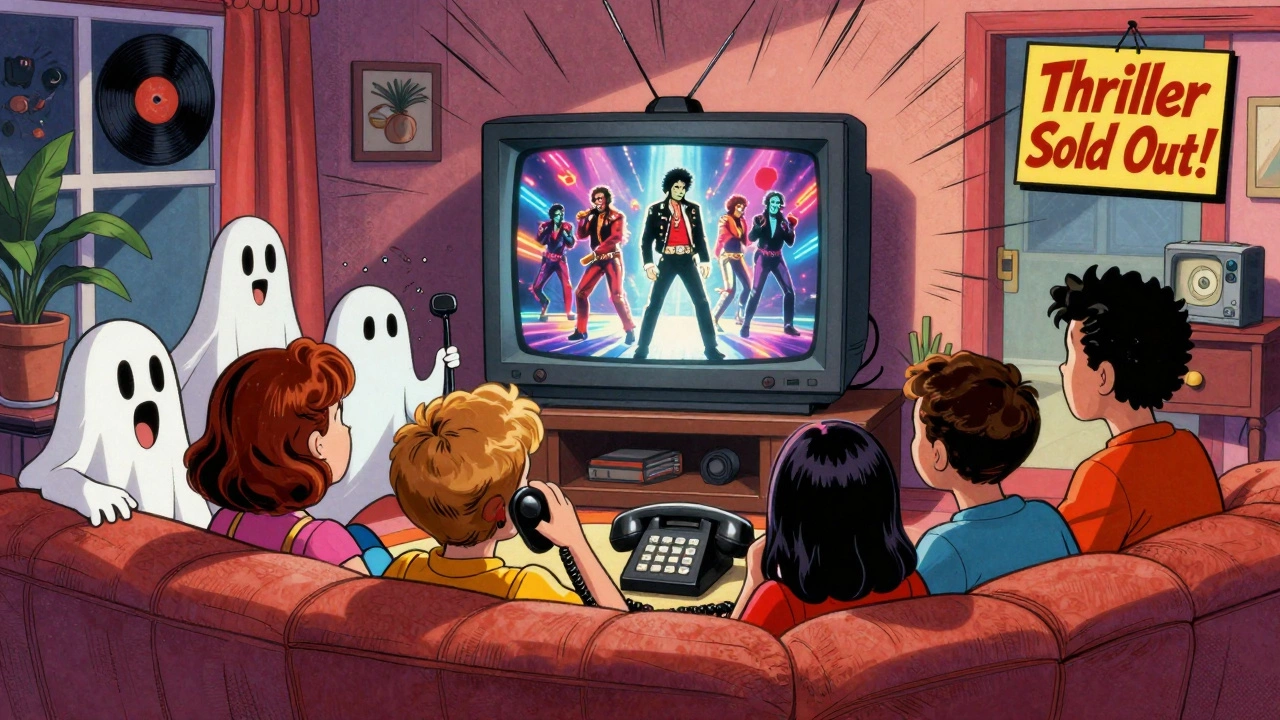
Michael Jackson’s "Thriller" in 1983 was the first true blockbuster premiere. It wasn’t just a video - it was a short film. MTV aired it twice on the same day. The network stayed on the air for hours afterward, replaying behind-the-scenes footage and interviews. Sales of the "Thriller" album jumped 500% in the next week. Record companies took notice. Suddenly, every major artist needed a cinematic video.
MTV didn’t just play videos - they built anticipation. They’d tease upcoming premieres with countdowns, posters, and VJ hype. "This Friday, see the first look at Madonna’s new video." That kind of promotion made viewers feel like insiders. You weren’t just watching TV - you were part of the music industry’s secret club.
Even Weird Al Yankovic got in on the action. MTV aired his parodies as official premieres. "Eat It," his take on Michael Jackson’s "Beat It," got the same treatment as the original. That told viewers: this isn’t just comedy - this is music culture too.
Who Got Played - And Who Didn’t
MTV’s early years weren’t perfect. In fact, they were deeply flawed. For the first two years, the network rarely played videos by Black artists. The excuse? "Our audience doesn’t want it." But that wasn’t true. SuperStation WTBS’s Night Tracks was already playing videos by Prince, Donna Summer, and Herbie Hancock - and getting huge ratings.
Then came "Billie Jean." Michael Jackson’s label threatened to pull all his videos if MTV didn’t play it. MTV caved. And once they did, they couldn’t stop. "Beat It," "Thriller," "Wanna Be Startin’ Somethin’" - they all got heavy rotation. Suddenly, the door was open. By 1985, videos by Lionel Richie, Whitney Houston, and Run-D.M.C. were in regular rotation.
But hip-hop still faced resistance. MTV claimed the lyrics were "too aggressive." It wasn’t until 1986, after "Walk This Way" by Run-D.M.C. and Aerosmith broke through, that the network fully embraced rap. That video didn’t just cross genres - it shattered them. Rock fans and hip-hop fans watched together. MTV had to admit: their audience was bigger than they thought.
Music, Movies, and Messages
MTV didn’t just promote music - it promoted movies. Flashdance in 1983 was the first film to use MTV as a launchpad. The studio sent over the video for "Maniac," and MTV played it nonstop. The movie made $100 million. After that, every studio wanted in. The soundtrack for Top Gun? MTV turned "Take My Breath Away" into a chart-topper. The network became a marketing machine for Hollywood.
But MTV also took responsibility. When AIDS hit in the mid-80s, MTV didn’t stay quiet. They ran PSA campaigns. VJs talked directly to the camera: "Use a condom. Talk to your partner. Don’t assume." They didn’t preach. They talked like friends. The campaign, called "It’s Your Sex Life," started in 1985 and is still running today.
They also banned videos with satanic imagery after pressure from the Parents Music Resource Center. That wasn’t censorship - it was strategy. MTV knew controversy sold, but they also knew they needed to keep parents from turning off the channel.
The Legacy
By 1989, MTV had changed everything. Music wasn’t just heard - it was seen. Artists weren’t just singers - they were visual storytellers. Record labels didn’t just sign acts - they built video budgets. Fans didn’t just buy albums - they waited for premieres.
The VJs were gone by then. Nina Blackwood had moved on. Martha Quinn was back, but only part-time. The original crew had passed the torch. But their influence stayed. The way videos were chosen, the way they were introduced, the way fans argued over which song should be in Heavy rotation - all of it came from those early years.
MTV didn’t invent music videos. But it turned them into a national obsession. It made the countdown a ritual. It made the premiere an event. And it proved that a channel built on 3-minute clips could change the world.


