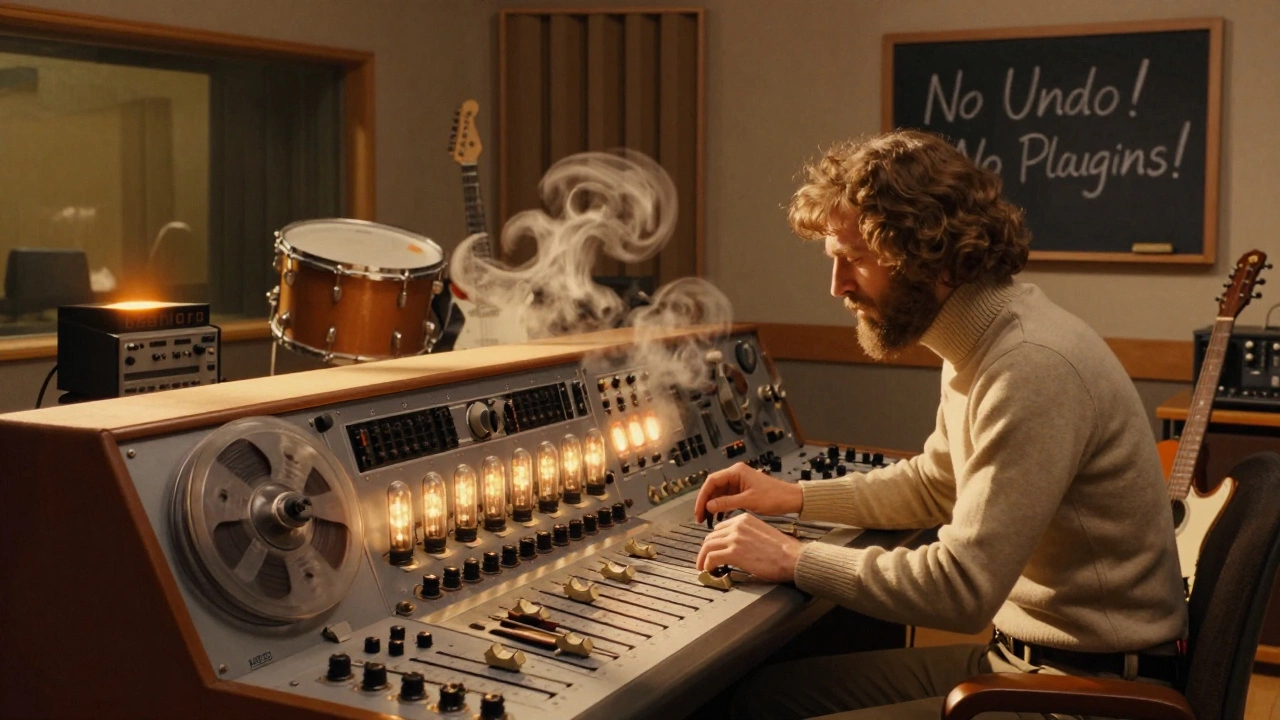

When you hear a classic 1970s album-whether it’s Led Zeppelin’s Physical Graffiti, Fleetwood Mac’s Rumours, or Pink Floyd’s The Dark Side of the Moon-you’re not just hearing music. You’re hearing a carefully crafted analog process that had almost no room for mistakes. Unlike today’s digital workflows, where you can undo, automate, and tweak endlessly, 1970s engineers worked with physical tape, limited tracks, and gear that couldn’t be replaced overnight. There was no “save as” button. No unlimited undo. No plugin presets. Every decision stuck. And that’s why these records still sound so alive.
The Gear That Defined the Sound
There was no such thing as a home studio in the early 1970s. Recording equipment was massive, expensive, and required serious training to operate. Studios didn’t just have tape machines-they had Helios consoles, which became legendary after being used on albums by the Rolling Stones, Led Zeppelin, and Deep Purple. These consoles weren’t just mixers; they were tone-shaping instruments. Their EQs were broad and musical, not surgical. A 1970s engineer didn’t cut 3 kHz to fix mud-they boosted the mids slightly and let the tape do the rest.
Tape machines ran at 15 inches per second (ips), using formulations like EMITAPE 815. This wasn’t just a technical spec-it defined the saturation. When you pushed a signal into tape, it didn’t clip like digital. It sang. It softened transients, added warmth, and gently compressed the sound. Engineers learned to ride levels to keep tape distortion just below the edge of noise. Too quiet, and you got hiss. Too loud, and the tape would melt. It was a balancing act that required years of experience.
How Mixing Was Done-No Plugins, No Recall
Modern mixes have dozens of tracks. 1970s mixes often had 24 tracks-but you couldn’t use them all at once. If you wanted to add a second guitar part, you had to bounce down existing tracks to free up space. Bouncing meant copying audio from one tape machine to another. Each bounce added noise, reduced high-end, and degraded the signal. That’s why engineers were careful. They didn’t layer six guitars. They layered two, perfectly panned, with space between them.
Reverb? Rare. Plate reverb was the only go-to for vocals. You’d hear it on Stevie Nicks’ voice on “Landslide,” or Robert Plant’s howls on “Stairway to Heaven.” But it was controlled. No cavernous halls. No long decays. Just a short, shimmering tail that sat just behind the voice. Most mixes were surprisingly dry. That’s why the drums on “Fool in the Rain” punch so hard-they’re not drenched in reverb. They’re dry, tight, and punchy.
Compression was used, but sparingly. The dbx 160 compressor became a staple for snare drums and bass. It didn’t smooth-it slammed. It gave drums that punchy, aggressive crack that still defines rock records today. Gating? Almost nonexistent. You didn’t gate a snare to kill bleed-you used mic placement, tape saturation, and level riding to control it.
The Art of Double-Tracking
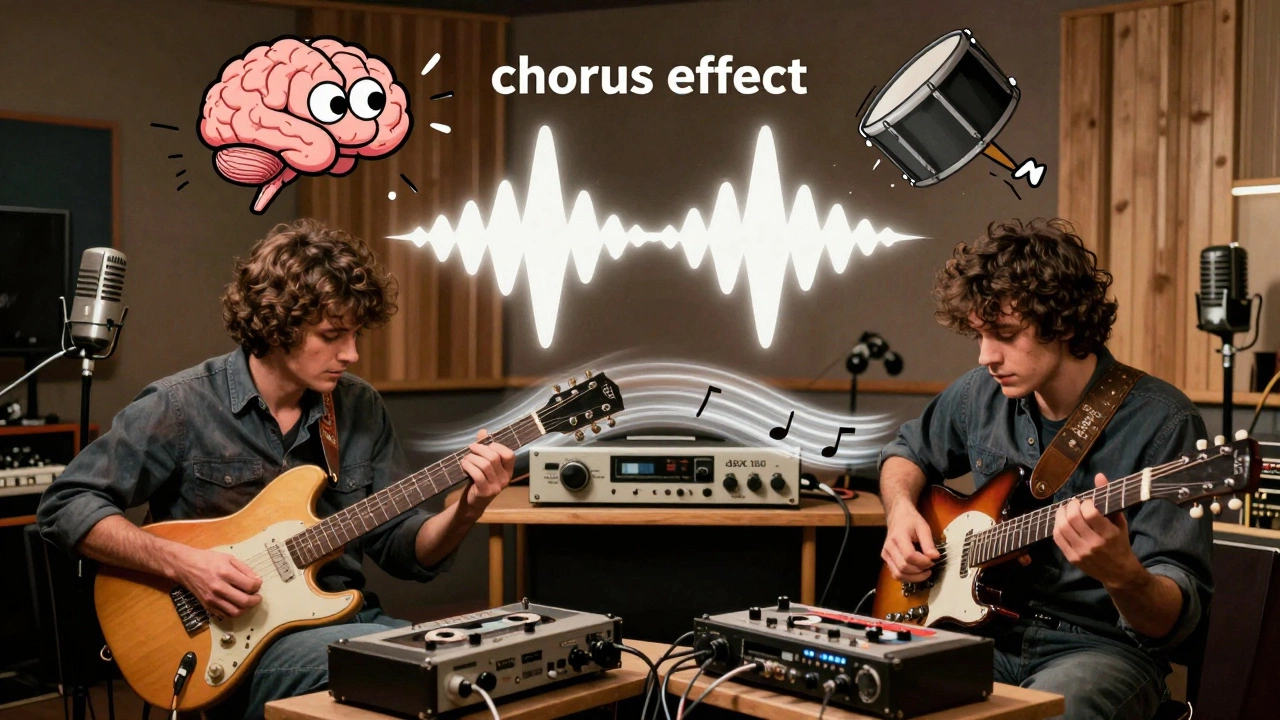
One of the most defining techniques of 1970s production was double-tracking. Not just doubling vocals-doubling guitars, bass, even keyboards. The goal wasn’t thickness. It was presence. When you heard two slightly different performances of the same part, it created a subtle chorus effect. The brain couldn’t pin it to one source. It felt bigger.
Abba’s engineer Michael B. Tretow took this further. He didn’t just record two takes. He ran one tape machine slightly faster than the other, then slowed it down during playback. The result? A shimmering, almost robotic chorus that made “Dancing Queen” feel like it was floating. This wasn’t auto-tune. It was analog magic.
Artificial Double Tracking (ADT) was another trick. Developed by Ken Townsend at Abbey Road, it used two tape machines synced together, with one delayed by a few milliseconds. The Beatles used it on “Tomorrow Never Knows,” but it exploded in the 1970s. Bands like the Bee Gees and Queen used it on every vocal. You can hear it in the opening of “Stayin’ Alive”-two voices, not one, but not quite a choir. Just right.
Mastering Wasn’t About Loudness-It Was About Transfer
Mastering in the 1970s wasn’t a creative stage. It was a transfer process. The goal wasn’t to make the record louder than everyone else. It was to make sure it cut cleanly onto vinyl.
Engineers used the Abbey Road TG12410 console for mastering. It had a simple EQ section-broad, gentle curves. No aggressive shelf boosts. No brick-wall limiting. If the mix had too much low end, they’d roll off 100 Hz. If it was too bright, they’d dip 8 kHz. That was it. The mastering engineer didn’t “fix” the mix. They respected it.
Dynamic range was king. You could hear the quiet parts. You could hear the breath before a vocal. The vinyl cutting lathe needed space. If you crammed too much level in, the needle would jump. So engineers left headroom. Albums like “Hotel California” or “The Wall” didn’t sound loud-they sounded alive.
Why 1970s Sound Still Matters Today
Today, plugins like Waves’ Kramer HLS Channel and J37 Tape are used by producers to recreate 1970s mixes. Why? Because modern digital mixes often sound too clean. Too perfect. Too flat. The 1970s sound has warmth, movement, and character-not because it was flawed, but because it was human.
Modern producers are rediscovering the value of constraints. Limited tracks. No recall. Tape saturation. Analog consoles. These aren’t nostalgic quirks-they’re production philosophies. The 1970s taught engineers to make every choice count. To trust their ears over meters. To let the tape breathe.
And that’s why, in 2026, indie rock bands are still recording to 8-track tape. Why studios are buying vintage Helios consoles for $50,000. Why the EMITAPE 815 setting in tape plugins gets more clicks than any other preset. The 1970s didn’t just make music-they made a sound that still moves people. Not because of technology. But because of care.
How to Recreate a 1970s Mix Today
- Keep it dry. Use plate reverb only on vocals. Avoid room mics on drums unless you want a tight, live feel.
- Double-track everything. Record two takes of guitars, vocals, and even bass. Don’t pan them dead center. Leave space.
- Use analog emulation. Try the Kramer HLS Channel on your mix bus. It models the Helios EQ and saturation perfectly.
- Apply tape saturation. Use the J37 Tape plugin with the EMITAPE 815 setting. Run it at 15 ips. Don’t overdo it-just enough to glue the mix.
- Master gently. Use the Abbey Road TG Mastering Chain. Apply broad EQ. No limiting. Leave 1-2 dB of headroom.
- Use delay. Try a bucket brigade delay (like H-Delay’s lo-fi mode) on snare or guitar. It’s not digital. It’s lo-fi, warm, and slightly messy.
- High-pass everything. Cut below 80-100 Hz on non-bass instruments. This was standard practice in the 1970s. It cleaned up mud without EQ.
Why were 1970s mixes so clean despite limited technology?
The cleanliness came from careful mic placement, minimal processing, and the natural compression of analog tape. Engineers didn’t rely on plugins to fix problems-they prevented them. High-pass filtering, strategic panning, and tape saturation all helped create separation without clutter. A 1970s mix might have only 24 tracks, but each one had space, purpose, and sonic clarity.
Can you really replicate 1970s sound with modern plugins?
Yes, but only if you understand the philosophy behind the sound. Plugins like Waves’ Kramer HLS Channel and J37 Tape accurately model the gear. But just slapping them on a mix won’t work. You need to mix like a 1970s engineer: fewer tracks, more intention, less processing. The plugins are tools, not magic. The real secret is restraint.
Why was mastering so simple in the 1970s?
Because mastering was treated as a transfer, not a creative stage. The goal was to cut a clean vinyl master, not to make the record louder than others. Engineers used gentle EQ and avoided limiting. If the mix was good, mastering just preserved it. Loudness wars didn’t start until the 1990s. In the 1970s, dynamics were respected.
What’s the biggest mistake modern producers make when trying to emulate 1970s mixes?
Over-processing. They add too much reverb, compression, and saturation, thinking more is better. But 1970s engineers did the opposite. They used less. They trusted the source material. They let tape do the work. The best modern 1970s-style mixes are often the ones with the fewest plugins.
Did 1970s engineers use automation?
No. Automation didn’t exist. Engineers moved faders by hand. They rode levels during playback. A snare hit might be turned down manually to keep it from peaking. A vocal might be faded up as it entered. This made every mix unique. It also meant you couldn’t recall a mix exactly. If you wanted to tweak it later, you had to re-mix from scratch.