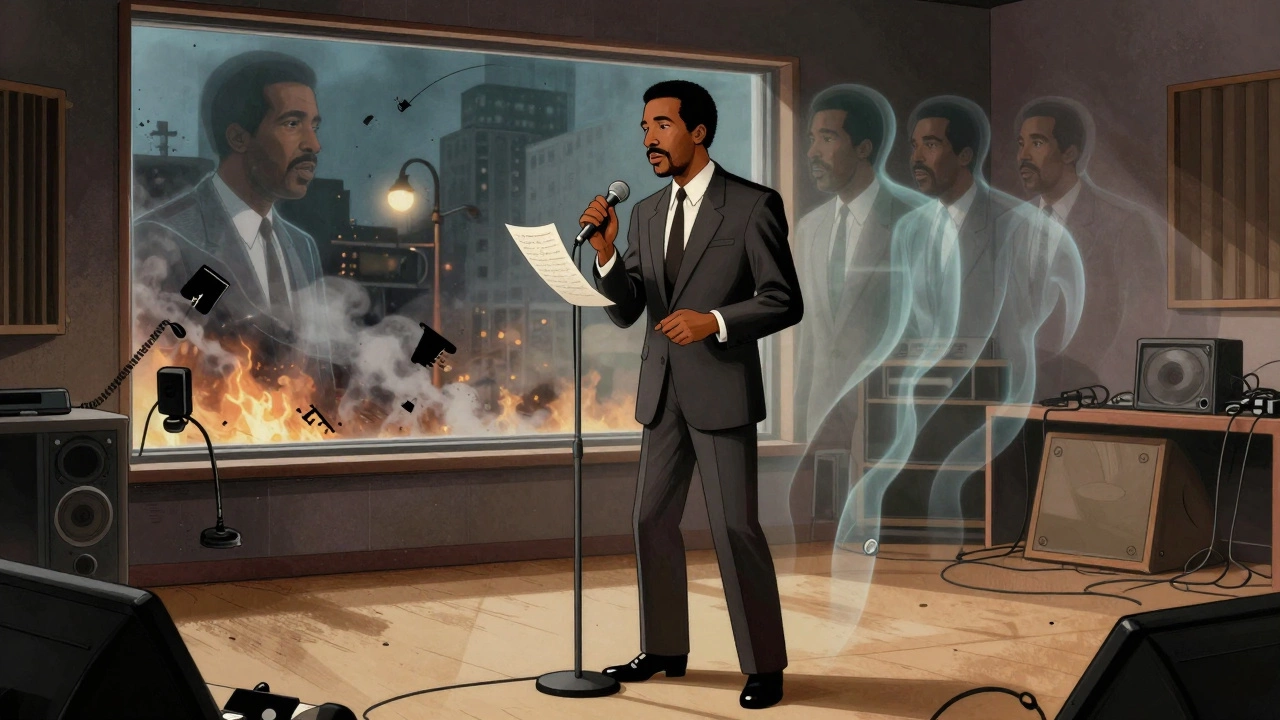

The year was 1971. America was burning. Soldiers came home from Vietnam in body bags. Cities choked on pollution. Poor families in Detroit and Harlem couldn’t afford food. And in the middle of it all, Marvin Gaye made an album that didn’t scream - it whispered. What's Going On wasn’t just a record. It was a conversation. A prayer. A mirror held up to a nation that didn’t want to see itself.
Before this album, Marvin Gaye was known for love songs. "I Heard It Through the Grapevine." "Ain't That Peculiar." Sweet, smooth, radio-ready R&B. Motown Records had built its empire on that formula: clean vocals, tight arrangements, no politics. But after his singing partner Tammi Terrell died in 1970 - after a long, painful battle with a brain tumor - Gaye didn’t just grieve. He transformed. He saw the world through new eyes. And he refused to sing about love when the world was falling apart.
The spark came from a friend. Renaldo "Obie" Benson of the Four Tops had been at an anti-war protest in Berkeley. He watched police beat unarmed demonstrators. When he told Gaye what he’d seen, Gaye didn’t get angry. He asked: "What’s going on?" That question became the heartbeat of the entire album. Not a slogan. Not a protest chant. A question. A real, trembling, human question.
And then he made the album no one wanted.
Motown founder Berry Gordy called the title track "the worst thing I ever heard." He thought it was too slow. Too quiet. Too serious. No catchy hook. No dance beat. Just Gaye’s voice, layered over and over, like a choir of one man. He recorded it in just ten days at Hitsville U.S.A., singing through a cardboard tube to get that raw, intimate sound. He used up to 15 vocal tracks on a single song - something no one had ever tried on an 8-track machine. The basslines? James Jamerson, playing like he was telling a story. The drums? Soft, brushed, like footsteps in the dark. The horns? Gentle, mournful, like a church bell at dusk.
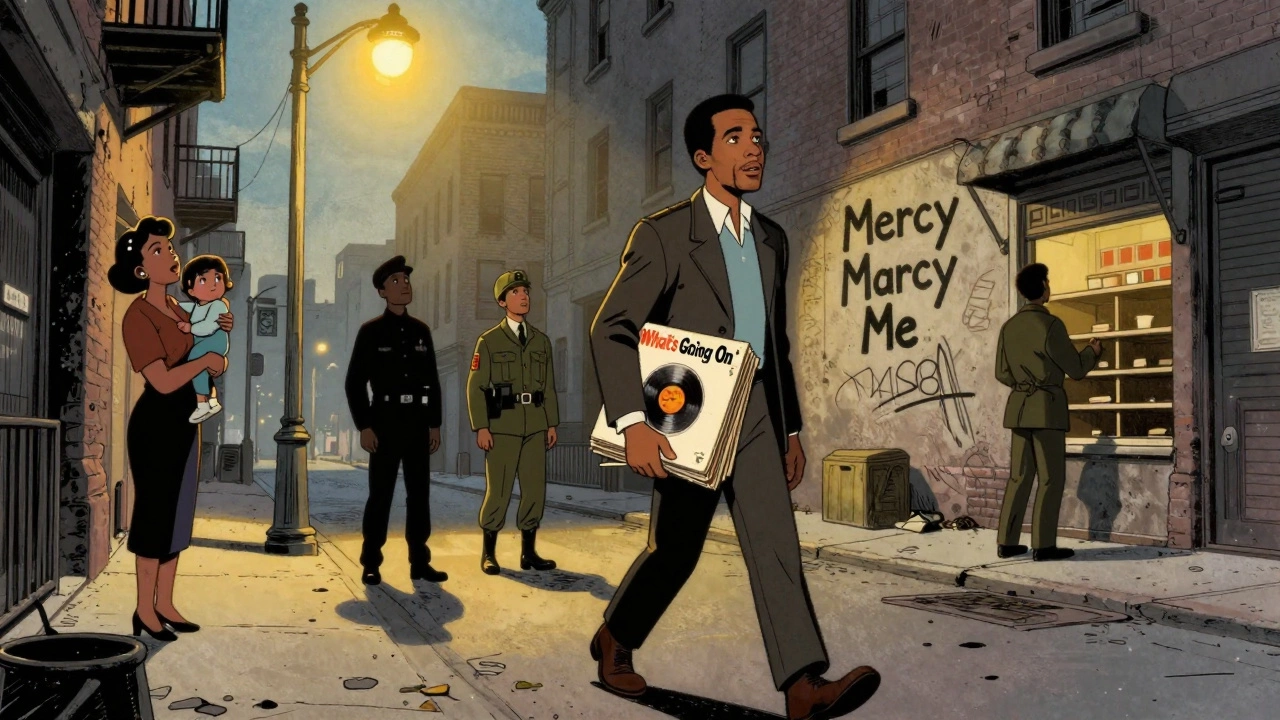
And then he did something unthinkable. He released the song himself - on his own label - and dared Motown to ignore it. The public didn’t. "What's Going On" climbed to number two on the R&B chart. Then came "Mercy Mercy Me (The Ecology)." A song about oil spills and smog, written before climate change was a household phrase. "The air is so dirty, it hurts my lungs," Gaye sang. People didn’t expect that from a soul singer. But they listened.
Then came "Inner City Blues (Make Me Wanna Holler)." A six-minute portrait of urban poverty. "115 degrees in the summertime," he crooned. "Twenty-five cents for a can of beanz." You could hear the sweat on the pavement. The desperation in the air. The album didn’t have singles. It had scenes. One song flowed into the next like a single breath. No breaks. No silence. Just the sound of a man trying to make sense of a broken world.
It wasn’t angry like James Brown’s "Say It Loud" or Edwin Starr’s "War." Those songs shouted. Gaye’s album wept. He didn’t demand justice. He asked for understanding. "Mother, mother, there’s too many of you crying," he sang. Not "Fight back." Not "Burn it down." Just: "Look. Look at what’s happening."
The result? The album spent five weeks at number one on the R&B chart. It reached number six on the pop chart. It sold over two million copies in its first year. And it changed everything.
Before What's Going On, no Black artist had ever been allowed to make a political album this personal, this poetic, this beautiful. Motown had rules: no politics. No controversy. No discomfort. Gaye broke those rules - and the label had to follow. Within two years, Stevie Wonder was making "Innervisions," a concept album about racism, addiction, and spirituality. And Marvin Gaye? He became the blueprint.
Today, when Kendrick Lamar says "To Pimp a Butterfly" was inspired by Gaye’s album, it’s not just a tribute. It’s a lineage. When D’Angelo sings about systemic pain, he’s echoing Gaye’s harmonies. When H.E.R. asks "Where are we going?" - she’s answering the same question Gaye asked in 1971.
And it’s still relevant. In January 2026, Apple Music showed 4.8 out of 5 stars from over 2,100 reviews. Spotify had 4.9. Reddit threads in r/Music from May 2025 said things like: "This album was made for 2025." "Mercy Mercy Me" sounds like it was written yesterday. The lyrics about oil on the ocean? The air pollution? The kids without food? They’re still true.
Music historians now call it the most important soul album ever made. Rolling Stone ranked it number one on their "500 Greatest Albums of All Time" list in 2020. The Library of Congress saved it for the National Recording Registry in 2003. Harvard just finished digitizing every original tape, every handwritten lyric, every studio note. It’s not just music. It’s a historical document.
But here’s the thing people forget. Marvin Gaye wasn’t a street activist. He wasn’t poor. He lived in a mansion. He flew first class. Critics like Zara Flack pointed out: "He had the privilege to escape the icy wind." And maybe that’s true. But that’s what made it powerful. He didn’t speak from the margins. He spoke from the center - and still chose to listen. He used his fame not to escape, but to echo.
There’s a moment on the album where you hear a snippet of conversation - friends on a street corner, laughing, then one of them softly asks: "What’s going on, brother?" That’s not studio magic. That’s real. Recorded live. A moment of quiet humanity in the middle of chaos. That’s the whole album in three seconds.
What’s going on? Still the same. Still the question. Still the song.
How Marvin Gaye Broke the Rules - and Changed Soul Music Forever
Motown was a factory. Artists were trained like athletes. Producers wrote the songs. Arrangers picked the instruments. Vocalists sang what they were told. No one got to produce their own album. No one got to choose the message.
Marvin Gaye changed that.
He walked into Berry Gordy’s office and said: "I’m making an album. I’m producing it. I’m writing it. And it’s about what’s happening in this country. If you don’t like it, don’t release it. I’ll put it out myself."
Gordy refused. So Gaye did it anyway. He recorded the tracks, paid for the studio time out of his own pocket, and pressed 500 copies of "What's Going On" under his own label. He handed them to DJs. He sent them to radio stations. He didn’t ask for permission. He just made it real.
When the song started climbing the charts, Gordy had no choice. He had to release the full album. And suddenly, Motown had its first politically charged record. It was a hit. And it opened the door.
After 1971, Motown signed artists who wrote about police brutality, poverty, and mental health. Stevie Wonder’s "Living for the City" came next. Diana Ross sang about urban decay. Even the Temptations started making albums with social themes.
Gaye didn’t just make an album. He rewrote the contract between artist and label. He proved that Black artists didn’t need to be sanitized to sell. They just needed to be honest.
The Sound That Changed Everything
Most soul records in 1971 had three chords. A verse. A chorus. A bridge. Done in three minutes.
"What's Going On" had 27 chord changes in the title track alone. It moved like jazz. It breathed like poetry. The bass didn’t just keep time - it sang. The drums didn’t just beat - they whispered. The horns didn’t just play - they sighed.
Engineer Ken Sands recorded Gaye’s voice so close to the mic you could hear his breath between lines. You could hear the slight crack when he sang "brother, brother, brother." You could hear the pause before he said "Mercy mercy me." That wasn’t a mistake. That was the point.
He used street sounds - distant sirens, children playing, car horns - to create atmosphere. He didn’t add them in post. He recorded them live. He wanted you to feel like you were walking down the block with him.
And then there was the vocal layering. Gaye sang every harmony himself. On "What's Going On," he stacked 15 vocal tracks. On "Inner City Blues," he sang the lead, the backup, and the echo - all in one take. No choir. Just one man, singing like he was talking to God.
That’s why the album still sounds so alive today. It wasn’t produced. It was lived.
Why This Album Still Hits Hard in 2026
Look at the lyrics again.
- "Mother, mother, there’s too many of you crying." - That’s not just about Vietnam. That’s about parents burying children today from gun violence.
- "Oil wasted on the oceans and upon our seas." - That’s not 1971. That’s the Gulf Coast in 2025.
- "Twenty-five cents for a can of beanz." - That’s inflation. That’s food insecurity. That’s a parent choosing between medicine and groceries.
Marvin Gaye didn’t predict the future. He just named what was already there.
Today, when a mother posts a video of her son being chased by police - and it goes viral - people say: "What’s going on?"
When a city bans clean water initiatives because of "budget cuts," people say: "What’s going on?"
When a kid in Portland or Atlanta or Chicago says, "I don’t see a future," they’re singing the same line Gaye sang 55 years ago.
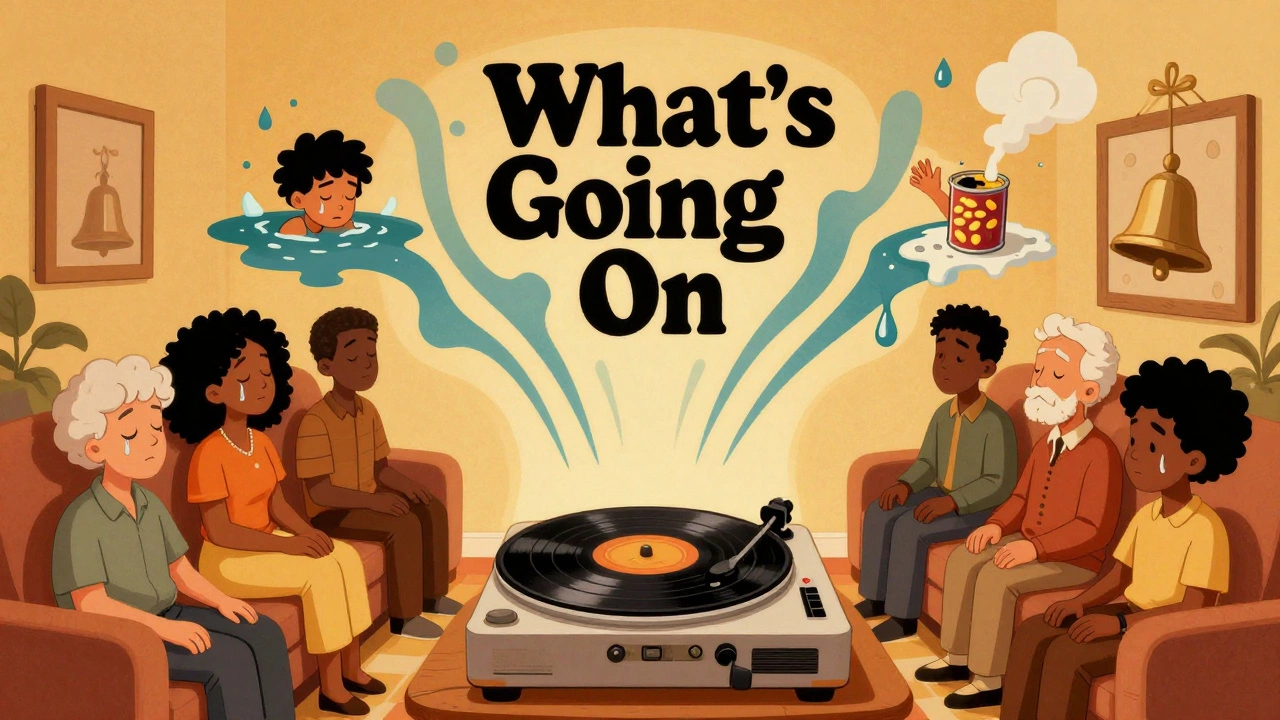
The album’s power isn’t in its politics. It’s in its humanity. It doesn’t tell you what to think. It asks you to feel.
What Made It Different From Other Protest Music
James Brown’s "Say It Loud" was a battle cry. Edwin Starr’s "War" was a scream. They were clear. Loud. Unmistakable.
Marvin Gaye was different. He didn’t say "stop the war." He said: "I don’t understand why."
He didn’t say "end racism." He said: "I see my brother crying."
He didn’t use slogans. He used silence. Pauses. Breath. A single note held too long.
That’s why it crossed over. White listeners who wouldn’t listen to a protest song sat down and listened to this. Because it didn’t feel like a protest. It felt like a prayer.
It was soul music - not because of the rhythm, but because of the soul behind it.
The Legacy: How One Album Shaped Decades of Music
Kendrick Lamar didn’t just say "What's Going On" inspired him. He built his entire album "To Pimp a Butterfly" on its DNA.
Same with D’Angelo’s "Black Messiah." Same with H.E.R.’s "I Can’t Breathe." Same with Anderson .Paak’s "Venture" - where he sings about police violence over a jazz-funk groove that could’ve been lifted from 1971.
These artists didn’t copy the sound. They copied the courage. The willingness to be vulnerable. To turn pain into beauty. To ask questions instead of giving answers.
Today, 92% of music historians say this album is essential to understanding 20th-century America. In 2005, it was 78%. The number is rising. Why? Because the questions are still unanswered.
"What's Going On" didn’t solve anything. But it made people listen. And that’s more powerful than any protest march.