
What Simulcasting Really Means Today
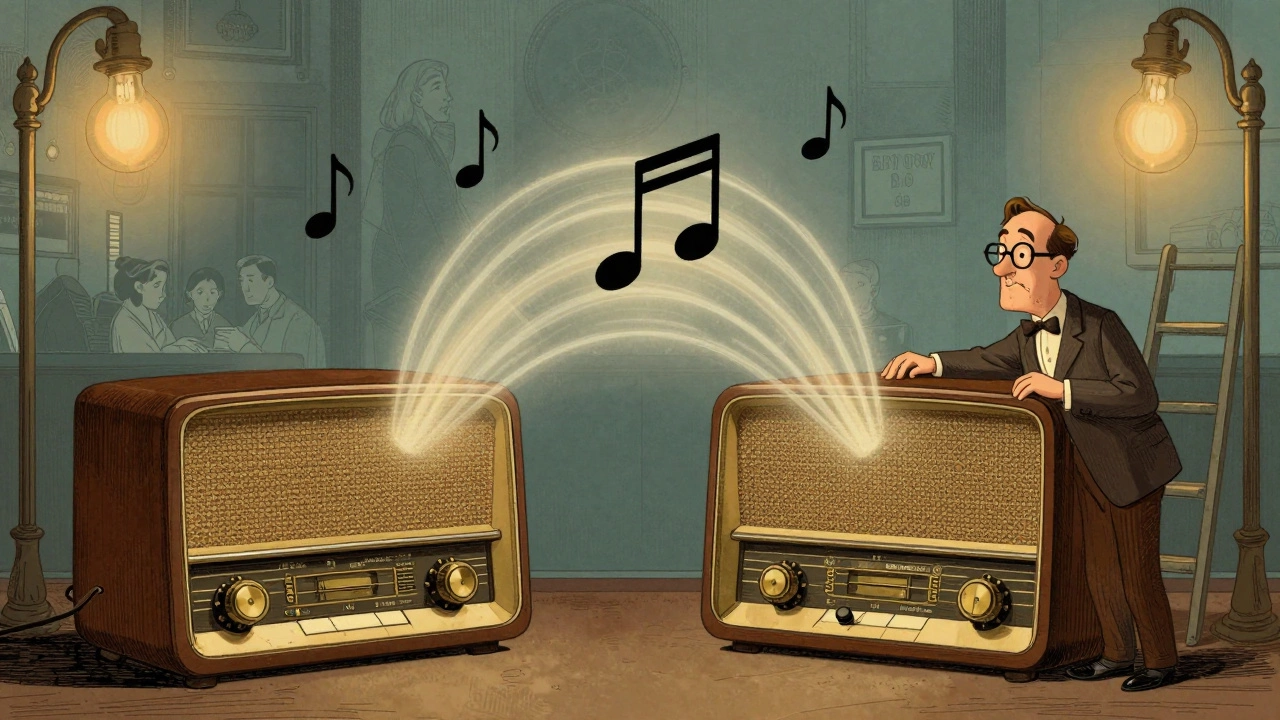
When you hear a concert on the radio while your friend watches it on TV at the exact same moment, you’re experiencing a simulcast. It’s not just radio and TV airing the same thing-it’s the same live event being sent out over multiple channels at once, with perfect timing. This isn’t new. Back in 1926, the BBC sent the same symphony performance over both medium and long-wave radio bands so listeners with two radios could hear a kind of early surround sound. That was the first real simulcast. Today, it’s more complex. A local news station might stream live on Facebook, YouTube, its website, and broadcast over AM/FM all at once. A jazz festival in Portland might be live on a public radio station, a YouTube channel, and a city-run app-all synced to the second.
Behind the scenes, this takes serious tech. The audio has to be encoded in MP3 or AAC, video in H.264 or H.265, and each platform needs a slightly different bitrate. YouTube might want 4,500 kbps for HD, while Facebook takes 2,000 kbps for mobile viewers. Tools like OBS Studio, StreamYard, or Restream handle all this automatically. But even the best software can’t fix bad internet. You need at least 10 Mbps upload speed to push a clean simulcast to three platforms without dropping frames or cutting audio. Small radio stations often struggle with this. One station in Eugene, Oregon, told me they upgraded their internet from 15 Mbps to 50 Mbps just to simulcast their morning show to their website and Facebook without lag.
Why Appointment Listening Still Matters
Simulcasting is about how you send the content. Appointment listening is about when you receive it. It’s the habit of tuning in at 8 p.m. because you know the news, the show, or the game is on. For decades, this was the only way to consume live media. Radio shows like The Lone Ranger in the 1930s built entire communities around fixed broadcast times. Families would gather around the radio. TV families did the same with Ed Sullivan or Happy Days.
Today, that habit is fading. Only 55% of radio listeners still tune in at scheduled times, down from 85% in 2000. On TV, just 35% of viewing is scheduled programming. But here’s the twist: appointment listening isn’t dead-it’s changed shape. People still show up live for big moments. The Super Bowl. A presidential debate. A surprise concert livestream. Nielsen found that 78% of Americans still watch major sports events live, even if they’ve ditched their cable box. The difference? Now they might watch on their phone, tablet, or smart TV, not the living room set. The ritual is still there. The screen just moved.
The Hidden Costs of Simulcasting
Setting up a simulcast sounds simple: hit one button, broadcast everywhere. But it’s not. For a small radio station, the real cost isn’t the software-it’s the licensing. In the U.S., playing music on a live stream means paying extra fees beyond traditional broadcast rights. The Copyright Royalty Board charges $0.0017 per stream for non-interactive digital radio. That doesn’t sound like much. But if your station streams 100,000 songs a month, that’s $170 just in royalties. Add in performance rights for artists, publishers, and labels, and some stations pay $300 to $800 extra per month. One community station in Bend, Oregon, had to cut its live music show in half just to stay under budget.
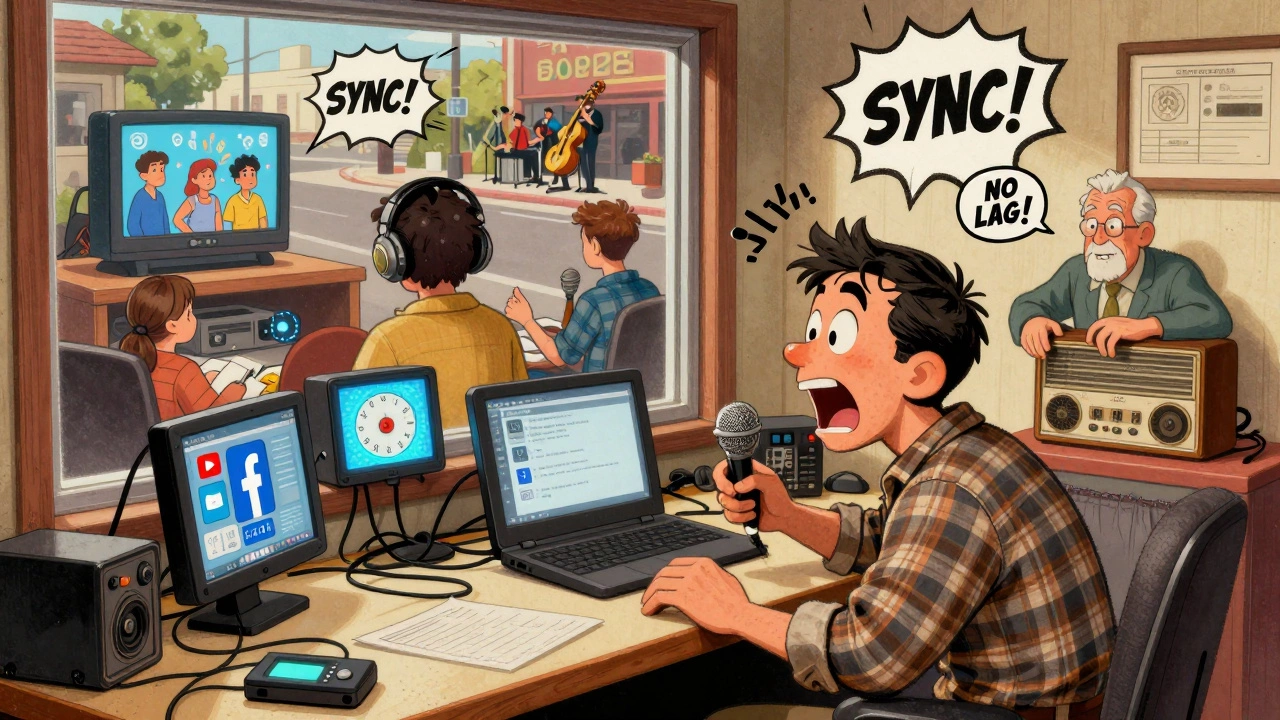
Then there’s the technical headache. Audio and video sync is a nightmare. If the video feed lags 3 seconds behind the radio feed, viewers on TV hear the drum hit before they see the drummer raise their stick. That’s jarring. Broadcast engineers call it “lip sync error.” It’s common in local sports simulcasts. One high school football broadcaster in Salem told me they spent three weeks tweaking delays before they got it right. Even then, during rain delays or commercial breaks, the audio sometimes drifts. It’s not perfect. And no one likes a bad sync.
What Works-and What Doesn’t
Not all simulcasts succeed. A 2021 study found that simulcasting traditional TV shows to social media platforms like Facebook or Instagram got 68% less engagement from viewers under 35 than native digital content. Why? Because they treated digital platforms like TV. No comments. No polls. No behind-the-scenes clips. Just a flat feed. Young audiences don’t want to watch a broadcast-they want to interact with it.
But when you adapt, it works. The BBC’s Proms concerts now stream to Radio 3, TV, and their Sounds app with audio synced within 5 milliseconds. They even added spatial audio for headphone listeners. Twitch’s Harry Styles concert in 2022 drew 27 million viewers because it wasn’t just a simulcast-it was a live event with real-time chat, fan shoutouts, and interactive visuals. That’s the future: simulcast as a base, but layered with digital engagement.
Tools like StreamYard and Restream make it easy for anyone to go live on multiple platforms. StreamYard users report reaching 3.2 times more viewers by broadcasting to YouTube, Facebook, and LinkedIn at once. But the best results come from creators who treat each platform differently. A podcast host might use YouTube for video, Spotify for audio-only listeners, and Instagram for 60-second clips. They’re not just broadcasting-they’re repurposing.
How to Start Simulcasting Without Overwhelming Yourself
You don’t need a $20,000 studio to simulcast. Here’s how to start small:
- Choose two platforms: Start with your radio station’s website and one social platform, like Facebook or YouTube.
- Use free or low-cost tools: OBS Studio is free. StreamYard offers a free plan for one platform. Restream’s free tier lets you go live on two channels.
- Test your internet: Run a speed test. You need at least 10 Mbps upload. If you’re under 5 Mbps, you’ll get buffering.
- Sync your audio: If you’re broadcasting video and audio separately, add a 1-2 second delay to the video feed. Use OBS’s audio delay feature.
- Check copyright: If you’re playing music, make sure you have digital performance rights. ASCAP, BMI, and SESAC can help you get licensed.
- Start with one live event: A weekly open mic night, a local band performance, or a community meeting. Keep it simple.
Most people who try this give up after two tries because they expect perfection. But simulcasting is about consistency, not polish. One church in Gresham started streaming Sunday services to YouTube and Facebook. First month: 12 viewers. Third month: 147. They didn’t change the content. They just showed up every week.
The Future: Simulcast Meets On-Demand
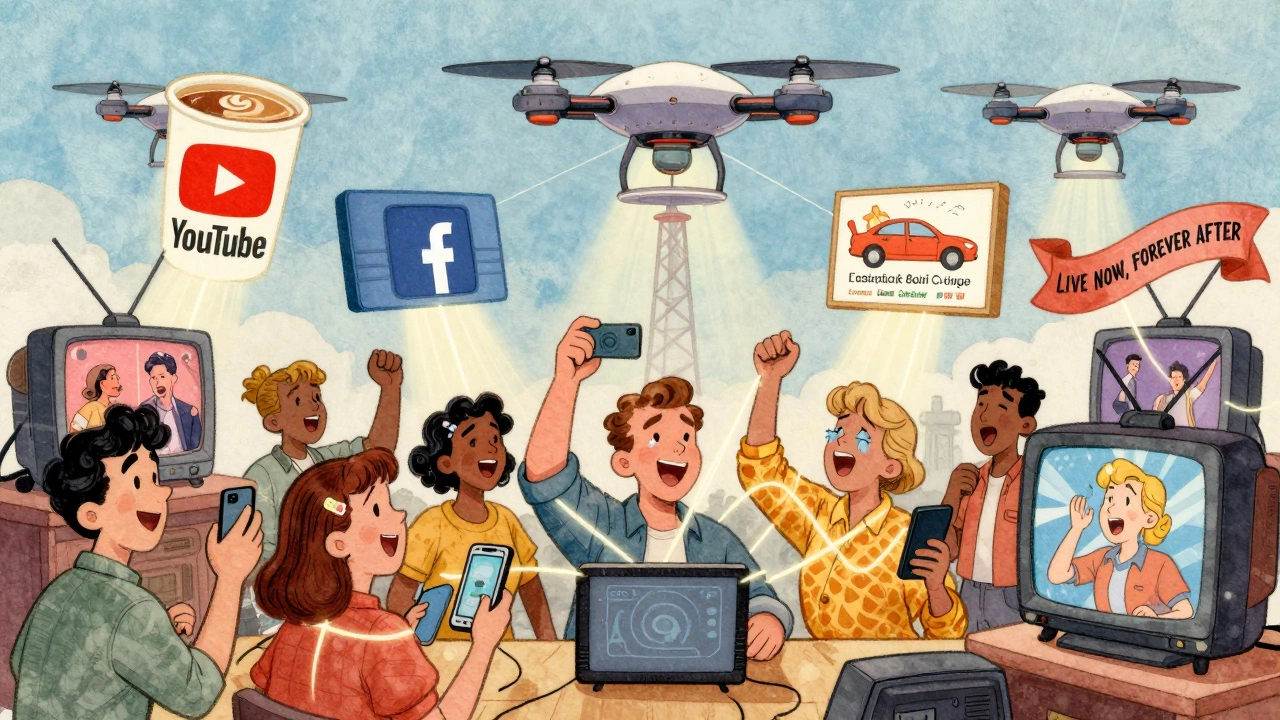
The line between live and on-demand is blurring. YouTube’s “Premiere Simulcast” lets creators schedule a live stream that plays like a movie premiere-complete with countdown, chat, and real-time reactions. After the live event ends, it becomes a video on demand. That’s the new model: live first, then available forever.
AI is making this smarter. By 2025, 65% of simulcast streams will use AI to insert ads tailored to each platform. A radio simulcast might show a local coffee ad on YouTube but a national car ad on Facebook. The same content, different monetization.
Appointment listening won’t vanish. It’s just becoming more intentional. People don’t want to watch TV at 8 p.m. because the schedule says so. They want to watch a live event because it’s happening now-and they want to be part of it. Simulcasting gives them the tools. The challenge is making it feel alive, not just broadcast.
Why This Matters for Local Media
Radio and TV stations are fighting for relevance. Streaming giants have the reach. But local stations have trust. Simulcasting lets them keep their audience without abandoning their roots. A community radio station that simulcasts to YouTube can reach college students who don’t own a radio. A small TV station that streams its weather report on Facebook can help seniors who don’t use apps. It’s not about replacing the old way. It’s about expanding it.
The stations that survive aren’t the ones with the fanciest gear. They’re the ones who show up. Every day. On every platform. With a real voice. And they remember that people still want to listen together-even if they’re listening from different rooms, different devices, different cities.


