
Two Albums. One Band. A Legacy That Shaped Rock
When you think of Led Zeppelin, two albums immediately come to mind: Led Zeppelin IV and Physical Graffiti. Both are masterpieces, but they’re not the same. One is a tight, explosive statement. The other is a sprawling, genre-bending journey. If you’ve ever wondered which one is truly the greater album, you’re not alone. Millions have argued this over decades. And the answer isn’t about which one sold more-it’s about what each album did differently, and why it still matters today.
Led Zeppelin IV: The Perfect Single LP
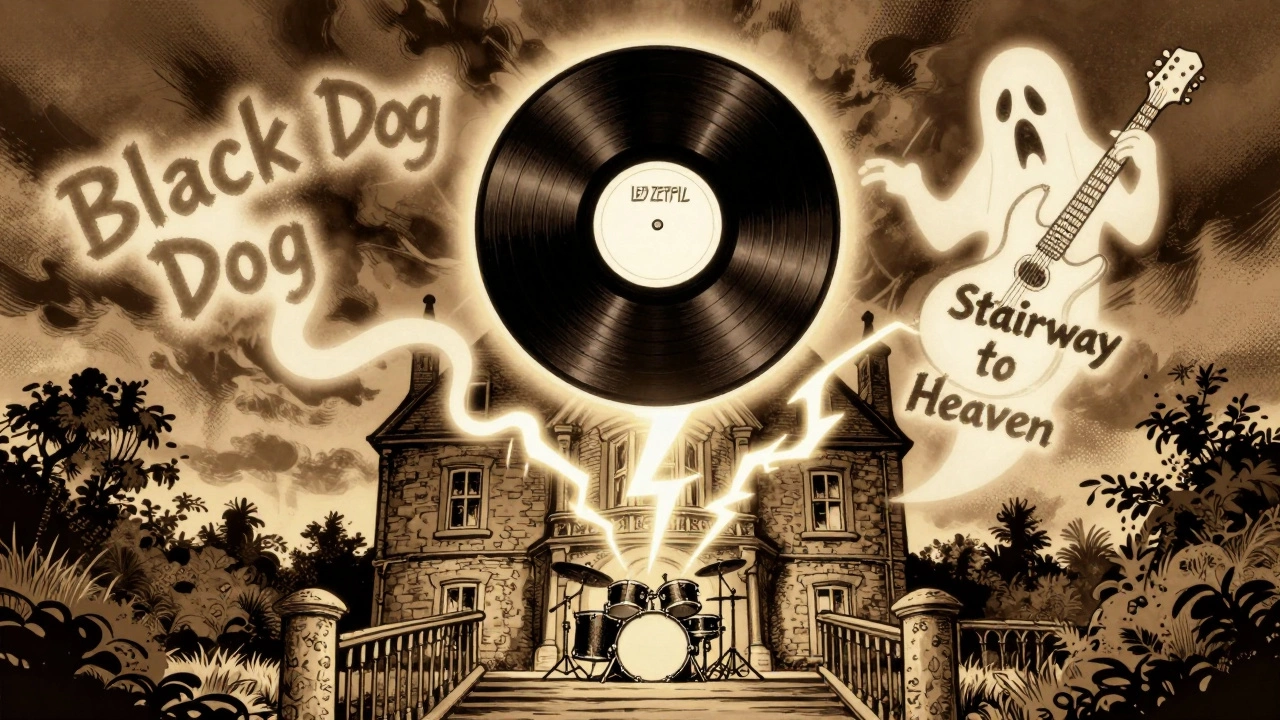
Released in 1971, Led Zeppelin IV wasn’t even given a real title. No band name. No album title. Just four Roman numerals. And yet, it became the most recognizable rock album ever. Recorded in just three months at Headley Grange, the band used vintage gear: Neumann U47 mics on Robert Plant’s voice, Shure SM57s on Jimmy Page’s amps, and Marshall Plexis cranked to the edge. The acoustics of the old stone house turned John Bonham’s drums into thunder-especially on "When the Levee Breaks," where his kit sat at the bottom of a three-story stairwell. The result? A drum sound that still defines heavy rock.
The album runs 43 minutes. Eight tracks. Zero filler. "Black Dog" kicks in with a riff that still makes guitarists stop and stare. "Rock and Roll" is pure energy. "Going to California" is quiet, haunting, and beautiful. And then there’s "Stairway to Heaven." Eight minutes long. Built from a gentle acoustic intro into a screaming guitar solo that feels like climbing a mountain. It wasn’t just a song-it became a cultural event. Radio stations played it. Kids memorized every lyric. It was played at weddings. At funerals. At high school dances. It’s the song that turned Led Zeppelin from a great band into a myth.
By the time it hit stores, it was already a phenomenon. It peaked at No. 2 on the Billboard 200, but sales kept climbing. Today, it’s certified 24x platinum in the U.S. alone. More than 37 million copies sold worldwide. It didn’t just top charts-it rewrote the rules of what a rock album could be.
Physical Graffiti: The Double Album That Broke the Mold
Four years later, Led Zeppelin came back with something no one expected: a double album. Physical Graffiti ran 80 minutes. Fifteen tracks. Material from four different recording sessions between 1970 and 1974. Some songs were leftovers from IV sessions. Others were brand new. The band didn’t just throw everything together-they shaped it into a cohesive whole. That’s the real magic.
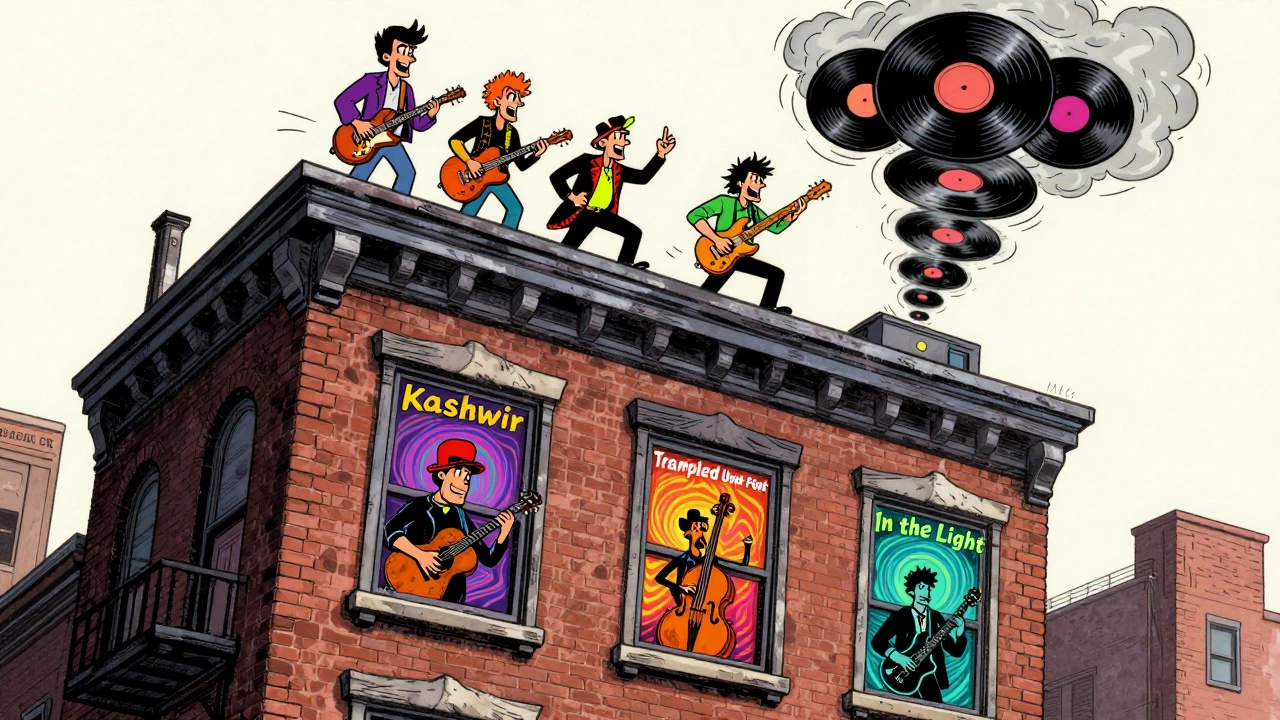
"Kashmir" alone is worth the price of admission. A 8-minute epic with a full orchestra, Middle Eastern strings, and Plant’s voice soaring over strings arranged by John Paul Jones. It didn’t sound like rock. It didn’t sound like anything else. It sounded like a movie score written by gods. Then there’s "Trampled Under Foot," with Jones on clavichord, locking into a funk groove that made people forget this was a hard rock band. "In the Light"? A slow-building, psychedelic drone that feels like a dream you can’t wake up from. "Down By the Seaside"? A country-blues tune with slide guitar and Plant singing like he’s on a porch in Mississippi.
Even the packaging was revolutionary. The album came in a die-cut sleeve that looked like a New York City tenement building. You could flip the windows to reveal different images. It was a physical experience, not just a record. And it worked. Physical Graffiti hit No. 1 on the Billboard 200. It sold 16 million copies in the U.S. and over 16 million worldwide. Critics called it indulgent. But time proved them wrong. In 2024, Pitchfork upgraded its rating from 8.5 to 9.7. Why? Because what looked like excess in 1975 now looks like genius.
How They Compare: Structure, Sound, and Scope
Let’s break it down.
| Aspect | Led Zeppelin IV (1971) | Physical Graffiti (1975) |
|---|---|---|
| Length | 43 minutes | 80 minutes |
| Tracks | 8 | 15 |
| Recording Time | 3 months | 4 years (across sessions) |
| Studio | Headley Grange | Headley Grange + Olympic Studios |
| Key Instruments | Marshall Plexi, Helios console, U47 mic | Marshall Plexi, Fender Twin, U47/U67 mics |
| Genre Focus | Hard rock, blues, folk | Hard rock, funk, orchestral, country, prog |
| Iconic Tracks | "Stairway to Heaven," "Black Dog," "When the Levee Breaks" | "Kashmir," "In the Light," "Trampled Under Foot" |
| RIAA Certification | 24x Platinum | 16x Platinum |
| Billboard Peak | No. 2 | No. 1 |
| Legacy | Grammy Hall of Fame (1999), National Recording Registry (2003) | Grammy Hall of Fame (2003), National Recording Registry (2018) |
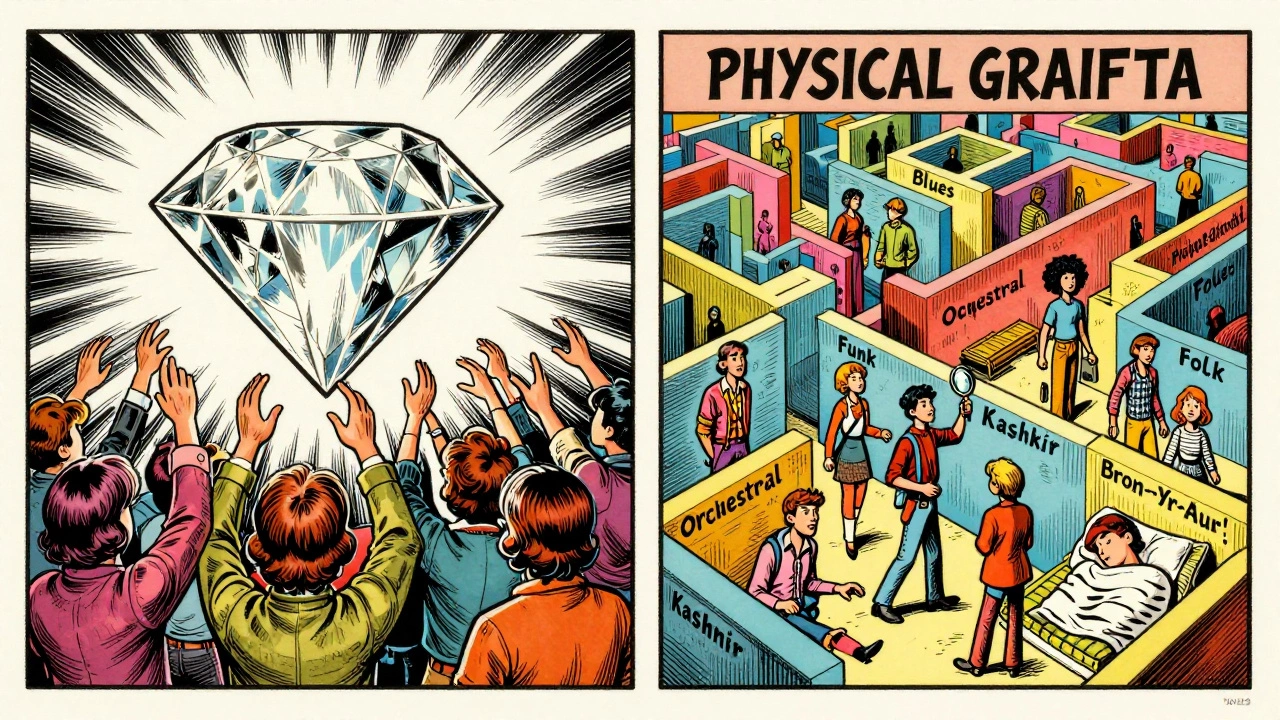
IV is precision. Every note serves the song. Every second counts. Physical Graffiti is exploration. It dares to be messy, slow, loud, quiet, strange, and beautiful-all in one sitting. One album is a lightning strike. The other is a wildfire.
What Fans Really Think
On Reddit’s r/LedZeppelin, a 2025 thread asking "Which is better?" got over 1,800 upvotes and 347 comments. Fifty-eight percent leaned toward Physical Graffiti. Why? "It’s a journey," one user wrote. "You go from "Bron-Yr-Aur," a quiet acoustic piece, to "In My Time of Dying," a 10-minute blues explosion. It feels alive."
But others hold firm. "IV has zero filler," says another. "Every song is a classic. Physical Graffiti has gems, but "Sick Again"? "The Rover"? I skip those."
On RateYourMusic, IV holds a 4.12/5 average from over 140,000 ratings. Physical Graffiti sits at 4.05/5 from nearly 120,000. Amazon reviews show similar trends: IV at 4.8 stars, Physical Graffiti at 4.7. The difference? Not much. But the reasons are clear. IV wins for consistency. Physical Graffiti wins for ambition.
Who Did Each Album Influence?
IV didn’t just influence rock-it built its foundation. Slash from Guns N’ Roses says he learned "Stairway to Heaven" note for note. Metallica covered "Stairway" live for years. The whole 1980s hard rock scene-think AC/DC, Van Halen, Judas Priest-built their sound on IV’s blueprint: heavy riffs, soaring vocals, thunderous drums.
Physical Graffiti? It opened doors. Pearl Jam’s "Even Flow"? That’s "In the Light"’s slow build. Soundgarden’s "Black Hole Sun"? The same psychedelic tension. Greta Van Fleet’s 2023 album "Starcatcher"? Frontman Josh Kiszka says it’s "Physical Graffiti in a modern key." Even Harry Styles cited IV’s "Going to California" as inspiration for his 2022 album "Harry’s House."
IV gave rock its power. Physical Graffiti gave it depth.
The Final Verdict: No Winner, Just Two Legends
There’s no right answer. Led Zeppelin IV is the perfect album. It’s tight. It’s iconic. It’s the one you play when you want to feel the raw energy of rock. Physical Graffiti is the complete experience. It’s wide. It’s bold. It’s the one you put on when you’ve got time to get lost.
One is a monument. The other is a cathedral.
IV will always be the album that made Led Zeppelin immortal. Physical Graffiti is the one that proved they were more than a band-they were architects of sound.
Is Led Zeppelin IV really better than Physical Graffiti?
It depends on what you value. Led Zeppelin IV is more consistent, with every track a classic. Physical Graffiti is more diverse, with songs that explore blues, funk, orchestral, and folk. IV is the album you show someone new to rock. Physical Graffiti is the one you get lost in for hours. Neither is "better"-they’re just different kinds of genius.
Why does Physical Graffiti have a lower rating than Led Zeppelin IV on some sites?
Physical Graffiti’s length and variety can be overwhelming. Some listeners find tracks like "Sick Again" or "The Rover" less essential. Led Zeppelin IV has no weak spots-it’s all iconic. But ratings have shifted. In 2024, Pitchfork upgraded Physical Graffiti to 9.7/10, calling it visionary. Time is redefining it as a masterpiece, not just a big album.
Which album sold more?
Led Zeppelin IV sold over 37 million copies worldwide. Physical Graffiti sold about 16 million. IV is the best-selling Led Zeppelin album. But Physical Graffiti was their first No. 1 album in the U.S., and it has held up better over time in critical reappraisals.
Did Jimmy Page prefer one album over the other?
In a 1993 interview, Page called Physical Graffiti "the culmination of everything we’d been working toward since our first album." He saw it as the full expression of the band’s evolution. But he never dismissed IV. Both albums were labors of love. He produced both. He shaped both. He saw them as complementary.
Which album is more influential today?
IV shaped hard rock and metal. Physical Graffiti shaped alternative rock, prog, and modern genre-blending. Bands like Greta Van Fleet, Queens of the Stone Age, and even Harry Styles draw from both. But if you hear a song with orchestral strings over a rock groove, you’re hearing the ghost of "Kashmir." If you hear a guitar solo that builds from quiet to screaming, you’re hearing the legacy of "Stairway to Heaven."