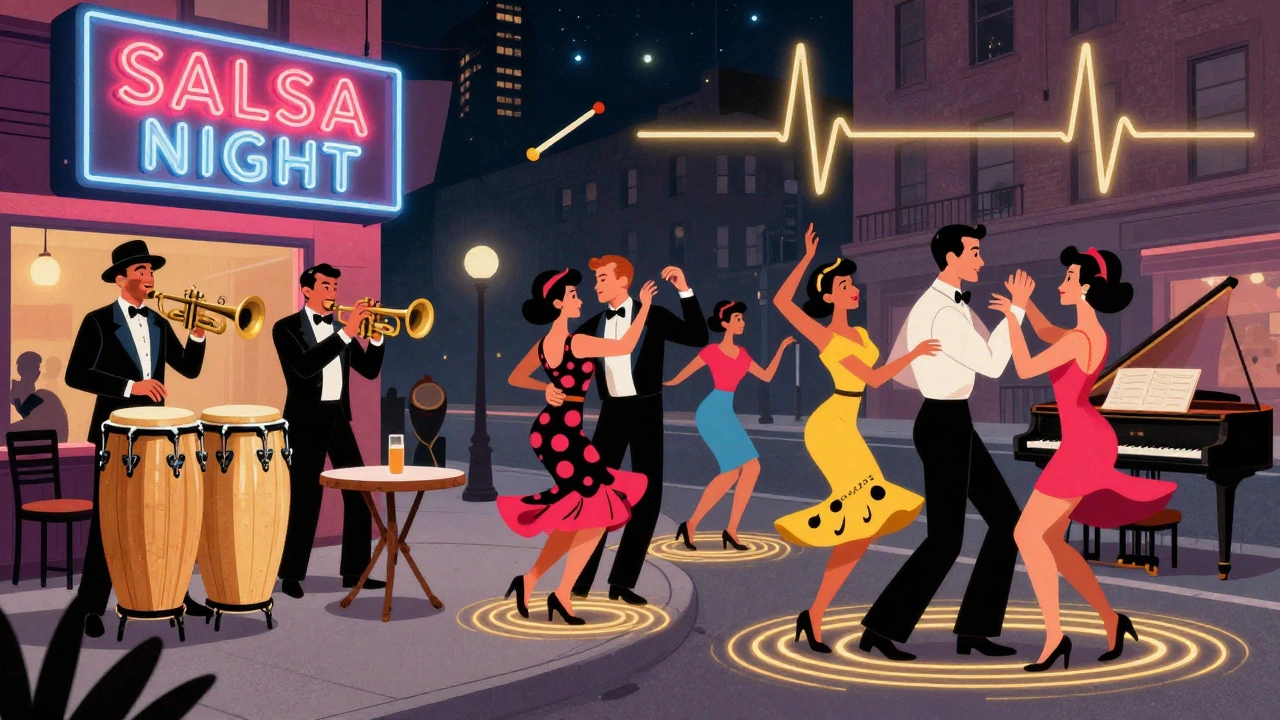

When disco faded out in the early 1980s, most people assumed dance music had moved on. But while glitter balls and four-on-the-floor beats disappeared from clubs, something far more complex and alive kept going - salsa. It didn’t need a chart-topping single or a celebrity endorsement to survive. It just kept dancing.
Salsa isn’t just another genre. It’s a living conversation between cultures, played out in sweat, rhythm, and connection. At its core is the clave - a two-bar rhythmic pattern that acts like the heartbeat of the music. Whether it’s 3-2 or 2-3, this pattern doesn’t just guide the drums; it tells every instrument when to speak, when to pause, and how to answer. You can’t dance salsa without feeling it. You can’t even understand it without listening for it.
Where Salsa Really Came From
Many think salsa started in New York City. That’s partly true - but only because that’s where it got its name. The real roots are deeper, older, and darker. In the 1500s, enslaved Africans in Cuba and Puerto Rico kept their rhythms alive, blending them with Spanish guitar, indigenous percussion, and Catholic church music. Over centuries, these sounds became Son, Mambo, Cha Cha Cha, Bomba, and Plena - each with its own flavor, each tied to a community.
Then, in the 1960s, Puerto Rican and Cuban musicians in New York started recording these styles together. Record labels needed a catchier label than "Cuban dance music." So they called it "salsa" - Spanish for "sauce." A spicy mix. And it stuck. But in Havana, people still called it "música cubana." The name change was marketing. The music? It was always there.
Why Salsa Beats Disco Every Time
Disco was simple. One beat. Every quarter note. Steady. Predictable. Dancers moved alone under strobe lights, lost in their own groove. Salsa? It’s a conversation. The congas answer the bongos. The piano plays montuno patterns that loop like a chant. The trumpets shout. The bass walks like a heartbeat. And the dancer? They don’t just move - they listen.
Disco played at 110-130 BPM. Salsa? 150-250 BPM. That’s not just faster - it’s layered. You’re not just keeping time. You’re riding multiple rhythms at once. A good salsa song has at least five instruments playing different patterns that lock together. That’s why beginners feel lost. It’s not about counting "1-2-3, 5-6-7." It’s about feeling the clave under everything.
And then there’s the dance. Disco was a solo act. Salsa is a two-person dialogue. You lead. You follow. You break apart. You come back. There’s tension in the arms - not force, but connection. A slight pull. A whisper of movement. That’s called "connection," and it’s what makes salsa social. You don’t dance salsa to show off. You dance it to talk.
The Five Major Styles - And Why They Don’t Always Get Along
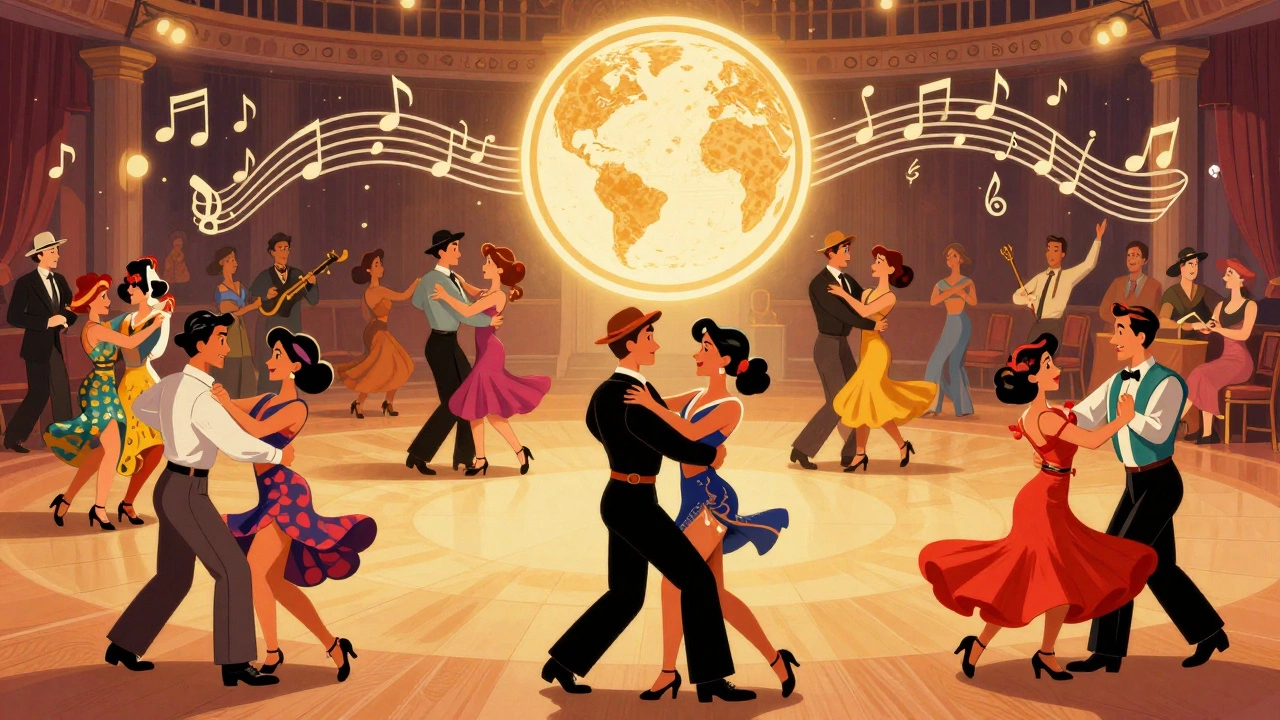
There’s no single way to dance salsa. The style you learn depends on where you grew up - or where you fell in love with the music.
- Cuban (Casino): Danced in a circle. Spins happen. Hands fly. You move with your whole body. Partners switch often. It’s playful, loose, and deeply rooted in Afro-Cuban traditions.
- New York (On2): Smooth. Elegant. Breaks happen on the second beat. Dancers glide. The music breathes. This style was shaped by Puerto Rican musicians and jazz-influenced dancers. It’s the favorite of musicians because it matches the piano montuno.
- LA Style (On1): Flashy. Big opens. Dramatic turns. Breaks on the first beat. Made for performance. Popularized by TV and movies. Easy to learn - hard to master.
- Colombian (Salsa Caleña): Fast feet. Kicks. Flicks. Inspired by cumbia. Dancers barely touch. It’s like a dance battle with rhythm. If you’ve seen Colombian dancers, you know - their legs move faster than your eyes can follow.
- Ballroom Salsa: The version you see on TV competitions. Strict rules. No improvisation. Perfect lines. It’s beautiful. But it’s not social.
Here’s the problem: if you learn LA style and travel to New York, you’ll have trouble. Your lead doesn’t match their follow. Your timing feels off. You’ll get confused. That’s why salsa congresses exist - places where dancers from all over the world come together to figure out how to dance with each other.
The Global Salsa Network
In 1997, a man named Eli Irizarry threw the first salsa congress in Puerto Rico. Less than 200 people showed up. By 2025, there are over 100 congresses worldwide - from Tokyo to Berlin to Buenos Aires. Each one draws hundreds, sometimes thousands. Dancers pay $150-$400 to attend. They take classes. They dance all night. They argue about who’s right - LA or New York? On1 or On2? But they keep coming back.
Why? Because salsa doesn’t care about borders. A woman in Oslo learns Cuban style from a video. A man in Manila takes online lessons from a teacher in Bogotá. A teenager in Chicago mixes salsa with hip-hop footwork. The music adapts. The community doesn’t.
Reddit’s r/salsa has over 45,000 members. One user wrote: "After six months of classes, I finally heard the clave. Now I can dance to any song without counting." Another said: "I went to Colombia and had to relearn how to lead. My whole body had to unlearn what I thought I knew. It changed me."
How to Start - And What to Expect
You don’t need to be a dancer. You don’t need to be young. You don’t need to know Spanish. You just need to show up.
Most studios offer 8-12 week beginner series. Cost? $150-$300. You’ll learn the basic step. The cross-body lead. How to hold your partner. Then you’ll go to a social dance - called a "salsa night." It’s not a club. It’s a living room with music. The first hour is a free lesson. Then the music turns up. People dance. You watch. You sweat. You feel awkward. That’s normal.
The first three months? You’ll struggle to find the clave. You’ll step on your partner’s foot. You’ll miss the turn. That’s okay. Most beginners take 3-6 months to feel comfortable. Real musicality? That takes 2-3 years. You have to learn to hear the piano, the congas, the horns - and move with all of them.
Practice matters. Dancers who go once a week don’t improve much. Those who dance three to five times a week? They start to shine. It’s not about talent. It’s about repetition. Muscle memory. Listening.
Why Salsa Still Matters
Disco was a moment. Salsa is a movement. It survived because it’s not just music. It’s identity. In the 1970s, Latino communities in the U.S. were being pushed to assimilate. Salsa gave them a voice. It said: "We are here. We are proud. We are not disappearing."
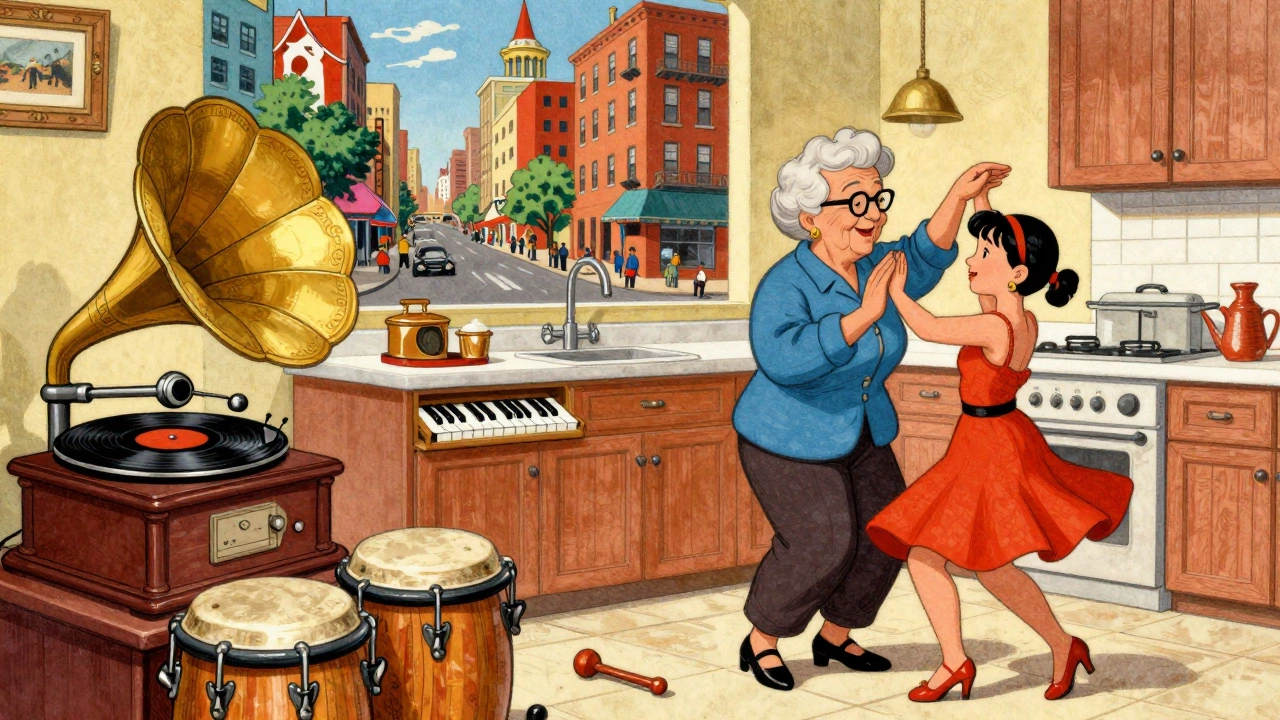
Today, it’s still doing that. A young girl in Detroit learns salsa from her abuela. A college student in Berlin joins a class because she wants to feel connected. A man in Los Angeles dances every Friday night to remember his father. Salsa isn’t about nostalgia. It’s about belonging.
There are now an estimated 5 million active social salsa dancers worldwide. The industry brings in $300 million a year - from lessons to concerts to clothing. Fania Records still tours 30+ countries. Live bands still play. And every night, in cities from Miami to Marseille, people gather to dance - not because it’s trendy, but because it’s true.
Salsa didn’t beat disco because it was louder. It beat it because it was deeper. It’s not just dance. It’s history. It’s resistance. It’s joy. And it’s still going.
What is the clave, and why is it so important in salsa?
The clave is a two-bar rhythmic pattern - either 3-2 or 2-3 - that forms the structural foundation of salsa music. It’s played on claves (two wooden sticks) and repeated throughout every song. Every instrument, from the piano to the congas, locks into this pattern. Without the clave, salsa loses its rhythm. Dancers don’t count beats - they feel the clave. If you can’t hear it, you can’t dance salsa properly. It’s not a beat you follow; it’s the heartbeat you move with.
How is salsa different from other Latin dances like bachata or merengue?
Salsa is defined by its complex polyrhythms, especially the clave, and its partner-based, improvisational style. Bachata has a simpler 4-beat rhythm with a distinct guitar pattern and a slower tempo (120-140 BPM), making it easier to learn but less rhythmically layered. Merengue is danced in a two-step motion with a steady beat and minimal body movement. Salsa, by contrast, demands musicality - dancers must respond to multiple instruments and change direction on cue. While bachata and merengue are often danced in place or with simple steps, salsa involves traveling, spins, and intricate partner connection.
Do you need to speak Spanish to dance salsa?
No. While many salsa songs are in Spanish, the music speaks through rhythm, not words. Dancers from Japan, Norway, and Australia learn salsa without speaking a word of Spanish. In fact, many instructors teach in English, and social dances are often multilingual environments. What matters is feeling the beat and connecting with your partner - not understanding the lyrics. That said, learning a few Spanish terms like "clave," "montuno," or "cierre" helps you understand instruction better and feel more connected to the culture.
Why do some people say salsa isn’t a real genre?
Some Cuban musicologists argue that "salsa" was a marketing term created in New York in the 1960s to sell Cuban-derived music to a broader audience. In Cuba, the music was called "música cubana" or "son," not salsa. Critics say the term erased its origins. But most dancers and musicians today see salsa differently - as a living, evolving tradition that absorbed Cuban, Puerto Rican, Colombian, and New York influences into something new. It’s not about purity. It’s about connection. Salsa is what happens when people from different places come together and dance - and that’s real.
Can you learn salsa if you’re over 50 or not physically fit?
Absolutely. Salsa isn’t about athleticism - it’s about rhythm and connection. Many dancers start in their 50s, 60s, or even 70s. The steps can be modified. The intensity can be lowered. The focus shifts from flashy moves to musical expression. Studios offer beginner classes designed for all body types and fitness levels. Many older dancers say salsa gives them energy, community, and a reason to get dressed up and move again. You don’t need to be young. You just need to be willing to try.


