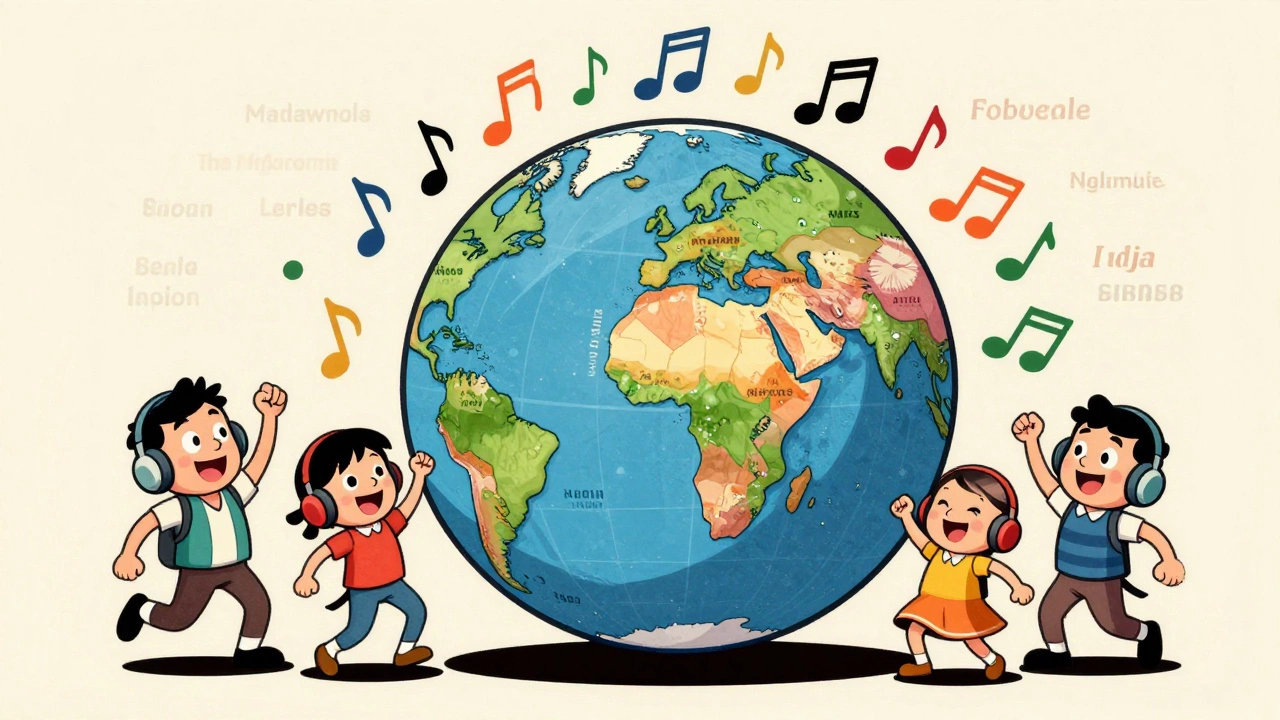

For decades, if you wanted to make it big in music, you sang in English. That rule is no longer true. Today, a song in Korean, Spanish, Hindi, or Yoruba can hit number one on Spotify just as easily as one in English. The global music scene isn’t just diversifying-it’s being completely rebuilt, and the language barrier that once held artists back is now gone.
English Isn’t the Only Language That Moves Millions
Spotify’s 2023 Loud and Clear report showed something startling: more than half of the 66,000 artists who made at least $10,000 on the platform came from countries where English isn’t the first language. That’s not a fluke. It’s a pattern. Spanish has become the second most streamed language globally, with U.S. listeners alone increasing their Spanish-language music consumption by 3.8% in 2023-while English-language streams dropped by the same amount. That’s a direct handoff. Listeners aren’t just adding non-English music to their playlists; they’re replacing English tracks with songs in other languages.
It’s not just Spanish. Korean music, especially K-pop, has turned into a worldwide phenomenon. BTS and BLACKPINK didn’t just break into the U.S. market-they redefined what global success looks like. Meanwhile, Indian artists like Arijit Singh and artists from the Punjabi and Tamil scenes are racking up hundreds of millions of streams, even though their lyrics are rarely in English. And then there’s afrobeats. Since 2017, this genre has grown by 550%. It’s not just popular in Nigeria or Ghana anymore. People in Mexico and India are dancing to it. Why? Because rhythm doesn’t need translation.
How Streaming Platforms Broke the Rules
Before streaming, record labels decided who got heard. If you weren’t signed to a major label in London, New York, or LA, your music rarely left your country. But platforms like Spotify, Apple Music, and YouTube changed everything. They don’t care what language you sing in-they care about how many people listen. Algorithms don’t understand grammar. They understand patterns: repeat plays, shares, saves, and skips.
Take Creepy Nuts’ Bling-Bang-Bang-Born. It’s a hyper-energetic J-pop track. It didn’t blow up in Japan first. It exploded in Belarus, Kazakhstan, and Ukraine-places you wouldn’t normally expect a Japanese song to go viral. Then it hit the U.S. and Europe. Why? Because the beat was infectious. The energy was contagious. The language? Irrelevant.
Even more telling: Japanese band Lamp has almost zero streams in Japan, but their YouTube views from the U.S. are higher than from their own country. That’s not a mistake. It’s proof that audiences are finding music based on feeling, not familiarity.
Generations Are Leading the Change
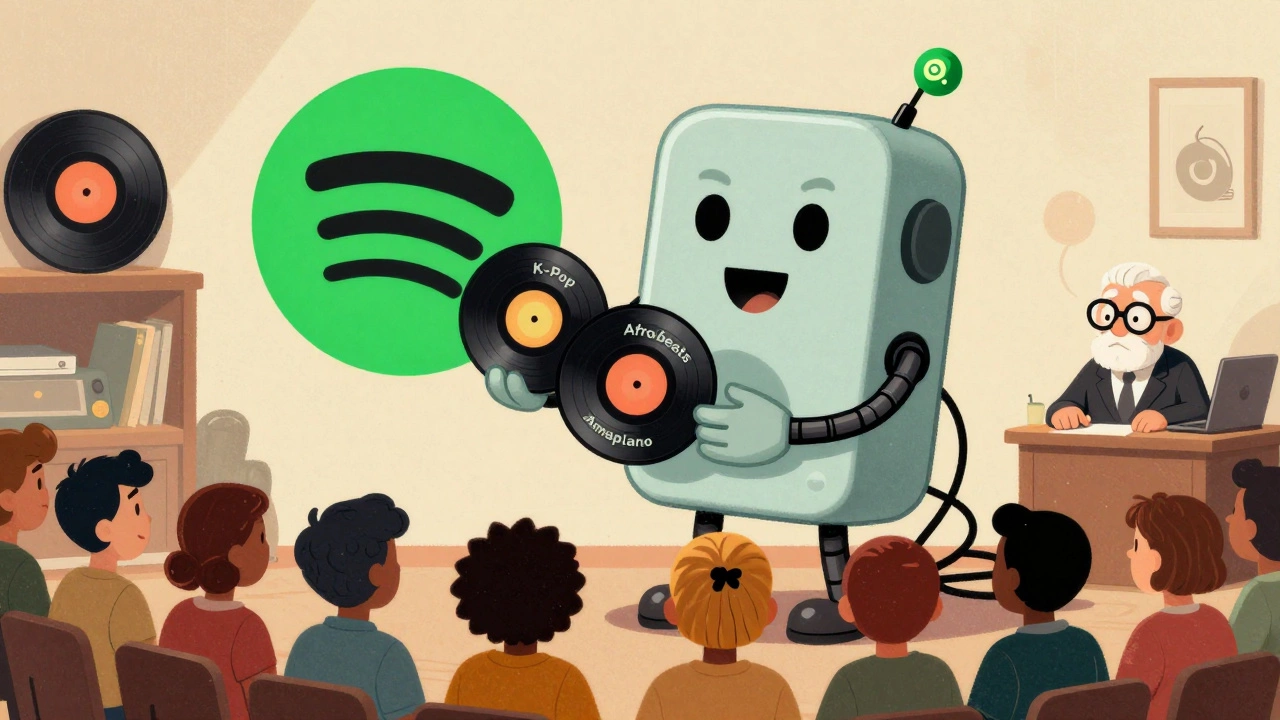
Who’s driving this shift? Young people. Millennials and Gen Z in the U.S. are 69% more likely to listen to non-English music than older generations. Nearly two-fifths of all American music listeners regularly play songs in languages they don’t speak. That’s not curiosity. That’s habit.
They don’t need translations. They don’t need subtitles. They feel the emotion. A song like CKay’s Love Nwantiti (Ah Ah Ah) hit #44 on global charts with over 333 million streams-even though most listeners didn’t understand a single word. The same goes for Joji’s Glimpse of Us, which climbed to #43 with 334 million streams. Both artists sang mostly in non-English languages. Both became global stars without ever changing their language.
Regional Sounds Are Becoming Global Sounds
Latin America isn’t just listening to reggaeton-it’s owning it. Countries like Colombia, Mexico, and Argentina have built music scenes that barely reference American pop. They’ve created their own charts, their own stars, their own rhythms. The same is true in West Africa. Amapiano, afrobeats, and afro house aren’t niche genres anymore. They’re chart-toppers. And they’re not just popular in Africa-they’re being sampled by producers in Los Angeles, London, and Seoul.
Even French-language rap is breaking out. Artists like Nekfeu and Damso aren’t just popular in France-they’re topping charts in Canada, Belgium, and even parts of the U.S. Their lyrics are dense, poetic, and deeply local. But the emotion? Universal.
Collaborations Are the New Gateway
One of the biggest drivers of global success? Cross-cultural collabs. When Bad Bunny teams up with J Balvin, or when BTS works with Halsey, or when Burna Boy sings with Ed Sheeran, something powerful happens. The audience doesn’t just hear two artists-they hear two worlds. And they want more.
These collaborations aren’t just marketing moves. They’re cultural bridges. A song like Youssou N’Dour and Neneh Cherry’s 7 Seconds blended Wolof, French, and English in 1993. It didn’t top the U.S. charts, but it became a global anthem. Today, that kind of fusion is routine. K-pop artists team up with Latin pop stars. Nigerian rappers work with Japanese producers. Indian singers duet with German DJs. Language becomes a tool, not a wall.
The Future Doesn’t Need English
Spotify’s data says it plainly: the share of English-language songs in the top 10,000 worldwide is declining. That’s not a slow fade. It’s a structural shift. Artists no longer need to translate their lyrics to reach a global audience. They just need to be authentic.
And the commercial upside? Massive. Forty percent of U.S. listeners now regularly play music in languages other than English. That’s not a small niche. That’s a market bigger than most countries’ entire music industries.
What’s next? More surprises. More genres. More languages. A song from Indonesia might be the next viral hit. A Tamil ballad could top the Billboard charts. A Greek folk tune might become a TikTok trend. The rules have changed. The gatekeepers are gone. And the world is finally listening-not to what language you sing in, but to what you’re saying with your voice.


