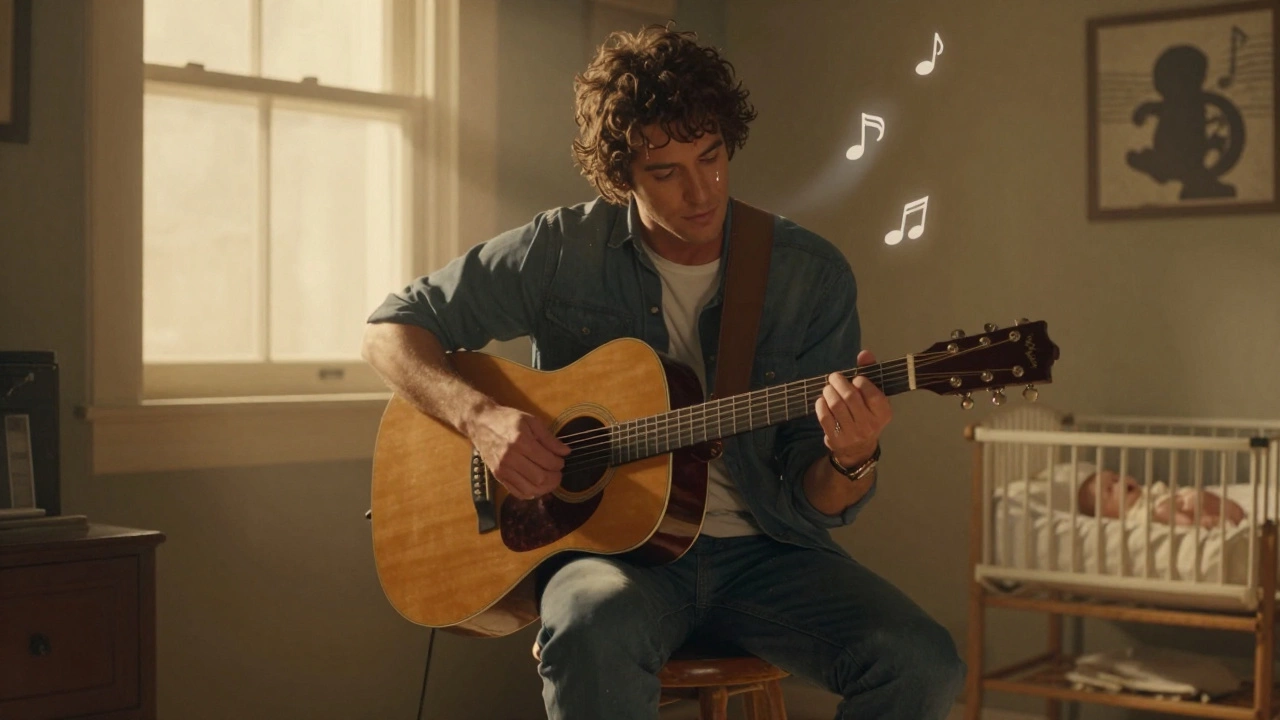

When James Taylor released Sweet Baby James in February 1970, no one expected it to change the sound of American music. The album didn’t have thunderous drums, blazing guitar solos, or psychedelic effects. It had quiet fingers on nylon strings, a voice that sounded like a late-night confession, and lyrics that didn’t try to impress-they just tried to be true. In a time when rock was getting louder and more elaborate, Taylor made something so soft it felt like it might disappear. But it didn’t. It stuck. And it changed everything.
What Made Sweet Baby James Different?
Before Sweet Baby James, Taylor’s debut album had barely made a ripple. Critics called it promising but uneven. Then came this second record, produced by Peter Asher, who gave Taylor complete control. No studio tricks. No overproduction. Just Taylor, his acoustic guitar, and a handful of musicians who knew when to play and when to stay silent. The result? A record that felt less like a product and more like a letter written in the dark.
Listen to "Fire and Rain" again. That opening line-"I have seen rain and I have seen sunshine"-doesn’t shout. It settles. Taylor’s voice doesn’t belt. It floats. And behind it, the piano and strings don’t compete. They breathe. The song isn’t about a dramatic event. It’s about loneliness, loss, and the quiet struggle of recovery. Taylor wrote it after his own hospitalization for depression and heroin addiction. He didn’t hide it. He sang it. And millions heard themselves in it.
That was the breakthrough. In 1970, pop music was still dominated by big bands and studio excess. But Taylor offered something else: honesty. Not the kind that shouts. The kind that whispers. And people leaned in.
The Sound: Less Is More
The instrumentation on Sweet Baby James is sparse but never thin. Acoustic guitar is the heartbeat. Steel guitar weeps gently on "Country Road" like a train whistle in the distance. Fiddle on "Sweet Baby James" doesn’t twang-it sighs. Brass on "Steamroller" doesn’t blare. It chuckles, like a friend who knows you’re full of it.
Taylor’s guitar work is the foundation. He didn’t play like a virtuoso. He played like someone who had spent years alone in a room, figuring out how to make silence speak. His fingerpicking wasn’t flashy. It was patient. You can hear the space between notes. You can hear the breath before the next line. That’s what made it feel real.
Even when he added more instruments-like the muted trumpet on "Anywhere Like Heaven" or the gospel-style backing vocals on "Blossom"-they never overwhelmed. They framed. They supported. They didn’t compete. That restraint became the album’s signature. It wasn’t about what was added. It was about what was left out.
The Songs: Quiet Truths, Deep Currents
"Sweet Baby James" opens the album with a lullaby. On the surface, it’s about visiting a newborn. But listen closer. The lyrics mention "the road that winds through the valley"-a metaphor Taylor used for his own path through addiction and recovery. The song doesn’t spell it out. It lets you feel it.
"Sunny Skies" is the album’s quietest heartbreak. The music is bright, breezy, almost cheerful. But the lyrics? "He closes his weary eyes upon the day / And throws it all away"-a direct look at depression, wrapped in sunshine. No one else was singing about this in 1970. Not like this.
"Steamroller" is the album’s sneaky rebellion. It sounds like a blues jam, but it’s mocking the rich kids who stole Black music and called it their own. Taylor didn’t preach. He sang it like a joke. And the joke was on the people who thought they were cool.
"Oh Baby, Don’t You Loose Your Lip on Me" is the rawest moment. It’s a bluesy, lo-fi groove that sounds like it was recorded in a basement. No polish. No safety net. Just Taylor and a slide guitar, channeling Muddy Waters in a way that felt honest, not imitation.
Even the album’s oddball tracks-like the funky "Suite for 20 G"-have purpose. They show Taylor wasn’t just a sad guy with a guitar. He was playful. He was curious. He could swing.
Why It Mattered: The Birth of the Singer-Songwriter Era
Sweet Baby James didn’t just sell. It inspired. It proved that a quiet voice with a guitar could fill arenas. After its success, record labels scrambled to find their own "James Taylors." Joni Mitchell, Carole King, Jackson Browne, and Cat Stevens all found wider audiences in the wake of this album. They weren’t copying Taylor. They were following the path he carved: personal stories, acoustic instruments, emotional honesty.
Before Sweet Baby James, the idea of a solo artist writing and singing their own songs wasn’t a mainstream business model. After it? It became the blueprint. The album sold over 5 million copies. "Fire and Rain" hit #2. "Country Road" cracked the Top 40. But numbers don’t tell the whole story. What mattered was how people felt when they listened.
One listener in 2025 wrote: "I didn’t know James Taylor before this album. I thought he was just a two-hit wonder. Then I played it on repeat during a sleepless night. I didn’t feel better. But I felt seen." That’s the power of this record. It didn’t fix anything. It just said: I know this feeling too.

Not Everyone Was Sold
It wasn’t all praise. Some critics called it "wimp rock." "Blossom" was singled out as too soft, too safe. One review said Taylor was "exactly the kind of dork who’d approve this album title and cover." Another called it "1970s folk rock-nice, but not essential."
There’s truth in that. Taylor wasn’t John Prine. He didn’t write with the razor-sharp wit or gritty realism of Gram Parsons. His world was gentler. More introspective. Less gritty. But that’s not a flaw-it’s a choice. And it was the choice that resonated.
He didn’t try to be the loudest. He didn’t try to be the hardest. He tried to be the most real. And in a world full of noise, that was revolutionary.
The Legacy: Still Soothing, Still Necessary
Today, over 50 years later, Sweet Baby James still sounds like a place you want to sit. Not because it’s loud. Not because it’s flashy. But because it’s quiet in the right way.
It’s the album you play when you’re tired. When you’re sad. When you need to feel less alone. It doesn’t offer solutions. It offers presence. A hand on your shoulder. A quiet voice saying: I’ve been there too.
James Taylor didn’t invent the singer-songwriter. But he gave it a voice. And that voice-calm, tender, unafraid of silence-still echoes in every artist who dares to sing softly in a loud world.
Why is "Fire and Rain" considered one of James Taylor’s most important songs?
"Fire and Rain" matters because it broke the mold of what a hit song could be. In 1970, Top 10 songs were usually upbeat, danceable, or driven by big production. "Fire and Rain" was slow, quiet, and deeply personal. It talked about depression, addiction, and the death of a friend-all things pop music usually avoided. Taylor’s raw delivery made it feel like a confession, not a performance. It reached #2 on the charts, proving that audiences would embrace emotional honesty over spectacle. It also became a cultural touchstone for people struggling with mental health, giving voice to feelings that weren’t often spoken about.
What instruments are most prominent on Sweet Baby James?
The acoustic guitar is the heart of the album, played by Taylor himself with a gentle fingerpicking style. Steel guitar adds emotional texture on tracks like "Country Road," while fiddle brings a folk-country warmth to the title track. Piano, especially on "Fire and Rain," provides subtle harmonic depth. Brass appears sparingly but effectively on "Steamroller" and "Suite for 20 G," adding a playful, almost bluesy feel. Background vocals from artists like Carole King and Linda Ronstadt lend gospel and harmony layers without overpowering Taylor’s lead. The production keeps everything in the foreground, so no instrument dominates-each one serves the song.
How did Sweet Baby James influence other artists?
Sweet Baby James showed that solo artists could achieve massive success without bands, big studios, or rock theatrics. It gave confidence to artists like Joni Mitchell, Carole King, and Jackson Browne, who were also writing personal songs with acoustic instruments. Record labels, seeing the album’s commercial success, began signing more singer-songwriters instead of just rock bands. Taylor’s approach proved that vulnerability could sell. His influence is heard in later artists like Paul Simon, Tracy Chapman, and even modern acts like Phoebe Bridgers and Julien Baker, who prioritize emotional clarity over sonic overload.
Was Sweet Baby James a commercial success?
Yes. It was James Taylor’s breakthrough. The album reached #1 on the Billboard charts and eventually sold over 5 million copies in the U.S. alone. The single "Fire and Rain" hit #2 on the Billboard Hot 100, and "Country Road" reached the Top 40. It was certified platinum and remains one of the best-selling albums of the 1970s. Its success proved that quiet, introspective music could compete with loud rock and funk, reshaping industry expectations about what audiences wanted to hear.
Why is the album called Sweet Baby James?
The title track was written about James Taylor’s nephew, James, who was born in 1969. Taylor visited him shortly after birth, and the lullaby-like song was meant to be soothing. But the name "Sweet Baby James" also became a metaphor for Taylor himself. He had been hospitalized for depression and heroin addiction before the album was recorded. The song’s gentle tone mirrors his own journey toward healing. The album as a whole is, in many ways, a letter to himself-a reminder that even after darkness, there’s still sweetness to be found.


