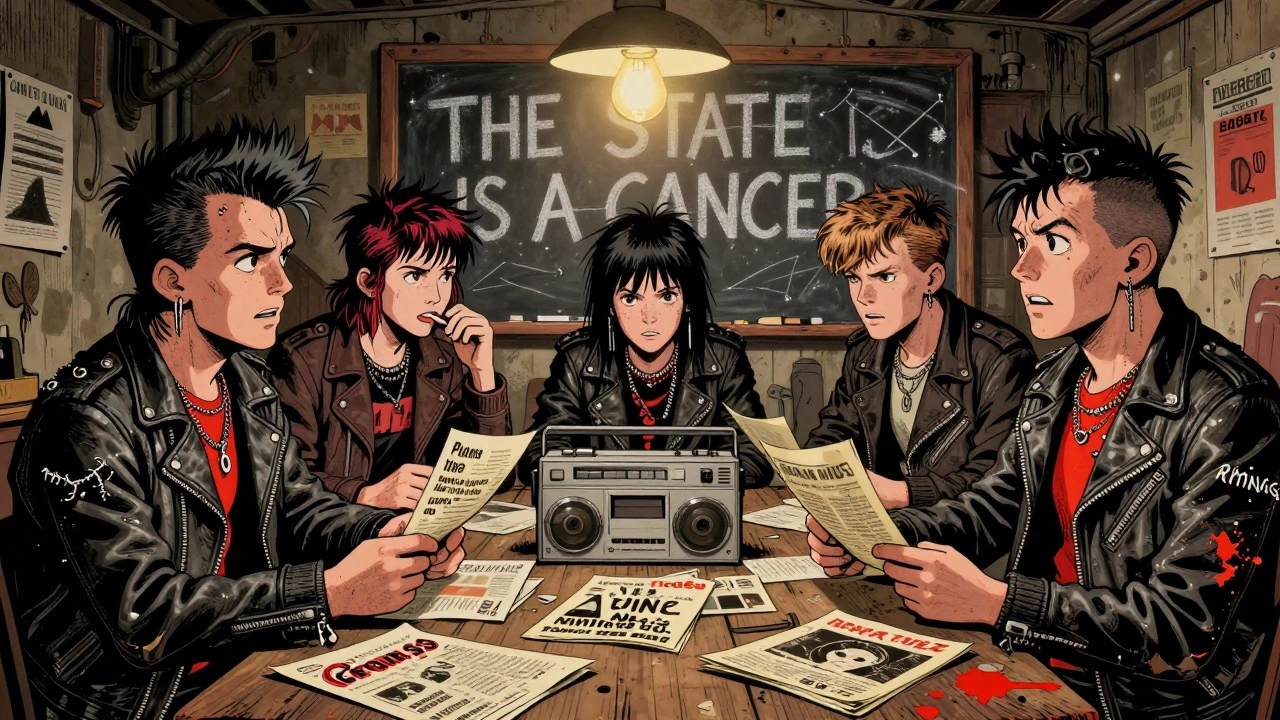

By 1982, punk wasn’t just a sound-it was a global scream. In the UK, it had moved past the chaos of 1977 and become something darker, tighter, and more political. In Japan, it was being rebuilt from scratch, in tiny basement clubs, with lyrics written in broken English and a fire that had nothing to do with imitation. And across the Atlantic, American hardcore was turning punk into a weapon-fast, loud, and unapologetically angry. This wasn’t one movement. It was three separate revolutions, all sharing the same broken guitar chords.
UK Punk in 1982: From Chaos to Control
By 1982, the UK punk scene had shed its glitter and safety pins. The Sex Pistols were gone. The Clash had started making albums that sounded like they were trying to be The Who. What remained was a harder, meaner breed-bands like Crass, Conflict, and the Apostles. They didn’t just play music. They ran squats, printed zines by the thousands, and organized benefit gigs for striking miners and anti-nuclear activists.
Thatcher’s Britain was grinding down. Unemployment hit 3 million. The government cut welfare, closed factories, and treated protesters like enemies. Punk responded not with noise, but with structure. Anarcho-punk emerged as a movement, not just a subgenre. Crass didn’t just sing about peace-they ran a record label (Crass Records), published a monthly zine called Stuckist, and refused to sign with major labels. Their album Christ: The Album (1982) was a manifesto wrapped in noise, with lyrics like, "The state is a cancer, and we are the cure."
Live shows became political rallies. At a 1982 gig in Sheffield, fans didn’t just mosh-they collected money for the miners’ strike fund. The music was faster than before, more rhythmic, almost militant. Drummers used double-time beats. Basslines were thick, distorted, and unrelenting. Guitars didn’t solo-they attacked. And lyrics? No more "I hate my teacher." It was "I hate the system that makes me have no future."
By late 1982, the UK punk scene had split. One side kept the DIY spirit alive in small towns like Brighton and Glasgow. The other side drifted into post-punk, goth, or industrial. But the true punk heart? It was still beating in squats, in print shops, and in the hands of kids who refused to work, vote, or shut up.
Japan’s Punk Explosion: No One Asked Them To
There was no British invasion in Japan. No American hardcore tour. No major label backing. In 1982, Japanese punk was built by teenagers who’d never seen a live punk show-but had read about it in a single, battered copy of Maximum Rocknroll smuggled in from the U.S.
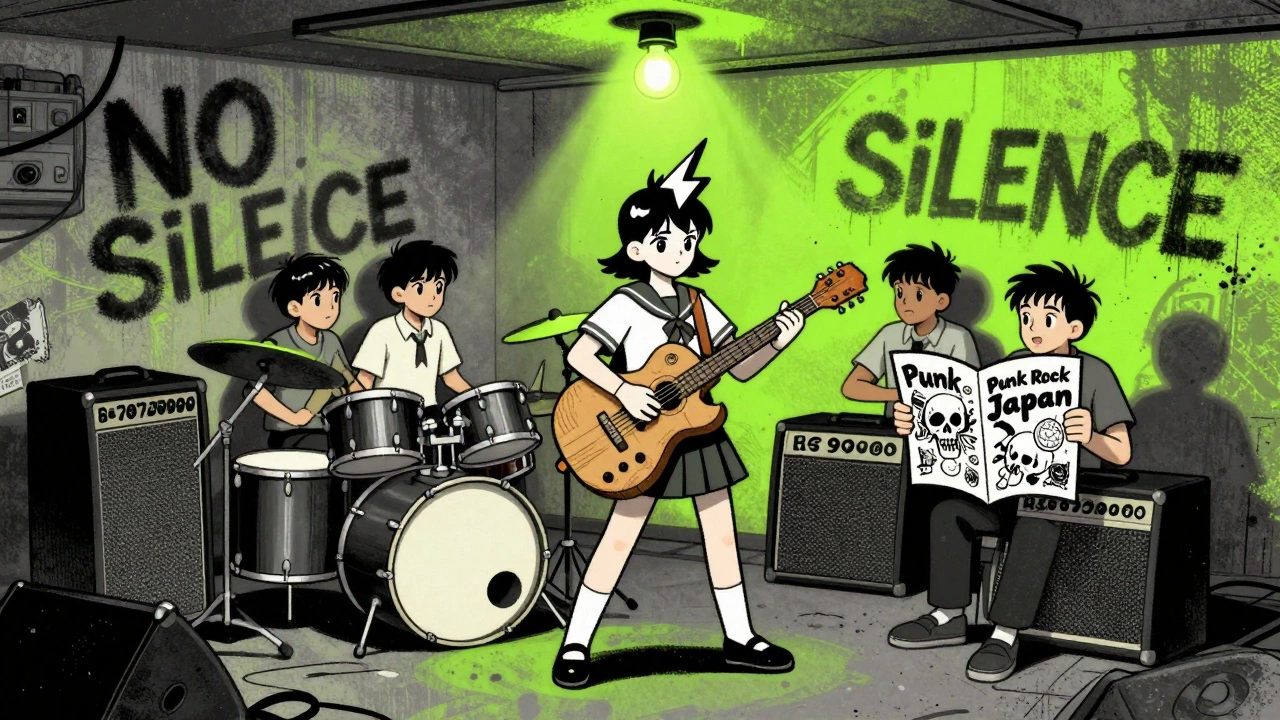
Tokyo’s underground scene lived in places like Shibuya’s Live House and Yoyogi Park after dark. Bands like The Stalin, Stalin, and F.M. Einheit played in rooms the size of closets. The amps were borrowed. The drums were taped together. The lyrics? Often in English, because Japanese didn’t have the right words yet. One band, The Roosters, sang: "I don’t know what I want / But I know I hate this town."
Japan’s punk wasn’t about politics. Not at first. It was about escape. A country still obsessed with order, silence, and conformity. A system that told kids to study, work, and never question. Punk was the first time a generation said: "No. We won’t be quiet."
By 1982, Japanese punks had started their own zines. One called Punk Rock Japan was photocopied and passed hand to hand. It had no ads. No sponsors. Just song reviews, interviews with foreign bands (written from memory), and drawings of skulls with samurai swords. The most famous photo from that year? A 17-year-old girl in a school uniform, mohawk shaved into a lightning bolt, holding a guitar made of cardboard.
There was no record deal. No TV appearance. No tour. But in Osaka, a band called The Blue Hearts would form in 1985-and by 1988, they’d sell over a million albums. They didn’t start as punk. They became punk because they had to. The scene in 1982? It was just a spark. But it was enough.
American Hardcore: The Sound of a Generation Locked Out
If UK punk was about revolution and Japan’s was about silence breaking, then American hardcore was about rage. Pure, unfiltered, and loud enough to shake the walls of any suburban basement.
By 1982, bands like Black Flag, Minor Threat, and Bad Brains were turning punk into a speed metal nightmare. Songs were under two minutes. Tempos hit 200 BPM. Vocals weren’t sung-they were screamed. Lyrics didn’t rhyme. They yelled. "I don’t need society!" screamed D.R.I. in 1985. "No future!" shouted UK bands. But in D.C., Minor Threat’s Ian MacKaye just said: "I’m not a punk. I’m not a skinhead. I’m not a fascist. I’m just a kid who’s tired of being lied to."
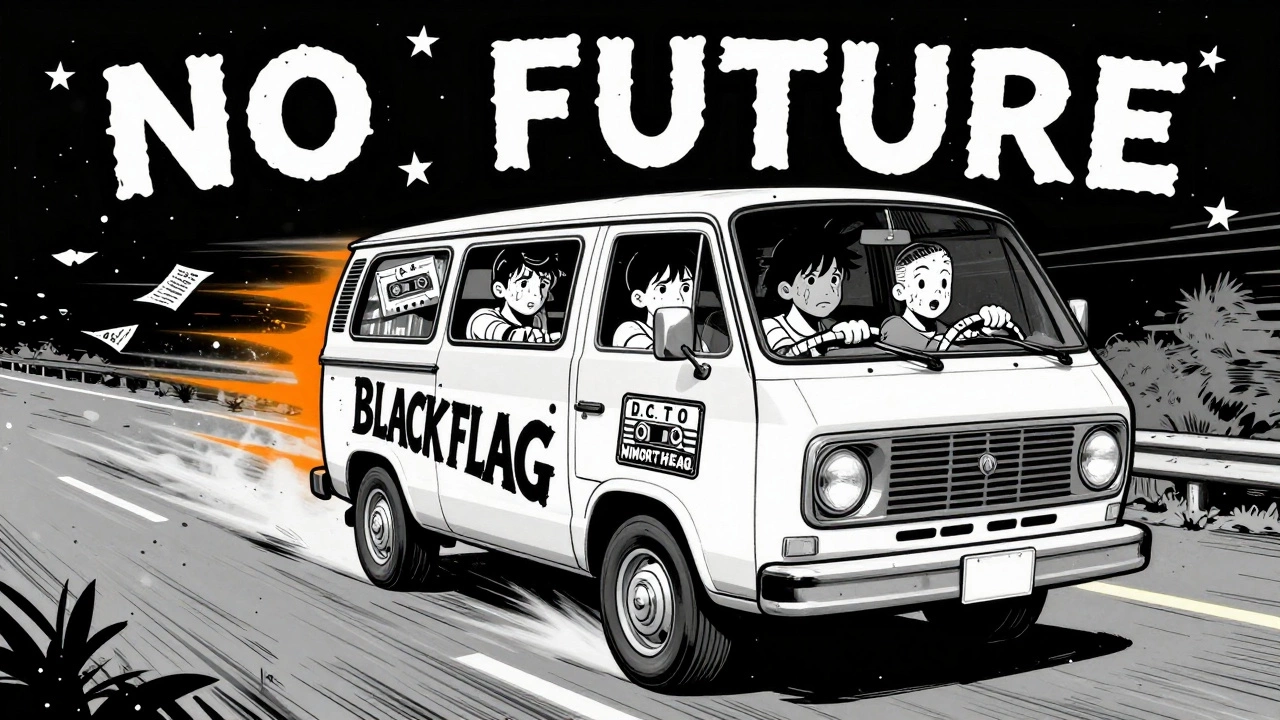
These weren’t bands trying to get famous. They were kids who built their own labels, booked their own shows, and drove across the country in vans with no AC. The tour bus of Youth Brigade wasn’t a luxury. It was a lifeline. They’d show up in a town, knock on a stranger’s door, and say: "We’re playing tonight. Got a basement?"
Chicago’s Naked Raygun sang about Reagan’s wars in Central America. San Francisco’s Dead Kennedys called Reagan a "toxic waste president." But the real power wasn’t in the lyrics. It was in the fact that these kids didn’t wait for permission. They didn’t need a label. They didn’t need radio. They had each other. And that was enough.
How These Scenes Connected (And Didn’t)
Here’s the truth: UK punks didn’t know about Japanese punks. American hardcore kids had never heard of Crass. But they all knew the same thing: punk meant refusing to play by the rules.
UK punks sent tapes to Japan. Japanese kids sent zines to D.C. D.C. bands mailed vinyl to London. It was slow. It was messy. But it worked. A Japanese fan in Nagoya might get a tape of Black Flag from a guy in Seattle who got it from a guy in London. That’s how punk spread-not through MTV, but through hands.
They didn’t sound alike. UK punk had a Marxist edge. Japan’s was lonely, poetic, and full of confusion. American hardcore was pure adrenaline. But they all shared the same tools: a guitar, a tape recorder, and the refusal to be ignored.
By 1985, the UK anarcho-punk scene was fading under police crackdowns. Japan’s scene was still underground, but growing. America’s hardcore had birthed thrash metal, indie rock, and the first wave of emo. But in 1982? All three scenes were still alive. Still raw. Still dangerous.
Why This Matters Today
Look at any protest today-climate marches, student strikes, anti-police movements-and you’ll see the same things: handmade signs, loudspeakers, DIY flyers, and kids who refuse to wait for someone else to fix things.
Punk in 1982 wasn’t about fashion. It wasn’t about rebellion for the sake of rebellion. It was about survival. In the UK, it was about resisting a government that didn’t care. In Japan, it was about surviving a culture that demanded silence. In America, it was about being too young to vote, too poor to escape, and too angry to stay quiet.
That’s the real legacy. Not the ripped jeans. Not the mohawks. But the belief that you don’t need permission to speak. You don’t need a label to make music. You don’t need a stage to be heard.
Today, when a teenager in Lagos, Jakarta, or Chicago starts a band in their garage, they’re not copying 1982. They’re continuing it. Because punk never died. It just kept moving.
What made UK punk in 1982 different from 1977?
In 1977, UK punk was chaotic, flashy, and fueled by shock value-think safety pins and anarchic slogans. By 1982, it had evolved into a structured political movement. Bands like Crass and Conflict focused on anarcho-punk, organizing squats, benefit gigs, and zines. The music got faster and more militant, and lyrics shifted from "I hate my teacher" to "I hate the system that gives me no future." It was no longer just rebellion-it was organized resistance.
How did Japanese punk start without exposure to Western bands?
Japanese punk began in secret. Teens got their first glimpses of punk through smuggled zines like Maximum Rocknroll, bootleg tapes, and rare magazine articles. Bands like The Stalin and F.M. Einheit learned by listening to these recordings and copying the sound. They played in tiny basements, wrote lyrics in broken English, and created their own zines. There was no tour, no label, no media-just raw, stubborn creativity fueled by a desire to break free from Japan’s rigid social norms.
Did American hardcore influence the UK or Japanese scenes?
Not directly. American hardcore influenced Japan more through zines and tape exchanges than live shows. UK anarcho-punk developed independently, rooted in British labor struggles and anti-nuclear activism. But the shared DIY ethic-self-released records, fanzines, and touring in vans-created a global network. While the sounds differed, the belief that music could be a tool for change connected them all.
Why didn’t major labels sign these international punk bands?
Major labels saw punk as too dangerous, too unprofitable, or too radical. In the UK, bands like Crass refused to sign. In Japan, there was no infrastructure for punk distribution. In the U.S., labels tried to co-opt bands like the Replacements-but hardcore acts like Minor Threat and Black Flag turned down offers outright. They didn’t want fame. They wanted autonomy. And that made them invisible to the mainstream.
What happened to these scenes after 1985?
The UK anarcho-punk scene faded under police pressure and internal divisions. Japan’s punk went underground but grew stronger, eventually birthing The Blue Hearts and influencing the entire 1990s J-rock scene. American hardcore split into thrash metal, emo, and indie rock. But the DIY spirit never disappeared-it just moved into new forms: indie labels, online zines, and protest music today.


