
Music Was the Soundtrack of a Revolution
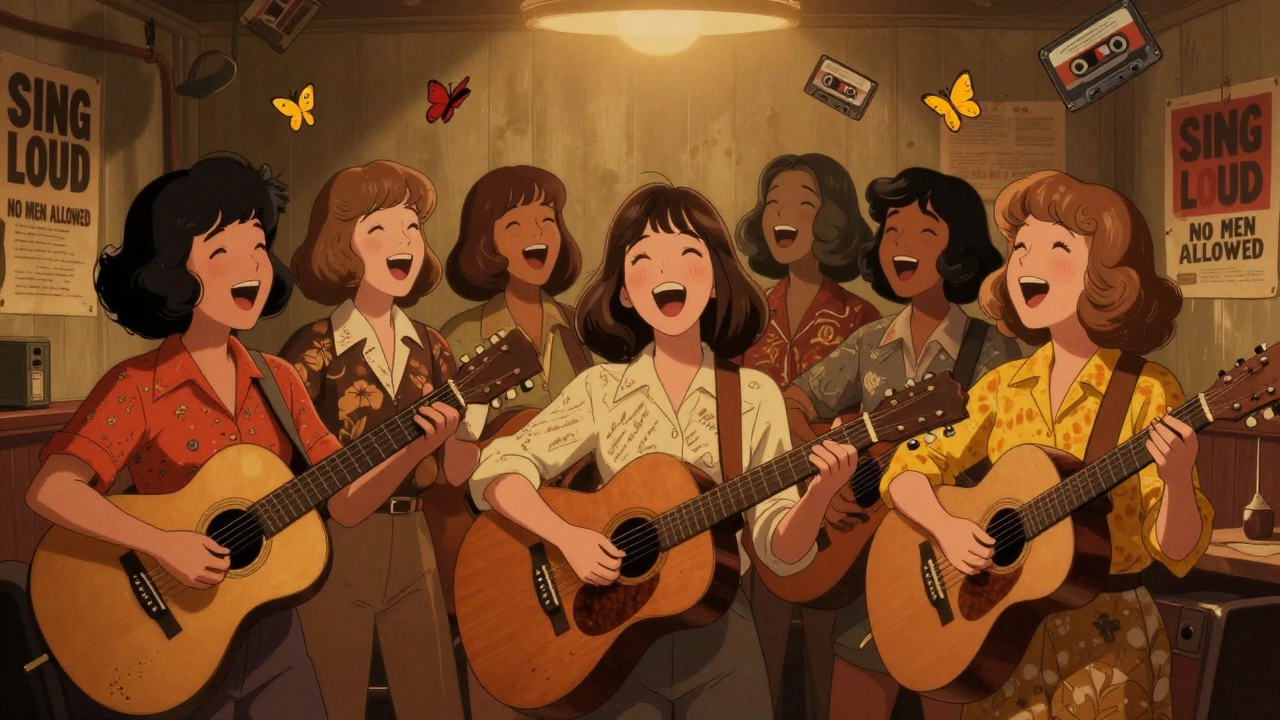
Before there were pop anthems on the radio, there were women singing in basements, at picket lines, and in rural communes-songs that didn’t care about charts or radio play. They were meant to be heard in circles, passed hand to hand, sung loud enough to drown out silence. The Women’s Liberation Movement didn’t just protest in the streets; it built its own music industry, one note at a time.
In the 1970s, if you were a woman who wanted to make music that spoke honestly about your life-your anger, your love, your fear-you had two choices: try to break into a system that treated you like background noise, or build your own world. Thousands chose the second.
The First Feminist Anthem Wasn’t on the Radio
Most people think of Helen Reddy’s I Am Woman as the big feminist anthem of the era. And yes, it hit No. 1 in 1972. But that song was the exception, not the rule. The real heart of the movement wasn’t in New York or Los Angeles-it was in basements, churches, and rented community centers where women gathered to play guitar, share poetry, and sing about being tired of being told to smile.
One of the earliest recorded feminist songs was Maxine Feldman’s Angry Atthis, written in 1969 and recorded in 1972. It wasn’t about equality in the workplace. It was about desire. About Sappho. About a woman loving another woman without shame. That song was the first to openly name lesbian love on a record. And it wasn’t played on any radio station. It was passed around on cassette tapes, mailed in envelopes with no return address, and played at women’s gatherings where men weren’t allowed.
Olivia Records: The Label That Refused to Play by the Rules
In 1973, five lesbians in Washington, D.C., pooled $3,000 and started Olivia Records. No investors. No distributors. No corporate backing. Just a belief that women’s music deserved to exist outside the male-dominated music industry.
They recorded Cris Williamson’s The Changer and the Changed in a single 12-hour session. No studio tricks. No producers telling her to soften her voice. Just her, a guitar, and a microphone. That album sold over 500,000 copies by 1990-without ever hitting Billboard. How? Through mail-order catalogs. Through word of mouth. Through women who drove hundreds of miles to buy it in person.
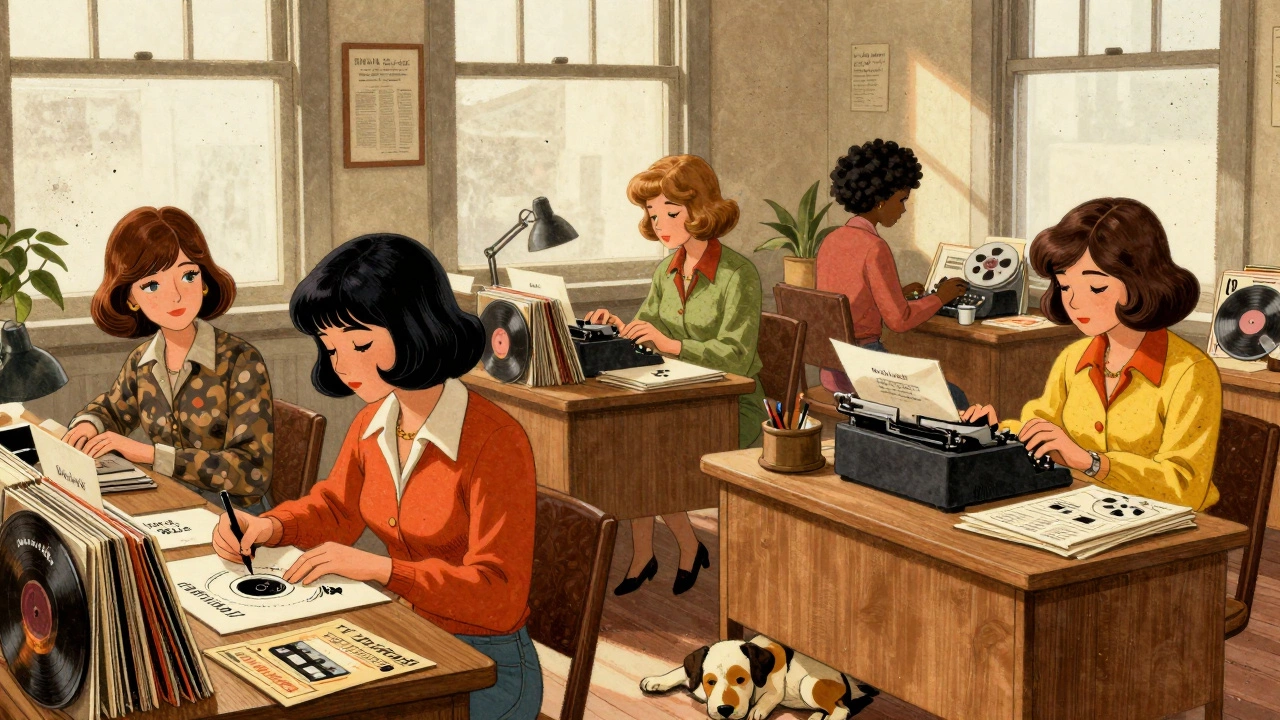
Olivia didn’t just release music. They built a network. They printed newsletters. They organized tours. They trained women to run sound systems. They taught women how to press records. By 1980, they were mailing out 2,000 orders a month with a staff of seven. In a world where women made up less than 4% of sound engineers in mainstream venues, Olivia had women running every single part of the process.
The Festival That Became a Sanctuary
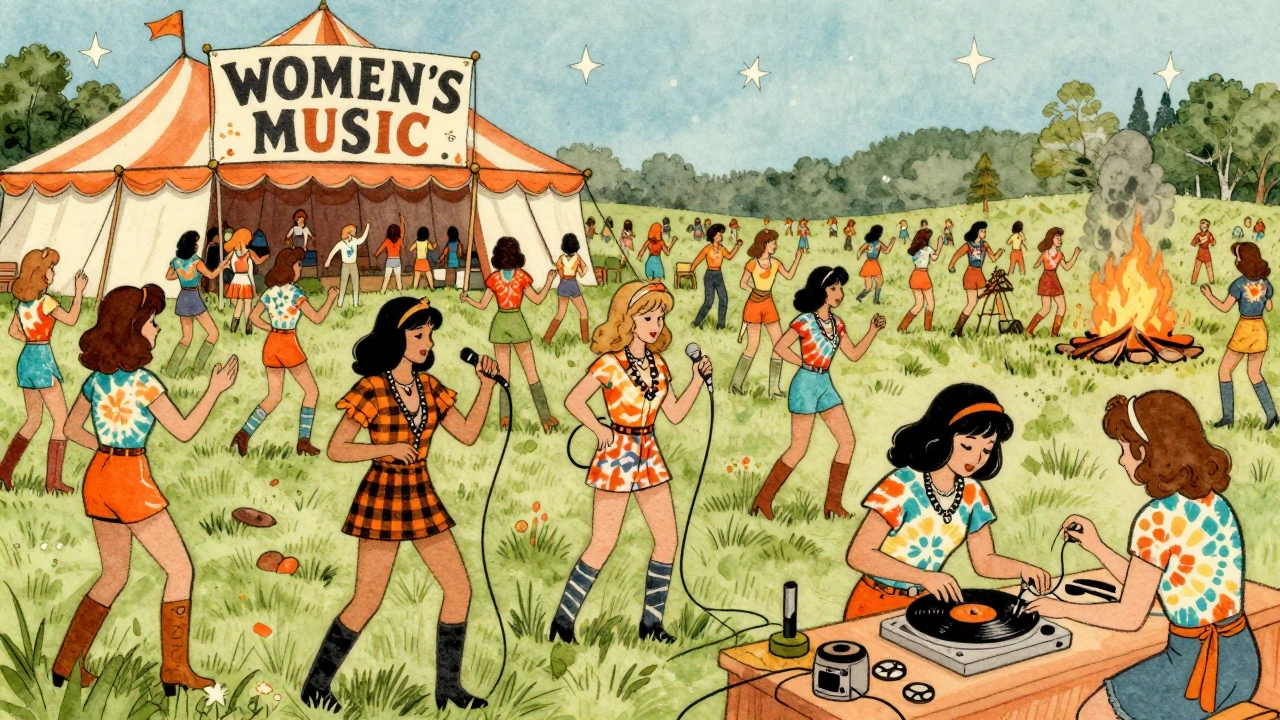
The Michigan Womyn’s Music Festival started in 1976. It wasn’t a concert. It was a home.
For a week every summer, over 9,000 women-mostly lesbian, many from rural towns with no queer community-showed up in a field in Hart, Michigan. They brought tents, instruments, and stories. They slept in shared cabins. They ate food cooked by volunteers. They listened to music by women, for women. They learned how to solder a microphone cable. They held workshops on breast cancer, racism, and how to start your own record label.
A 1985 University of Michigan survey found that 87% of attendees said they felt more empowered to speak up for women’s rights after the festival. 92% said they experienced physical affection between women for the first time without fear. For many, it was the first time they’d ever been in a space where women weren’t just present-they were in charge.
At the same time, mainstream music was still dominated by men. In 1985, only 16.8% of artists credited on Billboard Hot 100 songs were women. Olivia Records and the festival circuit were making $2 million a year in today’s dollars-small compared to the $4.2 billion music industry-but huge for a movement that refused to sell out.
Not All Women Were Welcome
The movement was powerful. But it wasn’t perfect.
Women of color like Linda Tillery and Bernice Johnson Reagon of Sweet Honey in the Rock brought gospel, jazz, and African rhythms into the music. Their voices were essential. Yet, they were often sidelined. Between 1976 and 1990, only 12% of headliners at the Michigan festival were women of color-even though Black women made up 18% of the U.S. female population.
And then there was the policy: womyn-born-womyn. Starting in 1991, the festival barred transgender women. It wasn’t an accident. It was policy. Trans activists like Nancy Nangeroni were turned away at the gate. Annual protests by Camp Trans became a painful, necessary part of the festival’s history.
The movement created safety. But safety shouldn’t mean exclusion. That contradiction haunted the movement. Many women left because they couldn’t reconcile the music they loved with the walls being built around it.
How Women’s Music Changed the Rules
Here’s what the movement proved: you don’t need a record label to change culture.
Women’s music didn’t rely on radio play. It relied on community. It didn’t need to be on MTV. It needed to be sung in a circle, in a kitchen, in a tent in the woods. It didn’t need to be popular. It needed to be true.
They taught women to engineer sound. To tour without a manager. To write songs about periods, about abortion, about falling in love with a coworker. They created a whole language of music that mainstream artists were too afraid to touch.
And when Lilith Fair launched in 1997-with 85% women performers, drawing 250,000 people-it wasn’t a coincidence. It was the direct line from Olivia Records to the mainstream. Sarah McLachlan didn’t start Lilith Fair out of charity. She started it because she remembered what it felt like to be told she didn’t belong.
The Legacy Lives in the Music Still Being Made
The Michigan festival closed in 2015. Olivia Records stopped being exclusively lesbian-focused. The catalogs are gone. The cassettes are dusty.
But the music didn’t disappear. It evolved.
Artists like Big Joanie and Serpentwith are sampling Cris Williamson’s chords. They’re singing about queer joy, about Black lesbian identity, about healing from trauma-just like the women before them. Spotify streams of women’s music from the 70s and 80s have jumped 300% since 2020. The Women’s Liberation Music Archive has digitized over 1,200 recordings. Young women are finding these songs and saying: That’s me.
Today, 28.3% of artists on the Billboard Hot 100 are women. It’s not enough. But it’s more than 16.8%. And that growth didn’t happen by accident. It happened because women refused to wait for permission.
The Women’s Liberation Movement didn’t just change laws. It changed the sound of freedom. And that sound is still playing.
What was the first openly lesbian music album?
The first full-length album created specifically for and by lesbians was Lavender Jane Loves Women, released in 1973 by Alix Dobkin, Kay Gardner, and Patches Attom. It came out through Olivia Records, the same label that later released Cris Williamson’s landmark album. The album didn’t chart, but it became a foundational text for lesbian identity, passed hand to hand in women’s communities across the U.S.
How did women’s music get distributed without record stores?
Women’s music relied on direct-mail networks. Organizations like Ladyslipper and Goldenrod mailed out 15,000 catalogs annually by 1975. People ordered albums by phone or mail, often using PO boxes to protect their privacy. Olivia Records processed 2,000 orders a month by 1980 with just seven staff members. Festivals also sold records on-site. There were no retail chains involved. This was a grassroots, community-run system.
Why didn’t women’s music chart on Billboard?
Billboard’s charts in the 70s and 80s were based on radio play and mainstream retail sales-two channels that largely ignored women’s music. Olivia Records and other feminist labels didn’t have distribution deals with major chains. Their albums were sold through women’s networks, not stores. So even though The Changer and the Changed sold over half a million copies, it never appeared on the Billboard 200. The system wasn’t broken-it was designed to exclude them.
What role did African-American artists play in the movement?
African-American artists like Linda Tillery and Bernice Johnson Reagon (of Sweet Honey in the Rock) brought spirituals, gospel, and jazz into the women’s music scene. Their music connected feminism with civil rights and Black liberation. Reagon, a former SNCC activist, used music to teach about racial justice. Despite their influence, women of color were underrepresented in festival lineups and leadership roles. Their presence was essential, but their inclusion was often conditional.
Did the movement exclude transgender women intentionally?
Yes. The Michigan Womyn’s Music Festival officially banned transgender women starting in 1991 under a "womyn-born-womyn" policy. This was not a fringe issue-it was a central policy enforced by festival organizers. Transgender activists protested annually from 1995 onward. The policy alienated many allies and drew criticism from feminist scholars. The movement’s legacy is now understood as both revolutionary and deeply flawed.
How did women learn to run sound equipment in a male-dominated industry?
Women’s music festivals offered hands-on workshops. At the Michigan festival alone, 437 women completed basic audio training between 1978 and 1985. These weren’t demonstrations-they were full classes where women learned to set up mics, mix live sound, and troubleshoot amps. By the late 70s, women were running sound at every major women’s music event. This was radical: in mainstream venues, women made up only 3.5% of sound engineers.
Is women’s music still being made today?
Absolutely. Contemporary artists like Big Joanie, Serpentwith, and Hiss Golden Messenger draw directly from the 70s women’s music tradition. Big Joanie’s 2022 album Tomorrow’s Daughter reimagined Cris Williamson songs and hit 1.2 million Spotify streams in its first year. The genre has expanded to include queer, Black, and trans voices. The music is no longer separate-it’s evolving. But its roots are still in those early gatherings where women sang because they had to.
What was the economic impact of women’s music?
By 1985, the women’s music industry generated about $2 million annually-equivalent to $5.8 million today. Olivia Records, Ladyslipper, and Redwood Records operated as small collectives, employing dozens of women in production, distribution, and event planning. While this was tiny compared to the $4.2 billion mainstream music industry, it was enough to sustain a national network of artists, festivals, and listeners who had nowhere else to go.