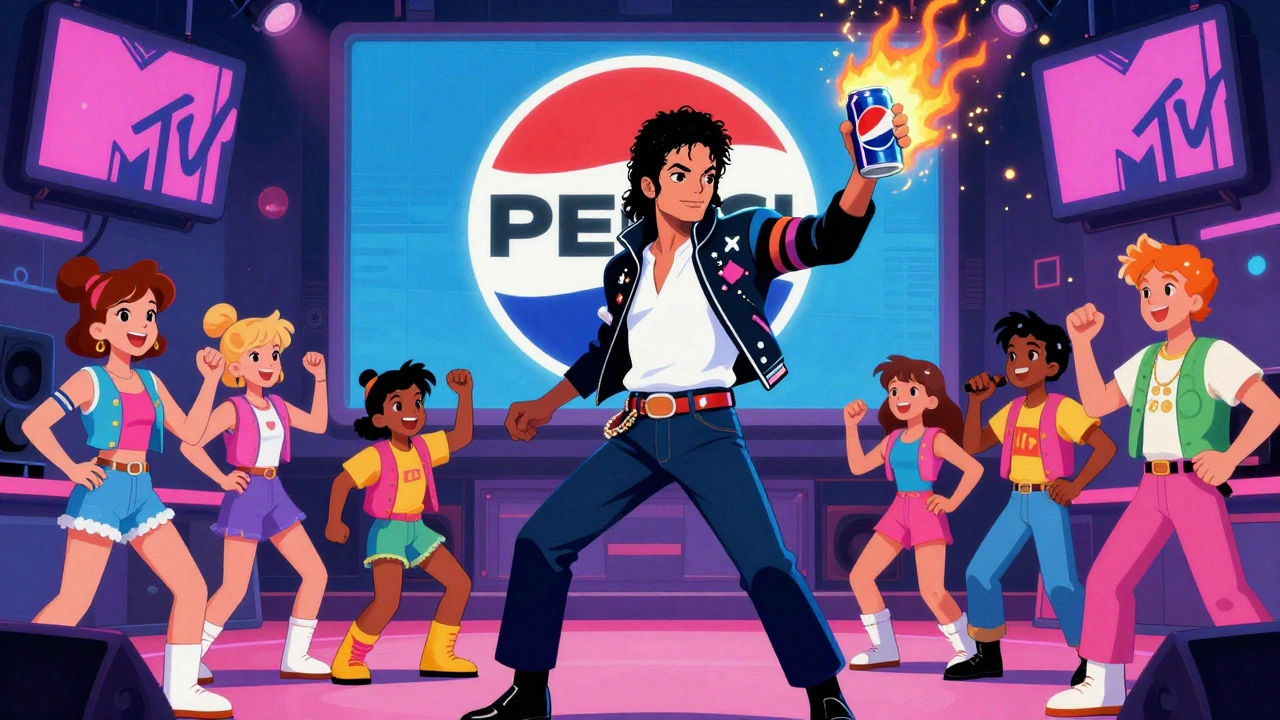

Before the 1980s, if a brand wanted to reach music fans, they ran a radio jingle or slapped their logo on a poster. But everything changed when MTV launched on August 1, 1981. Suddenly, artists weren’t just making songs-they were making visual moments. And brands noticed. Sponsorships and endorsements didn’t just become common in the 1980s-they rewrote the rules of music, marketing, and pop culture.
The MTV Effect: When Music Became an Ad
MTV didn’t just play music videos. It turned them into prime advertising real estate. By 1984, it reached 38 million U.S. households. That’s more than half of all cable subscribers. Brands realized they could reach the exact audience they wanted: teens and young adults who lived for music. Pepsi didn’t just want to sell soda-they wanted to own a moment. So they paid Michael Jackson $5 million in 1983 to be their face. Not just for a commercial. For a whole campaign. He recorded a new version of "Billie Jean" with the line "You’re the Pepsi generation." He filmed a 3-minute video for their ad. He appeared at their events. And when he got burned during filming in 1984, the whole world watched. Instead of hurting Pepsi, it made them seem bold. Real. Human.The Pepsi vs. Coke War: Who Owned the Youth?
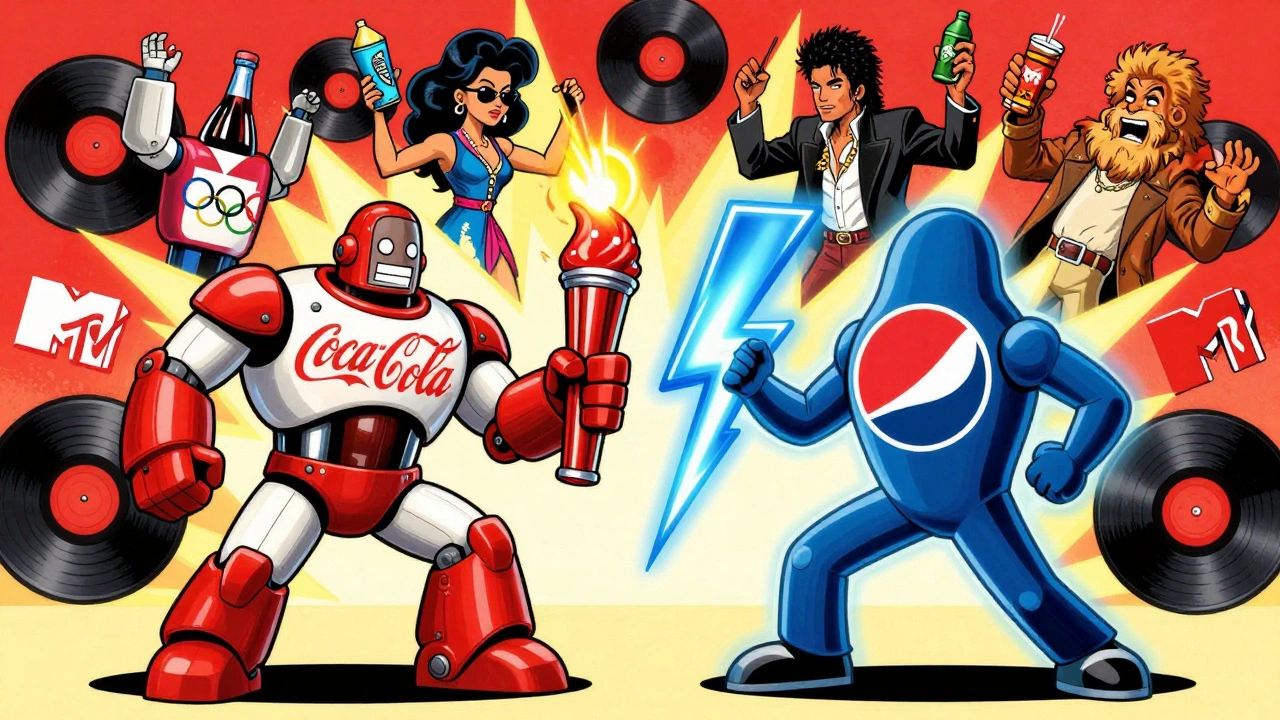
Coca-Cola had been the king of American soda for decades. But Pepsi was hungry. Their solution? Music. While Coca-Cola sponsored the 1984 Olympics with big, patriotic ads, Pepsi went straight for the heart of youth culture. They signed Michael Jackson, Diana Ross, and Lionel Richie. In 1984 alone, Pepsi spent $187 million on music sponsorships-23% of their entire marketing budget. That’s not just advertising. That’s war. By 1986, Pepsi’s market share among teens jumped from 22% to 31%. Coca-Cola couldn’t keep up. The reason? Music wasn’t just background noise anymore. It was the message. When Michael Jackson danced in "Beat It," you didn’t think "I want to buy a guitar." You thought, "I want to be like him." And if he was drinking Pepsi? Then Pepsi was cool.How These Deals Actually Worked
These weren’t simple contracts. They were complex, multi-year deals. A typical sponsorship included:- 3 to 5 TV commercials
- 8 to 12 personal appearances
- Product placement in music videos
- Exclusive songs or remixes made just for the brand
- 12 to 24 months of exclusivity
Product Placement: The OG Branded Content
No CGI. No digital editing. If you wanted a Coke can in a video, you had to put a real one there. Directors had to plan shots around products. Cameras had to frame them just right. A single placement cost between $50,000 and $250,000. And it worked. People didn’t feel like they were being sold to. They felt like they were watching real life. When Prince rolled through the streets in "1999," the Pepsi logo on the side of the car didn’t feel forced. It felt normal. Because it was real. Brands even sponsored entire tours. Coca-Cola ran the "Pop Music Festival" in 1985, hitting 15 U.S. cities. Fans didn’t just get to see their favorite artists-they got free soda, branded merch, and a sense that the music and the brand were one.The Numbers Don’t Lie
By 1989, music sponsorships were worth $12.7 billion. That’s 34% of the entire global sponsorship market. For every $1 spent, brands got $7 back in media value. Sports sponsorships? Only $4.50. Music was the winner. Professor Karen Nelson-Field’s 2021 study found celebrity endorsements boosted brand recall by 63%. But they also carried a 28% higher risk of failure. One misstep-like Madonna’s video-and millions could vanish overnight.
Was It Real? Or Just a Sellout?
In 1987, Billboard polled 1,200 fans. 68% said endorsements made products more appealing. But 42% thought they compromised the artist’s authenticity. That tension never went away. On Reddit, users still talk about it. One person wrote: "Michael Jackson got burned filming the Pepsi ad. I felt bad. But I also bought more Pepsi after that." Another said about Madonna: "Pepsi pulled the ad because they were scared. That’s not art-that’s fear." Gen Xers look back with nostalgia. A 2023 survey showed 72% of them feel positively about these deals. Millennials? 63% call them "cringey." But here’s the thing: they all remember them. That’s the power of a cultural moment.The Legacy: How the 1980s Built Today’s Influencer Economy
Instagram influencers today? They’re the 1980s music stars. The same structure: brand deals, exclusive content, personal appearances. Billie Eilish’s 2021 campaign with Pull&Bear got slammed for "selling rebellion"-just like Madonna’s Pepsi ad. The script hasn’t changed. Only the platform. Michael Jackson’s Pepsi deal wasn’t just a sponsorship. It was a blueprint. It showed that artists could become brands. That music could be the ad. That authenticity wasn’t about being pure-it was about being real enough to matter. Dr. Emily West, author of "Brand Harmonies," put it best: "Successful music sponsorships don’t just attach brands to artists-they create cultural moments where the brand becomes part of the artistic expression." Pepsi didn’t just sell soda. For a few years, it sold a generation’s identity. And that’s why we still talk about it.What was the biggest music sponsorship deal of the 1980s?
The biggest was Michael Jackson’s deal with Pepsi. The initial 1983 contract was worth $5 million, making it the largest music endorsement ever at the time. By 1987-88, the deal was renegotiated to $10 million, including exclusive content, commercials, and tour appearances. It set the standard for future artist-brand partnerships.
How did MTV change music sponsorships?
MTV turned music videos into a visual advertising platform. Before MTV, brands used radio and print. After MTV, they could show artists using their products in real, high-energy scenes. By 1984, MTV reached 38 million U.S. homes, giving brands direct access to young audiences. This made product placement in videos worth up to $250,000 per spot and turned artists into walking billboards.
Why did Pepsi cancel Madonna’s "Like a Prayer" campaign?
Pepsi pulled the campaign after just three days because the music video featured religious imagery-including burning crosses and stigmata-that sparked outrage from religious groups. Even though the deal was worth $5 million, Pepsi feared backlash from conservative consumers and pulled the ad entirely. It became a landmark case in how brand safety can override artistic expression.
Did artists lose creative control with these deals?
Sometimes. Contracts often required artists to use products in videos, change lyrics for commercials, or appear in ads. Michael Jackson recorded a special version of "Billie Jean" for Pepsi. Lionel Richie made a three-minute song just for them. But many artists, like Prince and Bruce Springsteen, kept tight control. They used sponsorships to amplify their message, not dilute it. The key was choosing brands that matched their image.
How much did brands spend on music sponsorships in the 1980s?
By 1989, music sponsorships made up $12.7 billion of the global $37.2 billion sponsorship market. Pepsi alone spent $187 million on music deals in 1984-23% of its total marketing budget. For every $1 spent, brands got $7 in media value, far outperforming sports sponsorships. This made music the most valuable sponsorship category of the decade.
Are today’s influencer deals similar to 1980s music sponsorships?
Yes, exactly. Instagram influencers today follow the same model: brand partnerships, exclusive content, and personal appearances. Billie Eilish’s 2021 campaign with Pull&Bear was criticized the same way Madonna’s Pepsi deal was-"selling rebellion." The only difference? The platform. Back then, it was MTV. Now it’s TikTok and Instagram. The core idea-that artists become brand vessels-started in the 1980s.


