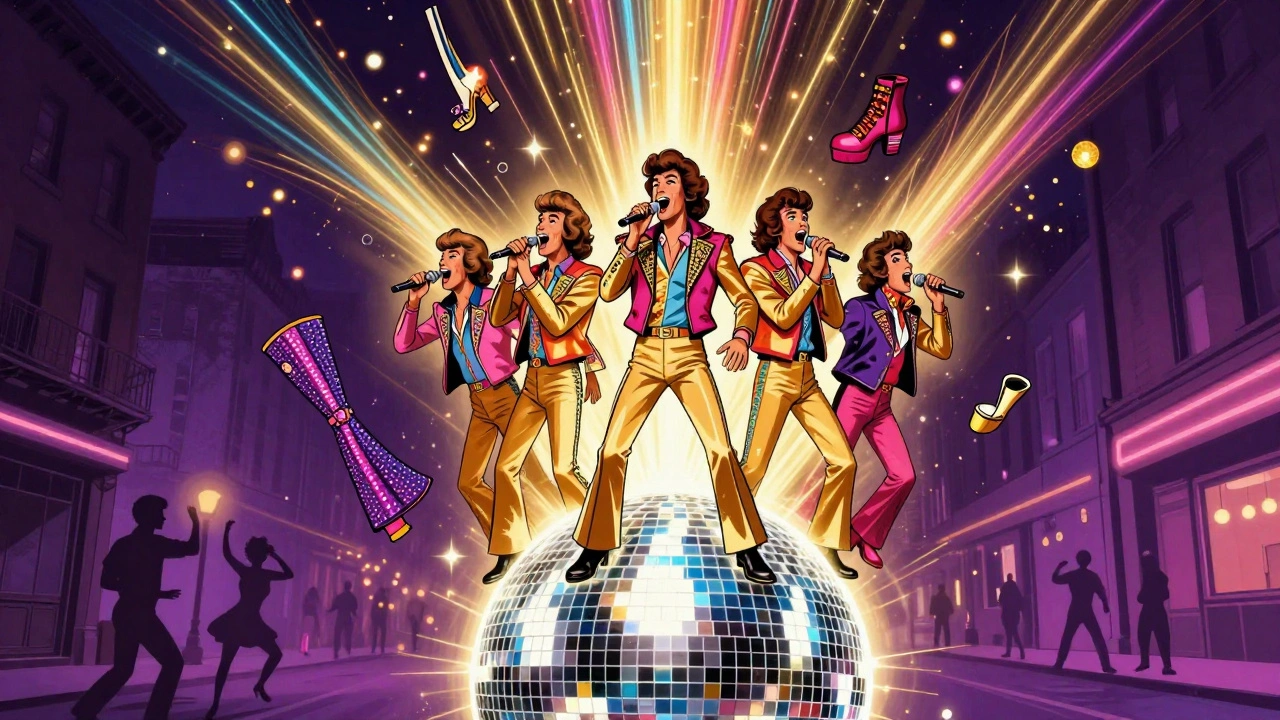

The Bee Gees weren’t supposed to be disco stars.
In 1977, the Bee Gees were a band past their prime. Barry, Robin, and Maurice Gibb had been charting hits since the 1960s, but by the mid-70s, their sound felt dated. Rock was dominating, punk was rising, and the brothers were struggling to stay relevant. Then came Saturday Night Fever.
The film wasn’t meant to be a musical. It was a gritty drama about Tony Manero, a working-class kid from Brooklyn who found escape on the dance floor. But when the producers needed a soundtrack, they turned to the Bee Gees-not because they were disco artists, but because they could write hooks that stuck. What happened next changed music forever.
Disco wasn’t new-but it was about to go global
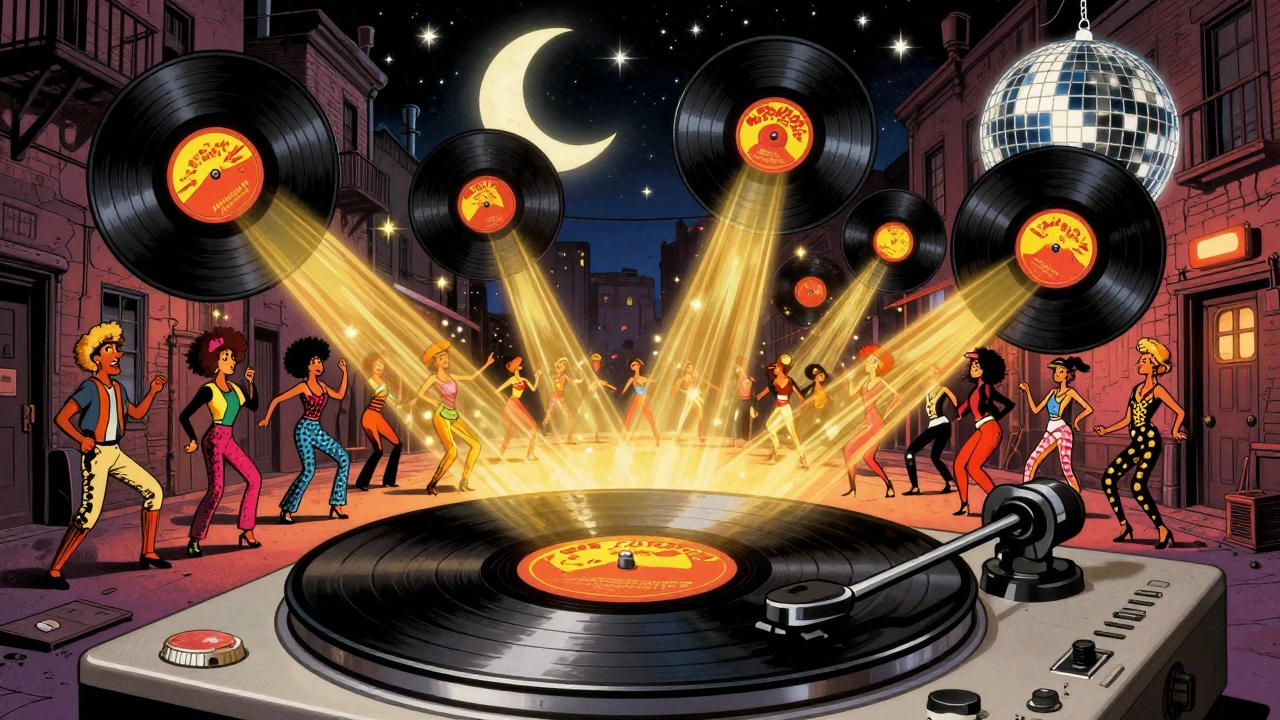
Before Saturday Night Fever, disco was a sound born in underground clubs. It came from gay Black and Latino communities in New York, where DJs mixed funk, soul, and Latin rhythms on turntables. Artists like Gloria Gaynor and KC & The Sunshine Band were already making hits, but disco stayed locked in clubs. It wasn’t on the radio. It wasn’t on TV. It wasn’t for mainstream America.
Then the Bee Gees dropped six songs on the soundtrack. Four of them hit No. 1. “Stayin’ Alive,” “Night Fever,” “How Deep Is Your Love,” “Too Much Heaven,” and “If I Can’t Have You” (written by Barry Gibb and sung by Yvonne Elliman) didn’t just top charts-they dominated them. The album spent 24 weeks at No. 1 on the Billboard 200. It sold over 40 million copies. No album before it had done that. No album since has matched it in pure cultural saturation.
What made the Bee Gees’ sound so impossible to ignore?
It wasn’t just the beats. It was the way they made you feel.
Every Bee Gees track on the soundtrack had the same DNA: a steady four-on-the-floor kick drum, syncopated strings, and those unmistakable falsetto vocals. “Stayin’ Alive” clocks in at exactly 104 beats per minute-the perfect tempo for strutting down the street like Tony Manero. The bassline doesn’t just groove; it pulses like a heartbeat. The harmonies? Layered so thick they sound like a choir of angels in a nightclub.
But here’s what most people miss: the emotion. “How Deep Is Your Love” isn’t just a dance track. It’s a ballad about loneliness and longing. In the movie, it plays during a quiet moment between Tony and his girlfriend, when everything’s falling apart. That contrast-joyful music with sad lyrics-made it hit harder than any party anthem.
Other disco songs were about dancing. The Bee Gees’ songs were about surviving. And that’s why they connected with everyone-not just club kids, but moms, dads, teenagers, even people who’d never set foot in a disco.
The soundtrack didn’t just sell-it rewrote the rules of pop
Before Saturday Night Fever, albums were collections of songs. The Bee Gees turned it into a movie score. They didn’t just write songs for the film-they wrote the film’s emotional backbone. Every track matched a scene. “Night Fever” isn’t just background music during a dance-off; it’s the heartbeat of Tony’s transformation.
That approach changed how soundtracks were made. Producers stopped thinking of music as an add-on. Now, songs had to drive the story. Nile Rodgers of Chic, who produced Donna Summer’s “I Feel Love,” later admitted the Bee Gees’ layered vocals and tight arrangements influenced his own work. Even modern artists like The Weeknd and Dua Lipa cite the soundtrack as a blueprint for their dance-pop sound.
And the production? Revolutionary. The Gibb brothers used multitrack recording like no one else. They stacked their own voices-Barry, Robin, and Maurice-until the harmonies sounded like a full choir. That technique became standard in pop, R&B, and later, EDM. Berklee College of Music still teaches it today.
Disco exploded-and then it imploded
Within months, disco was everywhere. Teenagers bought bell-bottoms and platform shoes. Dance studios opened in every town. Even the White House hosted a disco night. Record stores couldn’t keep disco albums in stock. DJs replaced live bands because they were cheaper and easier to book.
But that’s also why it died.
The more mainstream disco became, the more people started to hate it. Critics called it soulless. Rock fans saw it as a betrayal. The backlash wasn’t just about music-it was about class, race, and identity. Disco was seen as “too gay,” “too Black,” “too flashy.” And the Bee Gees? White British guys singing falsetto over a Black-created genre? To some, that felt like theft.
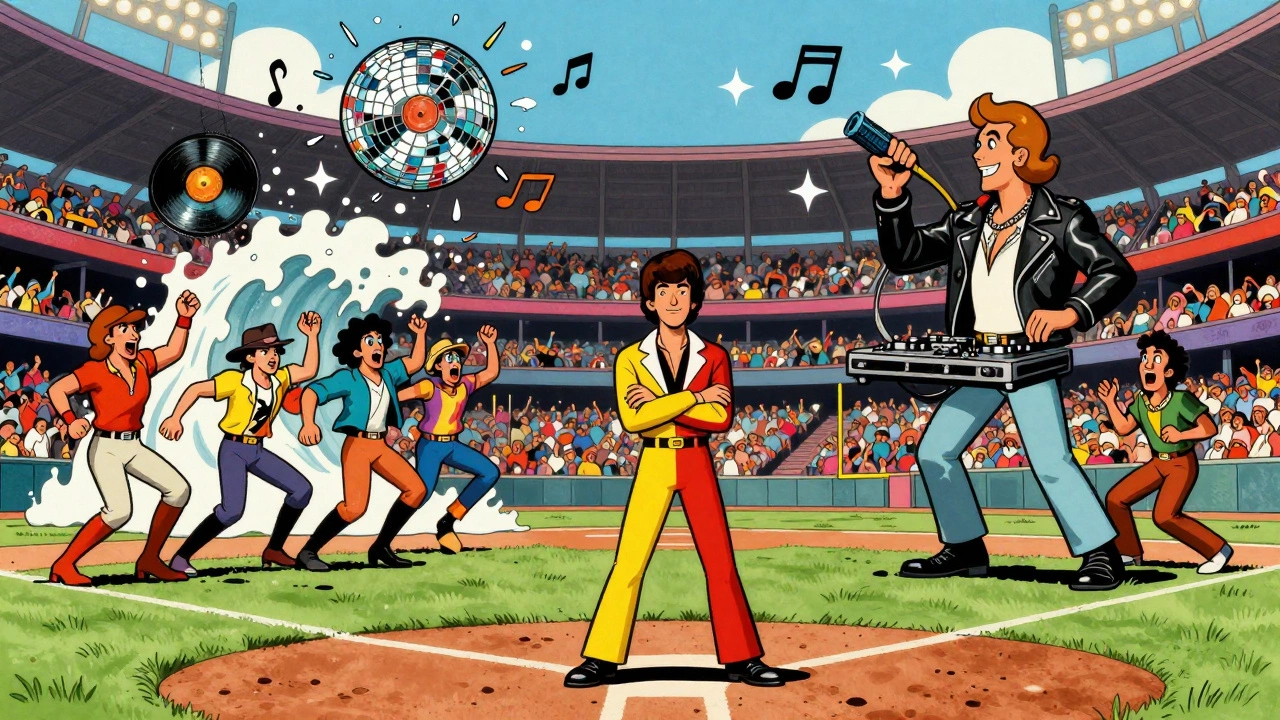
The explosion came on July 12, 1979: Disco Demolition Night in Chicago. A DJ blew up a crate of disco records between baseball games. The crowd stormed the field. The game was canceled. It wasn’t just a stunt-it was a cultural riot.
After that, radio stations stopped playing disco. Record labels dropped their artists. Clubs closed. The genre was declared dead.
But the music never really left
Disco didn’t die. It just went underground-and then came back.
In 2017, “Stayin’ Alive” had over 1.2 billion streams on Spotify. It’s still the most-played disco song ever. DJs remix it for festivals. TikTok teens use it for dance challenges. In 2021, the Library of Congress added the Saturday Night Fever soundtrack to its National Recording Registry, calling it “culturally, historically, and aesthetically significant.”
Modern pop is full of its DNA. Dua Lipa’s “Levitating”? That bassline? Pure Bee Gees. The Weeknd’s “Blinding Lights”? The synth pattern? Straight outta 1977. Even Beyoncé’s “Break My Soul” borrows the four-on-the-floor beat and the gospel-infused vocal runs that started with disco.
The irony? The very thing that made the Bee Gees kings of disco-its mass appeal-also made it a target. But time doesn’t care about backlash. It only cares about what lasts.
Why does it still matter today?
Because Saturday Night Fever proved music could change the world without saying a word.
It gave a voice to people who felt invisible. It turned a Brooklyn kid’s dream into a global anthem. It showed that dance music could be deep, not just loud. And it proved that sometimes, the most unlikely artists can define a generation.
The Bee Gees didn’t invent disco. But they gave it its soul. And no matter how many times people try to bury it, that groove still lives. Every time someone hears “Stayin’ Alive” and starts moving, disco is alive.
Did the Bee Gees write all the songs on the Saturday Night Fever soundtrack?
No, but they wrote six of the seventeen tracks, including all four of their No. 1 hits: "Stayin' Alive," "Night Fever," "How Deep Is Your Love," and "Too Much Heaven." They also wrote "If I Can't Have You," which became a No. 1 hit for Yvonne Elliman. The rest of the soundtrack featured other artists like KC & The Sunshine Band and the Trammps, but the Bee Gees’ songs made up the emotional core of the film.
Why did disco become so unpopular after Saturday Night Fever?
Disco’s popularity became its downfall. As it exploded into the mainstream, it was oversaturated. Record labels pushed it aggressively, clubs replaced live bands with DJs, and the music started to feel manufactured. Many fans saw it as inauthentic-especially white, middle-class audiences who felt it had been co-opted from its Black and gay roots. The Disco Demolition Night in 1979 became a symbolic end, but the backlash was really about fear of change, not just the music itself.
What made the Bee Gees’ falsetto vocals so unique in disco?
Before the Bee Gees, disco vocals were usually deep, soulful, or powerful-think Donna Summer or Gloria Gaynor. The Bee Gees used high, layered falsetto in a way no one else had. It was emotional, almost fragile, yet incredibly rhythmic. It created a contrast: soft voices over hard beats. That tension made their songs feel both intimate and explosive, which is why they stood out in a genre full of loud, flashy performances.
How did Saturday Night Fever change how movies used music?
Before this film, movie soundtracks were often collections of songs that didn’t necessarily connect to the story. Saturday Night Fever changed that. Every Bee Gees track was chosen to reflect a character’s inner state. The music didn’t just play in the background-it drove the emotion. That approach became the standard for future films like Flashdance, Dirty Dancing, and even modern hits like Guardians of the Galaxy.
Is Saturday Night Fever still relevant in today’s music scene?
Absolutely. Modern pop and dance music still use the same production techniques: layered harmonies, four-on-the-floor beats, and synth-driven rhythms. Artists like Dua Lipa, The Weeknd, and Bruno Mars have openly cited the soundtrack as inspiration. Even TikTok trends keep "Stayin' Alive" alive. It’s not just nostalgia-it’s a blueprint. The groove hasn’t changed. The world just forgot how to listen.