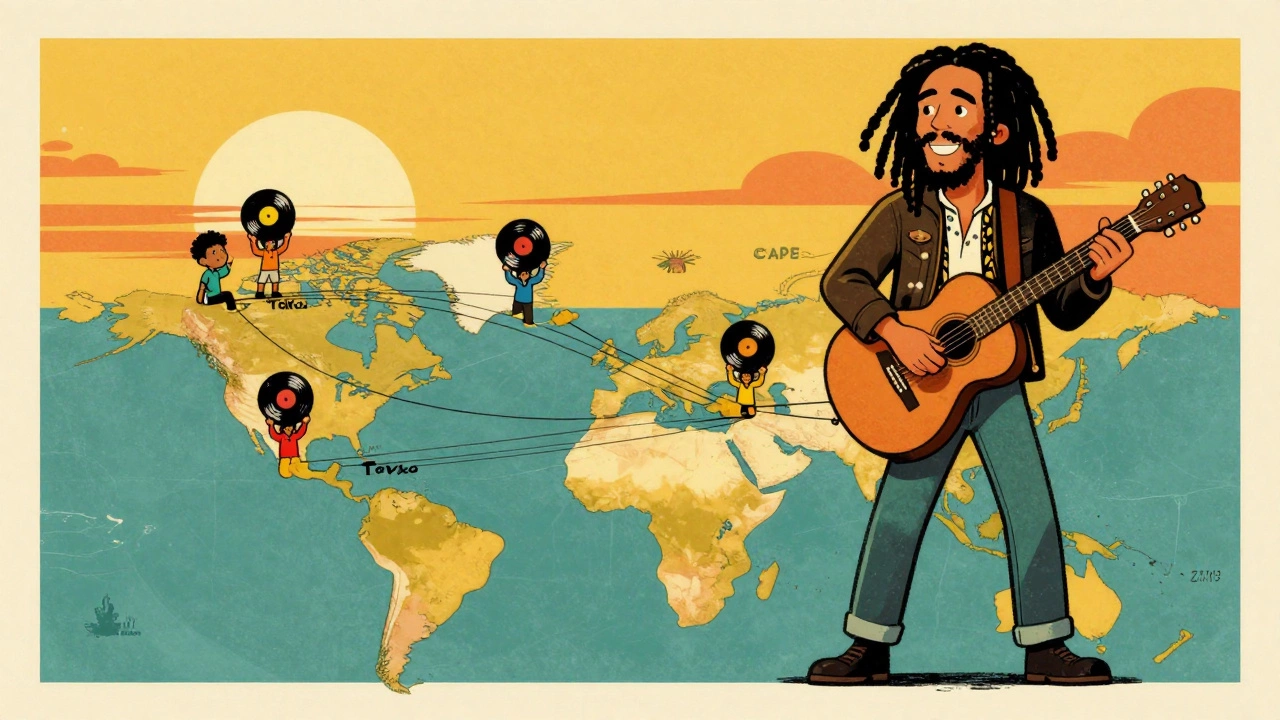

Before the 1980s, reggae was mostly known in Jamaica and a few Caribbean islands. But by 1990, you could hear it in Tokyo nightclubs, Cape Town townships, and Sydney beach parties. What happened in that single decade turned a local sound into a worldwide movement. It wasn’t just about music - it was about identity, resistance, and connection.
Bob Marley Didn’t Just Play Music - He Built a Bridge
Bob Marley’s death in 1981 didn’t end reggae’s rise - it fueled it. His albums, especially Exodus and Legend, kept selling across continents long after he was gone. But his real impact started earlier. When he played Tokyo in 1979, he didn’t just perform. He sparked something. Japanese fans started writing letters to Kingston record stores. They sent money to buy vinyl. By 1983, a fan named Jey Inoue led the first group tour to Jamaica just to visit Studio One and Randy’s Records. One of those tourists? Rankin’ Taxi - who later became Japan’s biggest reggae star.
Marley’s lyrics about freedom, unity, and spirituality spoke to people who had never set foot in Jamaica. In South Africa, under apartheid, reggae became the voice of the oppressed. In Zimbabwe, his performance on Independence Day in 1980 turned him into a symbol of liberation. People didn’t just listen - they saw themselves in his songs.
The UK: Punk, Lovers Rock, and a Musical Collision
In London, reggae didn’t just arrive - it mixed. DJs like Don Letts played Bob Marley and The Clash back-to-back at The Roxy. Punk kids in safety pins started dancing to reggae beats. Suddenly, the music wasn’t just for Caribbean immigrants - it was for angry white teens too.
That blend gave birth to Lovers Rock, a smoother, romantic version of reggae. Artists like Janet Kay and Louisa Mark hit the UK charts. Record labels started signing reggae acts not as exotic imports, but as mainstream acts. Black Uhuru won the first Grammy for Best Reggae Album in 1985. That award wasn’t just a trophy - it meant radio stations would play reggae, record stores would stock it, and teens in Manchester could buy a reggae tape without being judged.
Japan: The Most Surprising Reggae Powerhouse
By 1987, Japan had more reggae fans than any country outside Jamaica. Why? It wasn’t just Marley. It was the culture. Japanese fans didn’t just buy albums - they studied them. They learned about Rastafari. They collected rare 7-inch singles. They traveled to Kingston to meet producers. They didn’t want to imitate - they wanted to understand.
By the late 1980s, Japanese reggae bands like Rankin’ Taxi and The Bizarros were recording in Jamaica. Their music kept the roots - the one-drop rhythm, the bass-heavy groove - but added their own flavor. You could hear it in the way they sang: precise, emotional, deeply respectful. Japan didn’t adopt reggae - it embraced it as its own.
Africa: Reggae as a Soundtrack to Liberation
In Nigeria, Majek Fashek was already popular in the 1970s. But in the 1980s, reggae exploded across the continent. Why? Because it spoke to the same struggles - colonialism, poverty, injustice. When Marley played Zimbabwe’s independence concert, it wasn’t a performance. It was a declaration.
Across West Africa, reggae fused with highlife and Afrobeat. In South Africa, it became a quiet act of rebellion. In Cape Town, colored and Black communities used reggae to connect. The music didn’t need translation. The message was clear: stand up. Stay strong. Keep hope.
The Americas: From Panama to Hawaii
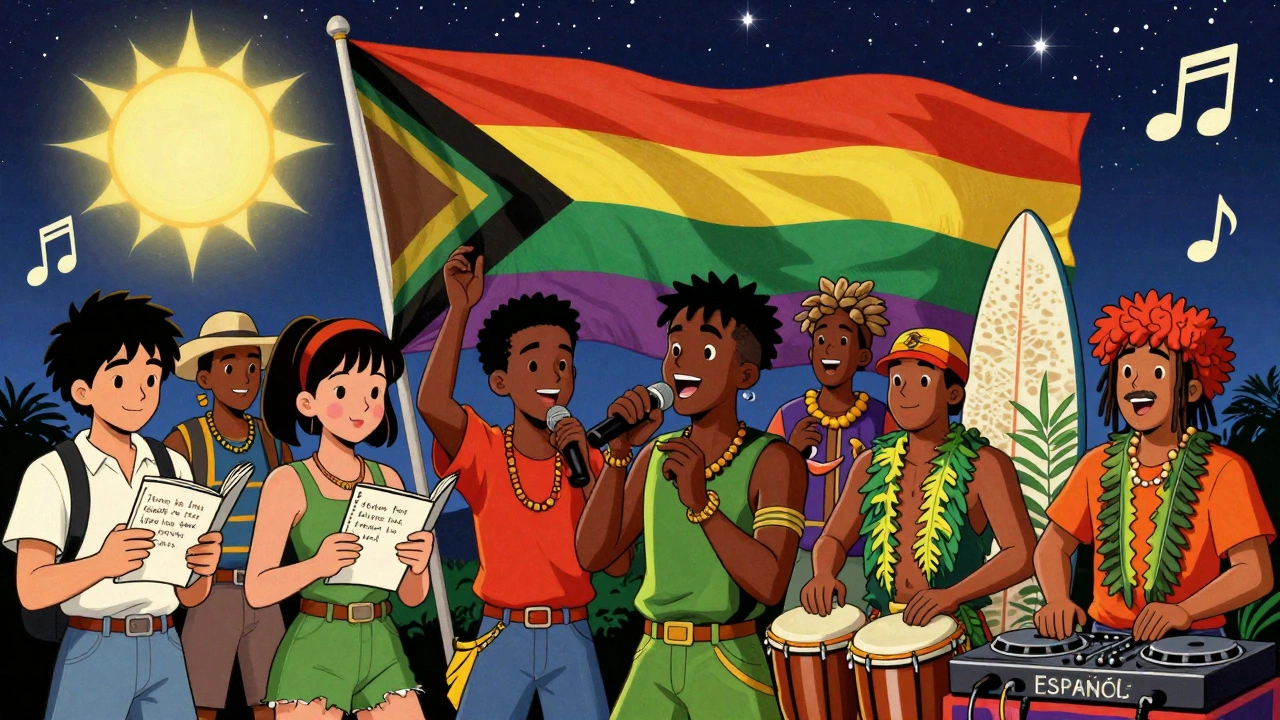
In Panama, artists started singing reggae in Spanish. That was the birth of reggae en Español - a genre that would later explode in Colombia, Venezuela, and Mexico. Suddenly, reggae wasn’t just English. It was Spanish. It was local.
In Hawaii, a new sound called Jawaiian emerged. It mixed reggae with Hawaiian melodies, steel drums, and lyrics about surfing, sunsets, and aloha spirit. By 1989, Jawaiian was the top genre on local radio. It wasn’t imitation - it was evolution.
In the U.S., reggae never left. Johnny Nash’s "I Can See Clearly Now" had already proved it could top the charts. In the 1980s, it started influencing hip-hop. The Sugarhill Gang sampled reggae beats. Public Enemy used reggae rhythms in their production. Reggae wasn’t just a genre anymore - it was a building block.
Dancehall: The New Sound of the Streets
While roots reggae kept its spiritual core, a louder, faster, more electronic sound was rising in Jamaica. Dancehall. It used drum machines, digital synths, and deejays toasting over riddims. It was raw. It was street. It was everywhere.
Artists like Yellowman and Shabba Ranks didn’t sing about peace - they rapped about partying, politics, and street life. Their records sold in Kingston, then in London, then in New York. Dancehall didn’t replace roots reggae - it expanded it. Now reggae had two sides: one for meditation, one for movement.
Festivals, Cruises, and a Global Fanbase
Reggae Sunsplash started in Jamaica in 1978, but by the 1980s, it drew fans from 40 countries. Then came Rototom Sunsplash in Spain. Suddenly, reggae wasn’t just heard - it was experienced. People flew in from Australia, Germany, Brazil. They camped out. They danced. They bought T-shirts with the Jamaican flag.
Reggae cruises started sailing from Miami to the Caribbean. Resorts in Montego Bay began offering "Reggae Weekends." You could book a vacation and hear live sound systems every night. Reggae became a lifestyle - not just a genre.
Why the 1980s Changed Everything
Before the 1980s, reggae was a Jamaican sound. After the 1980s, it was a global language. It didn’t need permission to spread. It spread because it had truth. It had rhythm. It had heart.
It wasn’t just Bob Marley. It was Japanese collectors. South African teens. Panamanian DJs. Hawaiian surfers. UK punks. Nigerian artists. They all took reggae and made it theirs. And in doing so, they turned a local music style into one of the most influential cultural forces of the late 20th century.
Today, reggae is still growing. But none of it would’ve happened without what happened in the 1980s - when a small island’s music found a world that needed to hear it.


