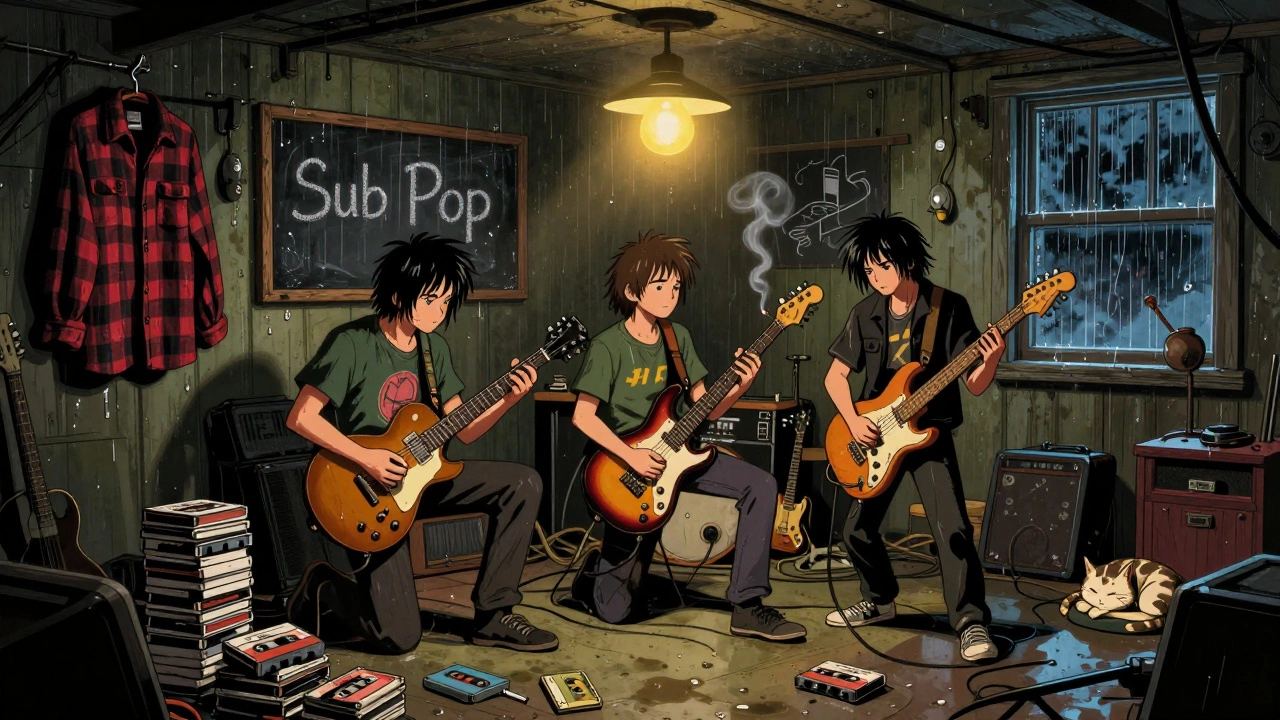

Before MTV, grunge was just noise in a basement
In the late 1980s, if you wanted to hear Nirvana, Pearl Jam, or Soundgarden, you had to drive to Seattle. Or order a cassette from Sub Pop Records. Or catch a band playing in a smoky club where the stage was three feet off the floor and the crowd smelled like wet flannel. Grunge wasn’t a genre on the radio. It wasn’t on TV. It was a local thing-raw, loud, and unpolished. Bands didn’t care about looking good. They cared about sounding real. Kurt Cobain wore thrift store clothes. Eddie Vedder screamed like he was trying to scream the pain out of his chest. And no one outside the Pacific Northwest cared.
Then MTV changed everything-in just a few months
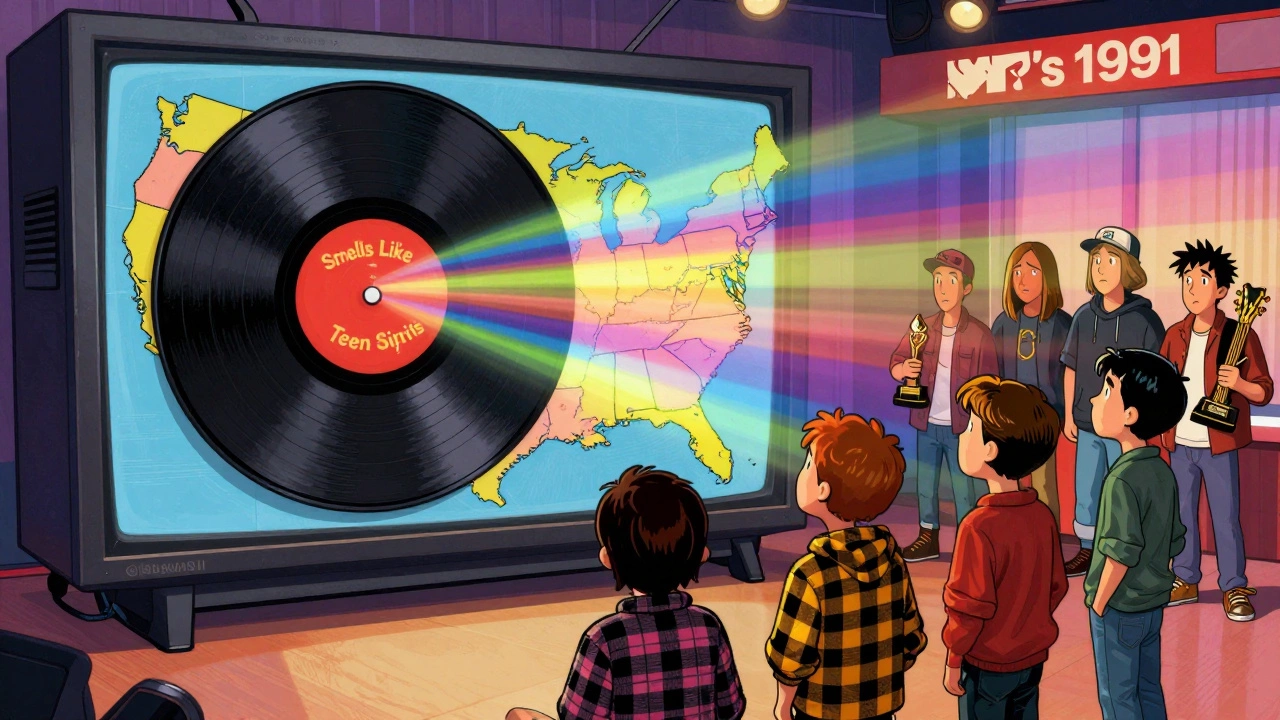
Everything shifted in early 1991. MTV didn’t wake up one morning and decide to play grunge. It happened because they played R.E.M.’s "Losing My Religion"-a song with a mandolin, slow build, and haunting lyrics-and it exploded. Suddenly, the network realized: kids weren’t just into shiny hair and spandex anymore. They wanted something darker. Something real. So they started playing more alternative bands. And then, in September 1991, they aired Nirvana’s "Smells Like Teen Spirit" video.
It wasn’t fancy. No choreography. No special effects. Just a high school gym, kids in flannel, and a band that looked like they’d just woken up. The budget? $50,000. Less than half of what a typical pop video cost back then. But it felt true. And that’s what hooked viewers. Within two weeks, MTV put it in heavy rotation. By December, "Nevermind" was selling 300,000 copies a week. Nirvana went from playing dive bars to topping the Billboard charts. Michael Jackson’s "Dangerous"? Dethroned. The ’80s were over.
MTV didn’t just play videos-it built a new culture
MTV didn’t just show music. It made people feel seen. Gen X kids were tired of the fake perfection of the ’80s. They didn’t want to dance like Michael Jackson or dress like Bon Jovi. They wanted to sit in silence, stare out the window, and feel like someone else understood their anger. Grunge gave them that. And MTV gave it a stage.
Other videos followed the same blueprint. Pearl Jam’s "Jeremy" showed a troubled teen shooting himself in front of a classroom. It was disturbing. It was real. It got played nonstop. Alice in Chains filmed their clips on tour, in hotel rooms, with no makeup, no lighting crew. Jeff Ament from Pearl Jam said they just sent rough footage to the director and said, "Do what you want." That was the point. No polish. No lies. Just the band, tired and honest.
By late 1991, 40% of MTV’s daytime rotation was alternative music. That was unheard of. Before this, MTV was all about British pop stars and glam metal bands with teased hair and eyeliner. Now, it was flannel shirts, ripped jeans, and muddy boots. And suddenly, every kid in Ohio, Texas, and Florida wanted to wear the same thing. Flannel became a national uniform. Doc Martens sold out. Seattle fashion was everywhere.
The bands didn’t want this-but they couldn’t say no
Here’s the weird part: most of these bands hated MTV.
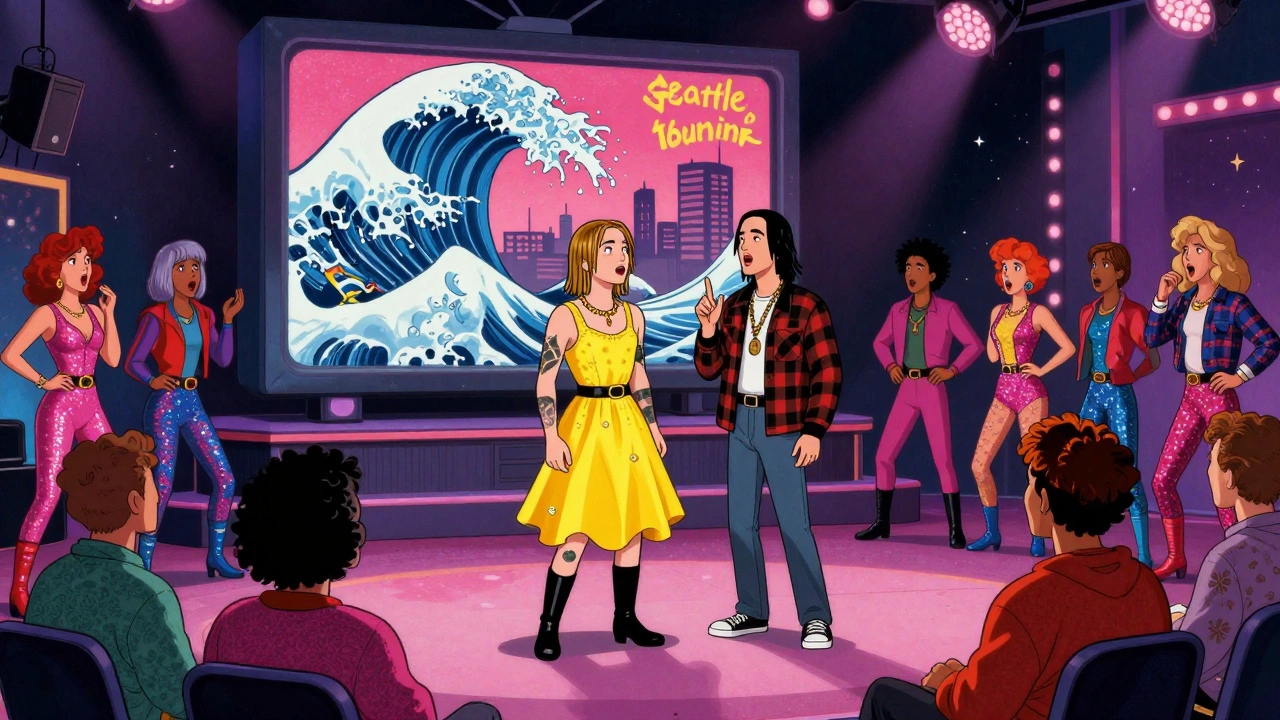
Kurt Cobain wore a yellow prom dress to the 1992 MTV Video Music Awards and said he kept his awards in the toilet. Eddie Vedder gave a speech at the same show saying, "If it weren’t for music, I think I would have shot myself in the front of the classroom." Pearl Jam refused to make videos for their biggest hits. Alice in Chains called the whole thing surreal-showing up to award shows in sweatshirts while Elton John showed up in velvet.
But they still played along. Why? Because MTV meant money. And money meant survival. Sub Pop, the indie label that put out Nirvana’s first records, had printed 10,000 copies of "Bleach." After MTV, they couldn’t keep up. Major labels came knocking. Soundgarden, Pearl Jam, and Alice in Chains all signed deals with Warner Bros., Epic, and Columbia. Sales jumped 300% to 400% in two weeks after a video aired. That’s not just success. That’s a tidal wave.
MTV didn’t invent grunge. But it turned a regional sound into a global movement in less than a year. And the bands knew it. They were angry. They were confused. But they were also rich.
It wasn’t just music-it was a cultural earthquake
MTV didn’t just change how music was sold. It changed how people thought about identity, rebellion, and authenticity.
Conservative commentators called grunge "depressing" and "nihilistic." Critics said MTV was turning a messy, diverse scene into a single brand. But kids didn’t care. They saw themselves in those videos. They saw someone who didn’t smile on cue. Someone who didn’t care about being liked. Someone who screamed instead of sang.
And for the first time, a youth movement didn’t come from New York or Los Angeles. It came from a rainy city in the Pacific Northwest. A city no one had heard of. Until MTV showed it to the world.
By 1994, MTV had moved on. Hip-hop, pop, and reality TV started taking over. Grunge faded. Nirvana’s lead singer was gone. Pearl Jam stopped making videos. But the impact stuck. The way music spreads today-through TikTok, YouTube, Spotify playlists-follows the same model MTV created. The network didn’t just play songs. It decided what culture looked like. And for a brief, loud, messy moment, it chose grunge.
What happened after MTV stopped playing grunge?
After 1994, MTV stopped treating music like the main event. Reality shows like "The Real World" and "Road Rules" took over. Music videos got shorter. Playlists got algorithm-driven. The power to make a band famous no longer lived in one channel. It was spread across hundreds of apps.
But the lesson didn’t disappear. Today, if a band goes viral on TikTok, it’s the same thing that happened with Nirvana on MTV. A small, raw sound finds a massive audience overnight. The difference? Back then, you had to wait for MTV to pick you. Now, you can upload it yourself. But the hunger for authenticity? That’s still the same.
Grunge didn’t die because it lost its edge. It died because it became too big. And MTV, the machine that made it famous, couldn’t control what it had created.


