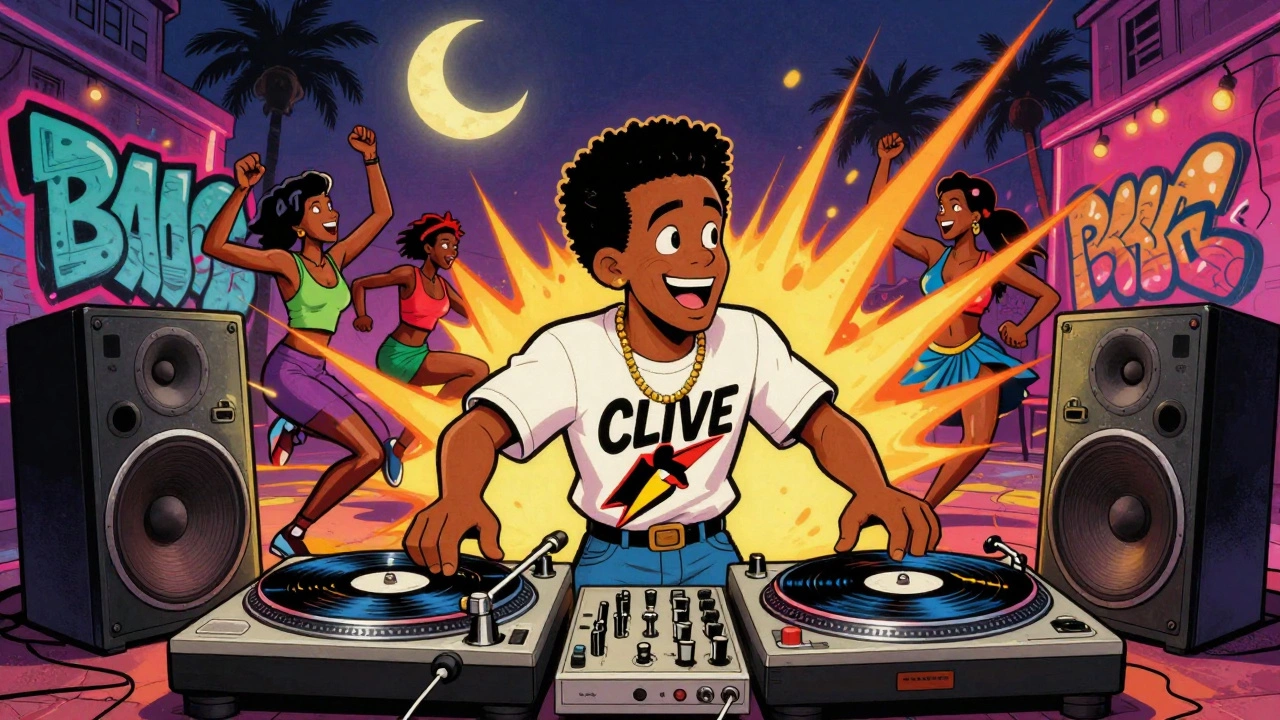

When you think of hip-hop, you might picture New York City block parties, graffiti, breakdancing, and MCs spitting bars over booming beats. But the roots of that sound didn’t grow in the Bronx alone. They were planted in Kingston, Jamaica. The music that became hip-hop didn’t just borrow from Jamaican dancehall - it was built on it. And the man who made that connection? Clive "Kool Herc" Campbell, a Jamaican immigrant who brought more than just his luggage to the South Bronx. He brought a whole culture.
The Night That Changed Everything
On August 11, 1973, at 1520 Sedgwick Avenue in the West Bronx, a 18-year-old named Clive Campbell threw a back-to-school party. He didn’t have fancy equipment. Just two turntables, a mixer, and two massive speakers he’d brought from Jamaica. What he did that night wasn’t just about playing music - it was about reimagining how music could be used. He noticed that when people danced, they went wild during the short instrumental breaks in funk and soul records. So he started playing the same break on one turntable while the other was loading the next record. He kept the beat going. He extended it. He made it last longer than anyone had ever heard before.
This technique - called the "merry-go-round" - became the foundation of the breakbeat. And it didn’t come out of nowhere. In Jamaica, DJs like Tom the Great Sabastian and Sir Nick the Champ had been doing something similar for years. They’d take reggae and ska records, strip out the vocals, and loop the drum-and-bass parts to keep dancers moving. Kool Herc didn’t invent the break. He just applied what he’d seen and heard growing up in Kingston to American records. That night, he didn’t just start hip-hop. He started a new way of listening.
From Toasting to Rapping
It wasn’t just the beats. It was the words too. In Jamaica, DJs didn’t just spin records - they talked over them. They’d chant, joke, hype the crowd, and call out names. This was called "toasting." It wasn’t singing. It wasn’t speaking. It was rhythmic talking - like poetry with a pulse. U-Roy, Duke Reid, and King Stitt were legends in Kingston for their toasting over dub tracks. They didn’t rhyme in the way we think of rapping today. But they had flow, timing, and punch.
Kool Herc brought that style with him. His MC, Coke La Rock, stood at the mic and started talking over the breaks - not just announcing songs, but building energy, calling out dancers, and trading lines with the crowd. It was call-and-response, just like in Jamaica. You can hear it in Kool Herc’s 1975 recording "Herculoids." The cadence, the rhythm, the way the voice locks into the drum - it’s unmistakably Jamaican. By the time the Sugarhill Gang dropped "Rapper’s Delight" in 1979, the blueprint was already set. The difference? They used Chic’s "Good Times" bassline. But the idea of looping a groove? That came from Jamaican dub producers like King Tubby and Lee "Scratch" Perry, who had been doing it since the early 70s.
The Sound System Legacy
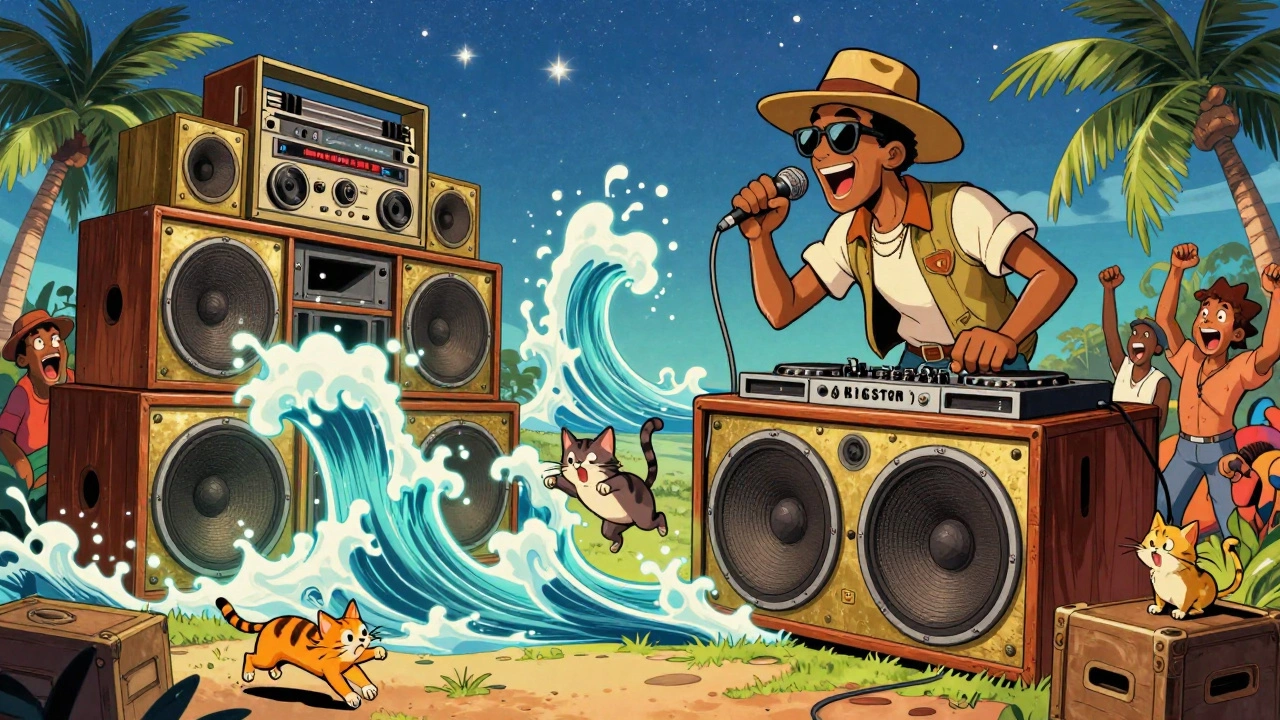
Forget headphones. Back in Jamaica, music wasn’t something you listened to alone. It was a public event. Sound systems were huge - sometimes bigger than a car. They had custom-built speakers, massive amplifiers, and bass so deep you felt it in your chest. These weren’t just speakers. They were weapons. DJs would take them to parks, yards, and street corners and battle each other. The crowd chose the winner. The loudest. The deepest. The most creative.
Kool Herc built his own version in the Bronx. He called it "The Bronx Sound System." He used twin 15-inch speakers, just like the ones in Kingston. He didn’t just play music - he projected it. He made sure every kid in the housing project could feel the beat. That’s why hip-hop grew so fast. It wasn’t just music. It was an experience. And that experience came straight from Jamaica.
From Dub Riddims to Hip-Hop Beats
One of the biggest misunderstandings about hip-hop is that it’s all about sampling. But sampling didn’t start with the MPC or the SP-1200. It started in Jamaica. Dub producers in the 70s would take a reggae track, remove the vocals, and remix it with echo, reverb, and bass drops. They’d create a new version - a "dub" - and play it for dancers. These versions weren’t one-offs. They became "riddims" - reusable instrumental tracks that multiple artists could rap or sing over.
That’s exactly what hip-hop producers did. Instead of using reggae riddims, they used funk and disco breaks. But the *idea* was the same. Sly & Robbie, the legendary Jamaican production team, made entire albums built around one rhythm. Marley Marl, one of hip-hop’s first great producers, took that model and applied it to New York. He didn’t need to invent it. He just needed to adapt it.
Today, you can buy sample packs like VP Records’ "Riddim Driven," which has 120 authentic Jamaican rhythms. Boi-1da, Drake’s main producer, uses them. Producers on Skillshare are taking courses on "Jamaican Rhythms for Hip-Hop Producers." Over 12,000 people enrolled in 2025 alone. The line between the two genres isn’t just blurry - it’s gone.
The Global Shift
The fusion didn’t stop in the 80s. It exploded. In 1988, Shinehead dropped "Try My Love," mixing dancehall patois with hip-hop beats. Heavy D sampled The O’Jays over a dancehall rhythm in 1989. KRS-One used reggae drums in "Sound of da Police" to talk about police brutality - just like Jamaican artists did. By the 90s, Shabba Ranks was on stage with LL Cool J. The lines were crossed.
But it wasn’t just artists. The technology changed too. In the mid-80s, Jamaica switched from live bands to digital rhythms using Casio keyboards. Hip-hop producers switched too - from turntables to samplers. Suddenly, both genres were using the same tools. The same machines. The same rhythms.
By 2016, Drake’s "One Dance" hit #1 for 10 weeks. It wasn’t just a hip-hop song. It was dancehall - patois, rhythm, groove - wrapped in Canadian pop. It made $50 million in streaming revenue. And it wasn’t an accident. It was the next step in a 40-year evolution.
The Cost of the Connection
But here’s the thing: not everyone got paid. In 2022, producer Steven "Lenky" Marsden revealed he earned $15,000 upfront for the "Diwali" riddim - the same one used in Sean Paul’s "Get Busy" and Beyoncé’s "Baby Boy." That one rhythm generated over $200 million. In 2022, Vybz Kartel sued Drake over "Hotline Bling," claiming his vocal style was copied. The case settled for $1.2 million. The issue isn’t just credit. It’s money. And power.
Now, in January 2026, Jamaica announced new laws requiring 15% royalty payments for any commercial use of Jamaican riddims. Major U.S. labels are fighting it. But the truth is simple: hip-hop wouldn’t exist without Jamaican sound systems, toasting, dub, and riddims. You can’t separate the two.
What It Means Today
Today, 68% of Americans aged 18-24 say their favorite music is hip-hop with dancehall influence. That’s up from 29% in 2015. In Brooklyn’s Caribbean Carnival, hip-hop and dancehall stages made up 78% of the $24 million in revenue. Riddim AI, a startup in Kingston, just raised $4.2 million to build AI that generates authentic dancehall beats for producers worldwide. By 2030, experts predict over half of all top 100 hip-hop tracks will have clear dancehall elements.
This isn’t about one culture "influencing" another. It’s about one culture *giving* another its heartbeat. Kool Herc didn’t create hip-hop by accident. He brought the tools, the sound, the spirit - and made them his own. But he never forgot where they came from.


