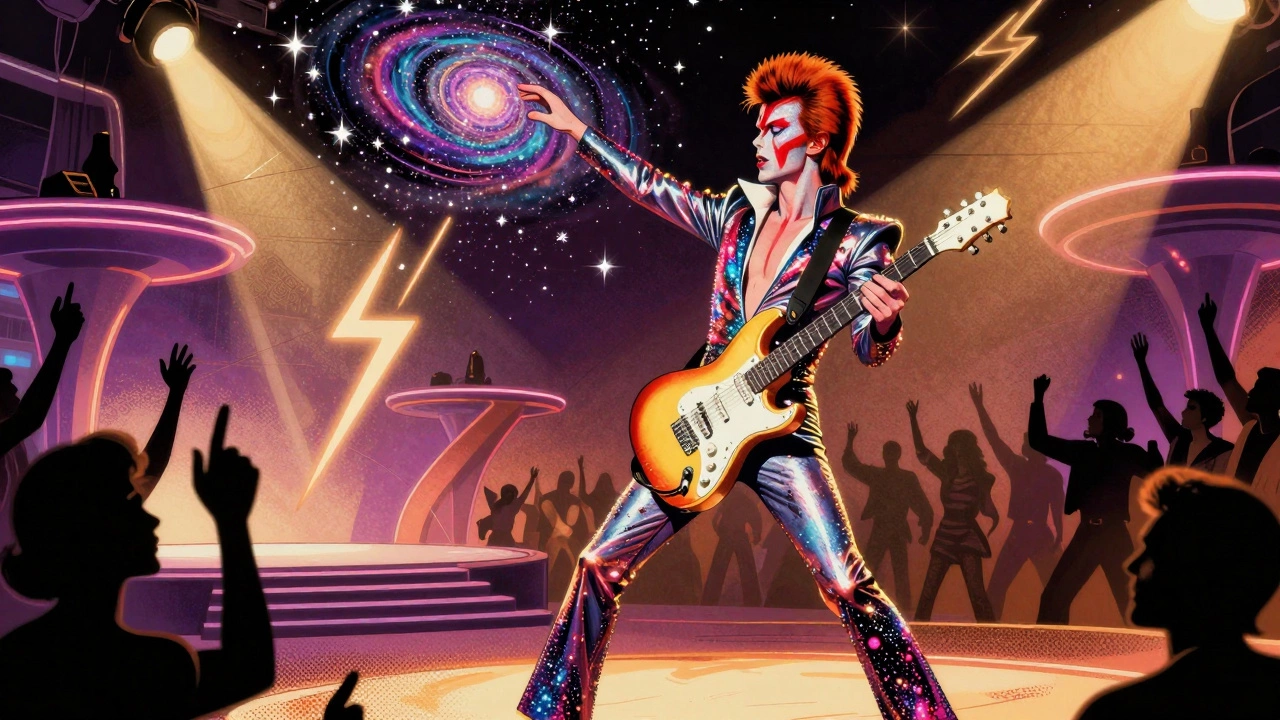

Rock music used to be about sweat, guitars, and raw emotion. But since the early 1970s, something else has been just as important: glam rock. It didn’t just change how bands sounded - it rewrote the rules of how they looked. Today, you can see its fingerprints everywhere: on stage, in music videos, on runways, and in the way artists present themselves. Glam rock didn’t fade away. It evolved. And it’s louder than ever.
What Glam Rock Really Was (And Wasn’t)
Glam rock wasn’t just about glitter and platform boots. It was a full-on rebellion. In the late 1960s, rock was serious - long hair, acoustic guitars, philosophical lyrics. Glam said: enough. It pulled from cabaret, sci-fi, and drag shows. It mixed hard rock riffs with pop hooks. And it dressed up like a space-age circus.
David Bowie’s Ziggy Stardust wasn’t a character - it was a revolution. He wore jumpsuits, painted his face, and sang about alien messiahs. Marc Bolan of T. Rex showed up on Top of the Pops in 1971 with sparkly pants and a grin that said, "I don’t care what you think." Roxy Music turned fashion into performance art. They didn’t just play songs - they created worlds.
And here’s the thing: no one cared if they could play perfectly. What mattered was presence. Power. Drama. The music didn’t need to be complex. It needed to make you feel something - usually excitement, defiance, or awe.
The Visual DNA of Glam Rock
Three things defined glam’s look - and they’re still the backbone of rock visuals today:
- Androgyny: Men in eyeliner. Women in leather pants. Gender lines didn’t just blur - they exploded. Bowie and Bolan didn’t just wear dresses; they made femininity feel dangerous and cool.
- Theatricality: Concerts weren’t shows. They were plays. Stages became sci-fi sets. Props, lighting, costumes - every detail told a story. This wasn’t entertainment. It was ritual.
- High Fashion Meets Rebellion: Glam didn’t just wear clothes. It designed them. Sequins, metallic fabrics, stiletto boots, fishnets, face paint - these weren’t costumes. They were armor.
These weren’t random choices. They were political. In a time when being openly queer was dangerous, glam rock gave people a way to say, "I’m here, I’m strange, and I’m not sorry." It became a safe space for LGBTQI+ fans and artists alike. That wasn’t an accident. It was the point.
How Glam Rock Killed "Authenticity" in Rock
Before glam, rock was supposed to be "real." Bands wore jeans, played in basements, and sang about heartbreak. Glam said: fake it better than real.
David Bowie didn’t just sing about being an alien - he became one. He changed personas like shirts. That freedom? It changed everything. Suddenly, musicians didn’t have to be one thing. They could be many. And that opened the door for Prince, Freddie Mercury, and later, Lady Gaga.
Think about it: when you see a modern rock band with a wild hairstyle, a leather corset, or a face full of glitter - they’re not being gimmicky. They’re following a rulebook glam rock wrote 50 years ago.
Who’s Carrying the Torch in 2026?
Glam rock didn’t die. It got an upgrade.
Måneskin is the most visible example. Their 2021 Eurovision win wasn’t just about a song - it was about a look. Tight sequins, teased hair, smoky eyes, and a stage presence that feels like a 1973 Bowie concert mixed with TikTok energy. They wear Gucci on tour. They don’t just play rock - they perform it.
The Struts do it with a British swagger. Their music sounds like Queen if it had a Netflix deal. Their videos are pure glam fantasy - think Bohemian Rhapsody meets Stranger Things.
Starbenders from Atlanta? They wear 12-inch platform boots, spray-paint their hair, and scream like they’re in a 1977 punk club. Their shows feel like a time machine set to "maximum glitter."
The Velveteers bring back the raw, fuzzed-out sound of T. Rex but with a female frontwoman who looks like a punk goddess from another dimension. Demi Demitro doesn’t just sing - she commands.
Ty Segall doesn’t look like a glam star. But his music? It’s glam on steroids. He covered T. Rex songs. He plays with feedback like it’s confetti. His concerts are messy, loud, and totally unapologetic.
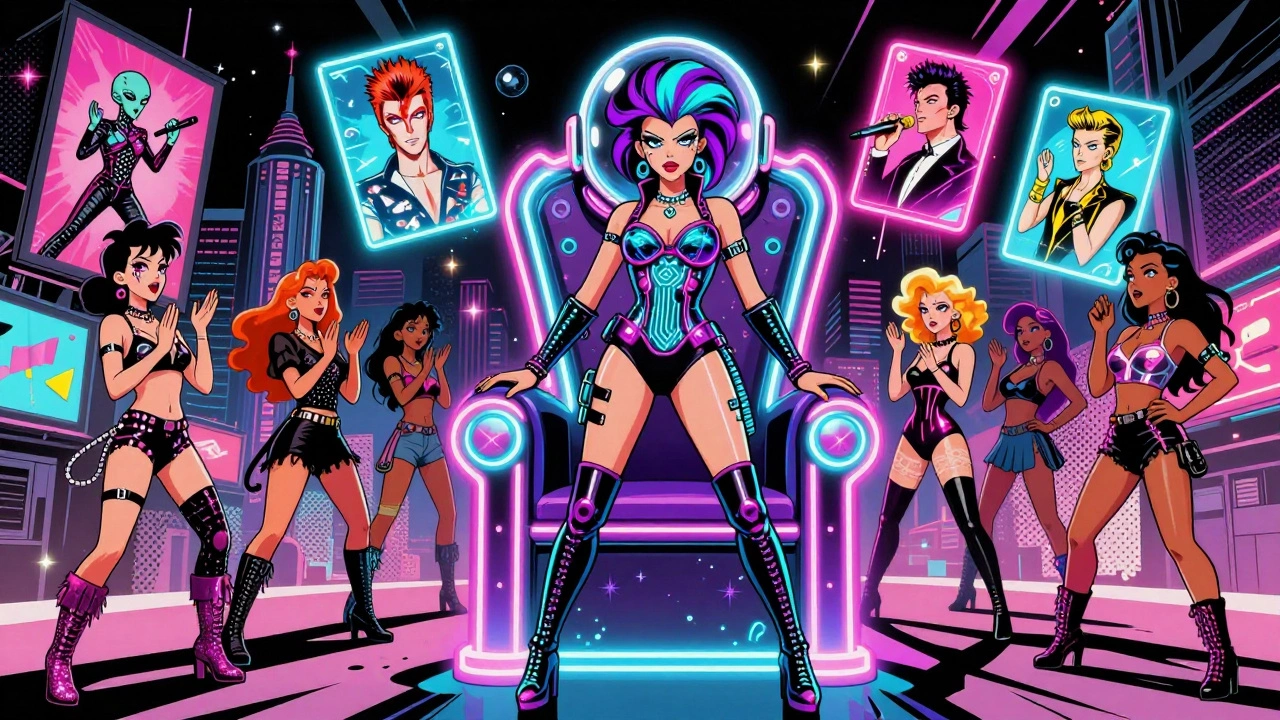
And then there’s Tash Blake. In 2026, she’s releasing her third EP with a visual concept called "The Pop Dungeon" - choreographed chaos, neon lighting, and fashion that looks like a cross between David Bowie and a cyberpunk anime. She’s not nostalgic. She’s forward.
Why This Matters Now More Than Ever
Glam rock didn’t just influence fashion. It changed how we think about identity.
Before glam, rock was mostly straight, male, and serious. After glam? You had artists who refused to be boxed in. Gender became fluid on stage. And fans - queer, nonbinary, shy, weird - finally saw themselves reflected in music.
Today, that legacy is everywhere. Look at Olivia Rodrigo’s music videos. Look at Harry Styles’ Gucci suits. Look at the rise of drag performers in mainstream rock. That’s glam rock’s DNA.
It’s not about looking flashy. It’s about using appearance as a tool of truth. If you’re not who the world expects you to be - wear glitter. Wear leather. Wear a crown. Make them look twice.
The Enduring Power of a Glittery Rebellion
Glam rock taught us that rock isn’t just about sound. It’s about spectacle. It’s about daring to be different. It’s about turning your body into a canvas and your stage into a temple.
Modern rock bands don’t need to copy the 1970s. But they don’t need to ignore it, either. The best ones? They take the spirit - the boldness, the freedom, the glitter - and make it their own.
That’s why, in 2026, you still see kids in glitter boots at small club shows. You still see bands with face paint opening for indie acts. You still see queer artists owning the stage like they own it.
Glam rock didn’t just leave a legacy. It gave rock back its soul.
Is glam rock still a thing today?
Yes - but not as a revival. Modern artists aren’t trying to recreate the 1970s. They’re using glam’s core ideas - theatricality, androgyny, high fashion, and fearless self-expression - to build something new. Bands like Måneskin, The Struts, and Tash Blake prove glam’s visual language is alive, evolving, and more relevant than ever.
Did glam rock invent rock fashion?
No - but it redefined it. Before glam, rock fashion was mostly jeans, leather jackets, and long hair. Glam threw in sequins, platform boots, eyeliner, and gender-bending outfits. It turned stage attire into performance art. Every rock artist who wears bold makeup or a flashy costume today owes something to glam.
Why was androgyny so important in glam rock?
Because it challenged the idea that rock had to be masculine. In the early 70s, society punished men for being "too feminine." Glam rock artists like Bowie and Bolan used makeup and flamboyant clothing to say: "I’m not breaking rules - I’m rewriting them." It gave space to queer fans, nonbinary people, and anyone who felt out of place. That’s why it still resonates.
How did glam rock influence modern pop stars?
Prince, Lady Gaga, and Harry Styles all learned from glam. They didn’t just borrow clothes - they borrowed the mindset. Glam taught them that identity is performative, and that power comes from owning your look. Gaga’s "Born This Way" era? Pure glam. Prince’s purple suits? Glam with soul. Harry’s Gucci phase? Direct lineage from Bowie’s Aladdin Sane tour.
Are today’s glam-inspired artists just copying the past?
No. They’re remixing it. Måneskin uses modern lighting and social media. Tash Blake adds cyberpunk visuals. The Velveteers blend 70s fuzz with feminist punk. They’re not rehashing history - they’re using its tools to speak in a new language. That’s how legacy works: not by repeating, but by evolving.


