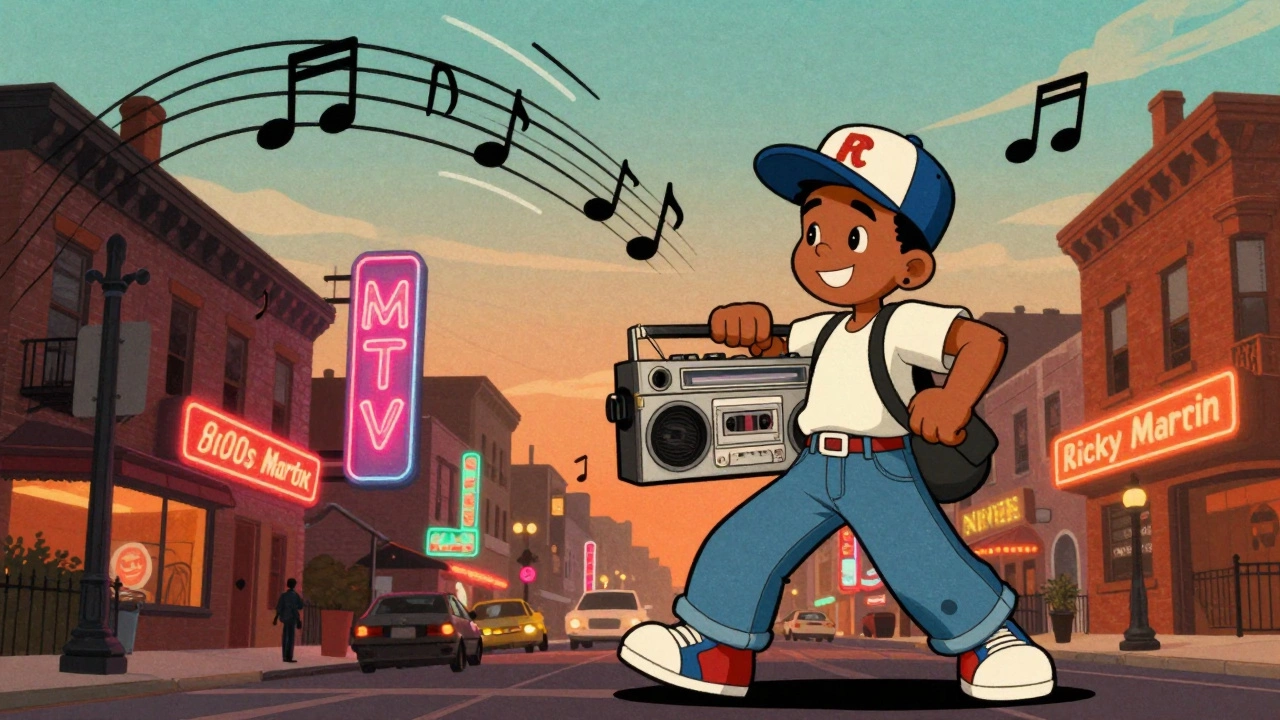

Think global pop music today sounds like a mix of Spanish beats, dancehall rhythms, and trap flows? That wasn’t always the case. Before Beyoncé sampled J Balvin, before Drake dropped a reggaeton track, before "Despacito" broke the internet - there was a quiet revolution happening in the 1990s. It wasn’t led by TikTok trends or streaming algorithms. It was led by a Puerto Rican kid in the Bronx blasting mixtapes, a Colombian singer on MTV, and a Puerto Rican superstar who walked onto the Grammy stage in 1999 and changed everything with one song.
The 1990s Latin Pop Breakthrough That No One Saw Coming
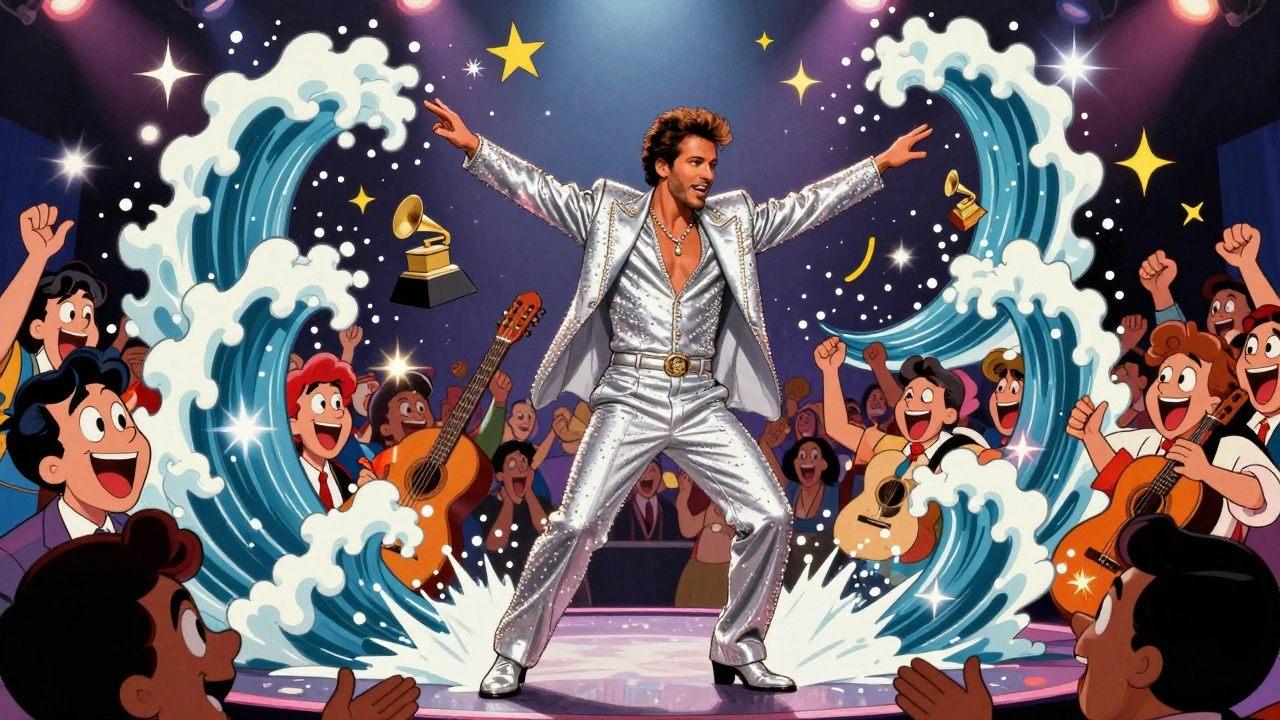
In the early 1990s, Latin music in the U.S. was mostly confined to Spanish-language radio, niche record stores, and family gatherings. Major labels didn’t believe English-speaking audiences would care about songs in Spanish. Then came Ricky Martin. His 1999 performance of "Livin’ la Vida Loca" at the Grammys wasn’t just a performance - it was a cultural explosion. The crowd went wild. The cameras zoomed in. The song hit number one in 21 countries. Suddenly, a Spanish-language track was playing in malls, on car radios, and in school dances across America.
It wasn’t a fluke. Right after Martin, Shakira dropped "Whenever, Wherever" in 2001 - a song that mixed Andean flutes with pop beats and Spanish lyrics. Enrique Iglesias followed with "Bailamos," which became the theme song for a Hollywood movie. These weren’t just hits. They were proof that Latin music could sell globally without being translated. Record labels started paying attention. Studios began hiring Latin producers. Radio stations started spinning Spanish tracks during peak hours. The infrastructure was being built - not just for Latin music, but for the next wave that was already brewing underground.
Reggaeton: The Underground Sound That Refused to Stay Quiet
While Latin pop was climbing the charts, something rawer was happening in Puerto Rico. In the late 1990s, young producers like DJ Playero and Negro were making mixtapes in garages, layering Jamaican dembow beats with hip-hop flows in Spanish. They called it "reggaeton" - a word that didn’t even exist in dictionaries until the early 2000s. The beats came from dancehall riddims, the attitude came from street rap, and the lyrics? They were about life on the block, not love songs.
Early artists like Vico C, Don Chezina, and Ivy Queen didn’t care about radio play. They were making music for parties, for clubs, for kids who didn’t see themselves on MTV. But by 2002, the sound started leaking out. DJs in New York, Miami, and Bogotá began playing these tracks. The dembow - that steady, thumping kick-snare pattern - started showing up in clubs worldwide. It was infectious. Simple. Unmistakable.
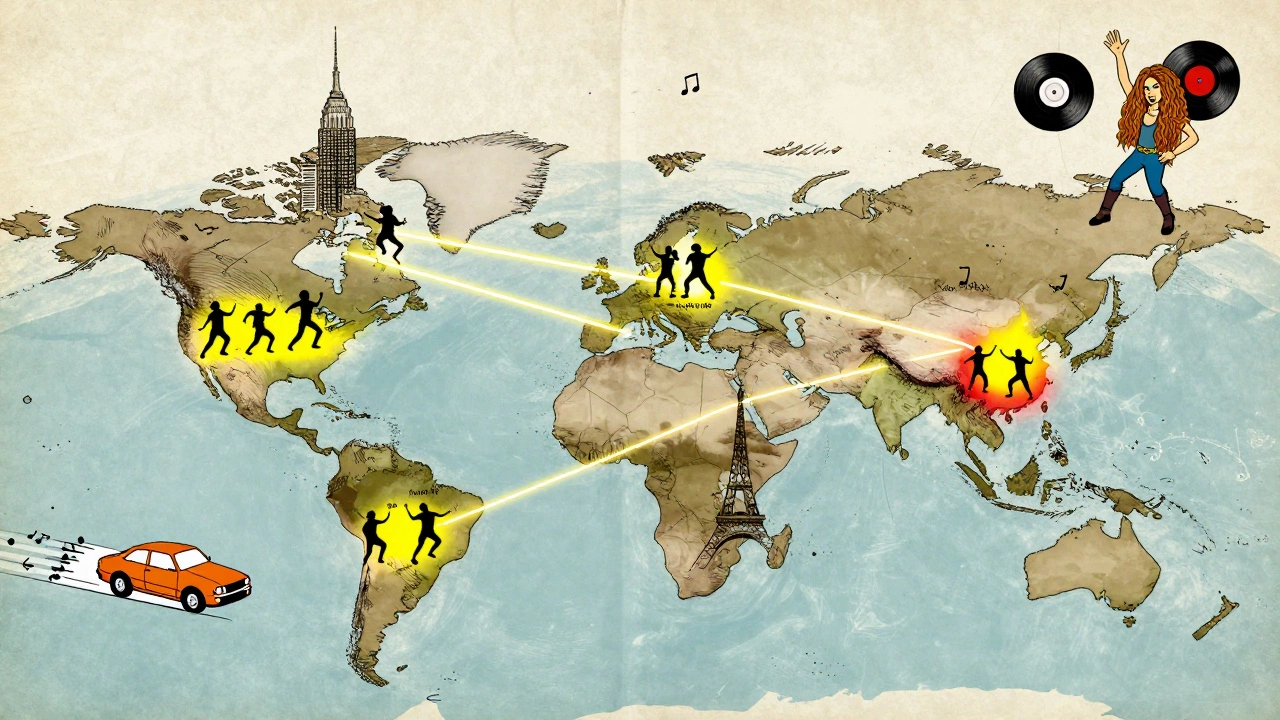
Then came "Gasolina" in 2004. Daddy Yankee’s anthem wasn’t just a song - it was a declaration. The beat was undeniable. The lyrics? Short, punchy, and built for shouting. Within months, "Gasolina" was blasting out of cars in Tokyo, clubs in Paris, and even at parties in rural Texas. For the first time, a Spanish-language urban track was dominating global charts without needing an English version. The world didn’t need to understand the words - they just needed to move.
The Perfect Storm: How Latin Pop Paved the Way for Reggaeton
Reggaeton didn’t explode because it was new. It exploded because the world was ready. The 1990s had already trained audiences to accept Spanish vocals in pop music. Radio stations had learned how to market it. Record labels had built distribution networks. MTV had launched MTV Tr3s to cater to the growing Latin audience. When reggaeton arrived, it didn’t have to fight for attention - it had a runway.
By 2005, the fusion was happening. Don Omar’s "King of Kings" album hit number one on the Billboard Top Latin Albums chart and cracked the top 10 on the Billboard 200. Wisin & Yandel’s "Pa’l Mundo" did the same. Reggaeton wasn’t just a genre anymore - it was a movement. Fashion brands started using its slang. Kids in London and Berlin started dancing to dembow beats. Even non-Latin artists began borrowing the rhythm. By 2008, reggaeton was the best-selling Latin genre in the world - and it was only getting started.
The Global Takeover: From "Mi Gente" to "Despacito"
The 2010s didn’t just continue the trend - they blew it up. J Balvin and Maluma brought a smoother, more melodic version of reggaeton to the table. Their songs didn’t sound like underground mixtapes. They sounded like pop anthems. Then came "Mi Gente" in 2017 - a collaboration with French DJ Willy William that blended reggaeton with EDM. It hit number one in 15 countries. Beyoncé later remixed it. Drake dropped "Mia" with Bad Bunny. The lines between genres were gone.
And then - "Despacito." Luis Fonsi and Daddy Yankee’s 2017 hit didn’t just break records - it shattered them. The original version was already huge. Then Justin Bieber jumped on the remix. Overnight, "Despacito" became the most-streamed song of all time. It hit number one in over 50 countries. It got played at the Super Bowl halftime show. It was covered by orchestras. It was sung by toddlers. And here’s the wild part: most of those listeners didn’t speak Spanish. They didn’t need to. The rhythm, the groove, the energy - it translated perfectly.
"Despacito" proved something revolutionary: language isn’t a barrier anymore. Melody and beat are universal. That lesson? It was learned in the 1990s.
Why This Matters Today
Today, reggaeton isn’t a "Latin genre." It’s pop. Bad Bunny’s 2022 album "Un Verano Sin Ti" became the most-streamed album in Spotify history - two years in a row. His music blends reggaeton, trap, rock, and even folk. He sings in Spanish, English, and Spanglish. He doesn’t ask for permission. He just releases music - and the world listens.
The same thing happened with Latin pop in the 1990s. Ricky Martin didn’t ask for permission to cross over. He walked on stage and owned it. Shakira didn’t wait for approval - she made music that moved people, regardless of language. And reggaeton? It took that same energy and turned it into a global force.
What started as underground tapes in Puerto Rico, amplified by Latin pop’s mainstream breakthrough, became the backbone of today’s pop music. The dembow beat is now as common in pop songs as a four-on-the-floor kick. Spanish hooks appear in songs by artists from Sweden to South Korea. And none of it would’ve happened if the 1990s hadn’t proven that Latin music could rule the world - without changing a single word.


