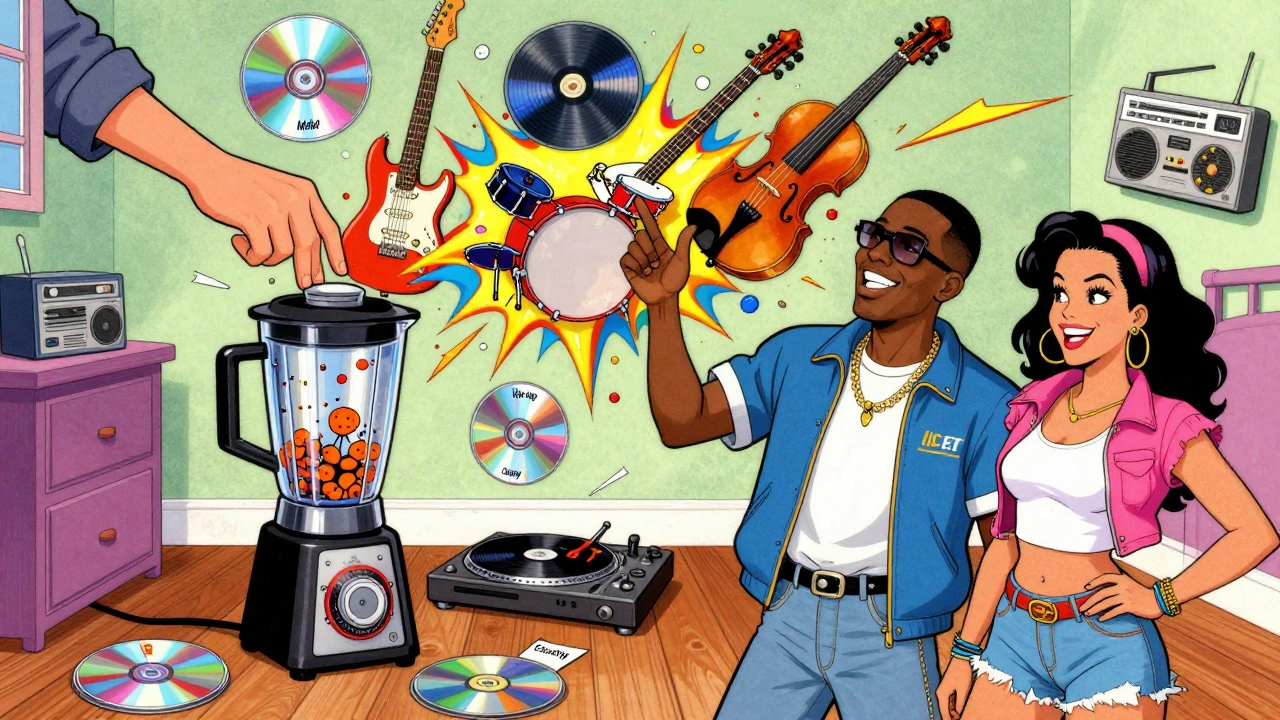

Back in the 1990s, music didn’t care about labels. You couldn’t just call something rock, pop, or hip-hop anymore - it didn’t fit. Artists started stitching together sounds like patchwork quilts: metal guitars with rap verses, country twang over electronic beats, soulful vocals riding trip-hop drums. These weren’t just random experiments. They were deliberate, messy, brilliant collisions that rewrote what pop music could be. And today’s biggest hits? They’re still using that same playbook.
When Boundaries Broke Down
The 1990s didn’t invent genre-blending, but it turned it into a movement. Before then, radio stations had strict formats. Rock played on one channel, country on another, hip-hop on a third. But in the ‘90s, that system started cracking. Kids with CD players didn’t care what genre a song was labeled - they cared if it made them move. So artists leaned into that.Take Ice-T’s band Body Count is a heavy metal band fronted by the rapper Ice-T, blending aggressive guitar riffs with socially charged hip-hop lyrics. Their 1992 track "Body Count’s in the House" didn’t just mix rap and metal - it made them fight each other on the same track. The guitars screamed. The drums pounded. Ice-T spit bars like a street preacher. It wasn’t a novelty. It was a statement. And it worked. Millions bought it. Radio stations played it. Critics argued about it. That’s the moment genre crossover stopped being a gimmick and became a strategy.
Then there was Living Colour is a rock band that fused hard rock with funk rhythms and soulful vocals, often compared to Prince meeting Metallica. Their 1990 hit "Type" had the crunch of a metal anthem but the groove of a Prince track. It wasn’t "rock" or "funk." It was both. And that’s what made it unforgettable. You couldn’t slot it into a radio format, so they played it everywhere.
The Country That Crossed Over
Country music didn’t stay in its lane either. Billy Ray Cyrus is a country artist whose 1992 hit "Achy Breaky Heart" became a global crossover phenomenon, sparking a line-dancing craze and topping pop charts. "Achy Breaky Heart" was pure country - twangy guitar, simple lyrics, fiddle in the background. But it hit the pop charts like a hurricane. It wasn’t just popular in Nashville. It was popular in Tokyo, London, Sydney. Why? Because it was simple. It was fun. It made people dance. And that’s what pop has always been about.But Shania Twain took it further. Shania Twain is a country-pop artist who fused country storytelling with pop production, becoming the defining crossover star of the 1990s with hits like "You’re Still The One". "You’re Still The One" (1997) didn’t just cross over - it obliterated the line. The song had steel guitar, sure. But it also had a four-on-the-floor beat, synth pads, and a chorus that could’ve been on a Britney Spears record. It wasn’t country. It wasn’t pop. It was something new. And it sold 20 million copies.
Electronic Meets Emotion
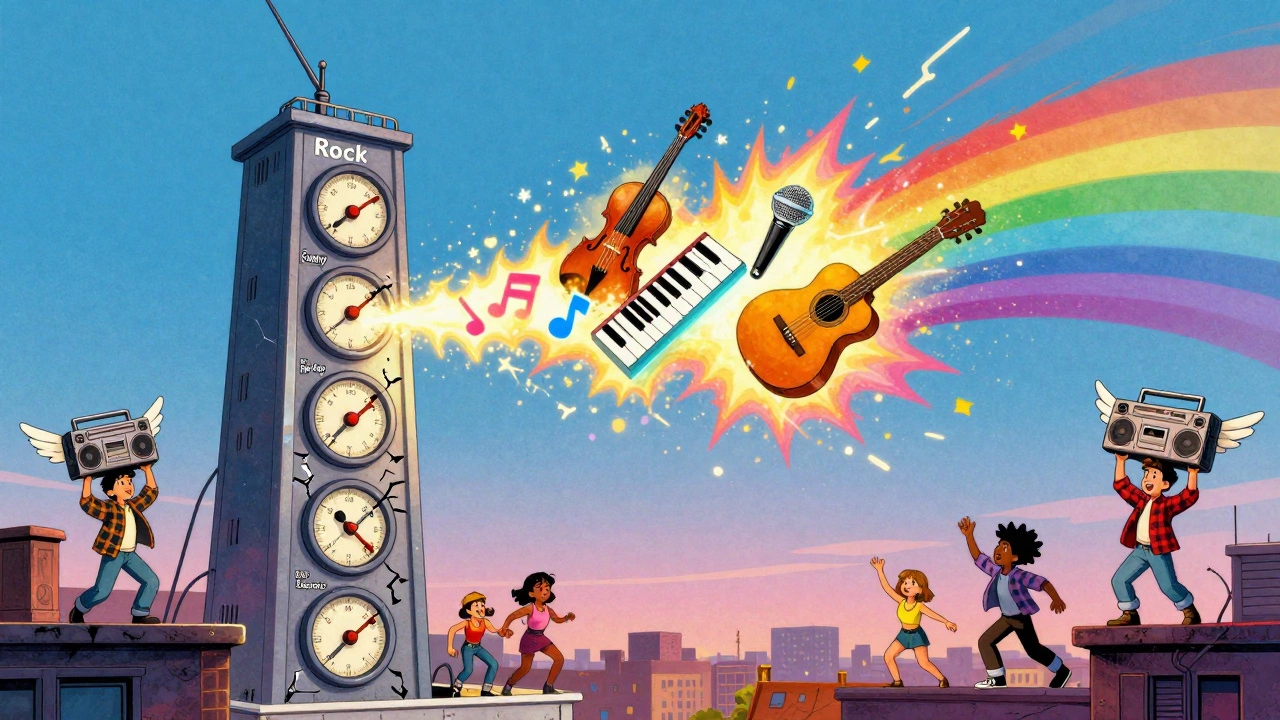
While rock and country were mixing, something quieter but just as powerful was happening in the shadows. Tricky is a British trip-hop artist whose 1995 track "Overcome" blended dark electronic beats with haunting vocals from Martina Topley-Bird, pioneering the fusion of electronic music and emotive female vocals. "Overcome" didn’t have a chorus you could sing along to. It had a mood. A slow, heavy beat. A voice that whispered like it was confessing a secret. It didn’t belong on dance floors or rock stages. It belonged in headphones, late at night.That’s the real legacy of the ‘90s: it taught us that genre blending isn’t about adding more instruments. It’s about adding more emotion. Tricky didn’t mix genres to be cool. He mixed them because he needed to say something no single genre could carry. And that’s exactly what today’s pop artists are doing.
Today’s Hybrid Pop Is Just the 1990s on Steroids
Look at Billie Eilish’s "bad guy." It’s got bass that sounds like a punk song, a beat that could be from a trap track, and a melody that feels like a 1980s synth-pop hook. Or Olivia Rodrigo’s "vampire" - acoustic guitar, pop-punk drums, and a bridge that sounds like a 1990s alt-rock anthem. These aren’t coincidences. These are deliberate callbacks.Today’s producers grew up on the ‘90s. They remember when a song could be rock, hip-hop, and electronic all at once. They don’t see genres as walls. They see them as tools. And they’re using them smarter than ever.
Streaming made it possible. Before, you had to choose: play on rock radio or pop radio. Now? A song can sit in 12 playlists at once. A track with a trap beat and a country twang? It goes viral on TikTok. A pop song with a metal guitar solo? It lands on Spotify’s "Alternative Rock" and "Pop Hits" lists. The ‘90s proved that genre-blending could sell. Today’s artists just have more tools to make it happen.
Why This Template Still Works
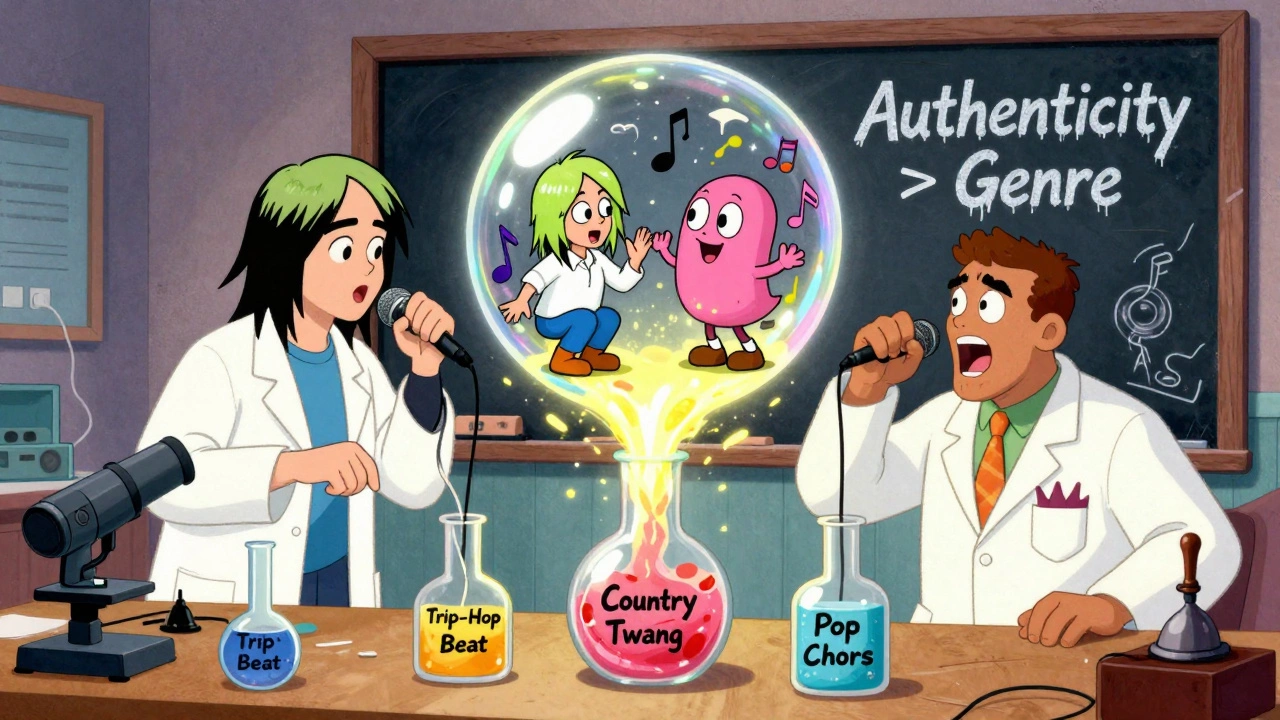
The secret isn’t the instruments. It’s the attitude. The ‘90s taught us that authenticity doesn’t mean staying pure. It means being honest about what you love. If you grew up listening to Nirvana and TLC and Dr. Dre, why pretend you only like one?Modern hybrid pop works because it’s real. It doesn’t try to be everything. It just lets everything in. A producer might start with a lo-fi bedroom beat, add a trap hi-hat, layer in a gospel choir, then drop in a distorted guitar solo. It sounds chaotic. But it feels true.
The ‘90s didn’t invent fusion. But they proved it could be massive. They didn’t wait for permission. They just made the music they wanted to hear. And that’s the template. Not the guitars. Not the beats. The courage to ignore the rules.
What’s Different Now?
The tools changed. The platforms changed. But the heart didn’t. In the ‘90s, genre-blending was risky. Labels were nervous. Radio programmers refused to play "hybrid" songs. Today? It’s the norm. Spotify’s algorithm doesn’t care if a song has a banjo and a synth bass. It just asks: does this keep people listening?And it does. Hybrid tracks get 3x more replay value than genre-pure songs, according to internal industry data from 2024. Listeners don’t want one sound. They want layers. They want history. They want the grit of rock, the bounce of hip-hop, the sweep of pop, and the mood of electronic - all in one song.
The ‘90s didn’t just create hybrids. They created a new kind of listener. One who doesn’t pick a side. One who wants it all.


