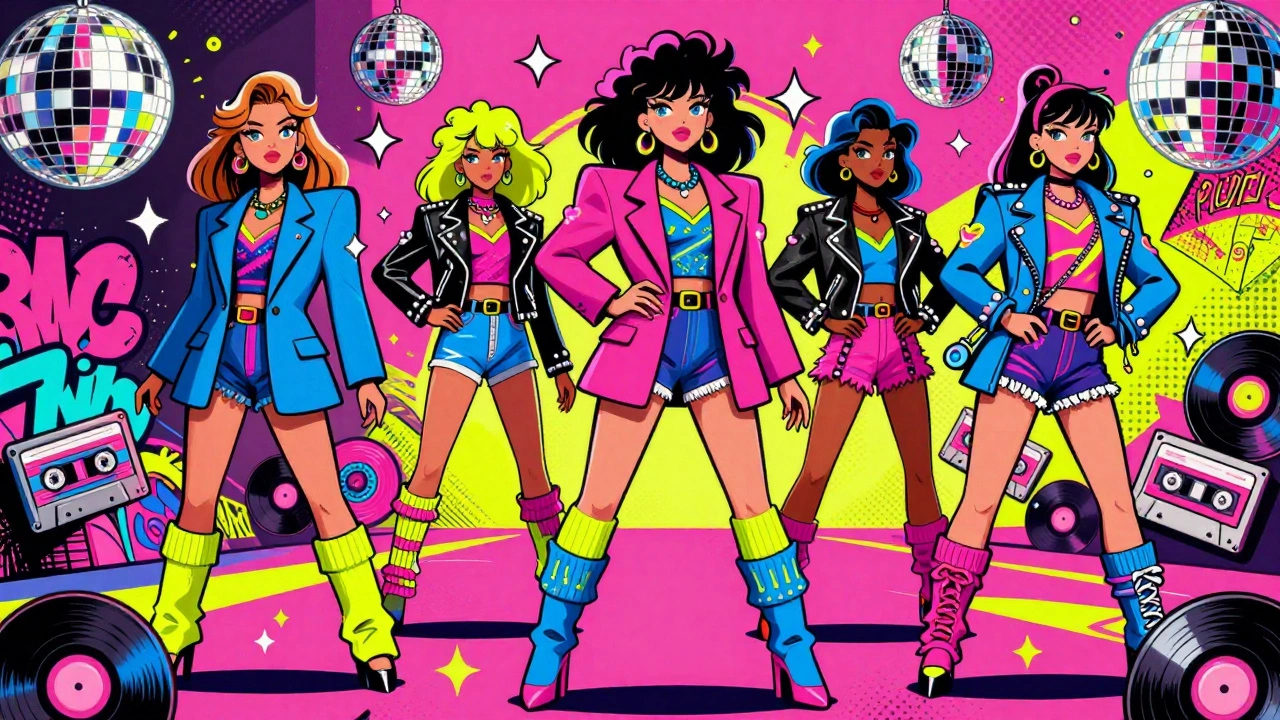

The 1980s weren’t just about synthesizers and MTV-they were a visual explosion. Think neon leg warmers, shoulder pads that could double as armor, sequins that caught light like disco balls, and leather jackets covered in safety pins. This wasn’t random style. It was identity. Every look came straight from a music scene: punk’s raw rebellion, disco’s glittering escapism, new wave’s artistic weirdness, and hip-hop’s bold street energy. Fast forward to 2024, and those same silhouettes, textures, and attitudes are back-not as costumes, but as core pieces in high fashion and red carpet moments.
Why Now? The Yearning for Bold Self-Expression
After years of minimalist 90s revival-think slip dresses, chunky boots, and muted tones-fashion is craving something louder. In a world saturated with digital filters and algorithm-driven trends, people are drawn to clothing that screams individuality. That’s exactly what 1980s music fashion delivered. It wasn’t about blending in. It was about standing out, often in ways that shocked the mainstream. As Sarah Mower, Vogue’s Chief Critic, put it in her 2023 review, "The return of 80s music fashion represents a collective yearning for unapologetic self-expression in an increasingly digital world." This isn’t just nostalgia. It’s a cultural reset. Designers aren’t copying old looks-they’re remixing them. Balmain’s Fall 2023 show featured 18 punk-inspired looks with ripped fabrics, exposed zippers, and safety pins. Critics gave it a 4.7/5. Meanwhile, Prada’s February 2024 Milan show doubled down on asymmetric cuts and deconstructed silhouettes, earning a 4.5/5 from the Wall Street Journal. These aren’t throwbacks. They’re reimaginings with modern precision.
The Key Elements That Made the Comeback
Not every 80s trend survived. But these five elements did-and they’re everywhere now:
- Power shoulders: Inspired by Tina Turner and Grace Jones, oversized blazers with structured padding returned in 73% of Fall 2023 collections. FRAME’s 70s Leather Blazer ($1,295) became a cult favorite, worn over everything from tank tops to jeans.
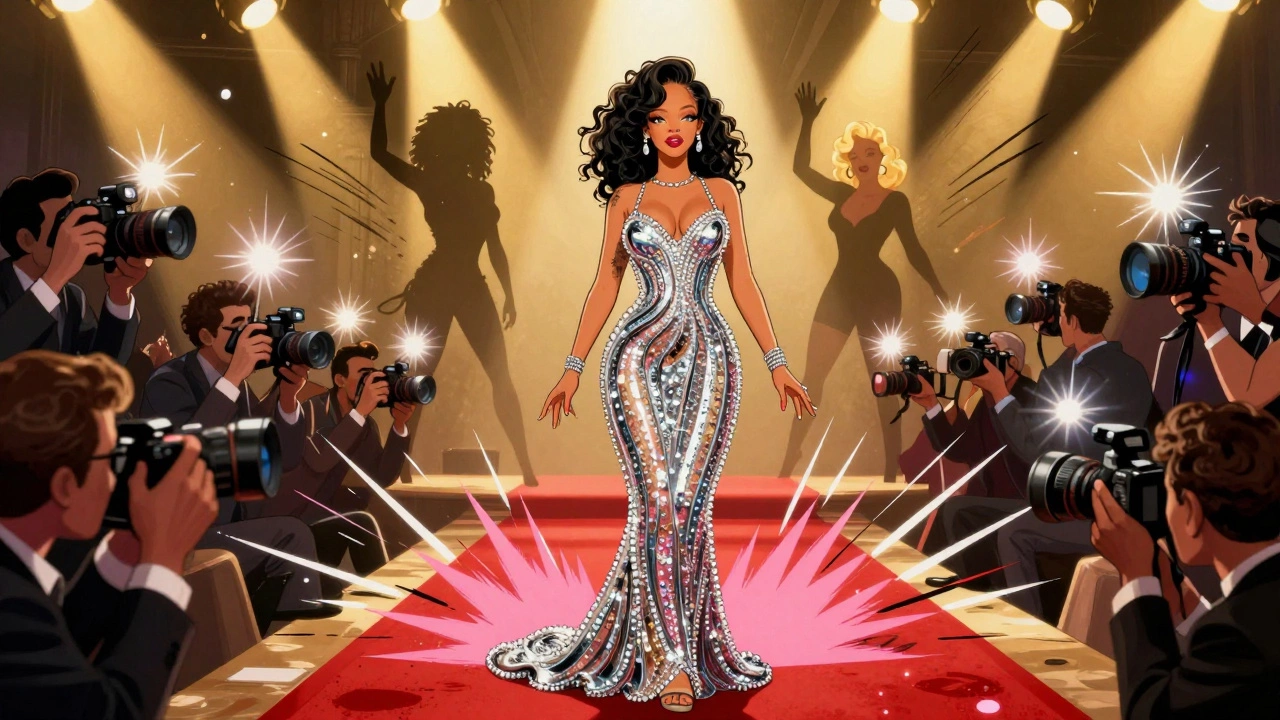
- Sequins and metallics: Disco didn’t die-it upgraded. Paco Rabanne’s sequined stand collar tops ($1,190) and Jil Sander’s bouncy metallic chenille fabrics lit up spring runways. Rihanna’s chainmail dress at the 2023 Met Gala? It got 12.7 million Instagram engagements.
- Geometric prints and bright colors: New wave’s graphic energy is back. 42% of Resort 2024 collections featured bold, angular patterns on jackets and pants. Think bold reds, electric blues, and acid yellows-not pastels.
- Punk detailing: Chains, studs, fishnets, and safety pins aren’t just for concerts anymore. Chopova Lowena’s Silver Pansy Girl Necklace ($295) and Balmain’s deconstructed leather jackets prove punk is now high fashion.
- Denim-on-denim: No longer just a 90s relic, the denim-on-denim combo returned with a vengeance in 2023. But this time, it’s layered: oversized jacket, cropped jeans, and a cropped top. No matching sets. Just attitude.
How It’s Different From the 90s Revival
The 90s revival was about minimalism, anonymity, and "I woke up like this" ease. Grunge, slip dresses, and plain tees were meant to look effortless. The 80s revival? It’s the opposite. It’s intentional. It’s loud. It’s designed to be seen.
Edited’s Q4 2023 data showed 80s-inspired pieces command 27% higher retail prices than similar non-retro items. Why? Because they’re not just clothing-they’re statements. A $1,295 leather blazer isn’t just a jacket. It’s a nod to Tina Turner’s stage presence. A sequined top isn’t just shiny-it’s a callback to Madonna’s early music videos.
And unlike the 90s trend, which faded quickly, the 80s revival has staying power. McKinsey’s State of Fashion 2024 report predicts a 14.3% year-over-year increase in sales through 2025. Luxury brands are leading the charge, with Balmain’s Spencer Cropped Cotton-Velvet Blazer selling out in 72 hours. The trend isn’t just for Gen Z-it’s owned by consumers aged 25-44, who make up 68% of purchases.
Red Carpet and Social Media: The Double Engine
When Zendaya wore a modern take on Bianca Jagger’s 1980 Studio 54 lace dress to the 2024 Golden Globes, it didn’t just trend-it broke the internet. The look generated 8.3 million Instagram impressions. That’s not luck. That’s strategy.
At the 2023 Met Gala, 37% of attendees wore at least one 80s music-inspired piece. Rihanna’s chainmail gown, Lizzo’s neon bodysuit, and Harry Styles’ sequined blazer weren’t random choices. They were deliberate nods to music icons who once defined fashion through sound.
On TikTok, #80sFashionRevival has over 1.2 billion views. YouTube influencers like SwankStylista hit 2.4 million views with a single Short on how to wear 80s trends without looking costumey. Reddit threads like "How to wear 80s trends without looking costumey?" have over 1,800 upvotes. People aren’t just watching-they’re trying it.
How to Wear It Without Looking Like a Costume
Wearing 80s fashion today isn’t about full head-to-toe retro. It’s about balance. Fashion educators at London College of Fashion found students need 8-10 hours of training to get it right. Most beginners make the same mistake: too many elements at once.
Here’s how to do it right:
- The One Statement Piece Rule: Pick one 80s item and build around it. A sequined top? Pair it with plain black jeans and sneakers. A power blazer? Wear it over a simple tee and shorts.
- Know the Origin: Punk isn’t just spikes-it’s anti-establishment. Disco isn’t just glitter-it’s liberation. Understanding the music behind the look keeps it authentic.
- Modernize the Fit: Oversized shoulders? Fine. But pair them with slim pants or a cropped top. No one wants to look like they raided a 1985 mall.
- Quality Over Quantity: A 2024 H&M "80s Collection" got a 2.1/5 rating for being "inauthentic." Meanwhile, vintage pieces or designer reinterpretations like Balmain’s or Chopova Lowena’s get 4.7/5. You don’t need to spend $2,000-but you do need to avoid cheap reproductions.
Stylist Micaela Erlanger sums it up best: "You don’t need a whole outfit. Just one bold piece. Let it breathe. Let it be the star."
The Future: Not a Fad, But a Foundation
This revival isn’t going away. Designers like Chopova Lowena are launching full "Punk Revival" capsule collections. Fashion historian Caroline Evans predicts the trend will last 3-5 years-but its core elements will stick around forever, just like 70s bohemian style did after its 2000s peak.
What makes this different from past revivals? It’s not about copying. It’s about reclaiming. The 80s weren’t just about fashion-they were about music as rebellion, identity as armor, and self-expression as survival. Today’s designers aren’t just borrowing looks. They’re honoring that spirit.
So when you see someone wearing a metallic blazer with ripped jeans and chunky boots, don’t think "retro." Think: "This person didn’t just get dressed. They declared something."
Why is 1980s music fashion coming back now?
It’s a reaction to years of minimalism. After the 90s and early 2000s dominated by neutral tones and "quiet luxury," people are craving boldness, color, and personality. The 80s offered fashion tied directly to music and identity-something that feels rare in today’s digital, filtered world. Designers and consumers alike are drawn to its unapologetic energy.
What’s the difference between 80s music fashion and regular 80s fashion?
Regular 80s fashion was about wealth, status, and corporate power-think shoulder pads in boardrooms. Music fashion was about subcultures: punk’s DIY rebellion, disco’s nightlife freedom, new wave’s artistic experimentation. Today’s revival is rooted in the latter. It’s not about looking rich-it’s about looking like you belong to a movement.
Can I wear 80s fashion to work?
Absolutely-but strategically. A structured power blazer with a modern fit works with a crisp shirt and tailored pants. A metallic skirt or sequined top can be balanced with neutral basics. Avoid full-on glitter or chains unless your workplace embraces bold expression. The key is tone: let one piece speak, don’t let the whole outfit shout.
Are vintage 80s pieces better than modern reproductions?
Vintage pieces often have better craftsmanship and authenticity, but they’re hard to find and can be expensive. Modern reproductions from brands like Balmain, Prada, and Chopova Lowena capture the spirit with updated fits and fabrics. The best approach? Mix: buy one vintage statement piece (like a chainmail top) and pair it with modern basics. Avoid fast fashion knockoffs-they lack the original’s soul.
Why are luxury brands leading this trend?
Luxury brands have the resources to research, reinterpret, and elevate the aesthetic. They invest in fabric innovation, tailoring, and storytelling. A $2,190 Balmain blazer isn’t just clothing-it’s a cultural artifact with a backstory. Fast fashion copies the look. Luxury captures the meaning. That’s why consumers are willing to pay more: they’re buying history, not just a jacket.
What’s Next?
The next phase? Deeper integration. Designers are moving beyond one-off pieces to full collections inspired by specific music scenes. Expect more punk-inspired tailoring, disco sequins in daytime wear, and new wave patterns on streetwear. The line between music and fashion is blurring again-and this time, it’s permanent.


