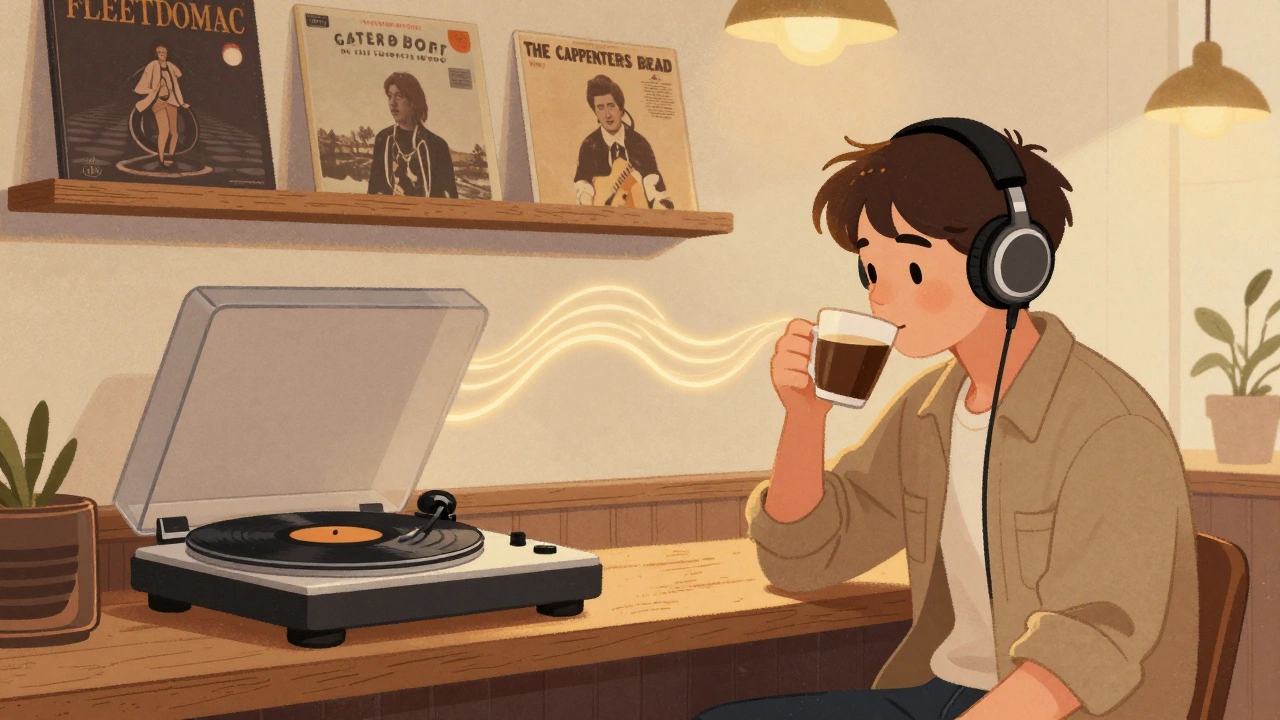

It’s 2026, and you’re walking through a Portland coffee shop. The playlist is smooth - warm piano, layered harmonies, a bassline that doesn’t rush. It’s not disco. It’s not lo-fi hip-hop. It’s unmistakably soft rock. Not the kind your parents played on vinyl. Not the punchline of 90s irony. But something deeper, quieter, and more honest than most of today’s pop. This isn’t nostalgia. It’s a revival - and it’s changing indie pop from the inside out.
The Sound That Got Dismissed
In the 1970s, soft rock was everywhere. Fleetwood Mac’s Rumours sold 40 million copies. The Carpenters ruled the radio. Bread, Dan Fogelberg, and the Doobie Brothers filled the airwaves with melodies that felt like sunlight through a kitchen window. But by the 1980s, it was labeled "cotton candy." Critics called it weak. The punk movement spat on it. Even rock fans rolled their eyes. "Too smooth," they said. "Too safe." But safety isn’t always boring. Soft rock was built on precision. Richard Carpenter didn’t just play piano - he layered Wurlitzers, Fender Rhodes, and acoustic pianos into textures that felt alive. Karen Carpenter’s voice wasn’t just pretty - it was controlled, nuanced, and emotionally precise. The harmonies? They didn’t just sit on top of the track. They moved like a choir in a cathedral - each voice intentional, each chord extension borrowed from jazz.What Modern Indie Pop Borrowed (And Why)
Today’s indie pop artists aren’t copying soft rock. They’re resurrecting its soul. You hear it in Father John Misty’s Pure Comedy - those sparse piano chords, the way his voice sways like Michael McDonald’s on "What a Fool Believes." You hear it in Aimee Mann’s Mental Illness, where she sings, "I’ll be here forever," over a gentle acoustic groove that could’ve come from Bread in 1972. The shift started around 2017. That’s when Mac DeMarco’s Salad Days got an 8.2/10 from Pitchfork - not for being raw or noisy, but for its soft, sun-drenched production. Japanese Breakfast’s Jubilee won the Mercury Prize in 2021, citing Bread and America as direct influences. Even Harry Styles’ debut solo album in 2017, with its soaring ballad "Sign of the Times," carried the same emotional weight as a Carpenters deep cut. What’s different now? These artists aren’t pretending to be from the 70s. They’re using the tools of that era to say things that feel urgent today. The slow tempo (80-100 BPM) lets space breathe. The analog warmth - tape saturation, minimal compression - makes the music feel human. In a world of hyper-quantized beats and autotuned vocals, soft rock’s imperfections are its power.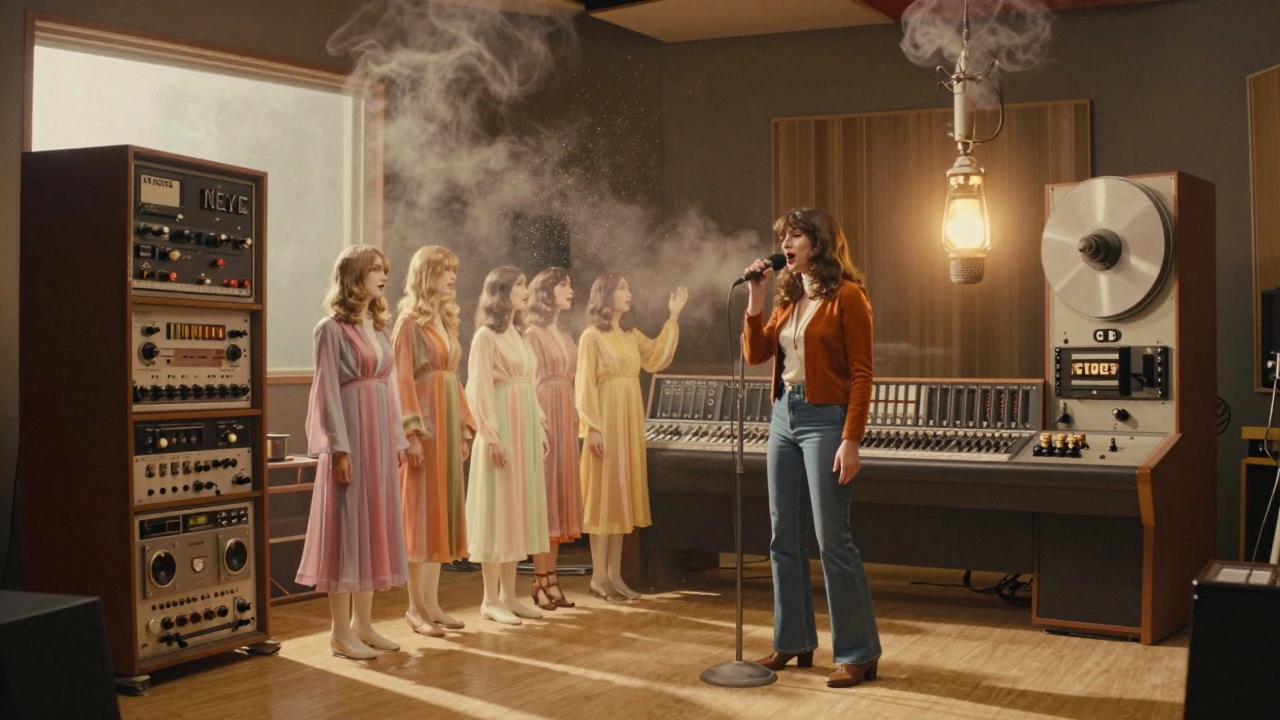
The Studio Secrets Behind the Sound
This isn’t just about chords or melodies. It’s about how the music was made. Back then, engineers didn’t have plugins. They had Neve 1073 preamps, Studer A800 tape machines, and Neumann U67 microphones. To get that rich vocal sound - the one that wraps around you like a blanket - you needed the right chain: U67 into a Neve, into tape, with just a touch of compression. Today, you can emulate that with plugins. But the best modern indie pop producers still seek out the real gear. A Neve 1073 now costs $4,500 per channel on Reverb. That’s not cheap. But artists like The War on Drugs, who won a Grammy in 2017 for A Deeper Understanding, know it’s worth it. Their sound doesn’t just sound retro - it sounds alive. Online communities have grown around this. The "Soft Rock Production" subreddit has over 8,200 members sharing tips on tape saturation settings, mic placement for vocals, and how to layer harmonies like the Association did on "Cherish." YouTube tutorials break down how Fleetwood Mac’s "Landslide" was recorded. It’s no longer a secret. It’s a craft.Why This Isn’t Just a Nostalgia Trip
Some critics say today’s artists are just copying the surface - the reverb, the piano, the falsetto. But the real revival is deeper. The original soft rock artists wrote about loneliness, longing, and quiet resilience. Karen Carpenter sang about love without grand gestures. Dan Fogelberg wrote about aging and regret. These weren’t love songs for parties. They were love songs for 3 a.m. after a fight. Modern indie pop carries that same emotional honesty. Angel Olsen’s "All Mirrors" doesn’t sound like a 1970s ballad - but the way her voice cracks on the word "broken"? That’s pure soft rock. It’s not about the instruments. It’s about the vulnerability. Even Michael McDonald, the voice behind "What a Fool Believes," noticed the shift. In 2017, he performed with Thundercat and Solange - artists half his age - and didn’t see it as a gimmick. He saw it as a conversation. "Each generation tries to separate itself from the one before," he told Noisey. "But sometimes, they’re just looking for the same thing: something real."
The Numbers Don’t Lie
This isn’t just critics or fans talking. The data proves it. Between 2015 and 2022, streams of 1970s soft rock classics jumped 208%. Albums with clear soft rock influences made up 12.7% of the Alternative Albums chart in 2022 - up from 4.2% in 2015. Spotify’s "Yacht Rock" playlist grew from 500,000 followers to 2.7 million in six years. Capitol Records launched a dedicated imprint called "Soft Rock Revival" in 2020. RateYourMusic data shows albums in this style now average 37% higher user ratings than they did in 2015. Pitchfork upgraded their review of Rumours from 8.3/10 in 2004 to 9.5/10 in 2022. Rolling Stone moved "What a Fool Believes" from #229 to #52 on their "500 Greatest Songs" list. This isn’t a trend. It’s a correction.What’s Next?
The revival isn’t slowing. In 2023, Thundercat’s album The Golden Age of Apocalypse featured Michael McDonald on "Dragonball Durag," blending jazz fusion with soft rock. Japanese Breakfast kept pushing boundaries with orchestral arrangements that still felt intimate. Even new artists like Sault and H.E.R. are slipping soft rock textures into their R&B and soul records. The biggest challenge? Finding the gear. Vintage Neve preamps are scarce. Tape machines are expensive. But the real barrier isn’t equipment - it’s mindset. Too many artists think "soft" means "simple." It doesn’t. Soft rock is complex. It’s technically demanding. It’s emotionally brave. What’s clear is this: the music that was once dismissed as too sweet is now the sound of emotional honesty in a noisy world. It’s not about going back. It’s about remembering that sometimes, the quietest songs carry the loudest truths.Why did soft rock get dismissed in the 80s and 90s?
Soft rock was labeled "cotton candy" and seen as too polished, too safe, and too commercial during the rise of punk, new wave, and grunge. Critics associated it with mainstream radio and dismissed its emotional depth. But time has revealed its craftsmanship - the harmonic complexity, the vocal precision, and the subtle lyrical themes that were always there.
What modern artists are carrying the soft rock torch?
Artists like Father John Misty, Aimee Mann, Mac DeMarco, Japanese Breakfast, and Harry Styles all incorporate soft rock elements into their music. The War on Drugs, Angel Olsen, and even Thundercat - especially with Michael McDonald’s involvement - have helped bridge the gap between 1970s warmth and modern indie sensibilities.
Is this revival just copying old songs?
No. While some artists mimic the sound superficially, the best ones use soft rock’s techniques - analog production, rich harmonies, emotional restraint - to express modern feelings. It’s not imitation. It’s translation. They’re not trying to sound like the 70s. They’re trying to feel like the 70s did: sincere, warm, and deeply human.
Why is this revival happening now?
After years of digital, high-BPM, heavily processed pop, listeners are craving texture, space, and emotional nuance. Soft rock offers a sonic refuge - slow tempos, organic instruments, and harmonies that feel like comfort. It’s a reaction to the noise, not a retreat from it.
Can I make soft rock-inspired music without vintage gear?
Yes. While original Neve preamps and tape machines are ideal, modern plugins like UAD’s Tape Saturation, Soundtoys’ Decapitator, and Slate Digital’s Virtual Tape Machines can replicate much of the warmth. The key is in the arrangement: focus on vocal layering, use real acoustic instruments when possible, and avoid over-compression. The spirit matters more than the gear.


