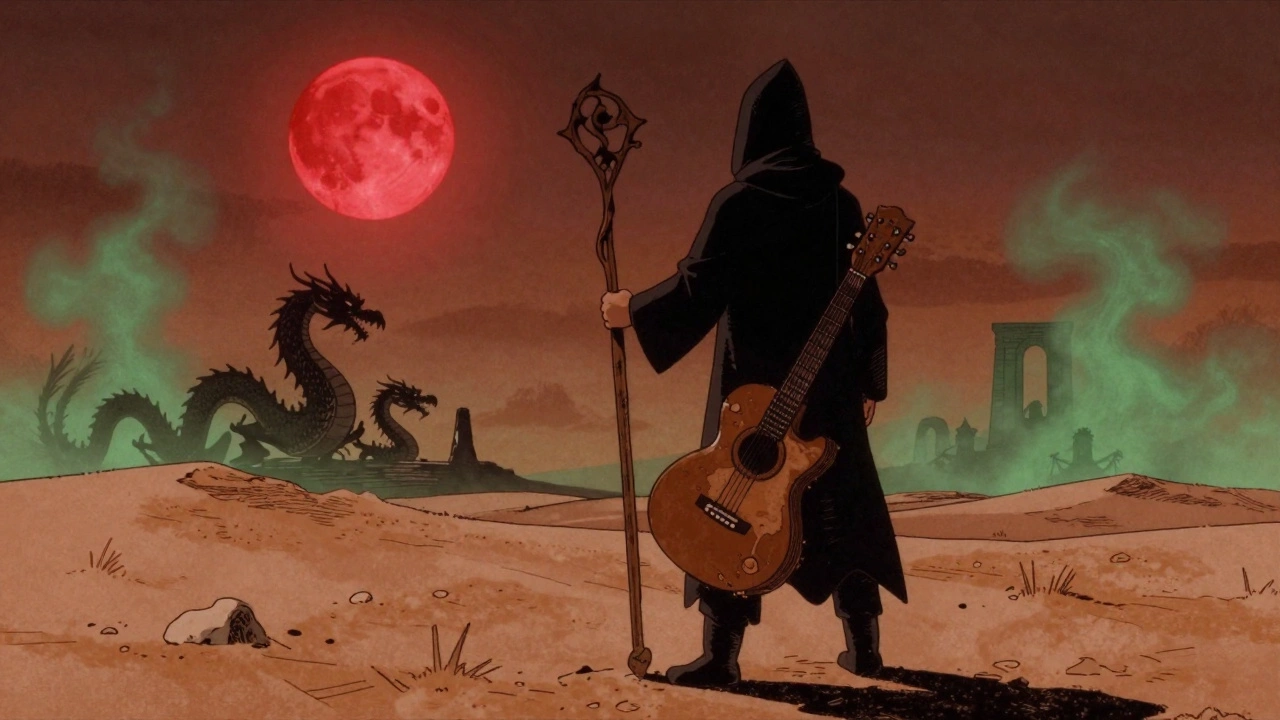

Heavy metal didn’t just start with loud guitars and angry drums. It started with mythology-dragons, wizards, ancient gods, and dark prophecies whispered through distorted riffs. The 1970s weren’t just the birth of metal; they were the first time metal began to tell epic stories. Bands didn’t just play music. They built worlds.
The Sound That Started It All
Black Sabbath’s 1970 self-titled debut wasn’t just the first full metal album-it was the first time metal sounded like a curse. The opening track, "Black Sabbath," didn’t just use minor chords. It used them like a ritual. Tony Iommi’s downtuned guitar, Geezer Butler’s bassline that crawled like a shadow, and Ozzy Osbourne’s haunting wail made it feel less like a song and more like a warning from another realm. The lyrics didn’t mention dragons or elves, but they didn’t need to. "I looked into the eyes of evil / I saw the face of fear"-that was enough. This was mythmaking without the cape. It was mythmaking with a fuzz pedal. The album’s tone wasn’t accidental. Iommi had lost two fingertips in a factory accident. He tuned his guitar down to make it easier to play. That tuning-C#-became the blueprint for doom. And that sound? It wasn’t just heavy. It was ancient. It sounded like something dug up from a forgotten tomb. Fans didn’t just hear it. They felt it. That’s why, even today, metalheads say: "This is where it all began."Rainbow and the Rise of the Fantasy Realm
While Sabbath whispered in the dark, Rainbow screamed it from the mountaintop. Ritchie Blackmore, fresh off Deep Purple, didn’t want to scare people-he wanted to enchant them. In 1976, he released Rising, and suddenly, metal had a new language. "Stargazer" wasn’t just a song. It was a symphony of myth. The lyrics spoke of "wizards," "rainbows," and "mystical women." The music didn’t just build tension-it built castles. The piano intro alone felt like walking into a cathedral carved from stone and starlight. Tracks like "Tarot Woman" and "Run With The Wolf" didn’t just reference fantasy-they lived inside it. The album cover showed a knight on horseback against a glowing sky, sword raised, as if about to charge into a dragon’s lair. This wasn’t decoration. This was identity. Rainbow proved that metal could be grand, theatrical, and still brutal. And it wasn’t cheesy. It was sacred. Fans didn’t laugh at "Stargazer." They bowed to it.Rush’s 2112: When Metal Met Philosophy
Not all fantasy in metal came from dragons. Some came from dystopian futures and lone rebels fighting totalitarian systems. Rush’s 1976 album 2112 didn’t have trolls or sorcerers. It had a single man, a solar system ruled by the Priests of the Syllabus, and a guitar solo that felt like a revolution. The album was inspired by Ayn Rand’s Anthem, a novella about individualism crushed by collectivism. But to fans, it felt like a myth. The protagonist finds an ancient guitar-"the last of its kind"-and plays it in secret. That act of defiance? That was the hero’s journey, rewritten for a world of synthesizers and power chords. "2112" wasn’t just prog rock. It was mythic rock. The seven-part suite stretched over 20 minutes, and every note carried weight. Neil Peart’s lyrics didn’t rhyme like poetry-they told a story like an epic poem carved into stone. And when the final chord rang out, listeners didn’t just feel satisfied. They felt changed. This wasn’t escapism. It was a call to arms.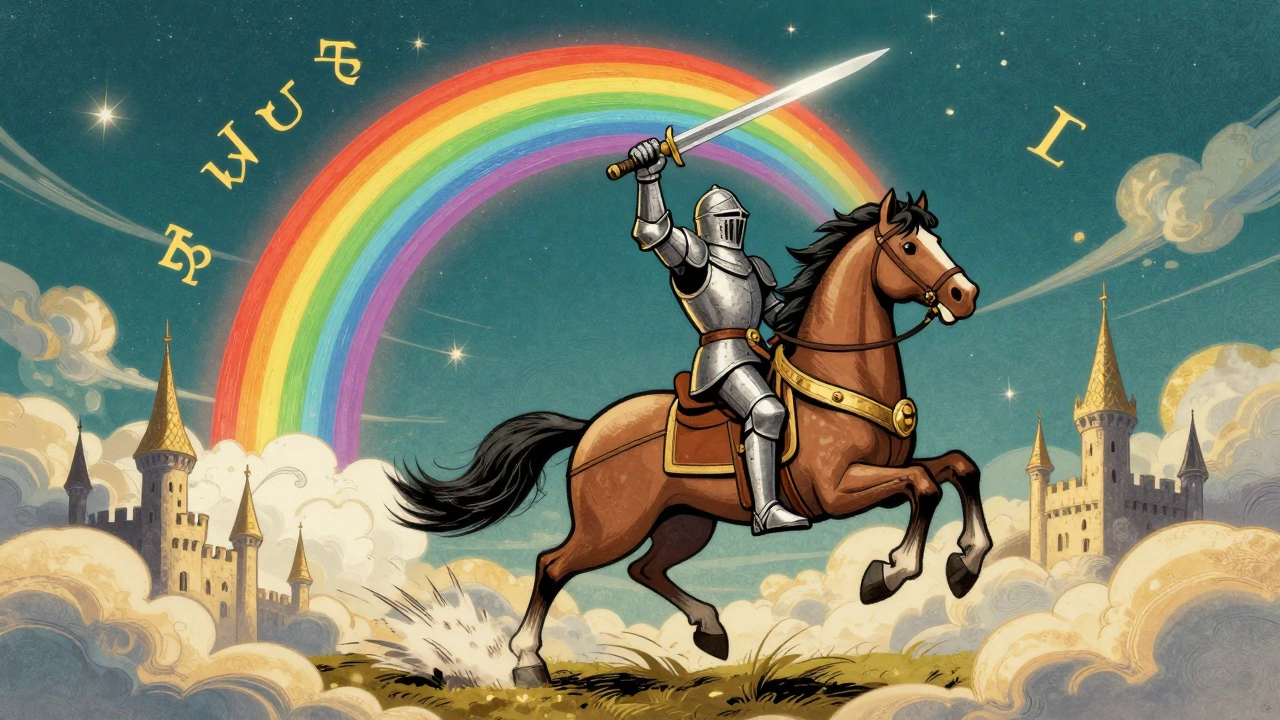
The Visual Language of Metal Mythology
The music wasn’t the only thing telling stories. The album covers were. You didn’t need to hear the songs to know what they were about. Rainbow’s Rising showed knights and stars. Black Sabbath’s Master of Reality had a hooded figure standing in a desert under a blood-red moon. Judas Priest’s Sad Wings of Destiny (1976) featured a winged demon clutching a skull. These weren’t just designs. They were portals. Artists like Roger Dean and Derek Riggs (who later became famous for Iron Maiden’s Eddie) were already shaping how fantasy looked in metal. But in the 1970s, it was raw. No polished CGI. No corporate branding. Just hand-painted dragons, ghostly forests, and ancient ruins. The artwork didn’t match the music-it amplified it. You could open the sleeve and feel the magic before the needle even dropped.German, Canadian, and Japanese Voices in the Myth
Metal wasn’t just a British or American thing. It was global. Germany’s Scorpions released Lovedrive in 1979, and while the lyrics were about lust and rebellion, the sound was mythic in its own way. "Another Piece of Meat" wasn’t about knights-it was about survival. It was primal. It sounded like a battle cry from a war that never ended. Canada’s Rush, as we’ve seen, brought philosophy. But Japan’s Flower Travellin’ Band? They brought something stranger. Their 1971 album Satori had no English lyrics. It had no dragons. But it had a sound that felt like a shamanic trance. Guitarist Hideki Ishima played like he was summoning spirits. The album was ignored in its time. Today, it’s a cult classic. Bands in Sweden, Japan, and the U.S. now cite it as a hidden blueprint for how metal could feel spiritual, not just loud.
The Transition: From Proto-Metal to Full Mythology
There’s a difference between proto-metal and full-blown mythological metal. Proto-metal was heavy, bluesy, and dark. Think Blue Cheer or The Sonics. Metal, as it formed in the 1970s, added structure, scale, and symbolism. Black Sabbath’s "Children of the Grave" wasn’t just about war-it was about legacy. "We are the children of the grave / We are the ones who will survive"-that’s not a protest. That’s a prophecy. Judas Priest’s Stained Class (1978) pushed it further. Faster. Sharper. More precise. Songs like "Exciter" and "The Ripper" didn’t just mention evil-they made you feel it. The band stripped away bluesy grooves and replaced them with twin-guitar attacks that sounded like swords clashing. This wasn’t just music. It was ritual. By 1979, the pieces were in place. Fantasy wasn’t just an option. It was expected. Metal had become a language for the epic. And when bands like Iron Maiden and Manowar took over in the 1980s, they weren’t inventing something new. They were just expanding what the 1970s had already built.Why It Still Matters
Today, you can find metal bands singing about Norse gods, elven wars, and cosmic horrors. But they didn’t pull those ideas from thin air. They pulled them from Rising, from 2112, from Master of Reality. The 1970s didn’t just give us metal. They gave us the stories metal would tell forever. The myths weren’t about escaping reality. They were about understanding it. The dragons were fear. The wizards were power. The dark castles were the system. The lone hero with the guitar? That was the listener. That’s why these albums still resonate. They didn’t just play music. They gave people a mythology they could wear on a leather jacket.Did Black Sabbath really influence fantasy metal, or was it just dark themes?
Black Sabbath didn’t sing about elves or dragons, but they created the emotional and sonic foundation for fantasy metal. Their use of minor keys, slow, heavy riffs, and lyrics about fear, death, and the occult made their music feel mythic-even without literal fantasy elements. Bands like Rainbow and Judas Priest later added dragons and wizards, but they built on the dark, ritualistic atmosphere Sabbath created.
Was Rainbow the first fantasy metal band?
Rainbow’s 1976 album Rising is widely considered the first full fantasy metal album. While earlier bands like Black Sabbath used dark themes, Rainbow was the first to fully embrace medieval imagery, mythical creatures, and epic storytelling with orchestral arrangements and soaring vocals. Tracks like "Stargazer" and "Tarot Woman" didn’t hint at fantasy-they lived in it.
Did any 1970s metal bands use Tolkien directly?
No 1970s metal band officially licensed or directly quoted Tolkien, but Black Sabbath’s lyrics, especially in early albums, echoed his tone and structure. Lines like "One Band to rule them all" became fan-made memes, but the spirit was real. Sabbath’s mythos-dark lords, ancient evil, doomed heroes-mirrored Tolkien’s world. Later bands like Manowar and Blind Guardian would quote Tolkien directly, but in the 1970s, it was all subconscious influence.
Why did metal turn to fantasy in the 1970s?
The 1970s were a time of cultural upheaval. Rock was becoming corporate. Punk was still brewing. Metal fans wanted something bigger than politics or love songs. Fantasy offered escape, but also meaning. Mythology gave metal a sense of history, gravity, and grandeur. Bands like Rush and Rainbow used it to explore ideas about freedom, power, and identity-things that couldn’t be said plainly in pop songs.
Are there any 1970s metal albums that didn’t use fantasy or mythology?
Yes. Bands like Led Zeppelin and Deep Purple leaned more into blues, psychedelia, or rock & roll themes. Even within metal, Motorhead’s 1979 album Overkill was about speed, rebellion, and street life-not dragons or gods. But even those bands influenced the fantasy movement by proving metal could be raw, loud, and dangerous. Fantasy became popular because metal had already proven it could be powerful. Once that foundation was set, the mythological themes had room to grow.