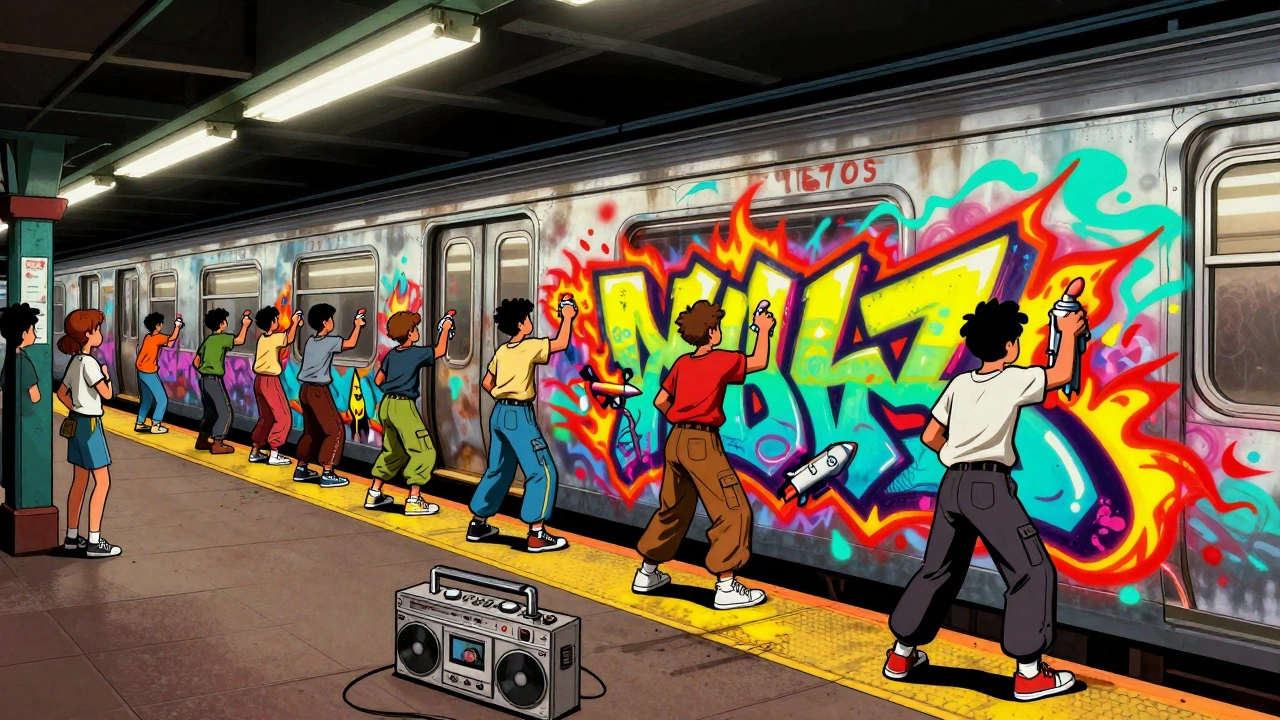

Before there were boomboxes, before rap songs hit the radio, before breakdancers spun on cardboard in the Bronx - there was paint. Spray paint. On walls. On trains. On every surface that said graffiti was here, and so were they. This wasn’t vandalism. It was survival. It was voice. And it was the first thing people saw when they encountered hip-hop. Graffiti didn’t just show up at the party. It built the door. In the late 1960s, kids in Philadelphia and then New York started tagging their names - not to destroy, but to say, I exist. Cornbread, a teenager from Philly, got his name after getting locked up. He started writing it everywhere. By 1971, kids in the Bronx were doing the same. They didn’t have money for canvas. They didn’t have permission. But they had walls, trains, and the raw need to be seen. By 1973, everything changed. DJ Kool Herc threw a party in the rec room of 1520 Sedgwick Avenue. He looped the breakbeats. MCs started rhyming. Dancers popped and locked. And outside? The walls were already screaming with color. The same kids who wrote tags on the subway were the ones dancing at the party. The same ones who painted murals were the ones spinning records. There was no separation. Graffiti wasn’t background noise. It was the visual heartbeat. That year, the United Graffiti Artists held their first gallery show in Manhattan. It was the first time anyone outside the streets saw graffiti as art - not just crime. And soon, the subway became the biggest gallery in the world. Entire train cars, covered from end to end in wild, swirling letters, rumbled through the city. Kids on the platform would stare. Rappers would write lyrics inspired by the shapes. DJs would name their crews after the tags they saw. The trains moved the art. And the art moved the culture. The Wild Style emerged as the pinnacle. Not just letters - but letters tangled like vines, popping out in 3D, surrounded by rockets, flames, and cosmic symbols. It wasn’t random. It was rhythm made visible. Each stroke matched the beat of a break. Each color choice echoed the bassline. Writers didn’t just paint - they composed. They practiced for months just to get the spray pressure right. Rust-Oleum became the gold standard. They learned which nozzles gave the thickest line, which paint dried fastest in the cold. They worked fast, in groups, watching for cops. One wrong move, and your piece was gone. And it was gone often. The city fought back. In 1989, the MTA launched the Clean Train Movement. Every car was stripped. Paint scraped off. No more moving murals. But the writers didn’t stop. They moved to rooftops, tunnels, abandoned buildings. The art didn’t die - it adapted. The same way hip-hop did. The 1983 documentary Style Wars captured it all. Not just the art, but the lives behind it. Kids who didn’t have jobs, who didn’t have hope, who didn’t have a voice - they had paint. And they used it to say, Look at us. Henry Chalfant’s camera didn’t just show pieces. It showed the community. The mentorship. The rivalry. The pride. One writer said, “I don’t care if you call me a criminal. I care if you call me invisible.” Fab 5 Freddy didn’t just paint. He connected. He took graffiti into the clubs. He brought rappers to the walls. He showed the world that hip-hop wasn’t just music - it was a full system. Four pillars: DJing, MCing, breakdancing, and graffiti. You couldn’t have one without the others. Graffiti was the face. The logo. The first thing you saw on an album cover. Look at any early hip-hop record - Planet Rock, Licensed to Ill, Def Jam’s first releases. The covers were graffiti. Not photos. Not logos. Hand-painted letters. Because that’s what hip-hop looked like. Even today, the connection holds. In Atlanta’s Krog Tunnel, walls covered in decades of tags are still used as backdrops for music videos. Young Thug filmed there in 2015. Not because it was trendy. But because it was real. The walls tell stories that studios can’t replicate. A 2023 survey of 200 hip-hop artists found that 65% still believe graffiti is essential to hip-hop’s visual identity. Even when companies like Nike and Adidas copy the style, the community knows the difference. Copying a tag isn’t the same as living it. Some say graffiti lost its edge when galleries started selling pieces for six figures. Dr. Jeff Chang writes that when the art moved from trains to museums, it sometimes lost its context. The anger. The urgency. The raw need to claim space. But others argue that’s not loss - it’s evolution. The message didn’t disappear. It just found new surfaces. Now, artists use AR apps to project graffiti onto buildings. Drones paint in places no human can reach. The tools changed. The purpose didn’t. In 2023, Columbia University launched a project to archive subway graffiti before it vanishes forever. They’re scanning walls, recording interviews, mapping locations. Why? Because graffiti isn’t just art. It’s history. It’s a map of who was there, who fought to be seen, and how they spoke when no one else would listen. Graffiti gave hip-hop its eyes. Without it, hip-hop would’ve been a sound - powerful, yes - but incomplete. The music made you feel. The graffiti made you see. Together, they made you understand. This wasn’t just a trend. It was a rebellion painted in color. And it’s still here. On walls. On screens. On sneakers. In the way a new generation picks up a can and writes their name - not because they want to be famous, but because they refuse to be ignored.
Why graffiti was the first pillar of hip-hop
Graffiti came first. Before the parties. Before the beats were chopped. Before MCs had microphones. Cornbread was tagging in 1967. By the time DJ Kool Herc threw his first block party in 1973, graffiti was already everywhere. It didn’t need equipment. Just spray paint, a wall, and the courage to show up. While DJs needed turntables, MCs needed mics, and breakers needed space - graffiti needed nothing but a can and a wall. That made it the most accessible entry point for kids with no money, no support, and no voice. It was the first way they said, I’m here.
How train graffiti shaped the spread of hip-hop
Trains were the internet of the 1970s. A piece painted in the Bronx could be seen in Brooklyn, Queens, even Manhattan - all in one ride. Writers didn’t just make art. They built networks. They’d tag a train, and by morning, it was rolling through five boroughs. Kids on the platform would memorize the names. Rappers would name their crews after them. DJs would play tracks inspired by the colors. The trains turned local tags into citywide legends. That’s how graffiti helped hip-hop go from a neighborhood thing to a movement.
The difference between tags, throw-ups, and Wild Style
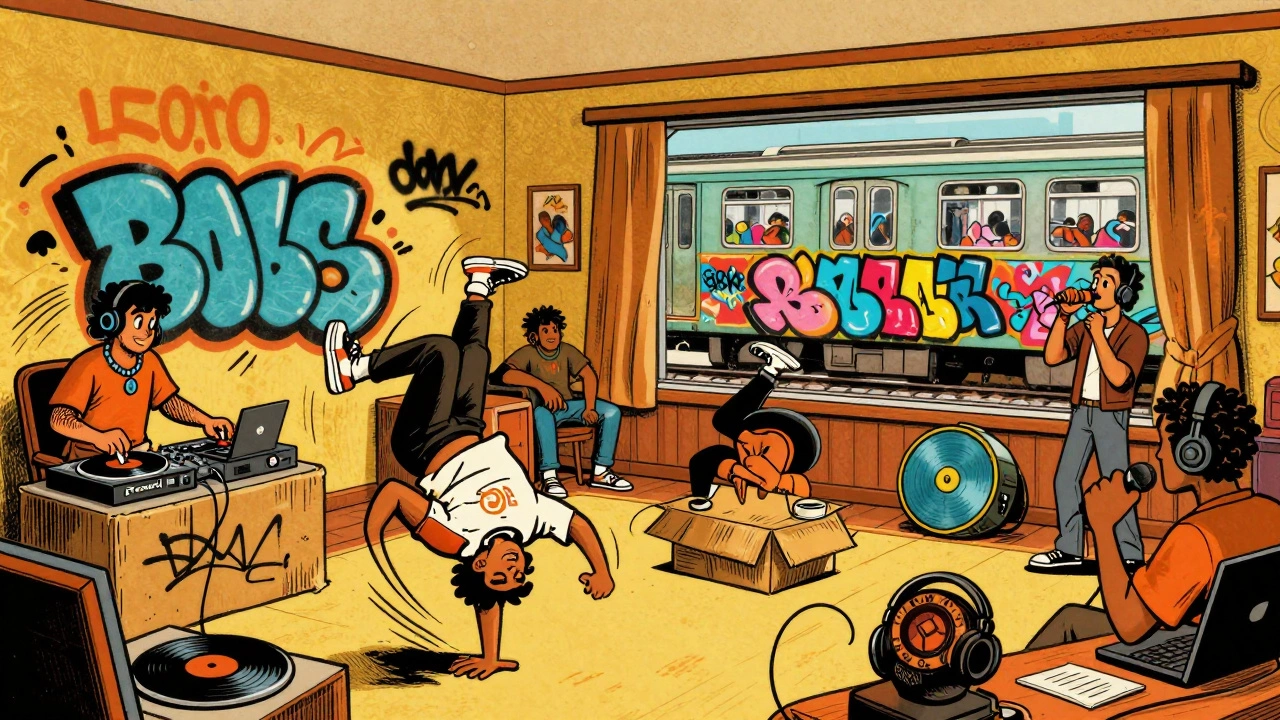
- Tags - Simple, quick signatures. One color. Done in seconds. The baseline. Every writer started here.
- Throw-ups - Bubble letters, two or three colors. Took 5-10 minutes. Bigger. Bolder. Harder to buff.
- Wild Style - Complex, layered, 3D letters with arrows, stars, backgrounds. Took hours. Sometimes days. Only the most skilled did this. This was the art form that turned graffiti into a visual language.
Why graffiti was more than just art - it was identity
For kids growing up in abandoned buildings, with no jobs, no future, graffiti was a way to say: I matter. It wasn’t about fame. It was about being recognized. In the Bronx, if your tag was on a train, you were known. If your name was on the wall, you existed. This wasn’t rebellion for rebellion’s sake. It was identity. And that’s why it stuck. When rappers started saying “I’m the king of the mic,” they were saying the same thing graffiti writers said with paint: I’m here. I’m seen. I’m not going away.
How commercialization changed - and didn’t change - graffiti
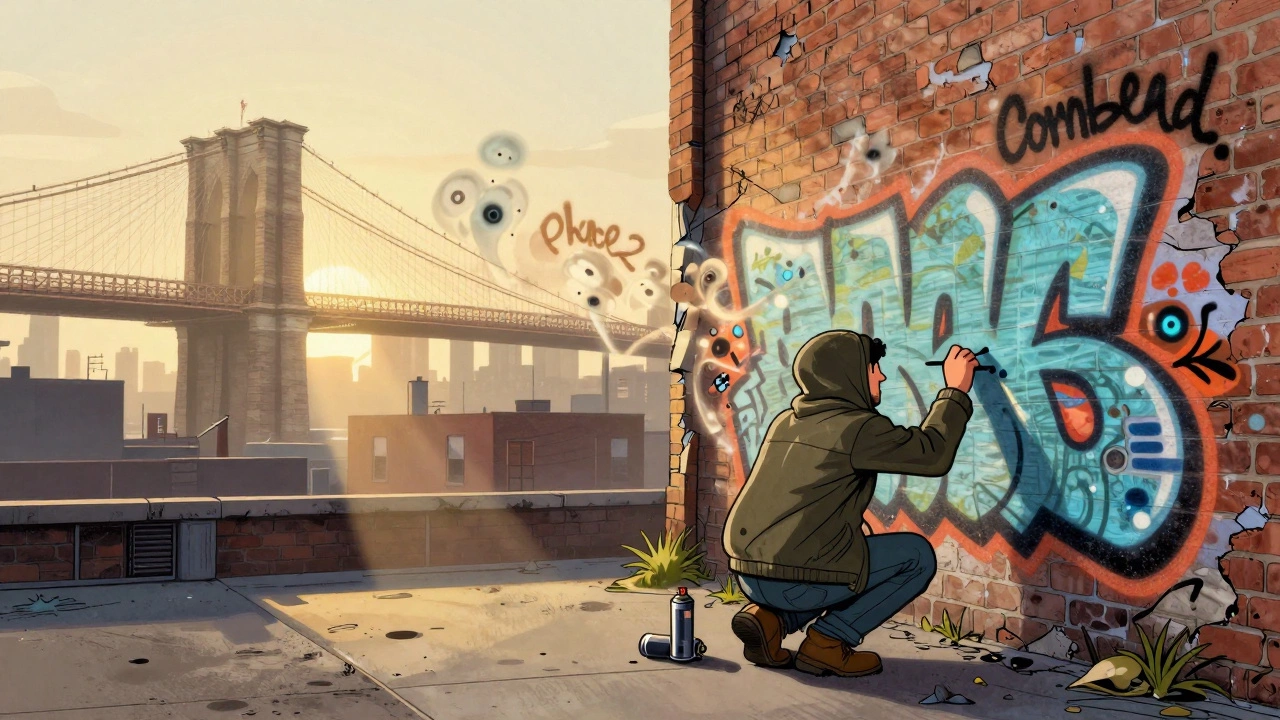
When brands started using graffiti in ads, when galleries sold pieces for millions, some said it was sold out. But the truth? The streets still have the real stuff. The artists who paint at midnight, under the bridge, still do it for the same reason: to be seen. The commercial side didn’t kill graffiti. It just gave it more places to live. The music videos still use tunnel walls. The album covers still use spray-painted letters. The kids still start with a tag. The soul hasn’t changed. Only the audience has.
What graffiti taught hip-hop about visibility
Music fades. A song ends. But a wall? A train? It stays. Graffiti made hip-hop impossible to ignore. Even if you never heard a rap song, you saw the art. And that made the culture harder to erase. When the city tried to clean the trains, the writers just moved. When the media ignored them, they painted louder. That’s the lesson: if you’re not heard, make yourself seen. Graffiti taught hip-hop how to do that - and it still does.
Was graffiti always considered part of hip-hop?
Yes - from the very beginning. In the early 1970s, graffiti, DJing, MCing, and breakdancing were all happening in the same neighborhoods, by the same kids. Fab 5 Freddy was the first to formally name these four as the pillars of hip-hop. Graffiti wasn’t an add-on. It was the visual foundation. Without it, hip-hop would’ve been just sound - missing its most powerful way to claim space and identity.
Why did graffiti become so tied to subway trains?
Trains were mobile canvases. A piece painted in the Bronx could travel across the whole city, seen by thousands of people daily. Unlike walls, which could be painted over quickly, trains took days or weeks to be cleaned. That gave writers more time to be seen. Plus, the subway yards were where the action happened - writers worked in crews, often at night, with DJs playing music to keep them company. The trains turned graffiti into a city-wide movement.
Can you still see original graffiti from the 1970s today?
Very few remain. The MTA’s Clean Train Movement in 1989 removed nearly all subway graffiti. Most original pieces were painted over, scraped off, or destroyed by weather. Today, you can find remnants in tunnels like the Krog Tunnel in Atlanta or under bridges in Brooklyn, but the vast majority are gone. That’s why institutions like Columbia University are now digitally archiving what’s left - before it disappears forever.
Is graffiti still relevant to modern hip-hop?
Absolutely. Even with digital tools, 65% of hip-hop artists in a 2023 survey said graffiti remains essential to the culture’s visual identity. Music videos, album covers, fashion lines, and even social media profiles still use graffiti aesthetics. Artists like KATSU use drones to paint in new spaces. Others use AR apps to overlay digital tags on real walls. The tools changed, but the purpose didn’t - it’s still about claiming space, making noise, and saying, I’m here.
Why do some people say graffiti ruined hip-hop?
They don’t. That’s a misunderstanding. Some critics argue that when graffiti was sold in galleries, it lost its connection to the streets - and sometimes to the other hip-hop elements. But the artists themselves never stopped. The real graffiti scene is still alive in tunnels, under bridges, and in abandoned buildings. The problem isn’t graffiti becoming art - it’s when people forget where it came from. The power of graffiti was never in the price tag. It was in the risk, the rebellion, the raw need to be seen.