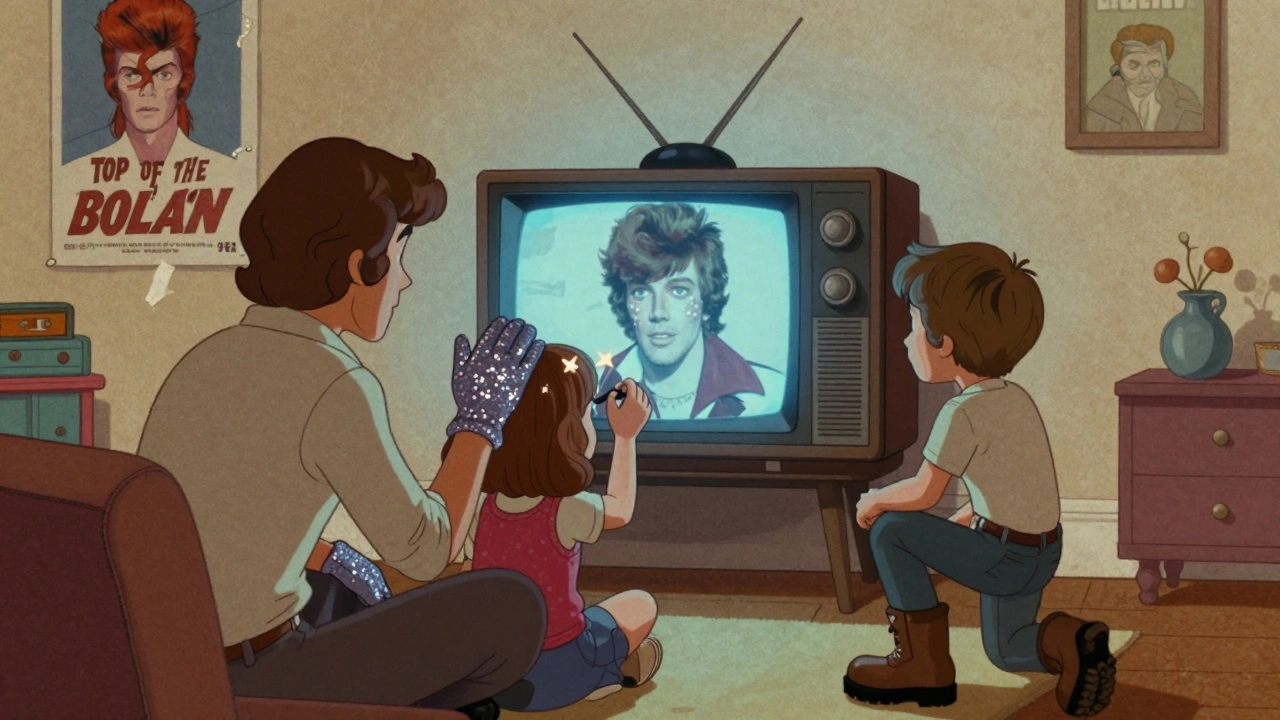

Before the internet, before YouTube, before music videos as we know them, there was Top of the Pops. Every Thursday night, millions of Brits gathered around their TV sets to watch the weekly chart countdown. But in 1971, something shifted. It wasn’t just about the songs anymore. It was about how they looked.
The Glitter Hit the Screen
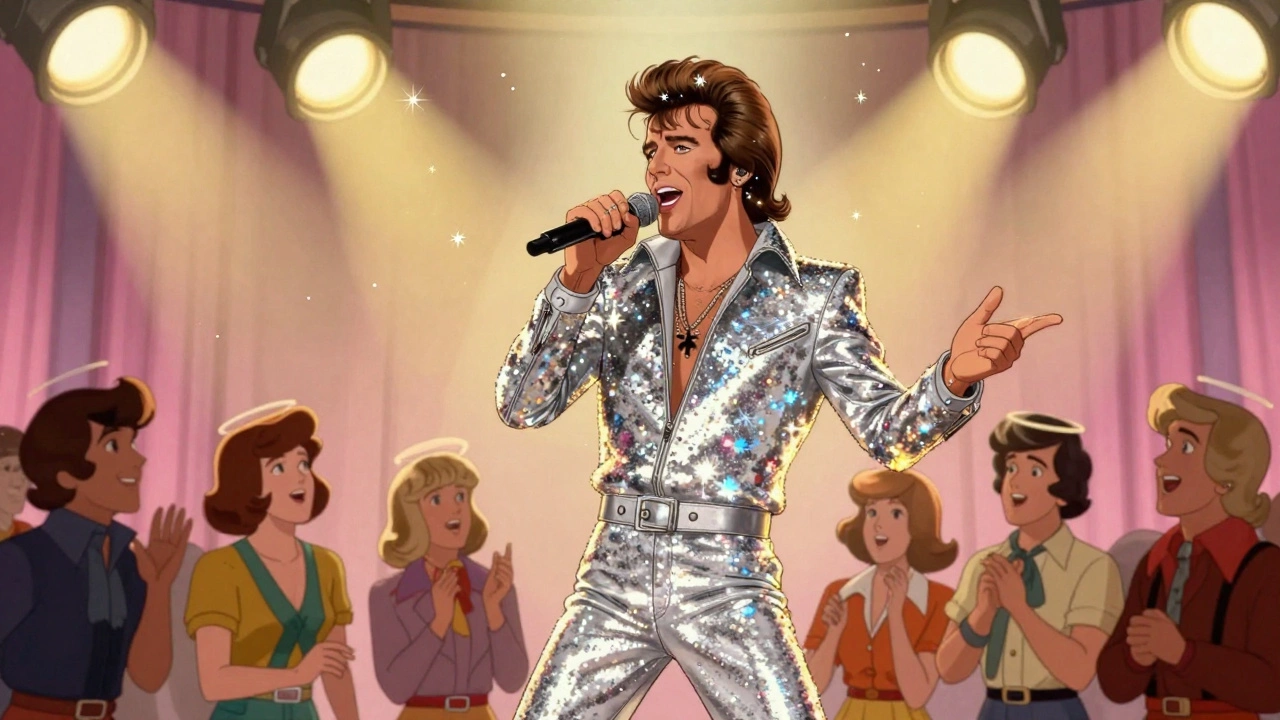
On March 11, 1971, Marc Bolan walked onto the Top of the Pops stage in a shimmering silver jacket, his hair slicked back, glitter dusted across his cheeks. He didn’t just sing "Hot Love"-he performed it like a rock god who’d stepped out of a fairy tale. The audience at home didn’t know what hit them. Within days, the single shot to number one and stayed there for six weeks. No one had seen anything like it on British TV. Bolan wasn’t just a musician. He was a visual statement. This wasn’t an accident. The BBC had spent years refining how music looked on screen. Top of the Pops began in 1964 as a simple performance show-bands miming to records in front of a plain backdrop. But by the late 60s, the show had evolved. Color broadcasting arrived in November 1969, and suddenly, the visual possibilities exploded. Glitter wasn’t just sparkly-it glowed under studio lights. Satin reflected light like liquid. Platform boots made performers tower over the crowd. Glam rock didn’t just appear on TV-it was made for TV.The Dance Troupes That Framed the Revolution
You can’t talk about glam rock on Top of the Pops without talking about the dancers. Pan’s People, the all-female troupe that replaced the Go-Jos in 1968, became the silent backbone of the show’s visual language. Dressed in colorful, form-fitting outfits, they moved in perfect sync, their choreography tight and playful. They weren’t just background filler-they were the visual counterpoint to the flamboyance of Bolan and Bowie. When T. Rex or Slade took the stage, Pan’s People danced beside them, their movements echoing the rhythm but never stealing focus. Then, in 1976, the BBC replaced them with Ruby Flipper-a mixed-gender group that brought a new energy. The shift mirrored glam rock’s own evolution: from pure theatricality to something more fluid, more daring. These dancers didn’t just move to the beat-they helped define the mood. Their presence made the stage feel alive, like a pop fantasy unfolding in real time.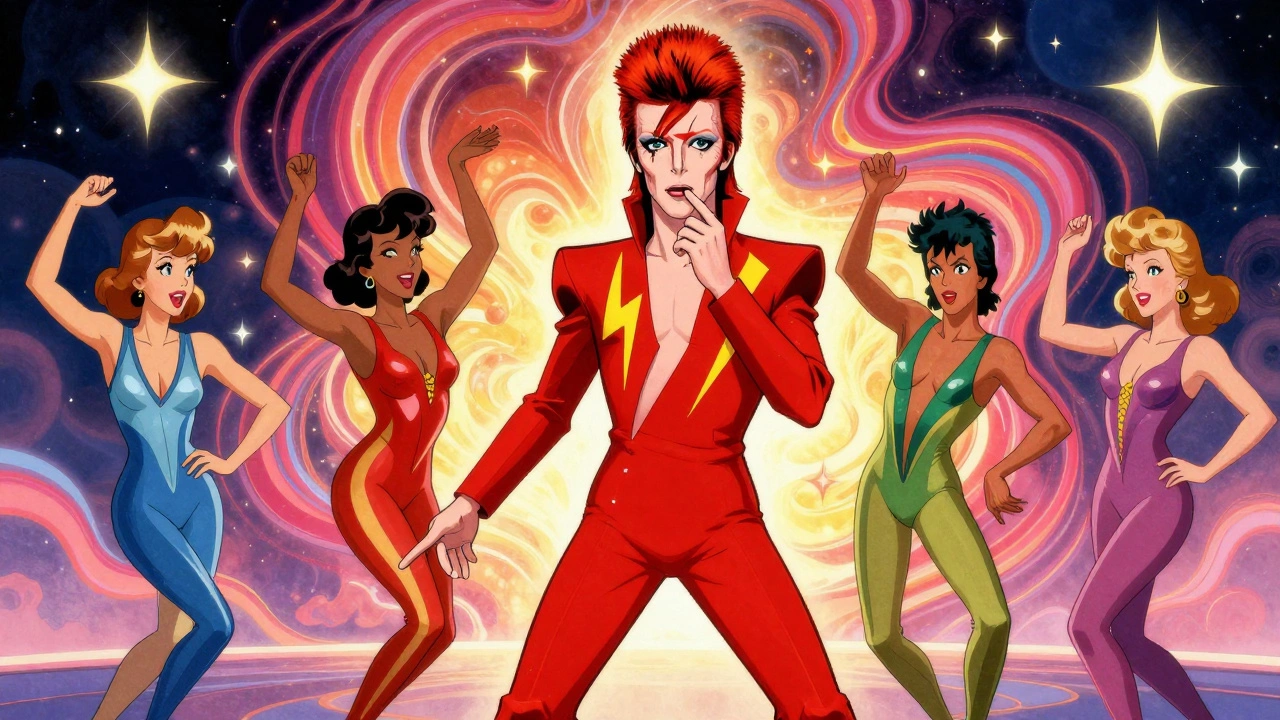
Bowie’s Moment That Changed Everything
If Bolan lit the fuse, David Bowie set off the explosion. On April 23, 1972, Bowie appeared as Ziggy Stardust, a space alien rock star with bright red hair, eyeliner, and a jumpsuit that looked like it came from another galaxy. He sang "Starman"-a song about an outsider reaching out to Earth-and then, in a move that still sends shivers down spines, he looked straight into the camera and said, "I had to phone someone so I picked on you." That single line, delivered with such quiet intimacy, broke the fourth wall. Viewers didn’t feel like they were watching a performance. They felt like Bowie was talking to them. The show had never been this personal. The BBC had never allowed this much risk. But the ratings soared. Teenagers across Britain started painting their faces. Boys wore makeup to school. Girls cut their hair short. The message was clear: identity wasn’t fixed. It could be worn, changed, reinvented. This wasn’t just music. It was a cultural reset. And it happened because Top of the Pops gave it a stage.Why TV Was the Perfect Stage
Glam rock was never meant to be a live concert act. It was designed for the screen. The tight, controlled environment of a BBC studio meant every detail mattered-the angle of a head tilt, the way light caught a sequin, the pause before a lyric. Live shows were chaotic. TV was curated. And that precision was perfect for glam’s artifice. The BBC’s rules were strict. Performers had to mime. No live vocals. No real instruments. But that didn’t matter. In fact, it helped. Because when you couldn’t rely on raw sound, you had to lean harder on image. Bolan’s eyelashes. Bowie’s boots. Gary Glitter’s sequined gloves. These weren’t accessories. They were the music. Compare this to ITV’s "Lift Off," which tried to copy Top of the Pops for acts like Sweet. It lacked the BBC’s authority. It didn’t feel like the national stage. Top of the Pops had history. It had legitimacy. When the BBC let glam rock in, it gave the movement permission to exist in the mainstream.