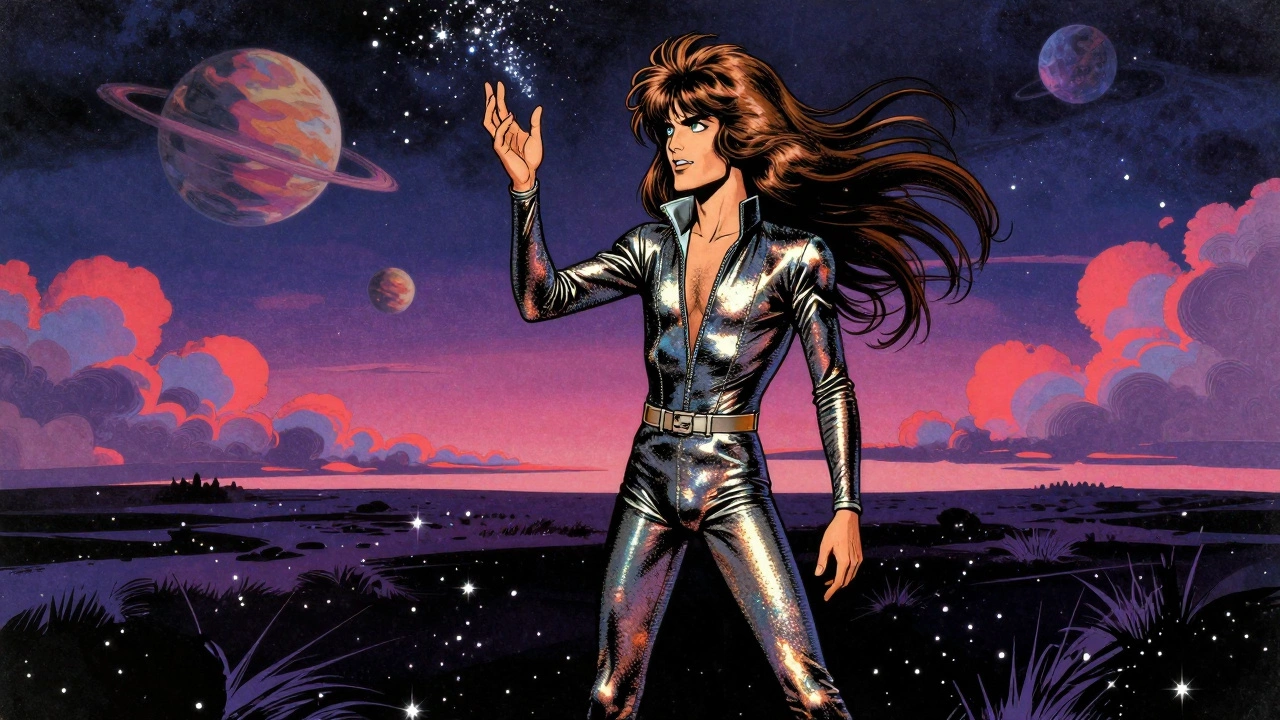

When you think of glam rock, you don’t just hear the music-you see it. The glitter, the lightning bolt, the metallic boots, the eyeliner that cracked under stage lights. These weren’t just album covers. They were billboards for a revolution. In the early 1970s, rock music was still stuck in denim and beards. Then came albums like T. Rex’s Electric Warrior and David Bowie’s Ziggy Stardust, and suddenly, the rules changed. The music was loud, wild, and full of swagger. But the cover? That was the first thing you felt before the needle even dropped.
The Cover Was the First Note
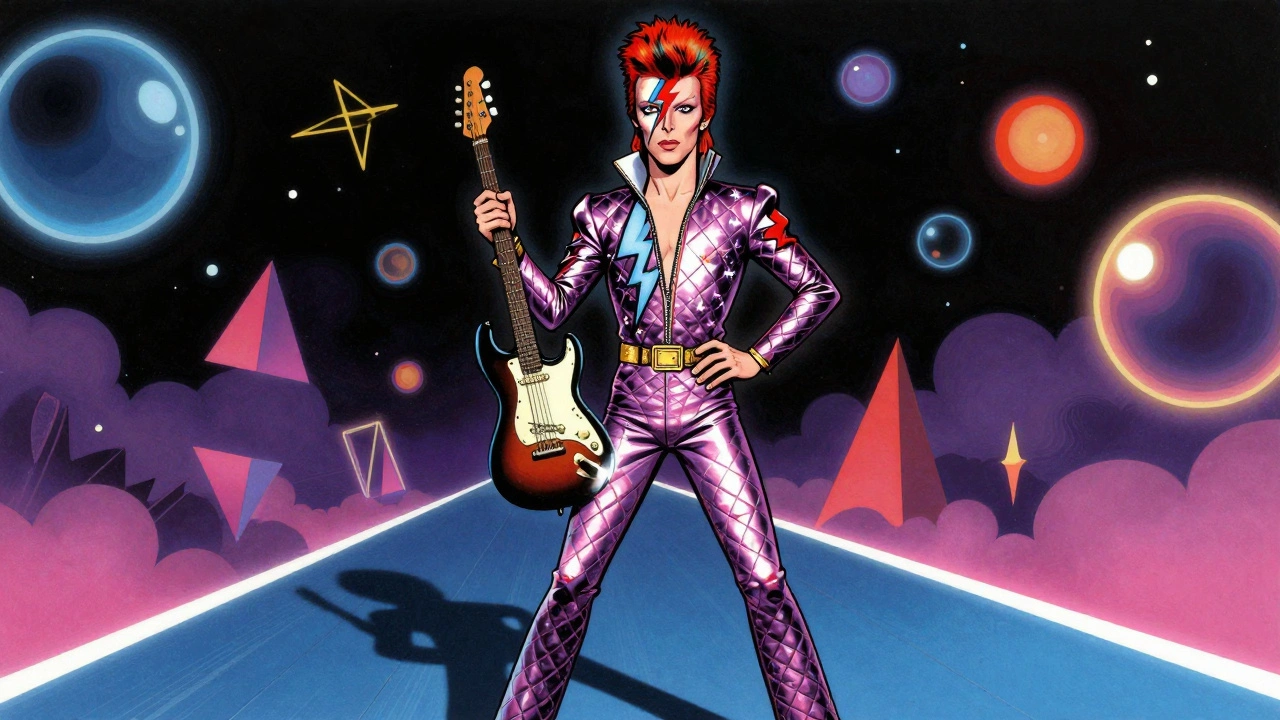
Glam rock didn’t just wear costumes-it built entire worlds on its album sleeves. The genre’s visual identity didn’t emerge by accident. It was a calculated move. Labels knew that in a world where radio play was limited and TV appearances rare, the album cover had to do the talking. And it talked loud. Marc Bolan of T. Rex stood in a cosmic field on Electric Warrior (1971), hair flowing, glitter catching the light like stardust. No guitars. No band. Just him, a myth. The cover didn’t advertise the music-it announced a new kind of rock star.David Bowie’s Ziggy Stardust (1972) took it further. Brian Ward’s photograph captured Bowie mid-stride, one hand on his hip, the other holding a guitar like a prop. The real magic? The red-and-blue lightning bolt across his face. It wasn’t makeup-it was a symbol. A brand. A question. Who is this creature? And why does he look like he fell out of a sci-fi comic? The answer was simple: he was everything rock wasn’t supposed to be. And that’s why it sold.
What Made These Covers So Different?
Most rock albums in the late 60s and early 70s looked like they were taken in a backyard. Woodstock. Grateful Dead. Neil Young. Earth tones. Long hair. No makeup. Glam rock flipped that script. It didn’t just add color-it added performance.- Colors: Silver, gold, electric blue, chrome. These weren’t just choices-they were statements. Metallic foil stamping was used on over 60% of key glam albums, making them glow under dim lighting in record stores.
- Makeup: Eyeshadow wasn’t decorative; it was narrative. Bowie’s Ziggy look took eight hours to apply. The lightning bolt? A single stroke that became one of the most copied images in pop history.
- Costumes: Freddie Burretti designed Ziggy’s quilted jumpsuit. Alice Cooper wore women’s lingerie on stage and on his Love It to Death cover. These weren’t costumes-they were armor.
- Lighting: No natural sunlight here. Glam covers were shot with stark studio lights, shadows carved like theater curtains. It wasn’t realism. It was drama.
According to Paste Magazine’s 2023 breakdown of 30 definitive glam rock albums, 87% of them used professional photography-not illustration. That’s rare. Most rock bands of the time couldn’t afford studio time. Glam acts didn’t just afford it-they demanded it. The average cost to produce one of these covers in 1973? $8,500. Adjusted for inflation, that’s over $58,000 today. Labels took huge risks. But the payoff? Albums with bold covers sold 23% faster than those with plain photos.
Contrast: Glam vs. Punk
By the mid-70s, punk was rising. And it hated glam. Not because it was bad music. Because it was too polished. The Ramones’ self-titled debut (1976) was shot in black and white. No glitter. No makeup. Just four guys in leather jackets, standing still. It was the opposite of Ziggy Stardust.Sex Pistols’ Never Mind the Bollocks (1977) took it further. A yellow and pink smear of text over a photo of a broken guitar. It was ugly. It was cheap. And it was intentional. Punk didn’t want to be admired. It wanted to be felt. Glam wanted to be worshipped. That’s why punk’s covers looked like they were made on a kitchen table-and why glam’s looked like they came from a sci-fi movie set.
SPIN’s 2024 blind test of 500 people showed glam rock covers scored 4.7 out of 5 for visual impact. Folk rock? 3.2. The difference wasn’t just style-it was intention. Glam didn’t just want you to listen. It wanted you to stare. To wonder. To dress like it.
The Legacy: Why These Covers Still Matter
Today, you can walk into any major city and see someone wearing a Ziggy Stardust jacket. Or a T. Rex glitter patch. Or a lightning bolt tattoo. These images aren’t relics. They’re living symbols.Dr. Emily Carter of Oxford University called Ziggy’s cover “the first chapter of a visual narrative that redefined gender presentation in popular culture.” That’s not hyperbole. Before Bowie, rock stars were men. After Ziggy? The lines blurred. Lady Gaga didn’t just borrow the look-she inherited the rebellion. Harry Styles doesn’t just wear dresses-he continues a tradition started on a London studio floor in 1972.
The Victoria and Albert Museum’s 2022 exhibition Glam! The Performance of Style displayed 78 original album covers. Over 120,000 people visited. Why? Because these weren’t just records. They were costumes. They were identities. They were permission slips to be someone else.
Reddit’s r/vinyl community had a 2023 thread asking: “What was the first album cover that blew your mind?” Over 63% of 1,247 respondents picked a glam rock cover. Bowie’s Ziggy got 41% of the votes. One user wrote: “Seeing Marc Bolan on Electric Warrior made me realize rock stars didn’t have to look like hippies.” That’s the power of a single image.
The Cost of Glam
But glam wasn’t perfect. It was expensive. It was exclusive. And it was white.A 2022 survey on RateYourMusic found that 78% of the top-rated glam rock covers featured only white artists. The genre emerged from a very specific corner of British and American culture. It celebrated androgyny, but rarely included Black or Latino performers. That’s a blind spot. And it’s one that modern artists are still wrestling with.
Also, the production cost made glam risky. Labels like RCA and EMI poured money into these covers, betting they’d pay off. Some did. Others didn’t. Second-tier glam bands with flashy covers but weak songs faded fast. Critic Lester Bangs once said: “The costumes became more important than the songs.” And he had a point. But that’s the danger of spectacle-it can drown out the substance.
Today’s Revival
Glam rock album art isn’t just nostalgia. It’s commerce. In 2023, Poster Plus reported a 37% year-over-year increase in sales of glam rock cover reproductions. Bowie’s Ziggy imagery alone accounted for 62% of those sales. Original vinyl pressings with intact foil stamping now sell for $1,200 to $1,800. The market for these covers is growing fastest among Gen Z collectors-43% of 2023 vinyl purchases in this genre were by buyers aged 18 to 24.New technology is keeping the art alive. Roxy Music’s 2024 reissues include augmented reality features. Point your phone at the cover, and Bryan Ferry’s original painted designs come to life, swirling with color. Meanwhile, NFT versions of classic covers sold for an average of $4,176 in 2023. Not everyone buys them. But enough do to prove the visual power still holds.
And it’s not just collectors. The Weeknd, Sam Smith, and even Harry Styles cite glam as a direct influence. The makeup. The costumes. The gender-bending. It’s all there. The album cover wasn’t just packaging. It was a blueprint.
How to Recognize a True Glam Cover
If you’re looking at a vintage album and wondering if it’s glam, ask yourself:- Is the artist wearing makeup that looks like theater, not everyday wear?
- Is there glitter, metallic ink, or foil stamping on the cover?
- Does the pose feel staged, like a movie still, not a candid shot?
- Is the background surreal-space, neon, studio lights, or nothing at all?
- Does the artist look androgynous, exaggerated, or intentionally unnatural?
If the answer is yes to three or more, you’re looking at glam. And you’re looking at history.
What was the first glam rock album cover?
The earliest album widely recognized as glam rock is Unicorn by Tyrannosaurus Rex (1969), featuring Marc Bolan in a fantasy-inspired pose with flowing hair and a dreamy backdrop. But the genre truly crystallized with Electric Warrior (1971), where Bolan’s glitter, androgynous look, and cosmic aesthetic became the template. This cover didn’t just represent glam-it defined it.
Why did glam rock album covers use so much glitter and foil?
Glitter and foil stamping were expensive, but they served a purpose. In record stores, albums sat on shelves under dim lighting. A glossy, metallic cover caught the eye. It stood out from folk, blues, and early punk records. It felt luxurious, futuristic, and rebellious all at once. The cost was high-about 18% more than standard printing-but labels knew it paid off in sales. Albums with foil covers sold faster and were more likely to be noticed.
How did Bowie’s Ziggy Stardust cover change music visuals?
Before Ziggy, rock stars were expected to look like they’d just come off a farm or a garage. Bowie’s Ziggy was a character-alien, sexual, theatrical. The lightning bolt wasn’t just makeup; it was a logo. It became instantly recognizable, endlessly copied. It proved that a musician’s image could be as powerful as their music. After Ziggy, every artist who wanted to stand out had to build a persona. Lady Gaga, Prince, and Harry Styles all follow that same playbook.
Are original glam rock album covers valuable today?
Yes, especially if they’re first pressings with intact foil stamping. Original copies of Ziggy Stardust sell for $1,200 to $1,800. Electric Warrior by T. Rex goes for $850 to $1,100. Condition matters-foil that’s peeled or faded cuts value in half. The market has grown 38% since 2020, driven by collectors and Gen Z fans who see these covers as art, not just packaging.
Why did punk reject glam rock visuals?
Punk saw glam as fake, overproduced, and elitist. While glam spent thousands on makeup and foil, punk bands like the Sex Pistols made covers with cheap printing, torn paper, and spray paint. Their message was raw: “You don’t need money to be real.” Punk didn’t want to be admired-it wanted to be loud, fast, and angry. Glam’s artifice was the opposite. That’s why Never Mind the Bollocks looked like a protest poster, not a fashion spread.