
When you think of the 1980s, you probably picture big hair, spandex, and glitter. But that look didn’t just appear out of nowhere. It came from a much weirder, more thoughtful movement that started in a smoky London club called Blitz. This is the story of how glam rock evolved from the art-school rebels of New Romanticism into the over-the-top rock stars of Hair Metal - and why it still matters today.
The Blitz Club and the Birth of New Romanticism
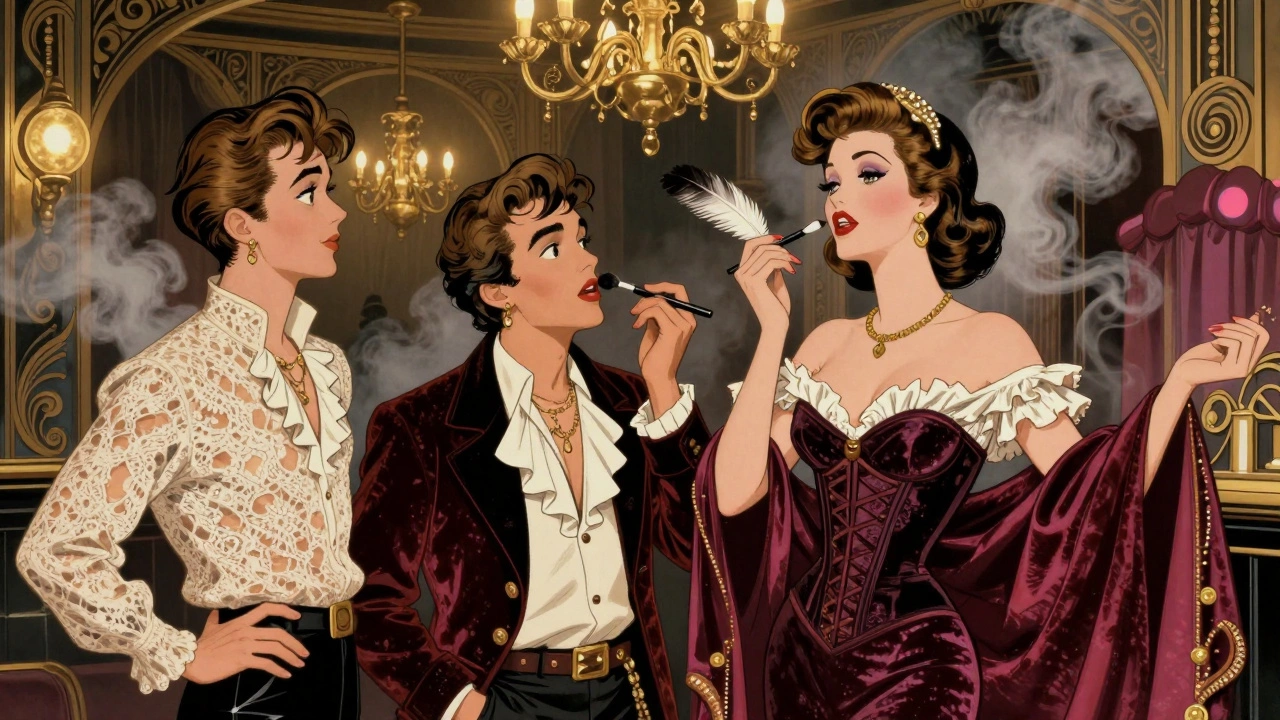
In 1978, a small club in London’s Soho district started turning away people who didn’t look right. Not because they were too loud, too drunk, or too poor - but because they weren’t dressed like living paintings. Steve Strange and Rusty Egan ran Blitz, and their rule was simple: if you weren’t wearing lace, velvet, or a frilled pirate shirt, you weren’t getting in. This wasn’t just a party. It was a revolution.
At the time, punk had ruled the last few years with ripped jeans, safety pins, and a "don’t care" attitude. But by 1980, a new generation was tired of grayness. They wanted color. Drama. Fantasy. New Romanticism wasn’t about rebellion - it was about reinvention. Inspired by David Bowie’s Ziggy Stardust, Roxy Music, and even 18th-century dandies, these kids turned fashion into performance art. Men wore makeup. Women wore corsets. Everyone wore shoulder pads the size of dinner plates.
Designers like Vivienne Westwood turned historical costumes into streetwear. Think lace-trimmed blouses, hussar jackets with gold braid, and silk scarves tied like capes. It wasn’t just clothing - it was storytelling. And it worked. By 1981, Spandau Ballet had flown to New York not just to play a concert, but to stage a full fashion show with their own design collective. That’s how seriously they took the look.
The Sound Behind the Style
While the fashion screamed attention, the music whispered elegance. New Romantic bands didn’t rely on distorted guitars. They used synthesizers. Cold, shimmering, electronic tones that felt like a disco ball in a cathedral. Visage’s "Fade to Grey" hit the Top 10 in 1980. Duran Duran’s "Rio" became an anthem. Culture Club’s "Do You Really Want to Hurt Me?" topped charts across Europe and the U.S.
This was the "Second British Invasion" - but instead of the Beatles or the Rolling Stones, it was a wave of androgynous, makeup-wearing musicians who sang about love, loneliness, and luxury. They weren’t trying to be gritty. They wanted to be beautiful. And America noticed. By 1983, MTV was playing their videos nonstop. The visuals were as important as the hooks. A song wasn’t complete without a video full of silk robes, candlelight, and slow-motion hair flips.
But by 1984, something shifted. The same bands that once looked like romantic poets started appearing in videos with too much gold, too much glitter, and too much excess. Duran Duran’s "The Wild Boys" looked like a budget sci-fi movie directed by a king who’d just won the lottery. Critics called it decadent. Fans called it magic. Either way, the mood changed. The art became about spectacle - not soul.
How Hair Metal Took the Crown
Across the Atlantic, American rockers were watching. They saw the makeup, the hair, the drama - and they thought: "We can do this louder."
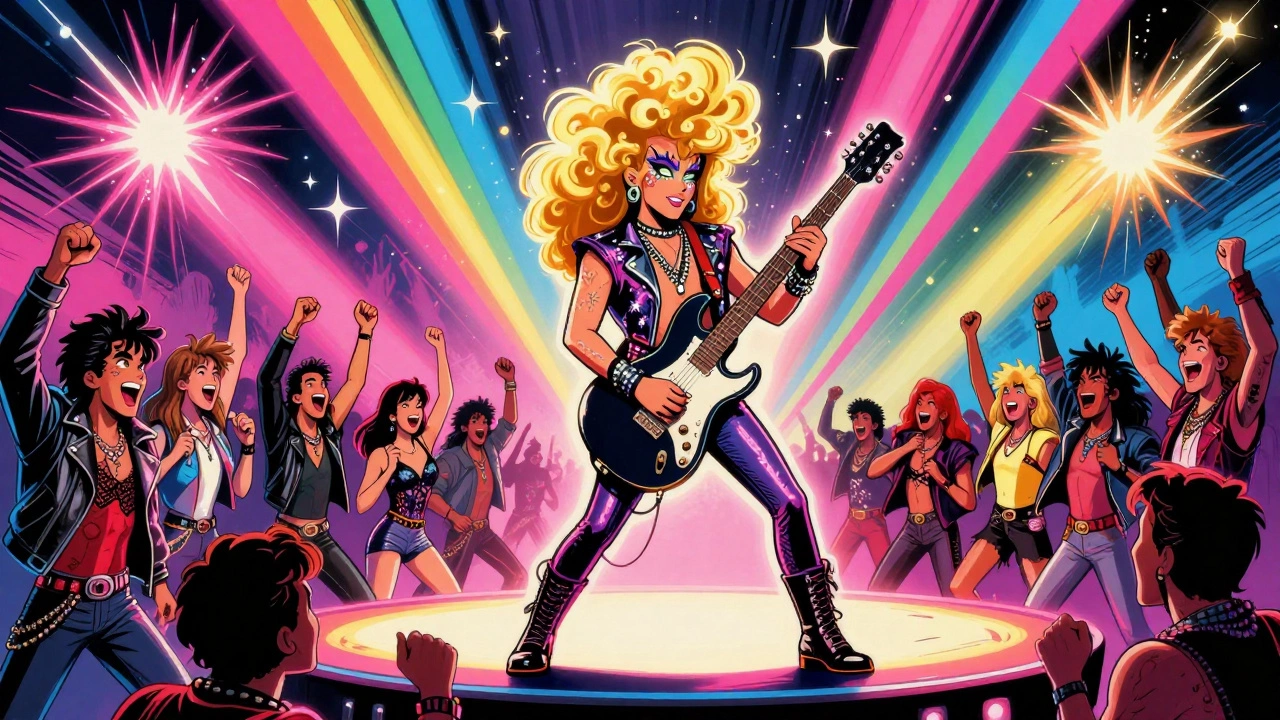
Enter Hair Metal. Bands like Mötley Crüe, Poison, and Bon Jovi didn’t care about Victorian lace or Romantic-era poetry. They cared about leather, spandex, and hairspray that could be seen from space. Their shirts were tight. Their pants were shiny. Their hair was taller than their guitars.
But here’s the twist: they kept the DNA. 78% of Hair Metal acts between 1984 and 1989 wore some version of the New Romantic uniform: frilly shirts, eyeliner, and gender-bending flair. Mötley Crüe’s Vince Neil wore lipstick on stage. Poison’s Bret Michaels had a lace-trimmed vest under his denim jacket. Def Leppard’s Joe Elliott wore a velvet jacket with a ruffled collar - straight out of a 1981 Blitz Club photo.
The difference? New Romanticism was about art. Hair Metal was about power. One looked like a painting. The other looked like a rock opera written by a teenager who just got his first credit card. The music changed too. Synths gave way to power chords. Ballads became anthems. The emotion stayed - but the subtlety vanished.
Why It Mattered - And Why It Fell
The numbers don’t lie. Between 1982 and 1986, British acts influenced by New Romanticism sold $1.2 billion worth of records in the U.S. alone. By 1987, Hair Metal tours were pulling in $487 million - the equivalent of over $1 billion today. The glam aesthetic had become the most profitable look in rock history.
But popularity killed it. When everyone started wearing the same look, it stopped being special. The same fans who once loved the drama of a silk shirt now rolled their eyes at a band that wore 12 layers of makeup. By 1990, album sales for Hair Metal bands dropped 67% in just two years. Grunge came in with flannel, dirty boots, and zero eyeliner. It wasn’t just a new sound - it was a rejection of everything the 1980s stood for.
Yet, the legacy didn’t die. Princess Diana’s 1981 wedding gown? It had a corseted waist and lace sleeves - straight from the New Romantic playbook. Even today, Harry Styles shows up on the red carpet in a ruffled blouse and glitter boots. The Weeknd’s "Blinding Lights" video? It’s a neon-lit tribute to 1983 synth-pop.
In 2023, fashion reports showed a 300% rise in runway designs drawing from both movements. Lace, velvet, and exaggerated silhouettes are back. Not as nostalgia - but as rebellion again. Because sometimes, the most radical thing you can do is wear glitter in a world that wants you to be dull.
The Lasting Divide
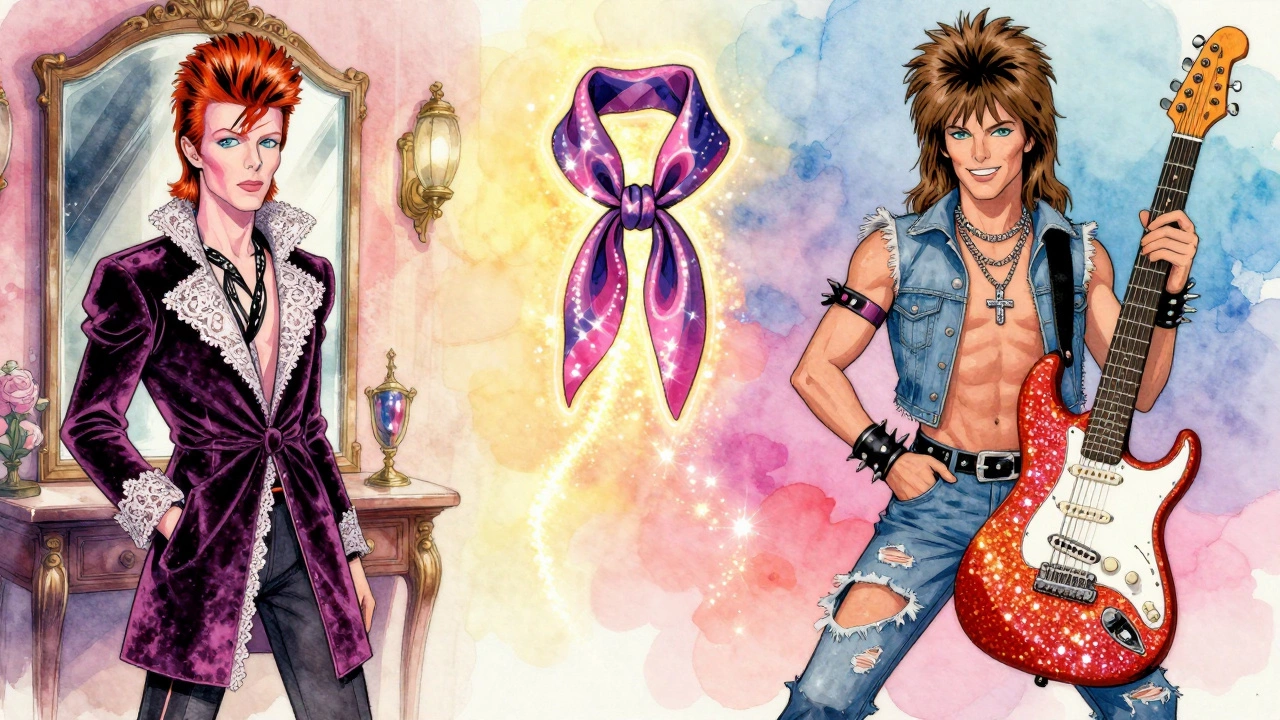
There’s a reason New Romanticism gets re-examined in art books while Hair Metal still gets mocked in comedy sketches. One was born in a club with a strict dress code and a love of history. The other was born in a record label meeting room with a checklist: "Make it flashy. Make it loud. Make it sell."
Paul Gambaccini put it best: "New Romanticism brought color to a gray world. Hair Metal turned that color into a billboard."
But here’s the truth no one talks about: you can’t have one without the other. Without the artistry of the Blitz kids, Hair Metal would’ve just been another guitar band. Without the raw energy of the L.A. scene, New Romanticism might’ve stayed a niche trend. They were two sides of the same coin - one polished, one rough. Both unforgettable.
What was the main difference between New Romanticism and Hair Metal?
New Romanticism was rooted in historical fashion, art, and androgyny - think lace, velvet, and makeup as self-expression. Hair Metal took those visual elements but stripped away the intellectual depth, replacing them with leather, spandex, and exaggerated masculinity. New Romanticism was about fantasy. Hair Metal was about fantasy sold as a product.
Did any Hair Metal bands admit to being influenced by New Romanticism?
Yes. Members of Def Leppard, Poison, and even Bon Jovi have said in interviews that they watched MTV constantly in the early '80s and copied the looks from Duran Duran and Spandau Ballet. Joe Elliott of Def Leppard once said, "We didn’t invent the ruffled shirt - we just made it louder."
Why did New Romanticism fade faster than Hair Metal?
New Romanticism was tied to a very specific scene - London clubs with strict entry rules. Once it went mainstream, it lost its edge. Hair Metal, by contrast, was built for mass appeal from day one. It had radio hits, MTV videos, and merch. It didn’t need to be "cool" - it just needed to sell. That’s why it lasted longer, even if it was less original.
How did New Romanticism influence mainstream fashion?
Princess Diana’s wedding dress in 1981 featured a lace bodice and a 25-foot train - both direct nods to New Romantic aesthetics. By 1983, department stores were selling "Blitz-style" blouses with ruffled collars. Even men’s fashion adopted the trend: wide lapels, brocade vests, and silk ties became common in business wear. It wasn’t just music - it reshaped how people dressed every day.
Is there a modern revival of these styles today?
Absolutely. Harry Styles, The Weeknd, and even Billie Eilish have worn looks directly inspired by both movements. The 2022 Met Gala theme, "Gilded Glamour," featured dozens of outfits with lace, velvet, and exaggerated silhouettes. Fashion houses like Gucci and Balenciaga have released collections that look like they came straight out of a 1981 Blitz Club photo. The aesthetic never left - it just went underground until it was cool again.
What Comes Next?
If you’re wondering where this is going, look at the charts. The most popular pop songs today are built on the same formula: big melodies, emotional lyrics, and visuals that scream "look at me." That’s not coincidence. It’s inheritance.
The 1980s taught us that music isn’t just about sound - it’s about identity. Whether it’s lace, leather, or a sparkly jacket, what matters is that someone, somewhere, felt brave enough to wear it. And that’s why these glam remnants still live - not in museums, but in mirrors.


