

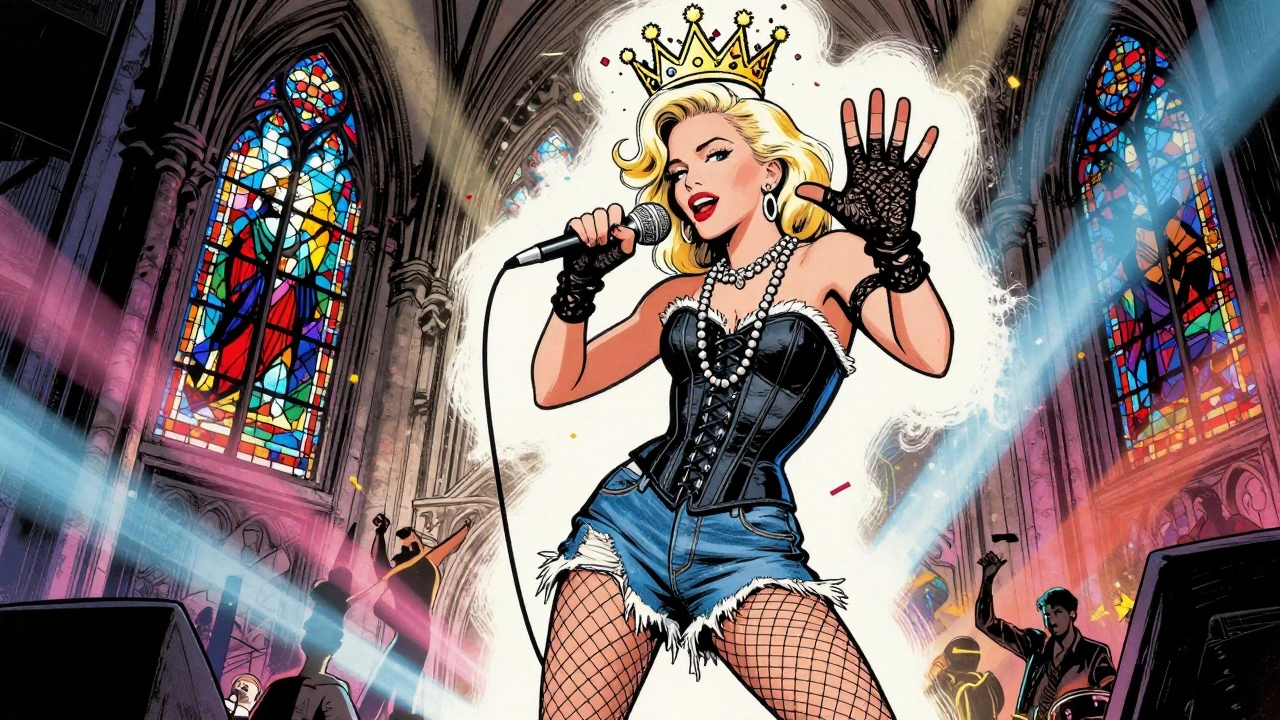
When Madonna stepped onto the stage in 1984 wearing a lace fingerless glove, she didn’t just pick an accessory - she picked up a weapon. Not a gun, not a mic, but something quieter, sharper: a piece of lace stitched into a glove that left her fingers bare. It wasn’t about warmth. It wasn’t about function. It was about control.
The Glove That Changed Everything
Before Madonna, fingerless gloves were mostly worn by bikers, punk kids, or athletes. They were practical - you needed to grip a handlebar or hold a drumstick. But Madonna turned them into a statement. She paired them with lace bras, layered rosaries, and teased hair that looked like it had been styled by a hurricane in a cathedral. The contrast was intentional: soft lace against hard edges, religious symbols against sexual rebellion. She wasn’t just dressing up. She was rewriting the rules.At a time when female pop stars were expected to look sweet, innocent, or polished, Madonna looked like she’d raided a thrift store in New York City and then set it on fire. The lace gloves weren’t accidental. They were armor. They hid her hands - not to protect them, but to make people look closer. To wonder: Why leave the fingers out? Why show skin but cover the rest? Why lace - a fabric tied to weddings and mourning - on a woman who was singing about virginity and desire?
More Than Fashion, It Was a Signal
Madonna didn’t invent the fingerless glove. But she made it mean something. In her hands - literally - it became a symbol of duality. The lace suggested delicacy, femininity, even purity. The exposed fingers? Aggression, control, rebellion. She could hold a microphone, point at the crowd, or flip off the camera - all while keeping her wrists covered in something that looked like it belonged on a Victorian bride.That contradiction was the point. She was the virgin and the whore, the saint and the sinner, the girl next door and the queen of the club. The gloves made it visible. They were a visual shorthand for everything she was fighting against: the idea that women had to choose one identity, one look, one role.
By the time she hit the road for the Like a Virgin tour in 1984, the gloves were non-negotiable. She wore them with fishnet stockings, corsets, and denim skirts ripped at the knees. She danced, twirled, fell to her knees - and every movement showed off the gloves. The fingerless design wasn’t just for looks. It let her gesture. It let her touch. It let her reach out and grab attention - literally and figuratively.
From Lace to Leather: The Evolution
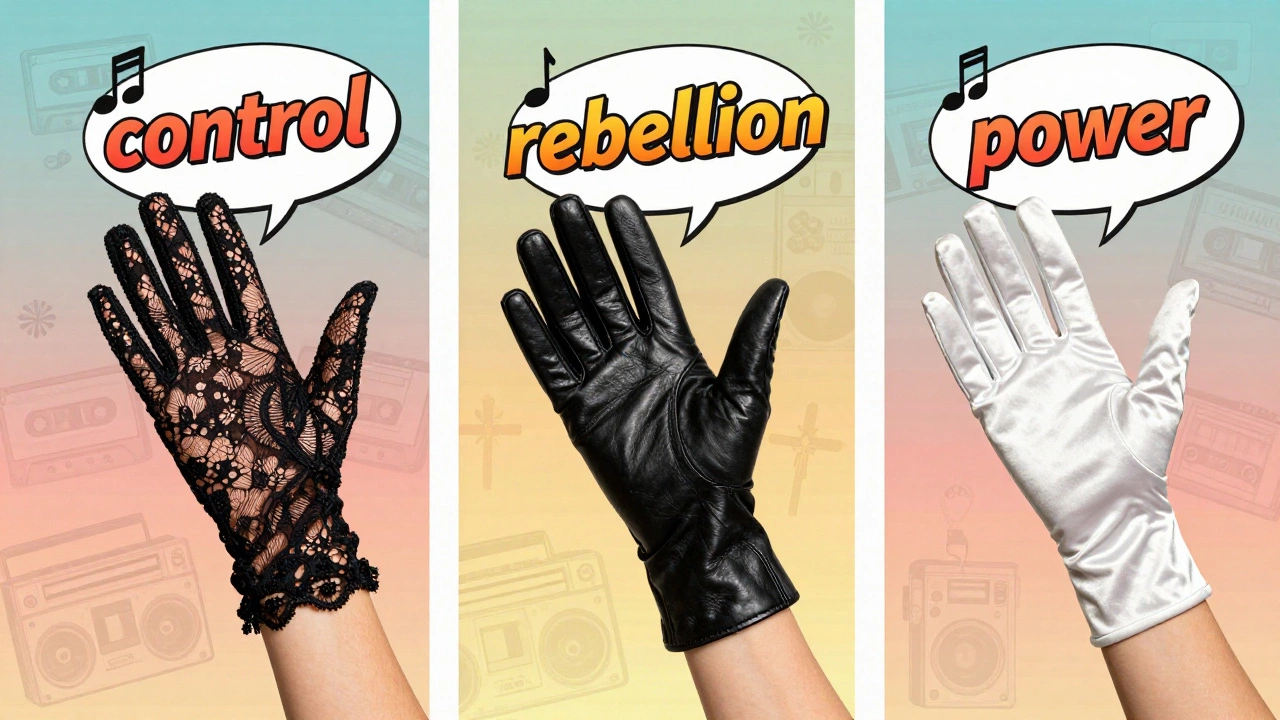
Madonna didn’t stay in lace forever. As her music got darker, her gloves got tougher. By 1986’s True Blue, she swapped delicate lace for black leather. The shift wasn’t random. It matched her transition from a bubbly pop star to a woman who owned her sexuality on her own terms. The gloves became part of a larger visual language: corsets, crucifixes, and biker boots. The lace was still there - but now it was layered under leather, like a secret.By the time she released Like a Prayer in 1989, the gloves were gone - replaced by long opera gloves in white satin. But the message hadn’t changed. The gloves had just grown up. They were no longer about rebellion. They were about power. In the music video, her gloved hands moved like a conductor’s - precise, commanding, elegant. She wasn’t asking for attention anymore. She was taking it.
The Glove That Outlived the Decade
Even after the 1980s ended, the gloves never left. In the 1990s, during the Erotica era, she wore them again - this time in black lace, paired with fishnets and thigh-high boots. In the Vogue video, they were long, elegant, and dripping with authority. The gloves were no longer just part of her outfit. They were part of her identity.By the 2000s, when she released Confessions on a Dance Floor, she returned to fingerless gloves - sleek, metallic, almost futuristic. Not a throwback. Not nostalgia. A continuation. The same shape. The same purpose. She didn’t need to explain it. Everyone who had grown up with her knew what it meant.
The Legacy in the Stores
You can still buy them today. Walmart, Target, and Amazon all sell “Madonna-style fingerless lace gloves” for under $7. They come in hot pink, neon green, and electric blue. Etsy shops sell handmade versions with rhinestones, lace trim, and custom embroidery. Costume shops in every major city have a rack of them labeled “80s Party” or “Madonna Look.”That’s the real proof of her influence. It’s not just that people remember her. It’s that people still want to dress like her. Not as a joke. Not as a parody. As a tribute. The gloves are now a costume, yes - but also a symbol. Wearing them means you’re not just copying a look. You’re claiming a moment. A time when a woman took control of her image, turned a simple accessory into a manifesto, and made the world pay attention.
Why It Still Matters
Madonna didn’t just wear gloves. She used them to say: I decide what I look like. I decide what I mean. In an industry that often tried to shrink women into cute, marketable shapes, she refused. The gloves were her signal. A quiet rebellion stitched into lace.Today, as younger artists wear gloves on red carpets and music videos, they’re not just following a trend. They’re echoing a legacy. Madonna showed that fashion isn’t about what you wear - it’s about what you refuse to hide. And sometimes, the most powerful thing you can wear is something that leaves your fingers free to point - straight at the future.
Did Madonna invent fingerless gloves?
No, Madonna didn’t invent fingerless gloves. They existed before her in punk, biker, and athletic circles. But she was the first to turn them into a global fashion symbol. Before Madonna, they were functional. After her, they became cultural. She gave them meaning - and millions of people followed.
Why did Madonna wear lace gloves specifically?
Lace was a deliberate contrast. It carried associations with innocence, femininity, and even religion - think wedding veils and altar cloths. By pairing it with exposed skin and provocative outfits, Madonna created tension. She was saying: I’m not just sexy. I’m sacred. I’m not just rebellious. I’m divine. The lace made the contradiction visible.
Are Madonna’s gloves still sold today?
Yes. Major retailers like Walmart and Target sell basic versions for $2.99-$6.91. Etsy has hundreds of handmade, custom versions with rhinestones, embroidery, and different lace patterns. Costume shops still feature them as part of "80s party" outfits. The fact that they’re still being mass-produced 40 years later proves their lasting cultural impact.
Did other artists wear similar gloves?
Some did - but none made them iconic. Artists like Cyndi Lauper and Prince wore gloves, but they didn’t tie them to a consistent visual narrative the way Madonna did. Her gloves weren’t just part of a look - they were part of her story. That’s why they stuck. Others borrowed the style. She built the myth.
Why did the gloves evolve from lace to leather to satin?
Each change matched her music. Lace matched her early, playful rebellion. Leather matched her more aggressive, sexual persona in the mid-80s. Satin opera gloves matched her rise to power in the late 80s and 90s. The gloves weren’t random. They were a visual timeline of her artistic journey - and they told the story better than any interview could.


