
When the Sky Drops, Your Festival Can’t Collapse
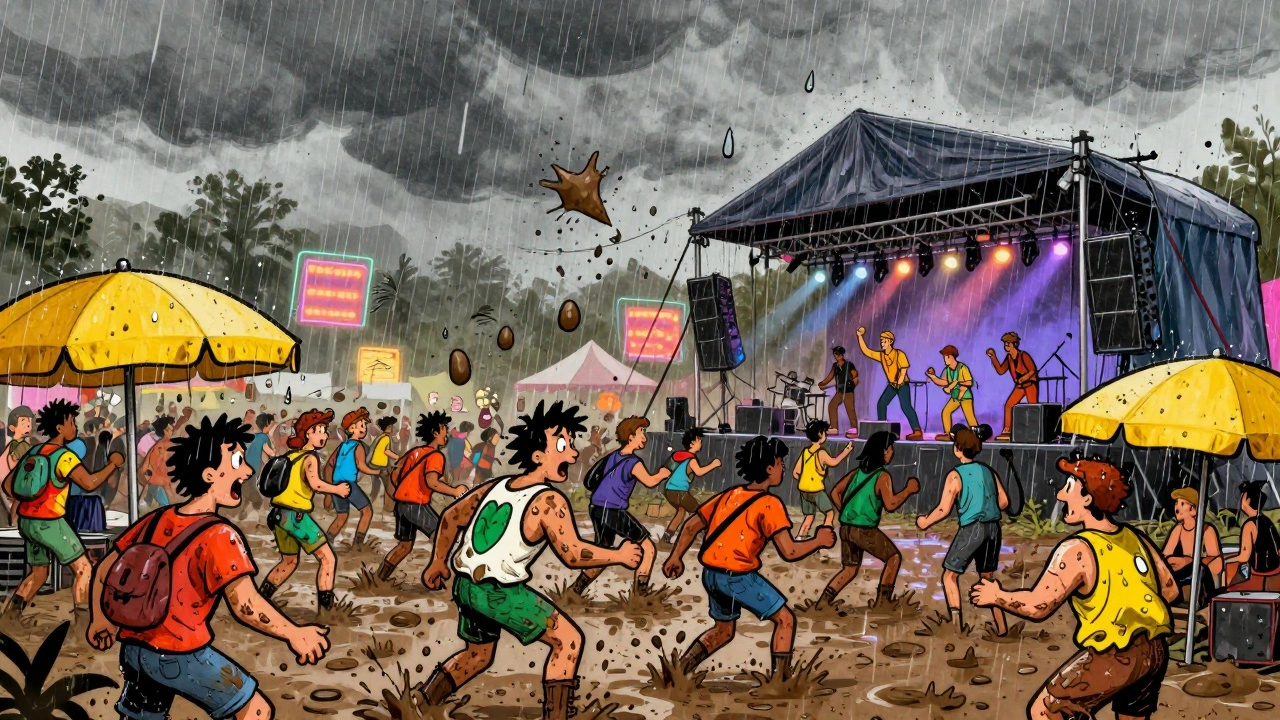
It’s Saturday afternoon. The crowd is buzzing. The bass is thumping. Then the first drop hits. Within minutes, the ground turns to mud. Or it’s 104°F with no shade in sight, and people are collapsing. This isn’t a movie. It’s real. And if you’re running a festival, festival weather contingency isn’t optional-it’s the difference between a memorable event and a disaster.
Most organizers think they’re ready until the first thunderclap or heat warning flashes on their phone. But weather doesn’t wait for permits. It doesn’t care about your lineup. And it won’t give you a second chance. The best festivals don’t react-they prepare. And they prepare like their reputation depends on it. Because it does.
Set Clear Weather Thresholds Before Day One
Don’t wait until the clouds roll in to decide what to do. That’s when panic sets in. And panic kills efficiency. Professional festivals use a weather decision matrix-a simple chart that says: “If X happens, we do Y.” No debate. No committee. Just action.
For heat, the critical threshold is usually a heat index of 105-110°F. That’s not just hot. That’s dangerous. At that point, you either shift high-energy sets to evening, add 15-minute breaks between acts, or pause the show entirely. In 2023, a Pacific Northwest festival sent a push notification at 11:30 a.m.: “Heat Alert: It’s 102°F. Water stations open. Shade zones activated.” Heat-related medical calls dropped by 68% that day.
For rain, it’s not just about wet ground. It’s about wind. Tents that can handle 20 mph winds might collapse at 35. That’s why you check with your rental company before signing anything. Front Range Event Rental insists: “Concrete weights aren’t optional-they’re mandatory if you can’t stake into asphalt or concrete.” Many urban venues don’t allow ground stakes at all. Know your venue’s rules before you pay a deposit.
And lightning? No gray area. At smaller festivals (under 1,000 people), if lightning strikes within 10 miles, clear the grounds. At bigger ones (50,000+), you’ve got to account for how long it takes 10,000 people to walk to shelter. That’s why mega-festivals use a 15-mile radius as their trigger. You don’t guess. You act.
Three Monitoring Systems Are Non-Negotiable
One weather app? One alert? That’s not a plan. That’s luck.
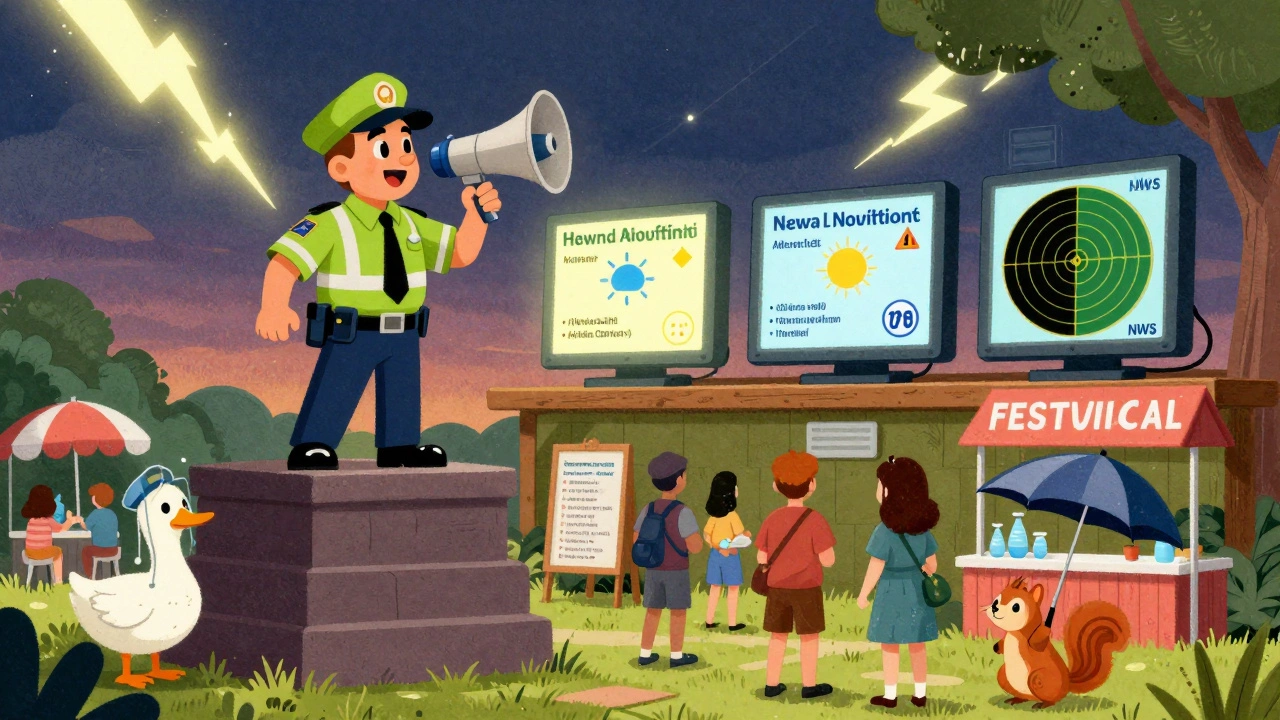
Top-tier festivals use three simultaneous sources: a dedicated weather app with lightning radius alerts (like Windy or RadarScope), official National Weather Service alerts (sign up for SMS or email), and an on-site meteorologist or contracted service with access to real-time radar. Why? Because your phone might not get a signal. The NWS alert might be delayed. The app might glitch.
At the 2024 Oregon Roots Festival, the stage manager got a lightning alert at 3:17 p.m. The app showed a storm 8 miles out. The NWS alert came at 3:21. The meteorologist on-site confirmed it was moving at 40 mph toward the main stage. They had 12 minutes to clear the field. They did. No injuries. No panic. Just a well-rehearsed protocol.
Don’t rely on free apps alone. Invest in a service like WeatherSTEM or a local meteorologist who knows your region’s quirks. Coastal storms behave differently than mountain squalls. In Colorado, weather can flip in 20 minutes. In Portland, humidity turns a drizzle into a swamp overnight. You need local insight.
Drainage, Walkways, and Mud Are Your Silent Enemies
People remember the music. But they’ll never forget the mud.
One Reddit user described a festival where “ankle-deep mud swallowed shoes and tents.” That wasn’t bad luck. That was poor planning. Rain doesn’t just fall-it pools. And if your venue has no drainage plan, you’re inviting chaos.
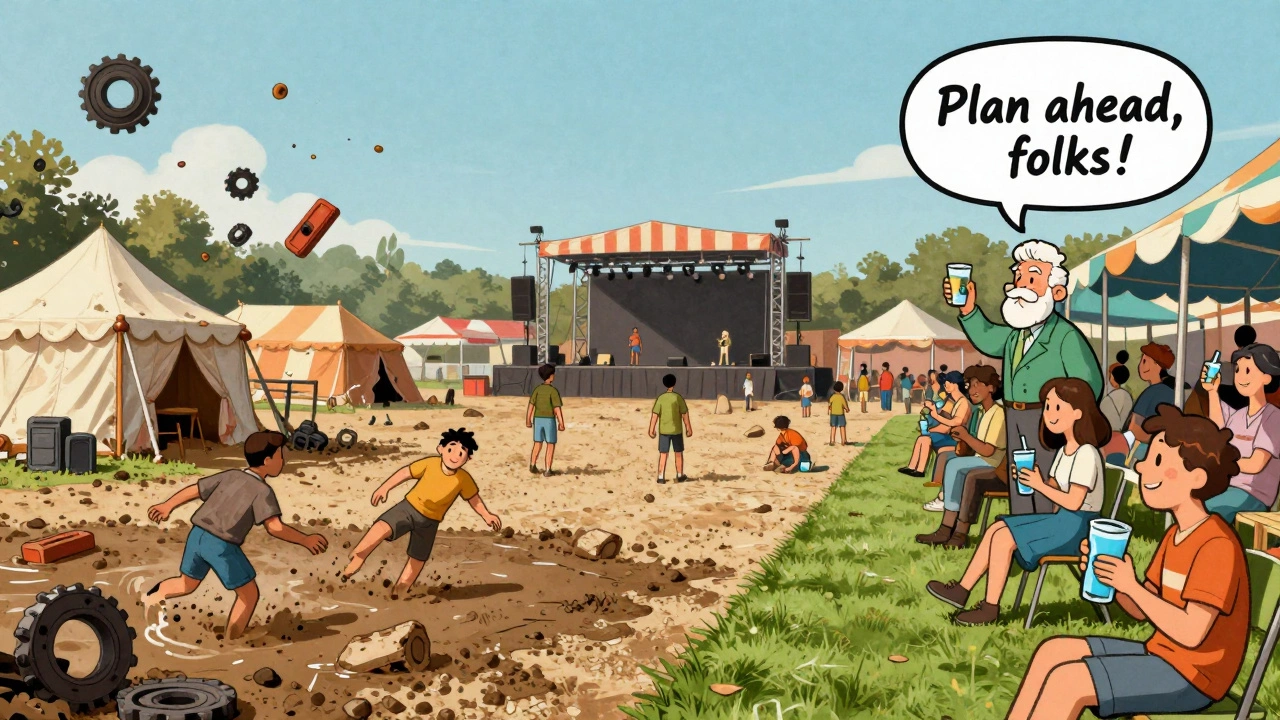
Solutions? Gravel paths. Raised platforms for stages and vendor booths. Sandbags around low spots. Temporary drainage ditches. Even something as simple as laying down 100 rolls of synthetic turf in high-traffic areas can save your event. Front Range Event Rental says 80% of rain-related complaints come from poor ground prep-not the rain itself.
And don’t forget the little stuff. Extra towels for drying chairs. Plastic sheeting under tents. Waterproof covers for soundboards. One festival lost $18,000 in gear because they didn’t cover their lighting rig. A $200 tarp could’ve saved it.
Who Decides? Authority Must Be Clear
Here’s the most common failure point: no one knows who has the final say.
At a 2023 event in Washington, the stage manager wanted to pause the show during lightning. The headliner’s manager said no. The security lead was stuck in the middle. The storm hit. Two people were injured.
That shouldn’t happen. You need a single person-designated before the festival starts-who can say: “Stop the music.” That person could be the safety officer, the event director, or a certified emergency coordinator. But they must have full authority. No exceptions.
Write it down. Tell every team member. Put it in the emergency binder. And practice it. Run a weather drill with your crew three weeks before the event. Pretend lightning is 5 miles out. See how fast you can shut down the stage, clear the field, and activate shelters.
Communication Is Everything-And It Starts Early
When the weather hits, your attendees need to know what’s happening. Fast. Clearly. Repeatedly.
Use three channels: PA announcements, mobile app push notifications, and social media updates. Don’t just say “We’re experiencing weather delays.” Say: “Heavy rain expected in 10 minutes. All attendees, move to the North Pavilion. Water and dry towels available. No refunds. Stay safe.”
Heat emergencies need the same clarity. “It’s 107°F. All non-essential movement is suspended. Water stations are open. Find shade. If you feel dizzy, go to Medical Tent 3.”
And don’t forget vendors. Caterers need to know if they’re closing early. Merch booths need to protect their stock. Band managers need to know if set times are shifting. Send a group text to all vendors the moment a threshold is hit. No one should be left guessing.
Insurance Isn’t a Luxury-It’s a Lifeline
You can plan everything. But if the festival gets canceled because of a tornado, you’re still out $200,000. That’s where weather insurance comes in.
Not all policies are the same. Spectrum Weather Insurance says most festival owners make one mistake: they buy a generic “rain insurance” policy that only pays out if the event is canceled entirely. But what if you lose a day? What if you have to move indoors and lose $50,000 in ticket upgrades? That’s not covered.
Look for a policy that covers:
- Partial cancellation (e.g., lost day due to heat)
- Extra costs (renting tents, moving stages, cooling units)
- Vendor refunds and artist fees
And talk to a specialist. Don’t just click “buy now.” Ask: “Does this cover heat index triggers? What’s the lead time for evacuation?”
According to HUB International, 87% of festivals with 5,000+ attendees now carry weather insurance. In 2019, it was 62%. The trend is clear: smart organizers don’t gamble. They protect.
What Happens When You Skip the Plan?
Here’s what not planning looks like:
- Attendees trampling each other to get to a single water station because no one marked the others.
- A band’s equipment frying because the tent wasn’t grounded properly.
- Security telling people to “just stay under the trees” during lightning.
- Post-event reviews that say: “Worst festival ever. The mud ruined everything.”
One festival in Texas lost 70% of its ticket sales the next year because of a single heat incident. No one died. But the trust was gone. And trust doesn’t come back with a discount code.
Start Now. Not Tomorrow.
Weather contingency isn’t a checklist you fill out the week before the festival. It’s a system you build months in advance. Talk to your venue. Order your tents. Hire your meteorologist. Train your team. Test your alerts. Buy your insurance.
Climate change isn’t a future threat. It’s here. Rainstorms are fiercer. Heat waves last longer. The old way of hoping for the best doesn’t cut it anymore.
The best festivals aren’t the ones with the biggest names. They’re the ones that kept their people safe when the sky fell. And that’s not magic. That’s planning.