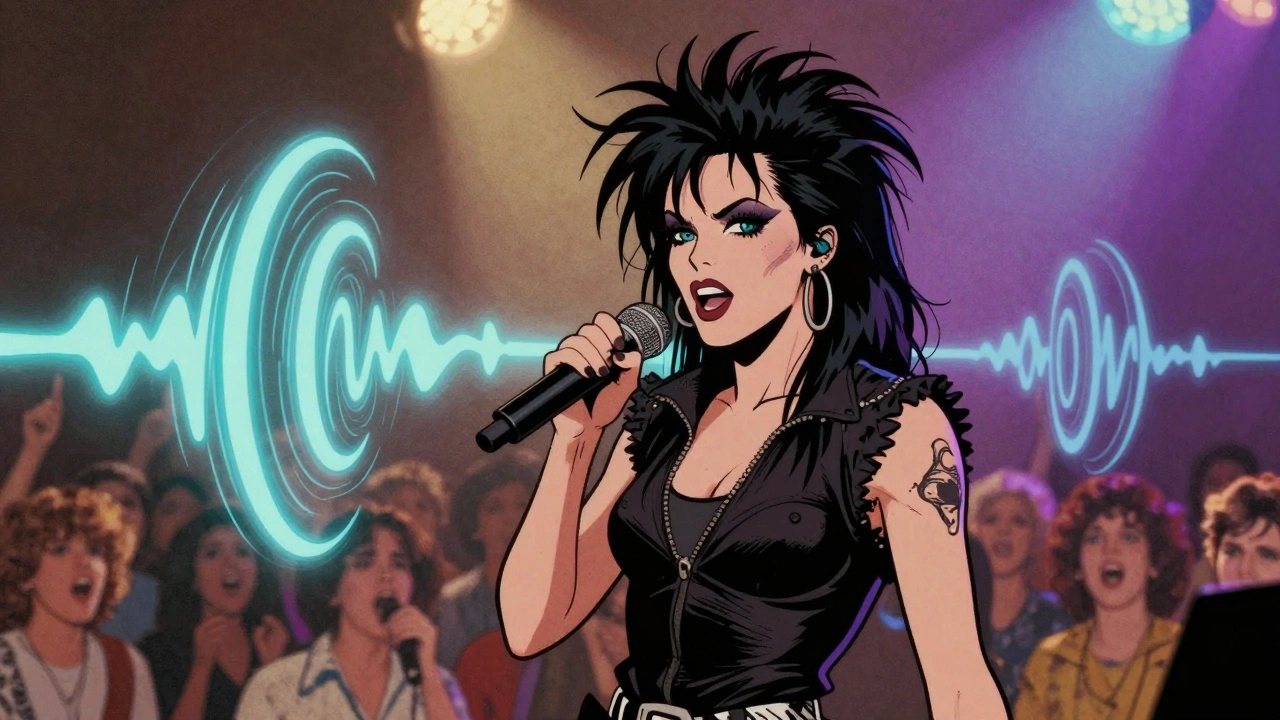

In the late 1970s and early 1980s, rock music was mostly men’s territory. But three women changed everything. Siouxsie Sioux, Chrissie Hynde, and Annie Lennox didn’t just join the scene-they reshaped it. Their voices, styles, and fearless creativity broke barriers and paved the way for future generations. This article explores how each of them carved their own path in alternative music.
Siouxsie Sioux is a British singer and songwriter who rose to prominence as the frontwoman of Siouxsie and the Banshees. Her distinctive vocal style and avant-garde fashion sense redefined the role of women in alternative music during the 1980s.
Formed in London in 1976, Siouxsie and the Banshees started as punk pioneers but quickly evolved. Their debut album The Scream (1978) stunned critics. NME called it "a bright, vivid narrative, something like snapshots from the window of a speeding Japanese train, power charged by the most original, intoxicating guitar playing." Siouxsie’s voice was raw and confrontational, but she evolved dramatically. By Peepshow (1988), her singing had become sophisticated, almost operatic. She mastered using her voice like a musical instrument-creating texture and mood, not just delivering lyrics.
The band pioneered the loud-soft-loud dynamic structure that later defined 1990s alternative rock. Think Nirvana’s "Smells Like Teen Spirit"-that formula actually came from Siouxsie and the Banshees. Their 1988 single "Peek-a-Boo" became the first track to top the newly launched US Modern Rock chart. This was huge: it proved alternative music could break into mainstream radio long before the genre exploded.
Chrissie Hynde is the founder and frontwoman of The Pretenders. Her blend of punk energy, rock sensibility, and pop hooks made her a defining voice in 1980s alternative music.
Hynde formed The Pretenders in 1978. Unlike many bands of the era, she refused to play the "rock star" role. She wrote her own songs, played rhythm guitar, and kept her style low-key. Hits like "Brass in Pocket" (1980) and "Back on the Chain Gang" (1982) proved you didn’t need flashy theatrics to succeed. The Pretenders scored four UK top 10 singles between 1980-1982, balancing commercial appeal with underground credibility.
Hynde’s influence was in her authenticity. She battled industry sexism while maintaining creative control. When record labels pushed her to be more "feminine," she doubled down on her gritty, no-nonsense persona. This made her a role model for women who wanted to be taken seriously in rock. As she once said: "I’m not here to be a pretty girl. I’m here to play music."
Annie Lennox is the lead singer of Eurythmics. Her innovative use of synthesizers and powerful vocals redefined what alternative music could sound like in the 1980s.
With Eurythmics, Lennox fused pop melodies with electronic experimentation. Tracks like "Sweet Dreams (Are Made of This)" (1983) and "Here Comes the Rain Again" (1985) used minimalist synth arrangements to create haunting, atmospheric soundscapes. Unlike rock bands, Eurythmics didn’t rely on guitars-they built songs from drum machines and synths. This made them pioneers of synth-driven alternative music.
Lennox’s style was theatrical but never gimmicky. Her androgynous fashion choices (like the shaved head in the "Sweet Dreams" video) challenged gender norms. She also had incredible vocal control-shifting from soft whispers to powerful belts within a single song. By the mid-1980s, Eurythmics were selling millions of records while staying firmly rooted in alternative culture.
| Artist | Band/Project | Key Albums | Musical Style | Legacy |
|---|---|---|---|---|
| Siouxsie Sioux | Siouxsie and the Banshees | The Scream (1978), Peepshow (1988) | Post-punk, gothic rock, experimental | Influenced shoegaze bands like Slowdive; pioneered loud-soft dynamics later used by Nirvana |
| Chrissie Hynde | The Pretenders | Pretenders (1980), Learning to Crawl (1984) | Punk-rock fusion, raw pop | Proved women could lead rock bands without sacrificing authenticity; inspired artists like Courtney Love |
| Annie Lennox | Eurythmics | Sweet Dreams (1983), Be Yourself Tonight (1985) | Synth-pop, electronic alternative | Redefined pop with electronic experimentation; paved the way for artists like Lady Gaga |
These three women didn’t just coexist-they shaped each other’s paths. Siouxsie’s experimental edge pushed Hynde and Lennox to take creative risks. Hynde’s punk roots kept Lennox grounded in raw energy, while Lennox’s synth innovations gave Siouxsie new tools to explore. Together, they showed that women could dominate alternative music without fitting into one box.
Their legacy is everywhere today. Karen O of the Yeah Yeah Yeahs cites Siouxsie as a vocal inspiration, saying: "Her refusal to perform conventional femininity changed everything." PJ Harvey calls Hynde’s authenticity "the blueprint for female rockers." Slowdive’s Rachel Goswell credits Siouxsie for teaching her how to use voice as texture. Even modern pop stars like Florence Welch and Lorde admit they grew up listening to these women.
Siouxsie’s battles for artistic control set precedents for future artists. Hynde’s refusal to compromise her vision made it possible for women to lead rock bands. Lennox’s synth experiments opened doors for electronic music in alternative scenes. They didn’t just make music-they changed the industry’s rules.
Why were Siouxsie Sioux, Chrissie Hynde, and Annie Lennox important in 1980s alternative music?
They broke gender barriers in a male-dominated industry, each bringing unique styles-Siouxsie’s experimental goth rock, Hynde’s punk-rock fusion, and Lennox’s synth-pop innovation. Their success proved female artists could lead alternative scenes without compromising creativity. Siouxsie’s band reached number 7 on the UK Albums Chart with Juju (1981), Hynde’s Pretenders scored four UK top 10 singles, and Lennox’s Eurythmics had two US top 10 hits. Together, they showed women could be both commercially successful and artistically daring.
How did Siouxsie Sioux influence shoegaze music?
Siouxsie’s use of atmospheric guitar textures and dynamic shifts in songs like "Spellbound" directly inspired shoegaze bands. Slowdive’s Rachel Goswell explicitly stated Siouxsie was a vocal influence, saying: "From a singing point of view, I was inspired by Siouxsie Sioux, who I just adored." Her band’s work on Kaleidoscope (1980)-with its swirling synths and layered vocals-became a blueprint for shoegaze’s dreamy soundscapes. The loud-soft dynamics pioneered by Siouxsie and the Banshees also shaped how shoegaze bands built tension in songs.
What made Eurythmics’ music stand out in the 1980s?
Annie Lennox and Dave Stewart’s use of synthesizers created a futuristic sound that blended pop hooks with alternative edge. Tracks like "Sweet Dreams" used minimalistic electronic arrangements, contrasting with the era’s rock-heavy alternative. This made them pioneers of synth-driven alternative music. Lennox’s androgynous fashion and powerful vocals also challenged norms-she wasn’t just a singer; she was a visual statement. Eurythmics sold over 40 million records worldwide while staying true to their experimental roots, proving pop and alternative could coexist.
Did Chrissie Hynde face challenges as a woman in The Pretenders?
Yes. Hynde battled industry sexism while maintaining creative control. When record labels pushed her to be more "feminine," she refused. She wrote all the band’s songs, played rhythm guitar, and kept her style low-key. This made The Pretenders unique-a band led by a woman who wasn’t defined by her looks. As Hynde said: "I’m not here to be a pretty girl. I’m here to play music." Her approach paved the way for artists like Courtney Love and Kim Gordon, who also rejected traditional gender roles in rock.
How did these artists impact modern musicians?
Contemporary artists like Karen O (Yeah Yeah Yeahs) and Florence Welch (Florence + The Machine) credit them for showing women could dominate alternative music. Karen O says Siouxsie’s "confrontational charisma" inspired her stage presence. Florence Welch calls Lennox’s vocal range "a masterclass in emotional delivery." Even male artists like Kurt Cobain cited Siouxsie’s band as a key influence. Their willingness to experiment-whether through Siouxsie’s gothic visuals, Lennox’s synth experimentation, or Hynde’s punk-rock blend-inspired generations to push boundaries. Today, streaming platforms list over 2.1 million monthly listeners for Siouxsie and the Banshees, proving their legacy is stronger than ever.


