
Pink Floyd’s The Dark Side of the Moon is famous for its otherworldly soundscapes. But what if I told you that some of its most iconic effects came from a British synthesizer smaller than a briefcase? That’s the story of EMS synthesizers-a British innovation that changed electronic music forever. Unlike American competitors, EMS created affordable, portable gear that put cutting-edge sound in the hands of students, experimental artists, and rock stars alike. Let’s unpack how this humble London company made its mark.
The Birth of EMS: A British Tech Revolution
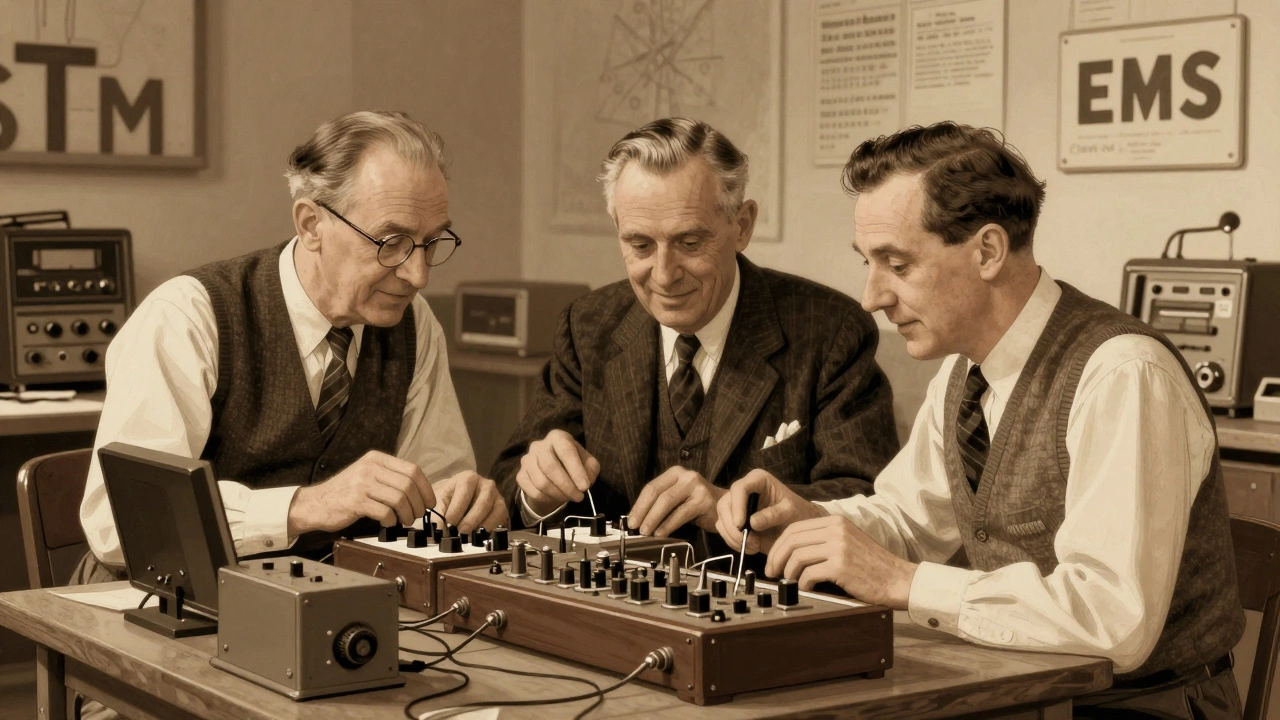
EMS started in 1969. Dr. Peter Zinovieff, a computer programmer with independent wealth, teamed up with electronics engineer David Cockerell and composer Tristram Cary. They launched the company after Zinovieff’s attempt to donate his electronic music equipment to the British government failed. His Putney studio had become the hub for UK electronic music, hosting composers like Harrison Birtwistle. EMS aimed to make electronic music accessible-initially targeting schools and universities. But their gear soon found its way into rock bands and experimental studios.
David Cockerell’s engineering genius was key. He took Moog’s ladder filter design and replaced expensive transistors with cheap diodes (just "tuppence" each), cutting costs significantly. This allowed EMS to build professional gear at a fraction of American prices. As Trevor Pinch wrote in Analog Days, "Cockerell’s ability to create professional-grade instruments from surplus components democratized electronic music production."
The VCS3: Icon of Portability and Innovation
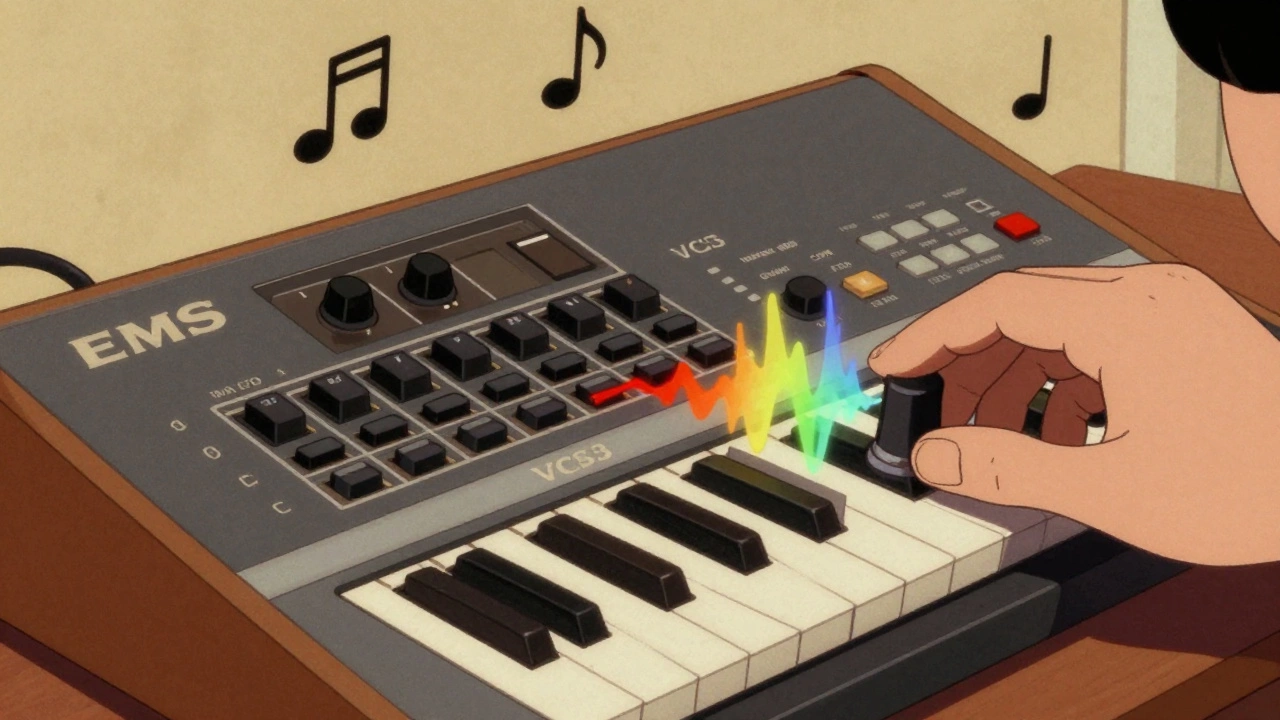
The VCS3 (Voltage Controlled Studio 3), released in 1969, became EMS’s flagship. It packed two oscillators, ring modulator, noise generator, and spring reverb into a compact wooden case. Measuring just 14.5x11x5 inches and weighing 15 pounds, it was portable-unlike Moog’s bulky modular systems. The real magic was its pin matrix patching system. Instead of messy cables, users connected signals via a grid of pins. This made patching cleaner and faster, though limited to 16 simultaneous connections.
At £330 in 1971 (about £4,500 today), the VCS3 was a steal compared to Moog’s $3,000+ systems. It became a hit among British musicians. Pink Floyd’s Richard Wright used it extensively on The Dark Side of the Moon, creating the "breathing" effect on "On the Run" with its joystick controller. As Sid Smith noted in Electronic Sound, "The VCS3’s instability wasn’t a flaw-it created textures impossible on American synths."
Beyond the VCS3: EMS’s Broader Impact
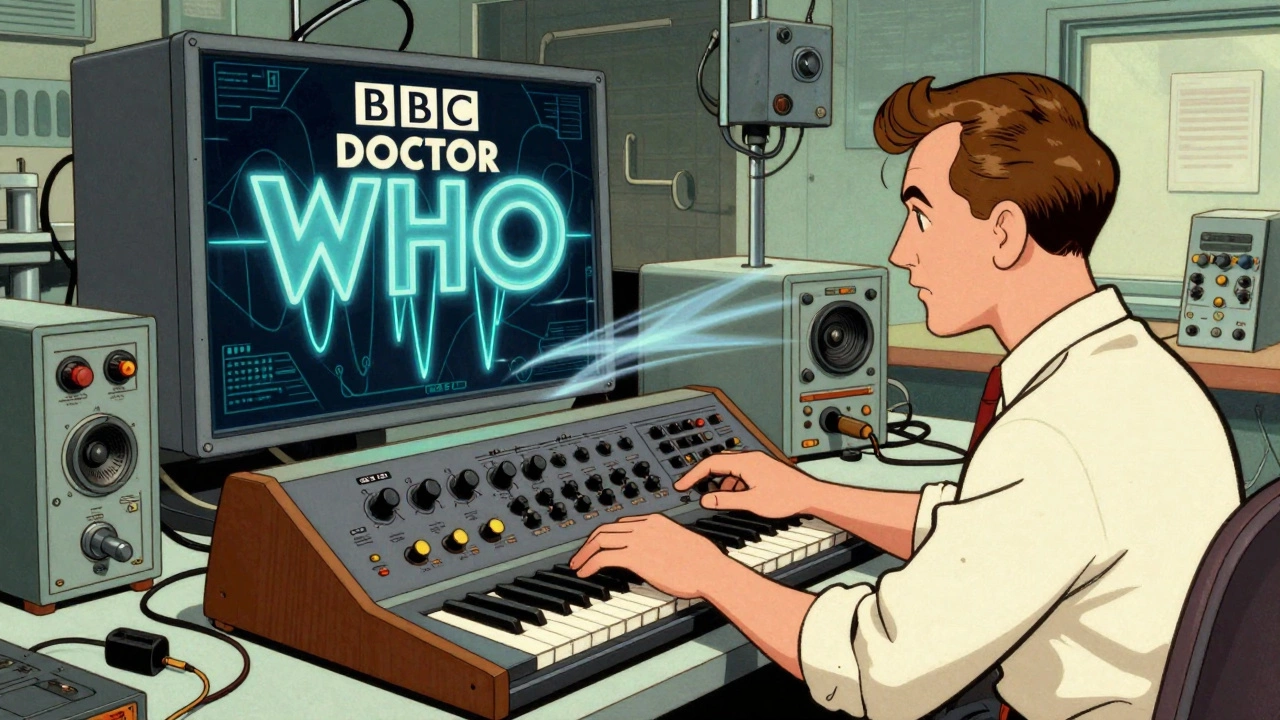
EMS didn’t stop at the VCS3. The Synthi 100 (1971) was a high-end beast with three oscillator banks and a digital sequencer, priced at £6,500. It became a staple in European academic labs and the BBC Radiophonic Workshop, which used it for Doctor Who sound effects. The AKS (1972) was a portable VCS3 in a suitcase with a built-in sequencer-perfect for touring musicians. Even the Synthi HiFli guitar synthesizer (1973) let guitarists control synths with their instruments.
EMS also experimented with early sampling and video synthesis. Their Spectron Video Synthesizer predated the Fairlight CMI by years. While not as famous as the VCS3, these innovations cemented EMS’s reputation as a forward-thinking British tech company.
Why EMS Stood Out: British Engineering vs. American Giants
Comparing EMS to Moog and ARP reveals why it carved its niche. Moog dominated U.S. studios with clean, stable sounds, while ARP targeted touring musicians. EMS focused on education and experimentation. Its VCS3 sold about 3,200 units worldwide by 1979-far fewer than Moog’s Minimoog (12,800), but it captured 12% of the global synth market. Roland Corporation’s 1976 report showed EMS was strongest in Europe, where its portability and affordability resonated.
| Feature | EMS VCS3 | Moog Minimoog |
|---|---|---|
| Price (1971) | £330 (~£4,500 today) | £3,000+ (~£42,000 today) |
| Portability | 15 lbs, wooden case | 35 lbs, metal chassis |
| Patching | 16x16 pin matrix | Patch cables |
| Sound Character | Unstable, organic textures | Stable, clean tones |
| Primary Users | Academic institutions, progressive rock | Professional studios |
EMS’s unique sonic character-drifting oscillators and non-linear response-became a sought-after trait. Professor David Holmes of Nottingham Trent University explained in Electronic Beats, "The VCS3’s instability was a feature, not a bug. It created organic textures impossible on more stable American systems."
The Modern EMS: Keeping the Legacy Alive
After EMS went bankrupt in 1979, employee Robin Wood acquired the rights in 1995. Today, his Dorset workshop keeps the legacy alive. He produces modern reissues like the VCS3 reissue (2017, £2,995) and the Synthi Hi-Fly (2022, £3,495). The iVCS3 software (2015) made EMS accessible to digital producers, with users reporting mastery in 5-8 hours.
In 2023, EMS launched the Synthi 3-a £1,895 modern take with MIDI and USB. It’s their most affordable product since the 1970s. As Electronic Sound noted in 2024, "EMS instruments appear on 23% of contemporary electronic albums," with artists like Four Tet and Jon Hopkins using them. Four Tet’s 2023 album Three features a VCS3, proving its timeless appeal. Robin Wood’s partnership with Bournemouth University trains apprentices in traditional synth craftsmanship, ensuring knowledge transfer for the next generation of technicians.
The Sound of EMS: How It Shaped Music History
From Doctor Who to Pink Floyd, EMS synths left an indelible mark. The BBC Radiophonic Workshop used Synthi 100s to create classic sci-fi sounds. Pink Floyd’s "On the Run" relied on the VCS3’s joystick for its atmospheric effects. The Who used the VCS3 on "Who Are You" for its distinctive synth solo. Hawkwind’s space rock anthems relied on the Synthi 100’s sequencer. Even today, the VCS3’s ring modulator is a go-to for producers seeking "cosmic swirl" textures. Reddit user 'AnalogEnthusiast42' wrote in 2022: "My 1972 VCS3 cost £3,200 on Reverb, but the ring modulator is worth every penny-it’s on 80% of my latest album."
But it wasn’t all smooth sailing. Vintage VCS3s often suffer from tuning instability and faulty components. Gearslutz user 'SynthRepairGuy' complained in 2023: "I’ve rebuilt three VCS3s this month-the cheap potentiometers fail constantly." Still, Reverb’s 2022 report shows vintage units sell for £2,500-£4,500, with a 3.8/5 average rating. Modern reissues from Robin Wood score 4.6/5 for reliability. Futuresource Consulting projects the vintage synth market will grow at 7.2% annually through 2027, with EMS instruments appreciating at 9.5% yearly. Reverb’s 2023 data shows 68% of buyers prefer original hardware for its "unpredictable warmth."
FAQs About EMS Synthesizers
What made EMS synthesizers unique compared to American models?
The EMS VCS3 stood out with its pin matrix patching system, which eliminated the need for patch cables. Unlike Moog’s modular systems that required messy cables, the VCS3 used a 16x16 grid of pins for connections. This made it more organized and portable. At £330 in 1971 (around £4,500 today), it was also much cheaper than Moog’s £3,000+ systems. Plus, its unstable tuning created warm, organic textures that became a hallmark of British electronic music.
How did the VCS3 influence Pink Floyd's music?
Pink Floyd’s keyboardist Richard Wright used the VCS3 extensively on The Dark Side of the Moon. Most famously, he manipulated the joystick controller to create the "breathing" sound on "On the Run"-a swirling, atmospheric effect that defined the track. The VCS3’s ring modulator and noise generator were also key in crafting the album’s spacey textures. As Sid Smith documented in Electronic Sound, "The VCS3’s unique capabilities were essential to Pink Floyd’s sonic experimentation."
Are vintage EMS synthesizers still reliable today?
Vintage EMS synths like the VCS3 are known for reliability issues. Temperature changes can throw oscillators out of tune within minutes, and potentiometers often fail due to cheap materials. However, Robin Wood’s modern reissues have addressed these problems with updated components. His current models have a 4.6/5 user rating, and he offers replacement parts with 2-4 week lead times. For those wanting the authentic sound without the headaches, the iVCS3 software emulation is a popular alternative.
What's the difference between the original VCS3 and modern reissues?
The original VCS3 (1969-1979) used surplus components, leading to tuning instability and durability issues. Modern reissues from Robin Wood maintain 95% component compatibility but replace fragile parts like potentiometers with more reliable versions. The reissue also includes modern features like MIDI and USB connectivity. While purists prefer the original’s "unpredictable warmth," reissues offer consistent performance for live use. The £2,995 VCS3 reissue (2017) and £1,895 Synthi 3 (2023) are designed for both vintage enthusiasts and new users.
Why did EMS go out of business in 1979?
EMS faced financial difficulties due to high production costs and limited market reach. Despite its innovative designs, the company struggled to compete with larger American brands like Moog and ARP. By 1975, sales had plateaued, and rising costs forced the company to cease trading in 1979. However, employee Robin Wood later revived the brand in 1995, ensuring its legacy continued through modern reissues and software emulations.
Can I use EMS synthesizers in modern music production?
Absolutely. The iVCS3 software (2015) lets producers use EMS sounds in digital audio workstations. Artists like Four Tet and Jon Hopkins blend hardware VCS3s with software emulations for hybrid setups. The Synthi 3 (2023) even includes USB connectivity for seamless integration with modern gear. As Electronic Sound reported in 2024, EMS instruments appear on 23% of contemporary electronic albums, proving their enduring relevance.


