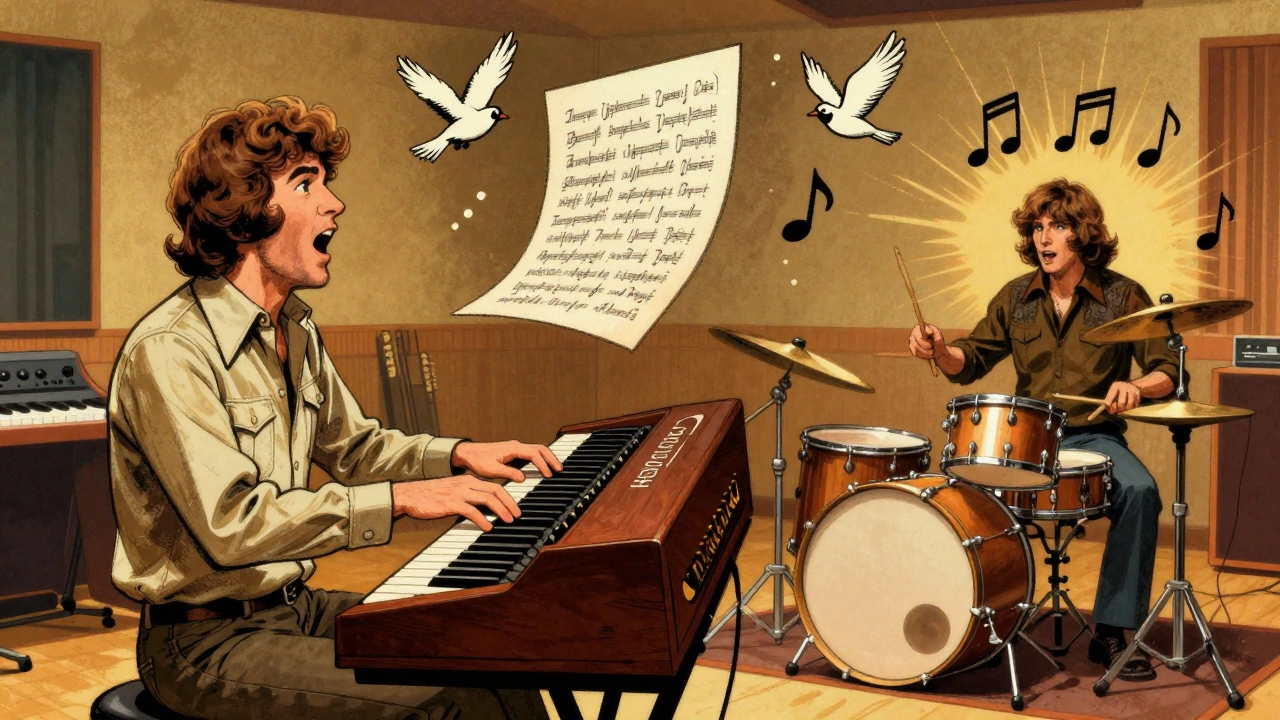

When Rock Met the Symphony
In 1970, three musicians walked into a studio with a wild idea: what if you took a 19th-century Russian piano suite and turned it into a rock anthem? That’s exactly what Emerson, Lake & Palmer did - and it changed everything. Before them, progressive rock was about odd time signatures and psychedelic lyrics. After them, it was about orchestras, Moog synthesizers, and full-blown classical adaptations played on electric instruments. This wasn’t just a gimmick. It was a revolution.
The Super Group That Wasn’t Supposed to Work
Keith Emerson wasn’t just a keyboardist - he was a musical architect. Coming from The Nice, he’d already been bending classical pieces into rock shapes. Greg Lake, fresh off King Crimson’s groundbreaking debut, had a voice that could soar over thunderous drums and a bass line that anchored everything. Carl Palmer, the youngest of the trio at just 20, had spent years mastering complex rhythms in avant-garde jazz-rock bands. When they came together, no one expected them to sell 40 million albums. But they did.
They didn’t just play rock. They rebuilt it. Emerson’s Hammond L100 organ, modified with pitch bend wheels, could scream like a violin. His Moog synthesizer didn’t just make weird noises - it copied the sound of a full string section. Lake’s Fender Precision Bass wasn’t just low-end - it carried melodies. Palmer’s kit included tympani and gongs, turning his drum solo into a percussion concerto. This wasn’t rock with a few fancy effects. This was rock with a symphony inside it.
Pictures at an Exhibition: The Album That Broke the Rules
On their first album in 1970, they didn’t release a single. They released a 27-minute side-long adaptation of Modest Mussorgsky’s Pictures at an Exhibition. No one had ever done this before. A rock band didn’t just cover a classical piece - they reimagined it note-for-note, using electric keyboards to replace piano, bass to stand in for tuba, and drums to mimic orchestral crashes. The original piece had ten movements. ELP turned it into one continuous, evolving epic.
They didn’t simplify it. They didn’t water it down. They made it heavier. The opening “Promenade” became a slow, ominous crawl. “The Gnome” turned into a manic, clattering rhythm. “The Great Gate of Kiev” exploded into a wall of organ and thunderous drums. Critics called it pretentious. Fans called it genius. And for the first time, a rock album demanded to be listened to like a symphony - all the way through.
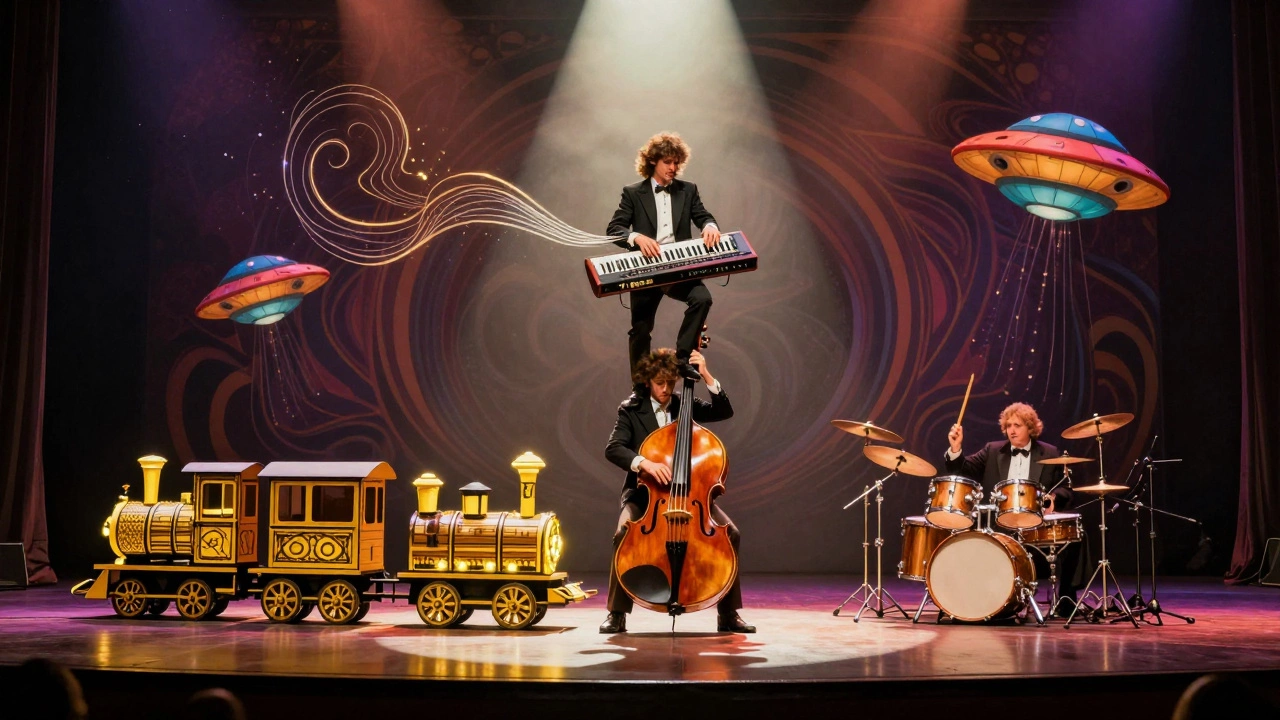
From the Beginning to Fanfare: The Hits That Outlived the Era
ELP didn’t just do long, complex pieces. They also wrote songs that stuck. “From the Beginning,” from their 1972 album Trilogy, was a haunting ballad built on classical counterpoint. Lake’s voice floated over a harpsichord-style keyboard line that could’ve come from Bach. It hit No. 39 on the Billboard Hot 100 - a classical-inspired song on a pop chart. That alone was unheard of.
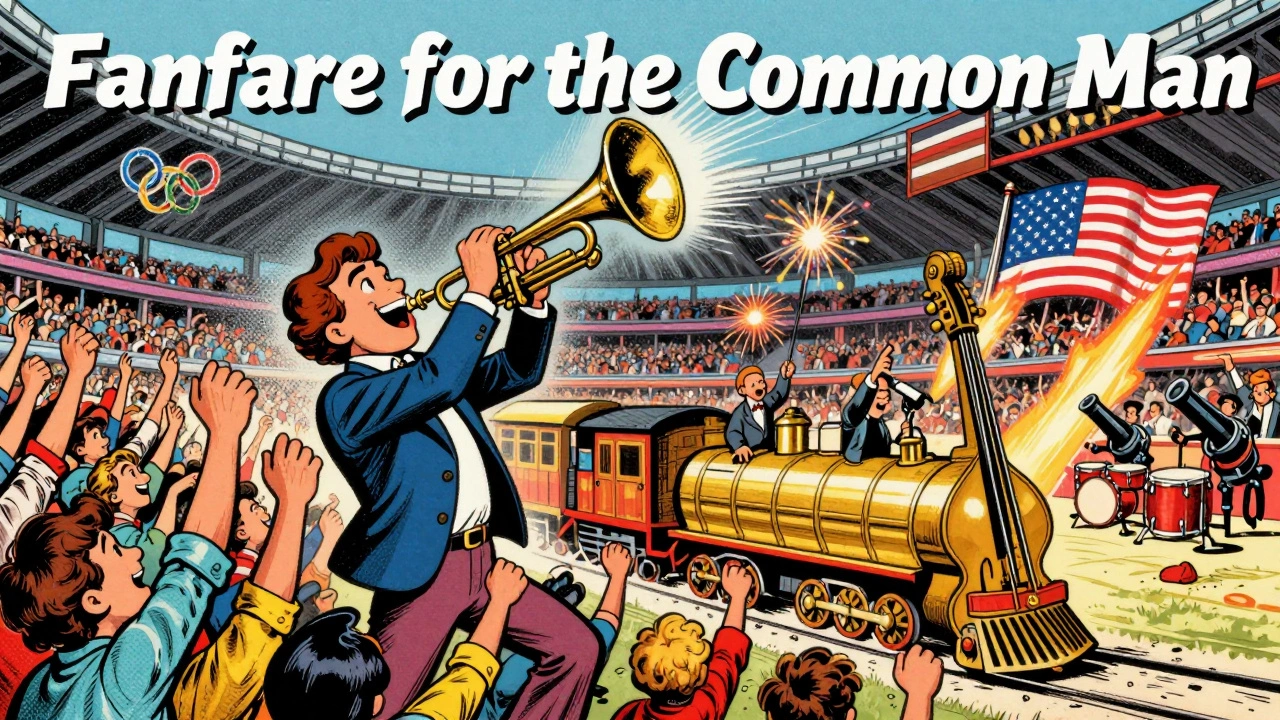
But nothing matched the cultural impact of their 1973 cover of Aaron Copland’s “Fanfare for the Common Man.” They didn’t just adapt it - they amplified it. Emerson’s Moog turned the trumpet fanfare into a roaring, metallic blast. The drums hit like cannon fire. Lake’s bass drove it forward like a locomotive. It became a stadium anthem. By the 1980s, it was played at NFL games, presidential inaugurations, and even Olympic ceremonies. It wasn’t just a rock song anymore. It was a national sound.
Works Volume 1: The Highs and the Crash
In 1977, ELP went all in. Their double album Works Volume 1 wasn’t just a collection of songs - it was a statement. Side one featured Emerson’s three-movement Piano Concerto No. 1, performed with the London Philharmonic Orchestra. This wasn’t rock with strings in the background. This was a full classical concerto, with the band as soloists. It was recorded live in the studio with a 70-piece orchestra. The cost? Over $3 million. The result? A masterpiece that no one else dared to attempt.
On the other side? Pure rock fury. “Tarkus,” “Lucky Man,” and “Fanfare” were all there - re-recorded, re-energized. The album hit No. 9 on the Billboard 200 and went platinum in six countries. But the tour that followed was a disaster. Sixty-three roadies. A choir. A karate instructor for Palmer (yes, really). The band lost millions. Critics called it “museum rock” - technically perfect, emotionally cold. Robert Christgau, the famous critic, wrote that ELP’s music felt like “a preserved specimen in a glass case.”
Why Critics Hated It - And Why Fans Loved It
Here’s the truth: ELP was never meant to be subtle. They didn’t want to whisper. They wanted to shout - with a full orchestra behind them. Critics saw excess. Fans saw ambition. Rolling Stone gave Trilogy 4.5 out of 5 stars, calling Emerson’s playing “breathtaking.” Pitchfork, decades later, called Brain Salad Surgery “virtuosic but overblown.” Both were right.
ELP’s music wasn’t about feeling. It was about showing what was possible. Keith Emerson could play Bach’s Toccata and Fugue on a Moog synthesizer while standing on his head. Carl Palmer could switch from jazz swing to 13/8 time signatures without blinking. Greg Lake could sing a folk ballad one minute and roar like a demon the next. That’s not rock. That’s performance art.
And that’s why, even today, fans still argue about them. On RateYourMusic, they hold a 3.78 out of 5 average - higher than most critics gave them. On Reddit, users still post videos of “Fanfare” at sports games, calling it “the greatest rock anthem ever made.” Amazon reviews for the remastered box sets average 4.4 stars. One fan wrote: “Hearing Copland’s Fanfare through Emerson’s Moog is still one of the most thrilling moments in rock history - 45 years later.”
The Legacy That Won’t Die
ELP broke up in 1979. They reunited in the 90s. They disbanded again. But their music never left. Carl Palmer still tours with the ELP Legacy band, playing sold-out shows across 25 countries. Dream Theater’s Jordan Rudess says he learned to play keyboards by copying Emerson’s solos. Snarky Puppy and other modern prog acts borrow their fusion model. Spotify says ELP’s monthly listeners doubled from 1.2 million in 2015 to 2.7 million in 2023 - and “Fanfare for the Common Man” is responsible for nearly 40% of those streams.
Berklee College of Music teaches Pictures at an Exhibition as part of its core curriculum. It’s not just a rock song - it’s a textbook example of how to merge two worlds. No other band in rock history has taken classical music so seriously - or so boldly.
What Makes ELP Different
Yes had mythic lyrics. Genesis had theater. King Crimson had chaos. ELP had structure. They didn’t just use classical music as inspiration. They used it as raw material. They didn’t write songs that sounded like Bach. They rearranged Bach - note for note - and played it on a Hammond organ. That’s not imitation. That’s reinvention.
They proved that rock could be intellectual without being dull. That it could be complex without being inaccessible. That a 20-year-old drummer could play tympani like a classical percussionist. That a bassist could sing like a tenor and still crush a riff. That a keyboardist could turn a synthesizer into a symphony.
They didn’t just cross genres. They erased the line between them.
Why You Still Need to Hear Them
If you think progressive rock is just long guitar solos and fantasy lyrics, you’ve never listened to ELP. If you think classical music is stuffy and old-fashioned, you’ve never heard Emerson turn Mussorgsky into a rock storm. If you think music has to choose between emotion and technique - ELP says you’re wrong.
They didn’t care if you called them pretentious. They cared if you felt something. And millions still do.
What was Emerson, Lake & Palmer’s biggest hit?
Their biggest commercial hit was "Fanfare for the Common Man," which reached No. 2 on the UK Singles Chart in 1977. It became a cultural staple, played at sports events and political rallies for decades. While "From the Beginning" was their only top-40 pop single in the U.S., "Fanfare" had far greater lasting impact across multiple generations.
Did ELP write original music or just cover classical pieces?
They did both. Albums like Trilogy and Brain Salad Surgery contain original compositions like "Lucky Man," "Tarkus," and "Karn Evil 9." But they also transformed classical works - including Mussorgsky’s Pictures at an Exhibition, Copland’s Fanfare for the Common Man, and Bach’s Toccata and Fugue - into full rock arrangements. Their genius was blending the two, making classical structures feel as powerful as electric rock.
Why did ELP break up in 1979?
The band disbanded due to creative fatigue and financial strain. Their 1977 orchestra tour for Works Volume 1 cost over $3 million and lost money, despite high ticket sales. The rise of punk rock also shifted public taste away from elaborate prog rock. By 1979, the band members felt they had pushed the style as far as they could - and wanted to explore other directions.
Is ELP considered prog rock or classical music?
ELP is firmly rooted in progressive rock, but they redefined what that genre could be. Unlike bands that just borrowed classical motifs, ELP performed full classical compositions using rock instruments. Their work sits at the intersection - using classical structure, harmony, and orchestration within a rock framework. They’re the bridge between the two worlds.
Are there modern bands that sound like ELP?
Yes. Dream Theater’s keyboardist Jordan Rudess cites ELP as his biggest influence. Trans-Siberian Orchestra directly modeled their symphonic rock style after ELP’s adaptations. Bands like Snarky Puppy and Muse also borrow from ELP’s fusion of classical instrumentation with rock energy. But no one has matched their scale - combining full orchestras with rock power trios - since.
Why do some people think ELP was too showy?
Critics like Robert Christgau argued that ELP prioritized technical skill over emotional depth. Their concerts were massive, their solos long, their arrangements dense. To some, it felt like a competition of virtuosity rather than musical expression. But fans saw it differently - as a celebration of what music could achieve when boundaries were torn down. The debate still continues today.


