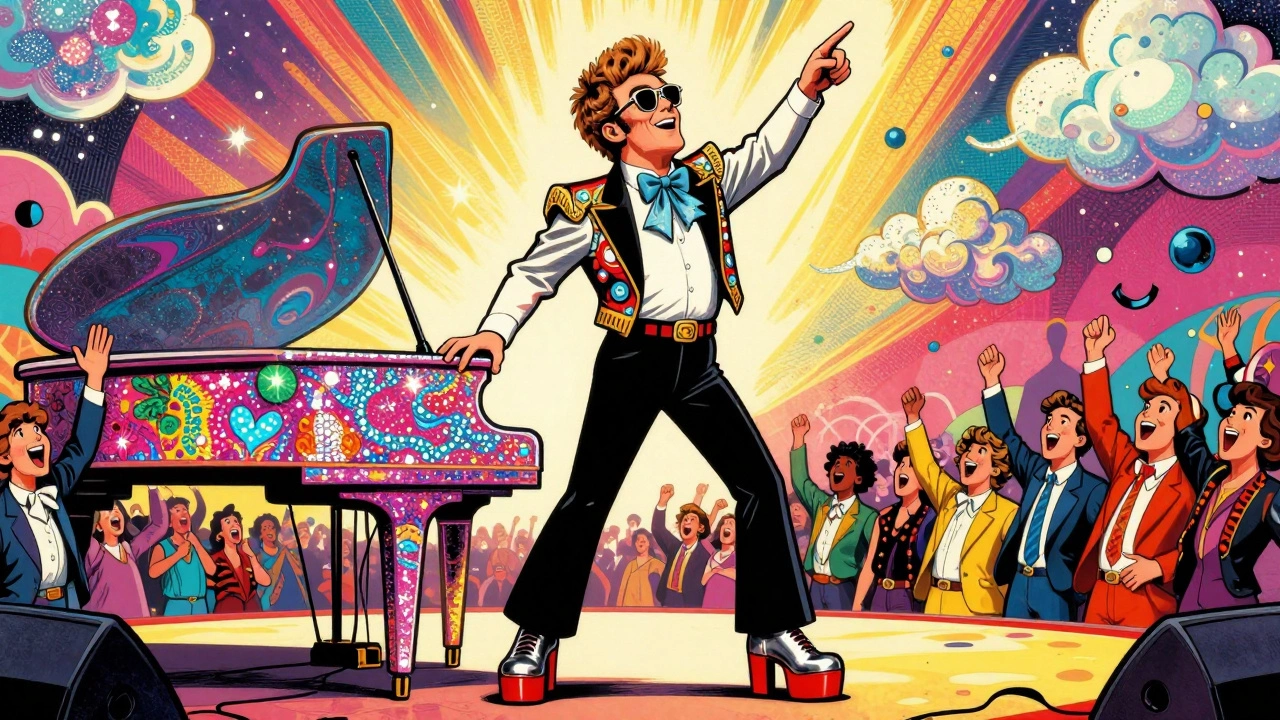

When Elton John stepped onto stage in the early 1970s, he didn’t just sing-he commanded attention with a visual explosion. Glittering jackets, oversized sunglasses, and towering platform shoes turned every concert into a theater of self-expression. But it wasn’t just about looking flashy. Those shoes? They were a statement. A rebellion. A deliberate smash of gender norms in mainstream rock music.
The Shoes That Changed Everything
Before Elton John, male rock stars wore boots. Practical ones. Black leather. Low heels. Nothing that made you look like you were walking on stilts. Then came 1970. John started with a pair of platform shoes about two inches high. By 1974, they were taller-maybe six inches. Each year, he added another layer. He didn’t just wear them. He engineered them.
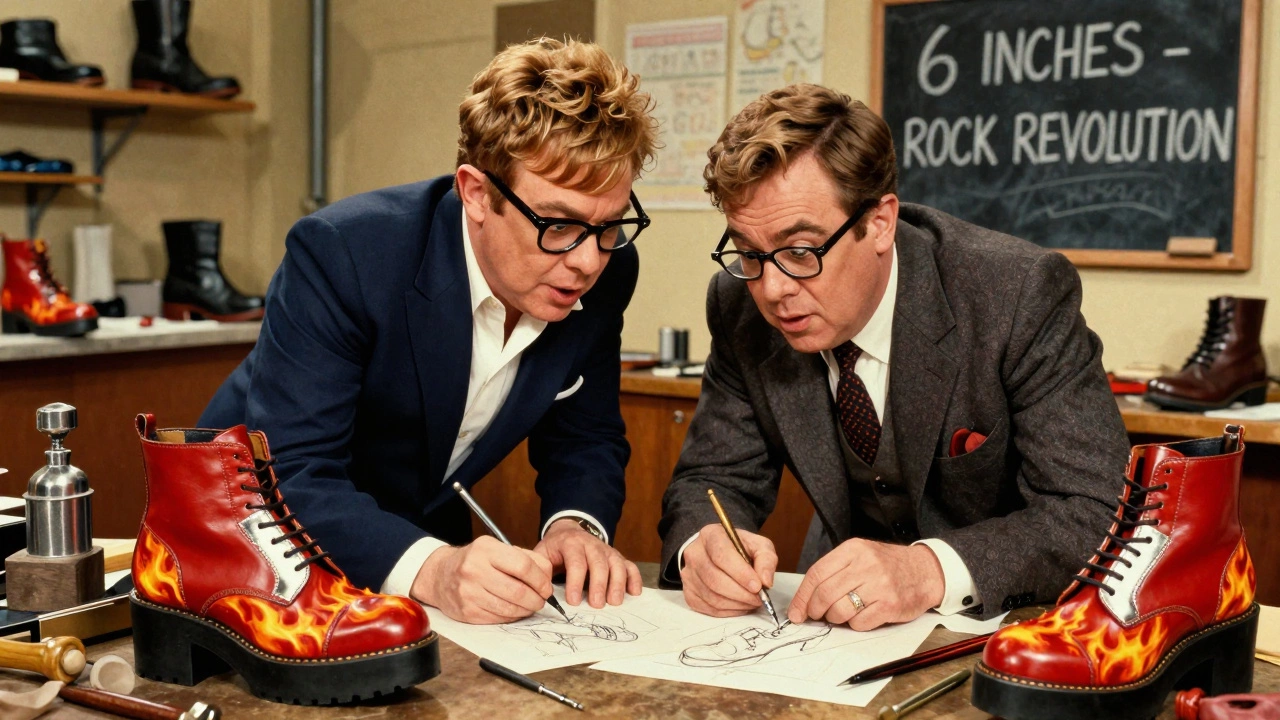
These weren’t off-the-rack boots. They were co-designed by Elton himself and Lionel Avery, a London-based designer who ran a small boutique in Kensington Market. The most famous pair? Metallic silver and red leather, with his initials stitched boldly across the side. They weren’t just footwear. They were branding. A signature you could walk in.
And they worked. On stage, the height made him loom over the crowd. It gave him presence. It made him impossible to ignore. But more than that, it broke a rule. Men didn’t wear platform shoes. Not like this. Not in rock. Not with pride.
Glam Rock’s Visual Rebellion
Glam rock wasn’t just about music. It was about image. David Bowie wore jumpsuits and eyeliner. T. Rex’s Marc Bolan rocked fringe and glitter. But Elton took it further. His shoes weren’t just decorative-they were functional theater. They transformed his movement. His walk became a performance. His presence became larger than life.
At the time, platform shoes were still seen as feminine. In the 1930s, they were worn by Hollywood starlets and wealthy women. By the 1950s, they’d faded out, replaced by sleek stilettos. But Elton didn’t care. He took what was labeled ‘feminine’ and made it his own. He didn’t borrow from women’s fashion-he redefined it.
And he wasn’t alone. But he was the most visible. While others experimented, Elton went all in. His shoes became the symbol of a movement that said: gender is a costume. And if you’re a rock star, you get to choose the fit.
Behind the Boot: Design, Debate, and Doubt
Here’s the twist: no one agrees who actually made those shoes.
Lionel Avery says he and Elton designed them together. He claims they were made in their small London shop. But Andrew Loizou says his father, George Loizou, owner of Bella Shoes, was the real manufacturer. Two competing stories. Both plausible. Neither proven.
That ambiguity? It’s part of the legend. Because when something becomes iconic, history gets messy. People want to claim it. The truth doesn’t matter as much as the myth.
What we do know: the shoes were built for performance. Heavy. Unstable. Uncomfortable. But that didn’t stop him. He practiced. He adjusted. He learned to walk in them. And then he danced. He jumped. He spun. He played piano while standing on six inches of leather and cork.
That’s the real miracle. Not the shine. Not the initials. It’s that he made something so impractical look effortless.
From Stage to Museum
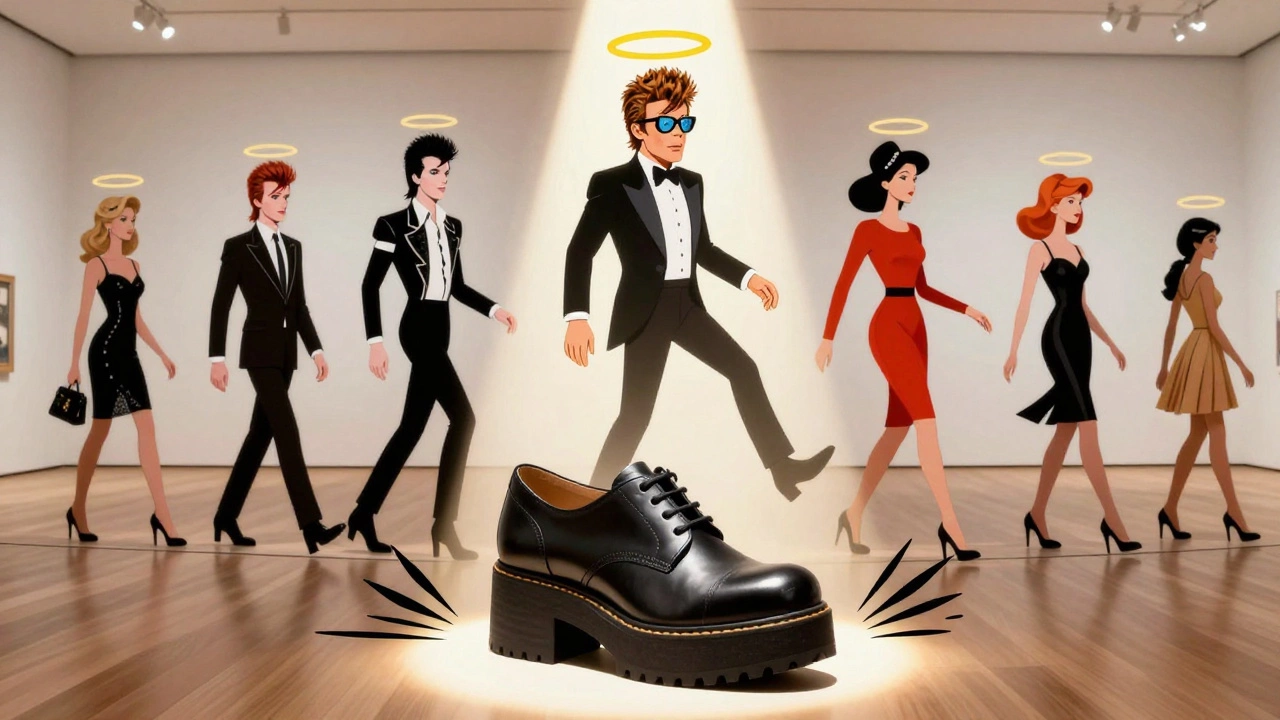
In 2017, the Museum of Modern Art in New York included a pair of Elton John’s platform shoes in their exhibit Items: Is Fashion Modern. Not as a relic. Not as a curiosity. As a landmark in 20th-century design.
MoMA doesn’t just display clothes. It displays culture. And Elton’s boots? They were there alongside Levi’s 501s, the Adidas Superstar, and the Nike Air Jordan. That’s the level of impact.
By 2024, a similar pair sold at Christie’s auction house in New York. No price was released, but the fact that it sold at all says everything. These aren’t just shoes. They’re artifacts. Pieces of history you can hold in your hands.
Legacy: From Rock to Runway
Think about the 1990s. Club Kids wore neon platforms to raves. The Spice Girls made them mainstream for teenage girls. Alexander McQueen sent models down the runway in 12-inch stilts. Noritaka Tatehana built shoes that looked like sculptures.
Every one of them stood on the shoulders of Elton John.
He didn’t invent platform shoes. But he was the first man in rock to wear them so boldly, so publicly, so unapologetically. He turned a fringe accessory into a symbol of liberation. He showed the world that masculinity could be glittery, exaggerated, and still powerful.
Today, brands like IGNIS still release modern versions of his look. The SILVER METAL and RED LEATHER combos? Still in production. Not as nostalgia. As inspiration.
Why It Still Matters
Elton John’s shoes weren’t just fashion. They were a quiet revolution.
At a time when men were expected to be stoic, serious, and restrained, he chose color, height, and drama. He didn’t ask permission. He didn’t explain himself. He just showed up-taller than everyone else-and owned it.
His legacy isn’t in the number of records sold. It’s in the way he made it okay for men to wear what they loved, even if the world called it weird. He made flamboyance a form of strength.
That’s why, nearly 50 years later, people still stare at those boots in museums. Not because they’re rare. But because they still feel dangerous. Still feel bold. Still feel like a challenge.
And maybe that’s the point.
Who designed Elton John’s platform shoes?
Elton John co-designed his most iconic platform boots with Lionel Avery, a London designer who ran a boutique in Kensington Market. The boots featured metallic silver and red leather with Elton’s initials stitched on the side. However, there’s conflicting testimony-Andrew Loizou claims his father, George Loizou of Bella Shoes, manufactured them. The exact origin remains debated, but Elton was deeply involved in the design process.
How tall were Elton John’s platform shoes?
Elton started with platforms around 2 inches high in 1970 and reportedly added about one inch each year. By 1974, his most famous boots likely reached 6 inches. Exact measurements aren’t documented, but eyewitness accounts and photos confirm they grew taller over time, becoming a defining part of his stage persona.
Why did Elton John wear platform shoes?
Elton wore platform shoes to amplify his stage presence, challenge gender norms in rock music, and express his artistic identity. At a time when men were expected to dress conservatively, he used bold footwear to make a statement: flamboyance could be powerful. The shoes became part of his performance, helping him stand out visually and emotionally.
Are Elton John’s platform shoes still worn today?
Yes. Modern brands like IGNIS continue to release platform shoes inspired by Elton’s 1970s style, particularly in metallic silver and red leather. His influence is visible in runway designs by Alexander McQueen and Noritaka Tatehana, as well as in pop culture from the Spice Girls to today’s streetwear trends. The aesthetic lives on-not as a costume, but as a symbol of self-expression.
Why are Elton John’s shoes in the Museum of Modern Art?
MoMA included Elton John’s platform shoes in its 2017-2018 exhibit Items: Is Fashion Modern because they represent a turning point in fashion history-where male musicians broke gender norms and turned footwear into cultural art. The shoes are recognized not just as performance gear, but as design objects that influenced global fashion trends.


