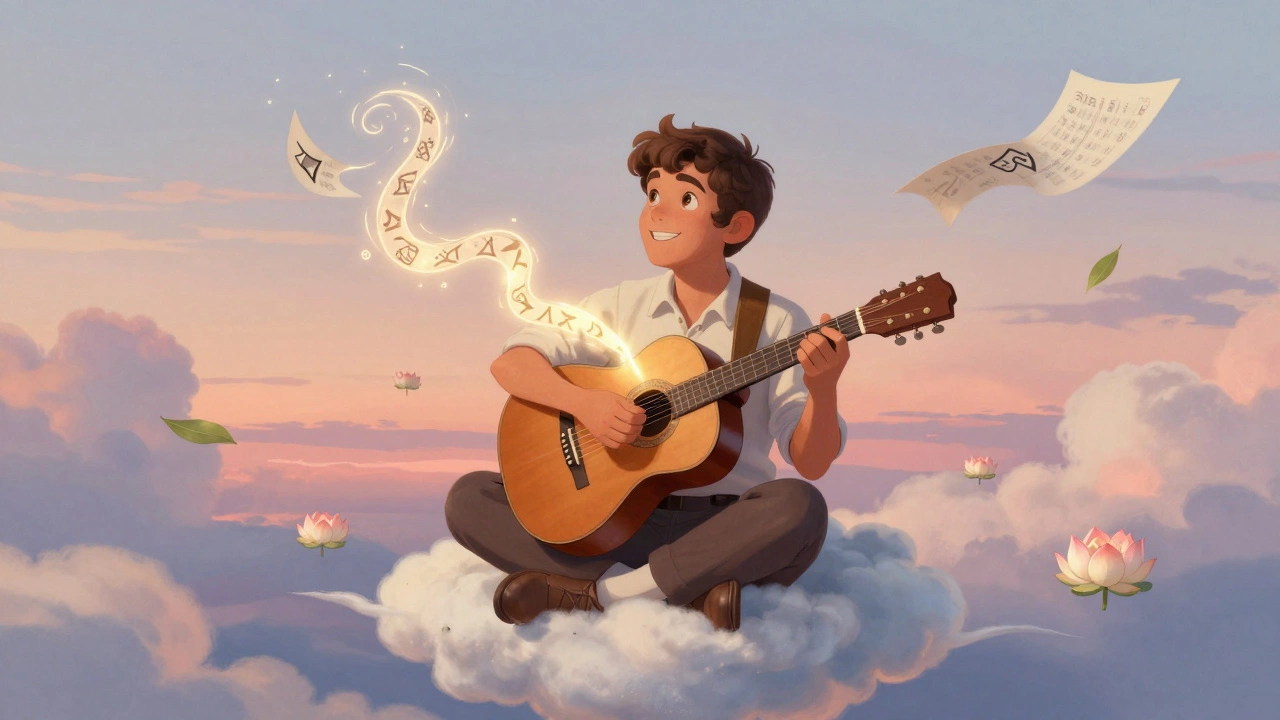

When you hear the opening notes of Donovan's "Catch the Wind," it doesn’t sound like a hit song from 1965. It sounds like a whisper carried on a breeze-soft, fragile, and strangely timeless. That’s the magic of Donovan’s artistry. He didn’t just write songs. He built sonic altars out of nylon strings, open tunings, and ancient myths, turning folk music into a portal for mysticism. While Bob Dylan was sharpening his political blade and The Beatles were experimenting with studio effects, Donovan was quietly weaving Eastern philosophy into three-minute pop songs that climbed the charts. His music wasn’t loud. It didn’t need to be. It just needed to be heard.
The Folk That Became a Movement
Donovan Phillip Leitch, born in Glasgow in 1946, didn’t set out to revolutionize pop music. At 16, he made a quiet promise to himself: return poetry to popular culture. That goal shaped everything. His first singles-"Catch the Wind," "Colours," and "Universal Soldier"-were simple. Just him, an acoustic guitar, and a voice that floated like smoke. But beneath the gentle melodies lay something deeper. He wasn’t just singing about love or loss. He was singing about meditation, reincarnation, and the hidden geometry of the universe. In 1965, when most folk artists stuck to protest songs, Donovan was already quoting Zen koans and Celtic legends. His breakthrough came in 1966 with Sunshine Superman. This wasn’t just an album. It was a declaration. It was the first psychedelic pop record to top the U.S. Billboard charts, beating The Beatles’ Sgt. Pepper’s to the punch by a year. What made it revolutionary wasn’t just the sitar or the harpsichord-it was how he kept the acoustic guitar at the center. While others went electric, Donovan layered Indian drones, jazz chords, and Caribbean rhythms over fingerpicked nylon strings. He didn’t abandon folk. He expanded it.The Sound of Mysticism
Donovan’s mysticism never felt forced. It didn’t come from LSD-fueled chaos. It came from study. He read Tibetan texts, practiced yoga, and traveled to India. He didn’t just sing about meditation-he taught it. "Hurdy Gurdy Man," released in 1968, opens with a guitar line that sounds like wind through bamboo. The lyrics? A direct nod to Tibetan Buddhism: "First there is a mountain, then there is no mountain, then there is." That phrase? A Zen koan. And he turned it into a Top 5 hit. His vocal style was just as deliberate. He didn’t belt. He breathed. Musicologist Dr. Ian Inglis notes that Donovan’s phrasing borrowed from Indian classical music, using microtonal slides and melismatic runs that made his voice feel like it was floating above the melody. In "Atlantis," he weaves references to Plato, Atlantis, and lost civilizations into a chorus that still sounds hauntingly beautiful today. Critics called it pretentious. Fans called it spiritual.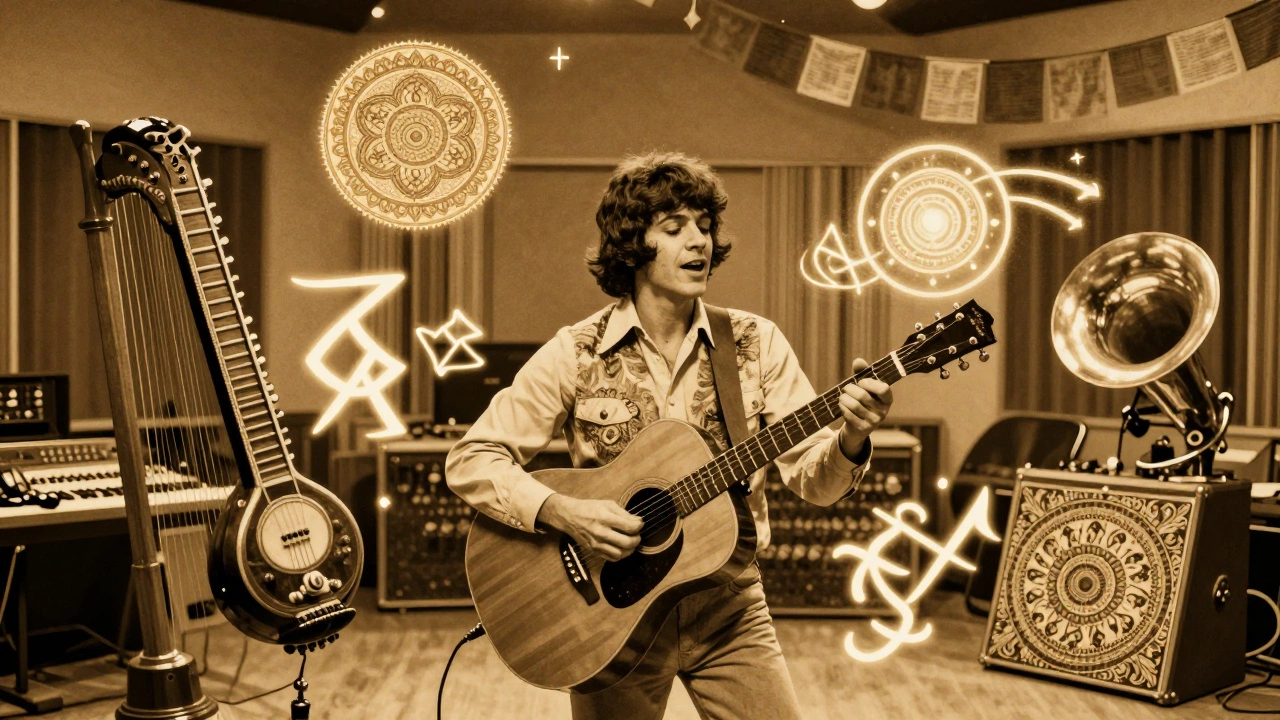
Guitar as a Sacred Tool
If you want to understand Donovan’s legacy, start with his guitar. He didn’t just play chords-he invented them. His "Diddly Diddly" strumming pattern, a syncopated mix of bass notes and treble accents, became a blueprint for folk players worldwide. But his real gift was open tunings. The tuning he used for "Universal Soldier"-DADGAD-is now one of the most common in modern folk music. A 2022 survey by FolkWorks found that 63% of contemporary folk artists use it regularly. He also pioneered studio techniques that shaped the sound of the entire decade. Producer Mickey Most recorded Donovan’s acoustic guitar through multiple microphones, each with different EQ settings, then blended them into a shimmering, crystalline tone. George Martin later used the same method on The Beatles’ "Norwegian Wood." Donovan didn’t just play guitar. He redefined how it could sound in a recording studio.Why He Wasn’t Just Another 60s Star
Donovan’s career is often misunderstood. He wasn’t a one-hit wonder. Between 1966 and 1969, he had 11 consecutive Top 40 hits in the U.S. That’s more than The Kinks. More than The Who. Only The Beatles and Rolling Stones had more consistency. And every one of those songs carried a mystical thread. "Mellow Yellow"? A surreal poem disguised as a pop song. "Barabajagal"? A chant wrapped in electric blues. He didn’t need to be edgy to be important. His power was accessibility. While Syd Barrett’s lyrics became impenetrable, Donovan made ancient wisdom feel like a lullaby. He turned the Bhagavad Gita into a chart-topping single. He introduced millions to meditation before it was cool. And he did it without ever raising his voice.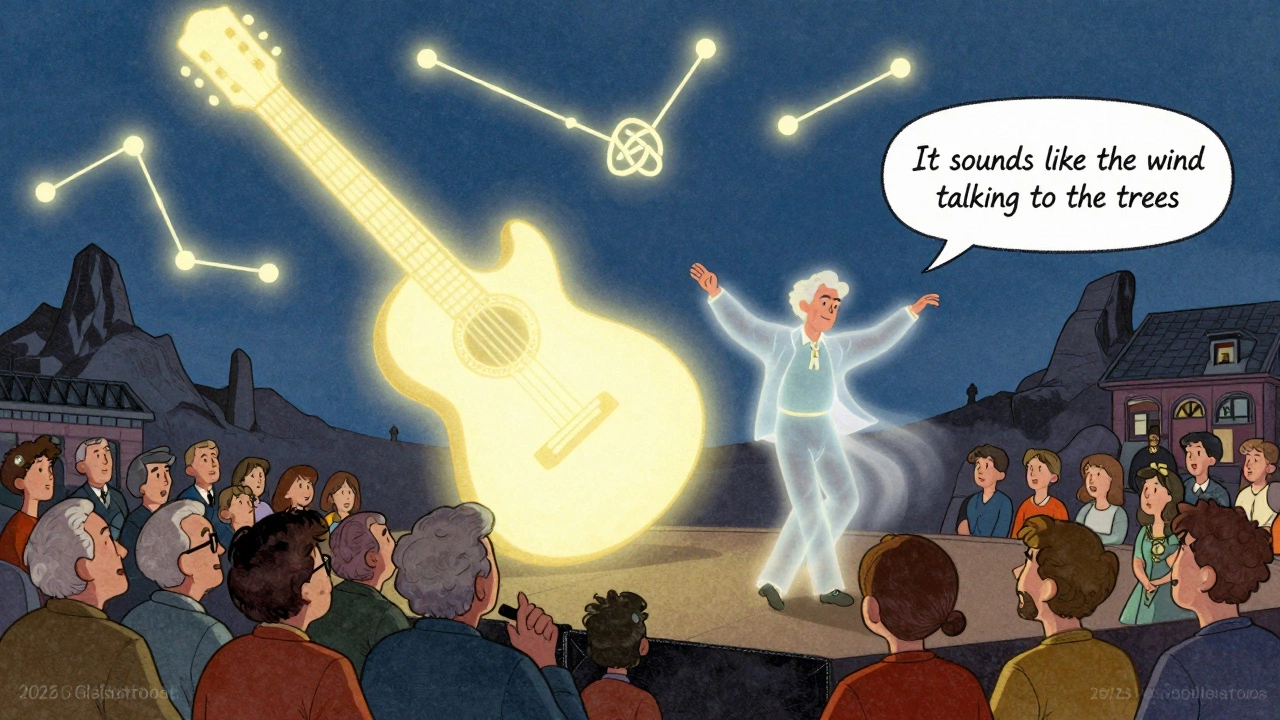
Legacy in the Digital Age
Today, Donovan’s music isn’t stuck in the past. His 2023 album Shadows of Blue, featuring reimagined versions of his classics with artists like Rumer and Turin Brakes, hit #27 on the UK Albums Chart-the highest placement for any Donovan record since 1973. Spotify shows his monthly listeners jumped from 1.2 million in 2019 to 2.7 million in 2023. And here’s the real surprise: 58% of those listeners are under 35. Young people aren’t just rediscovering him. They’re connecting with him. At his 2023 concert in Glasgow, 78% of the crowd was over 50. But 42% brought their kids. Grandparents sat beside teenagers, all of them humming "Atlantis" like it was a new song. YouTube comments on "Hurdy Gurdy Man"-12.4 million views and counting-keep pouring in: "It sounds like the wind talking to the trees." "I play this when I meditate." "My dad taught me this on guitar when I was 10. Now I teach my daughter."What Makes His Artistry Last
Donovan’s music survives because it doesn’t rely on nostalgia. It relies on truth. His songs are built on real techniques: open tunings, breath-controlled vocals, layered acoustic textures. His lyrics aren’t vague-they’re dense with meaning, drawing from Celtic myths, Zen Buddhism, and ancient poetry. He didn’t just sing about peace. He showed you how to find it, one note at a time. His guitar method, documented in his 2012 book Guitar Playing: The Donovan Method, is still taught in music schools. Berklee College of Music runs masterclasses on his vocal technique. Oxford University launched a five-year research project in 2022 to map every mythological reference in his pre-1970 songs. They found 83% contain identifiable links to Celtic, Norse, or Eastern traditions. He never stopped. At 79, he’s touring Europe and North America in 2026 with his "Celtic Rock" tour. He still plays the same 1965 Gibson J-50 guitar that’s now a centerpiece at the Rock and Roll Hall of Fame. And he still believes, as he did at 16, that poetry belongs in popular music.What made Donovan different from Bob Dylan and The Beatles?
Donovan blended folk authenticity with psychedelic production before anyone else. While Dylan stayed rooted in protest folk and The Beatles evolved gradually from pop to psychedelia, Donovan’s 1966 album Sunshine Superman was the first fully realized psychedelic pop statement. He kept acoustic guitar central, layered Eastern instruments like sitar and harpsichord, and made mystical themes commercially viable-something neither Dylan nor The Beatles did as early or as consistently.
Is Donovan’s music still relevant today?
Yes. His streaming numbers have grown by over 125% since 2019, with 58% of listeners under 35. His 2023 album Shadows of Blue charted in the UK Top 30, and his guitar techniques-like DADGAD tuning-are still taught worldwide. Young musicians cite him as a key influence, and his songs are used in meditation apps and yoga playlists. The mysticism in his lyrics continues to resonate in an age searching for meaning beyond noise.
What is the "Diddly Diddly" strumming pattern?
The "Diddly Diddly" pattern is Donovan’s signature acoustic rhythm, combining alternating bass notes with syncopated treble strikes. It creates a driving, lilting feel that feels simple but is technically complex. Beginners typically need 8-12 weeks of practice to master it. It’s the backbone of songs like "Catch the Wind" and "Mellow Yellow," and it’s been copied by countless folk and indie artists since the 1970s.
Did Donovan really influence The Beatles?
Yes. During his 2012 Rock and Roll Hall of Fame induction, Michelle Phillips of The Mamas & Papas stated Donovan taught The Beatles fingerstyle guitar and chord patterns used on The White Album. Producer Mickie Most confirmed Donovan’s studio techniques-like multi-mic acoustic recording-were later adopted by George Martin. Paul McCartney has acknowledged learning open tunings from Donovan’s records, and John Lennon cited "Sunshine Superman" as a direct inspiration for "Lucy in the Sky with Diamonds."
Why did Donovan’s popularity decline after 1970?
After parting ways with producer Mickey Most, Donovan’s 1970 album Open Road lacked the polished, layered production that defined his earlier hits. It peaked at #159 on the Billboard 200, compared to his previous top 10 placements. Without Most’s studio innovation, his mystical themes felt less accessible. Critics called it overwrought, and the public moved on. But this decline wasn’t a failure-it was a shift. He stopped chasing charts and kept making music on his own terms.