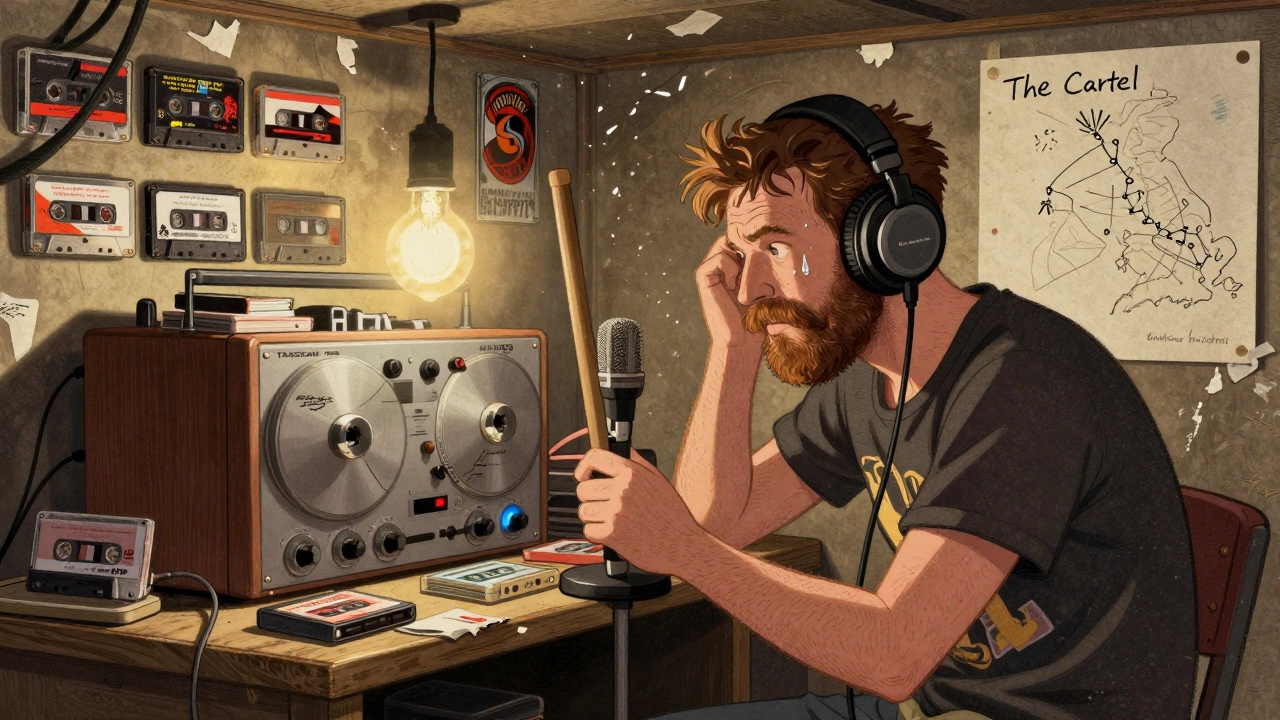

Back in the 1980s, you didn’t need a record deal to make an album. You just needed a four-track recorder, a few bucks, and the guts to press your own tapes. No studios. No producers. No executives telling you to change the drums. Just raw, weird, beautiful music made in basements, garages, and living rooms - and somehow, it changed everything.
How a £1,000 Cassette Started a Revolution
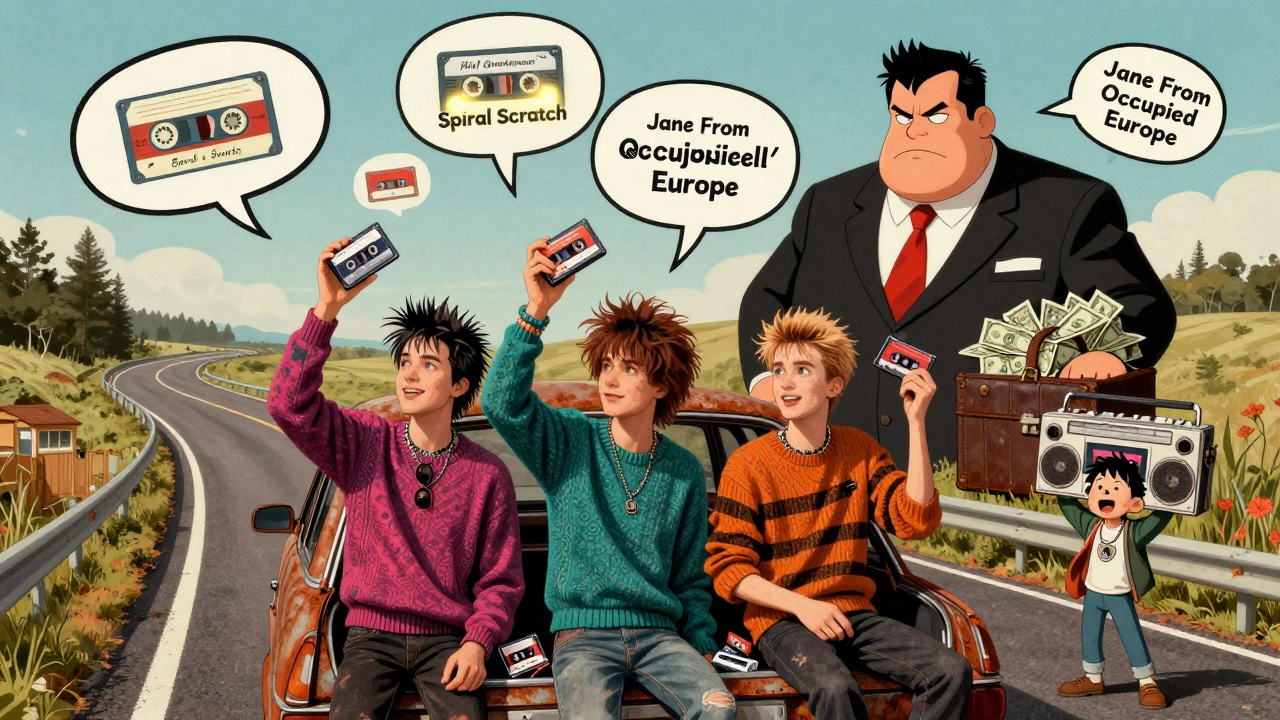
In 1977, a band from Manchester called Buzzcocks an English punk band that pioneered the DIY music movement by self-releasing their debut EP, Spiral Scratch, in 1977 pressed 1,000 copies of their EP, Spiral Scratch, on a shoestring budget of just £1,000. They handled everything: recording, pressing, designing the cover, and selling it out of the trunk of their car. No label. No marketing team. Just pure do-it-yourself energy. That tiny release became the blueprint. It proved you didn’t need a major label to reach listeners - you just needed to believe in your own sound.
By 1980, the movement had spread. The UK had a network called The Cartel a cooperative distribution network formed by independent UK record labels in the late 1970s to share warehouse and shipping resources, where labels like Rough Trade a pioneering British independent record label founded in 1978, known for releasing seminal DIY indie albums including those by The Smiths and Stiff Little Fingers and Red Rhino a UK-based independent record label active in the late 1970s and 1980s, part of The Cartel distribution network shared warehouse space and delivery routes. This meant a band in Liverpool could get their cassette into a shop in Brighton. It was revolutionary. For the first time, indie music wasn’t just local - it was national.
The Gear That Made It Possible
You didn’t need a $50,000 studio. You needed a TASCAM 144 a four-track cassette recorder released in 1979 that became the most popular home recording device for DIY indie artists in the 1980s. This thing, which cost less than $1,000, let you record four separate tracks onto a standard cassette tape. You could lay down drums, bass, guitar, and vocals - one at a time. No overdubs. No auto-tune. Just you, your instrument, and a lot of patience.
Take Television Personalities a British post-punk band whose 1980 debut album, ...And Don't The Kids Just Love It, became a cult classic for its lo-fi, home-recorded aesthetic. Their first album, ...And Don’t The Kids Just Love It, was recorded on a borrowed TASCAM in a living room. The vocals are shaky. The bass is muddy. The drums sound like they were hit with a broom. But it’s honest. And that honesty became the sound of the decade. Fans didn’t hear mistakes - they heard soul.
Meanwhile, across the Atlantic, Half Japanese an American indie rock band known for their raw, lo-fi recordings and DIY ethic, particularly on their 1980 album Half Gentlemen/Not Beasts made Half Gentlemen/Not Beasts with a four-track and a lot of attitude. The guitarist didn’t know how to play chords. The drummer used a trash can lid. Yet somehow, the album became a touchstone for future indie bands. It proved technical skill wasn’t the point. Passion was.
How DIY Albums Differed From the Mainstream
In 1980, David Bowie dropped Scary Monsters (And Super Creeps) - a polished, expensive, studio-crafted masterpiece. It cost over $80,000 to make. Meanwhile, The Smiths an influential British indie rock band signed to Rough Trade, whose 1980s albums defined the DIY aesthetic through minimal production and emotional authenticity were recording in a tiny studio in Manchester for under $3,000. Their debut single, Hand in Glove, had no reverb on the vocals. The drums were thin. The guitar was slightly out of tune. But it felt real. And people noticed.
Major labels were slick. Indie albums were scrappy. That contrast wasn’t accidental. Indie bands didn’t just record cheap - they chose to. They wanted to sound like themselves, not like a formula. The Smiths didn’t just make music. They made a statement: You don’t need polish to be powerful.
Even in the U.S., where college radio was the main outlet, the same logic applied. R.E.M. an American alternative rock band whose early recordings on Hib-Tone and I.R.S. Records exemplified the DIY indie ethos before mainstream success recorded their first single, Radio Free Europe, in 1981 for less than $1,000. They didn’t even have a bassist when they recorded it - the bass line was played on a keyboard. It wasn’t perfect. But it was unforgettable. That’s the magic of DIY: imperfection became identity.
The Distribution That Kept It Alive
Here’s the truth: no one would’ve heard these albums if not for the underground network that kept them moving. Independent labels didn’t have money for TV ads. So they relied on fanzines self-published magazines created by music fans in the 1970s and 1980s, which became crucial for promoting DIY indie releases like Chainsaw a UK punk and indie fanzine launched in 1977 that covered emerging independent music scenes and college radio university-run radio stations that became the primary platform for indie music in the United States during the 1980s.
By 1985, there were over 1,200 college radio stations in the U.S. playing music no commercial station would touch. DJs didn’t care if you had a hit. They cared if you had heart. A band from Athens, Georgia, or Olympia, Washington, could get airplay just by mailing a cassette to a station. No agents. No promoters. Just a handwritten note and a tape.
And distribution? It was messy. Labels spent 60-70% of their budget just getting records into stores. They’d ship crates to The Cartel, which would then split them up and send them to shops across the country. It wasn’t efficient. But it was honest. And it worked.
Cult Classics That Still Matter
Some of these albums were barely noticed when they came out. Now, original pressings sell for hundreds - sometimes over $1,000. Swell Maps a British post-punk band that released their 1980 album Jane From Occupied Europe on their own Rather Records label, becoming a cult favorite for experimental DIY recording’s Jane From Occupied Europe sold 500 copies in 1980. Today, a worn-out cassette goes for $800 on Discogs. Why? Because it’s raw. Because it’s weird. Because it was made with no rules.
Robbie Basho an American guitarist and composer whose 1983 cassette-only album Banquet was reissued in 2022, highlighting the enduring legacy of 1980s DIY music released his album Banquet in 1983 - only on cassette. No CD. No digital. Just one copy at a time, handed out at shows. It vanished. Then, in 2022, it was finally reissued. Fans cried. Not because it sounded perfect. Because it sounded like a secret someone finally shared.
Even today, bands like Snapped Ankles a contemporary British indie band that cites 1980s DIY aesthetics as a major influence on their lo-fi, experimental sound and Squid a British indie rock band whose 2020s recordings draw direct inspiration from the lo-fi textures of 1980s DIY albums are using four-track recorders again. Not because they can’t afford better gear. Because they want that grit. That humanity. That imperfection.
Why This Still Matters
The 1980s didn’t just give us music. It gave us a new way to think about art. You don’t need permission to create. You don’t need money to be heard. You just need to start.
Today, anyone with a laptop can make an album. But back then, it took guts. You had to hand-solder your own cassette labels. You had to drive 200 miles to drop off tapes at a record shop. You had to answer letters from strangers who said, “I’ve never heard anything like this.” And you kept going.
That’s the real legacy of these albums. Not the sound. Not the sales. But the idea: anyone can do it.


