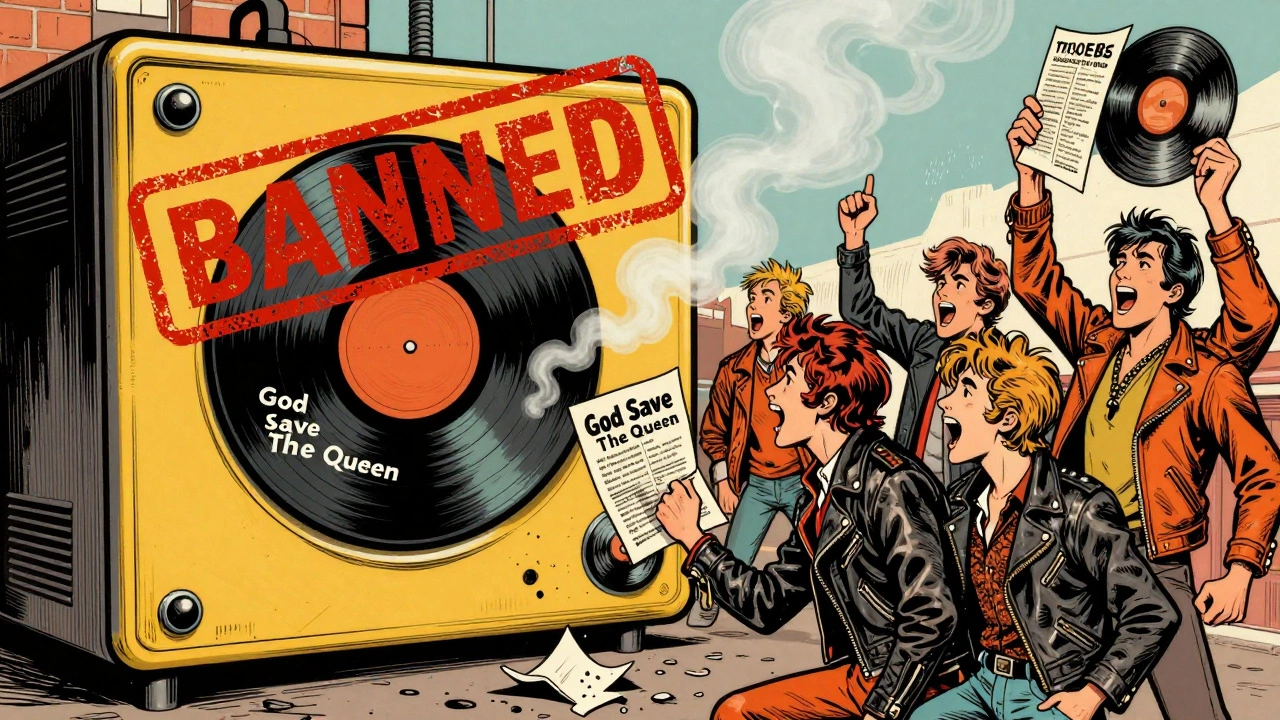

When you hear "God Save The Queen" by the Sex Pistols today, it sounds like raw punk energy - loud, angry, and defiant. But in 1977, it was banned across the entire UK. The BBC didn’t just refuse to play it; they erased it from their archives. Why? Because it wasn’t just a song. It was a middle finger to the monarchy, to the establishment, and to the idea that music should stay quiet. That same year, Donna Summer’s "Love to Love You, Baby" was pulled from radio stations in the U.S. and Europe. Not because it was bad - but because it had 22 moans. Or was it 23? Broadcasters couldn’t agree. What they all agreed on was this: it was too sexual, too real, too much.
The 1970s didn’t just produce music. It produced firestorms. Every time a song challenged the status quo, the system pushed back. Radio stations refused to play it. Religious leaders called it immoral. Government agencies banned it. And somehow, that made it even more popular. You couldn’t buy "God Save The Queen" on the radio, but you could buy it on vinyl. It sold 200,000 copies in its first week. The ban didn’t kill it - it made it a symbol.
When Lyrics Became Crimes
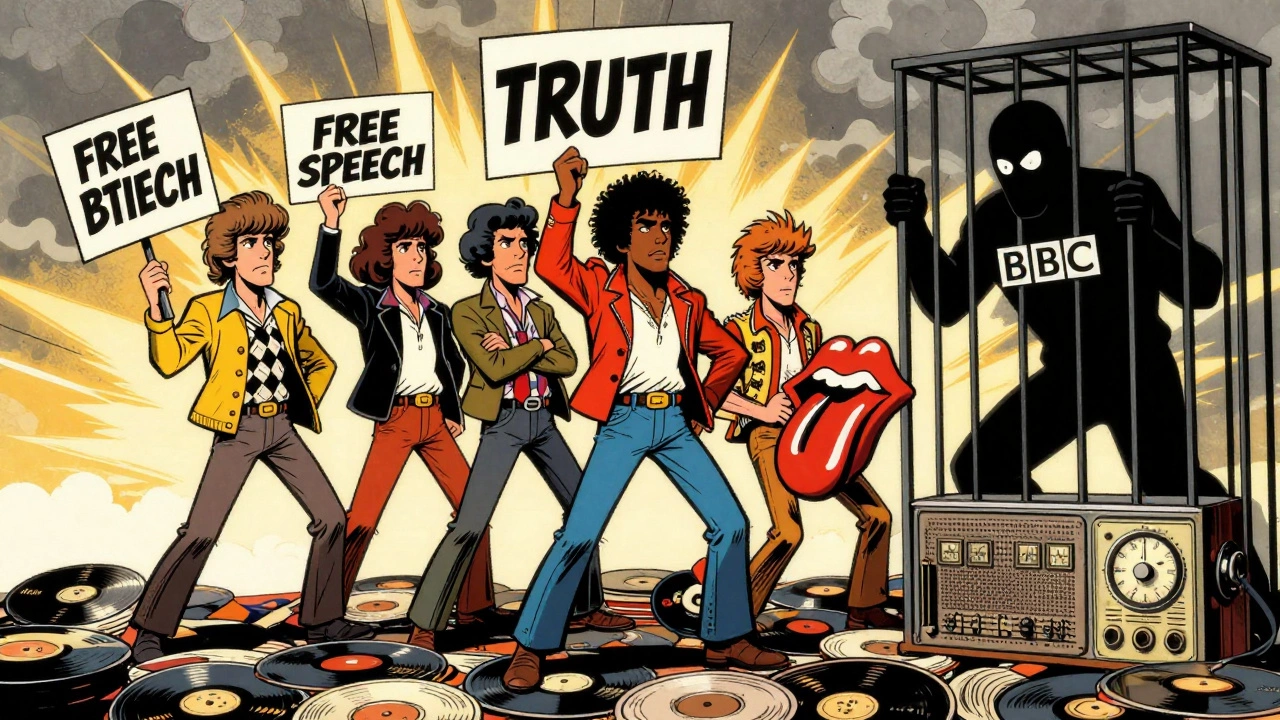
It wasn’t just sex or politics. Race, war, and power were all in the lyrics. Edwin Starr’s "War" wasn’t a protest song in the way you might expect. It wasn’t gentle. It screamed. "War, huh-huh, what is it good for? Absolutely nothing!" The BBC banned it. Not because it was loud - but because it was too clear. Too direct. In a time when Vietnam was still fresh in people’s minds, and soldiers were coming home broken, this song didn’t offer comfort. It demanded answers. And that scared the people in charge.
Then there was "Brown Sugar" by The Rolling Stones. On the surface, it was a rock song with a catchy riff. But dig deeper - it painted a picture of slavery, interracial rape, and exploitation. Critics called it offensive. Supporters said it was exposing the truth. In 2021, Spotify added a warning label to the track, explaining its "complex historical context." That’s the thing about these songs: they don’t fade. They evolve. What was shocking in 1971 is now a conversation starter in 2026.
Disco, Moans, and Moral Panic
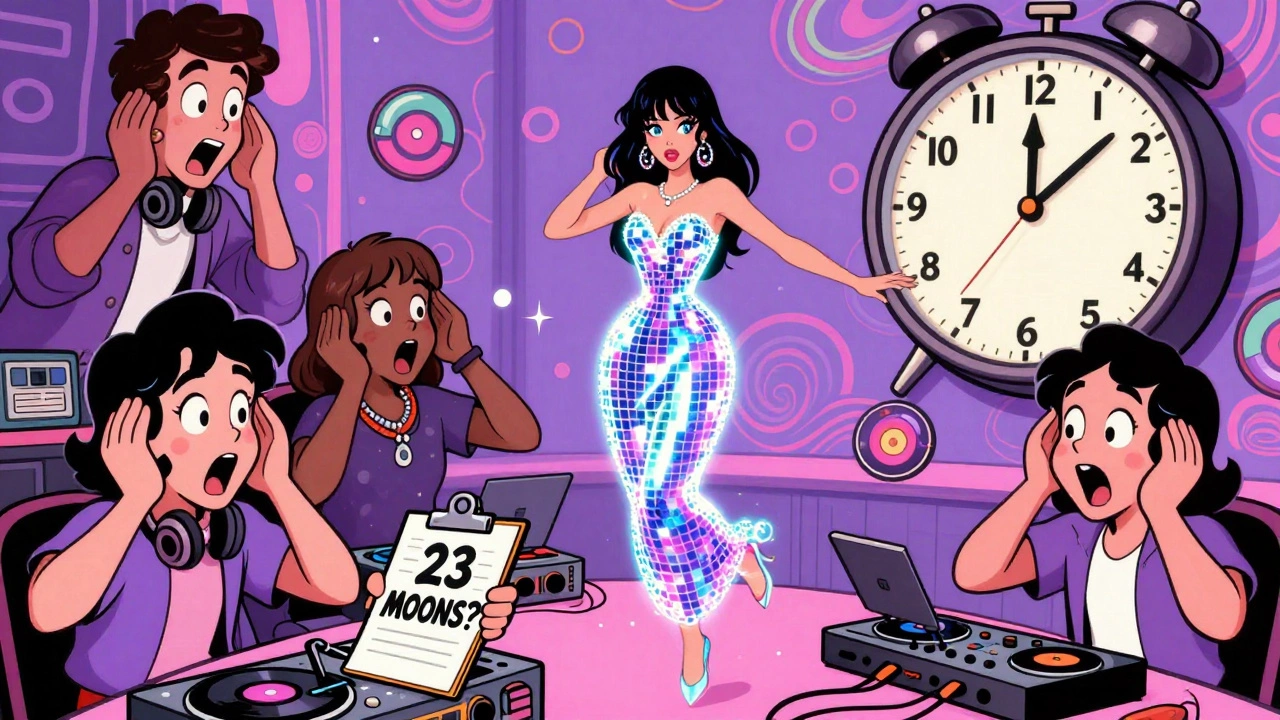
Donna Summer’s "Love to Love You, Baby" was 16 minutes long. That alone made radio stations nervous. But it was the moans - real, breathy, unapologetic - that triggered the real backlash. Time magazine counted them. The BBC claimed they heard 23. Some stations edited out the entire middle section. Others played it only after midnight. WABC in New York had a two-tier system: daytime edits, full version after 10 p.m. That’s not censorship. That’s compromise. And it worked. The song sold millions. The controversy didn’t hurt its success - it fueled it.
Same with Billy Paul’s "Let’s Make a Baby." Reverend Jesse Jackson called it obscene. He led protests. Radio stations refused to say the title out loud. Some played it as "Let’s Spend Some Time." But listeners knew. They bought the album anyway. The song hit number 2 on the R&B chart. The moral outrage? It became free advertising. And it showed how deeply society was divided - not just over music, but over what it meant to be free.
Why the BBC Banned "Lola" - And Why It Didn’t Matter
"Lola" by The Kinks was about a man falling for a woman - who turned out to be transgender. In 1970, that was unthinkable on radio. The BBC banned it for "suggestive content." But here’s the twist: they never said why. Was it the lyrics? The gender? The attitude? No one could agree. Meanwhile, Australian radio stations banned it because they thought it promoted "deviant behavior." But the song climbed to number 1 in the UK. Why? Because people didn’t care about the rules. They cared about the truth. "Lola" was funny, strange, and real. And that’s what made it powerful.
How Artists Fought Back
Artists didn’t sit back and wait for permission. They outsmarted the system. Billy Paul recorded two versions of "Let’s Make a Baby." One for radio. One for the album. Motown stood by Edwin Starr when the BBC banned "War." They didn’t apologize. They promoted it harder. John Lennon called "Imagine" "the Communist Manifesto sugarcoated with music." He knew it would rattle cages. He wanted it to. Record labels started marketing banned songs as "forbidden." They put "BANNED BY THE BBC" on album covers. Sales jumped. The more they tried to silence it, the louder it got.
Radio programmers had to learn fast. In 1970, the National Association of Broadcasters held 12 FCC compliance seminars. By 1979? 47. That’s a 300% increase. They weren’t just updating rules - they were scrambling to keep up with a culture that was changing faster than any policy could react.
The Numbers Don’t Lie
In 1970, only 4% of Top 40 hits faced radio restrictions. By 1975? 17%. That’s not a coincidence. That’s a movement. The FCC received 12,450 complaints about radio content in 1975 - triple what it got in 1970. But here’s the real story: banned songs sold 28% more albums than non-controversial ones. "God Save The Queen" sold 200,000 copies in a week. "Disco Lady" by Johnny Taylor hit number one on the Billboard charts - even after Jesse Jackson publicly called it "sex rock." The public didn’t care about the outrage. They cared about the beat.
Radio stations that played the banned tracks gained market share. KMET in Los Angeles, known for playing "forbidden" music, grew its audience by 37% between 1976 and 1978. People didn’t just listen - they rallied around stations that dared to play what others wouldn’t.
What Happens When a Song Outlives Its Ban
Today, you can stream "God Save The Queen," "Brown Sugar," and "Love to Love You, Baby" with a single click. But they’re not the same songs they were in 1977. They’ve been reinterpreted. Reddit threads still debate "God Save The Queen" - with one user saying, "The BBC ban amplified its revolutionary message across Europe." Spotify added historical notes to "Brown Sugar." Rolling Stone moved "God Save The Queen" to #56 on their "500 Greatest Songs" list. That’s not nostalgia. That’s reconciliation.
Dr. Emily Carter, a music historian at USC, put it best: "These controversies remain relevant because they represent the ongoing tension between artistic expression and societal boundaries. Each generation reinterprets these songs through their own lens."
What was once seen as dangerous is now seen as necessary. What was once called obscene is now called honest. The 1970s didn’t just give us music. It gave us a mirror. And we’re still looking into it.