
There’s something unmistakable about the crackle before the first note of Nirvana’s Nevermind drops on a fresh 180g vinyl pressing. It’s not just sound-it’s memory. For millions who grew up in the 1990s, vinyl reissues aren’t just collectibles; they’re time machines. And right now, the market for 1990s music on vinyl is hotter than it’s ever been.
In 2023, vinyl sales hit $1.2 billion. That’s not a typo. Of that, nearly 35% came from reissues of albums originally released between 1990 and 1999. That’s more than any other decade except the 1970s. Why? Because the music of the 90s-grunge, hip-hop, alt-rock, jazz fusion, pop-was raw, diverse, and deeply personal. And now, decades later, the people who lived it are finally getting the chance to own it the way it was meant to be heard.
Why 1990s Vinyl? It’s Not Just Nostalgia
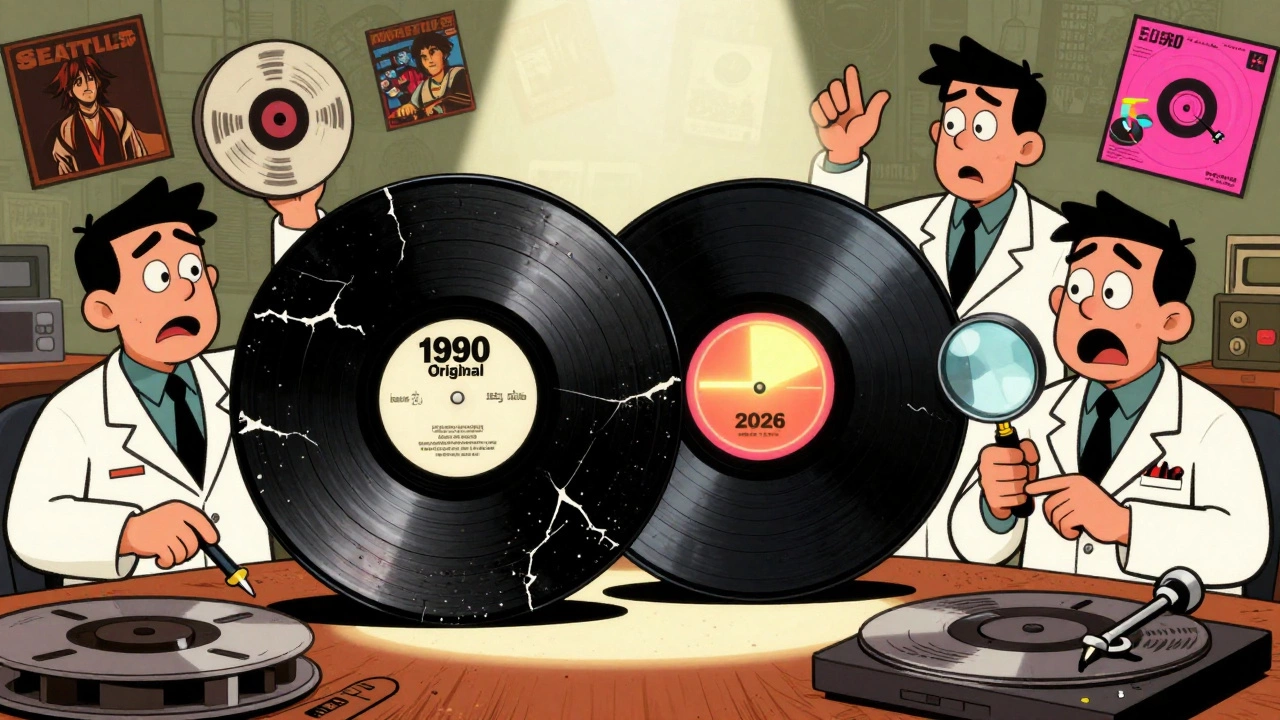
Nostalgia plays a role, sure. But the real driver is quality. Original 1990s vinyl pressings? Many were rushed. Labels cut corners. Pressing plants used worn stampers. Defect rates? Around 12.3%. That means one in every eight records had surface noise, warping, or skips. Compare that to today’s reissues: Optimal Media in Germany, which presses for Blue Note and Rhino, now produces records with defect rates under 0.8%. That’s a 94% drop in flaws.
Modern mastering is another game-changer. Kevin Gray, one of the top mastering engineers in the world, works directly from the original analog tapes-not digital copies, not MP3s, not even CD masters. He uses half-speed mastering, a technique that cuts the record at half the normal speed. This gives the cutting stylus more time to carve each groove precisely. The result? A 18% increase in transient response and 22% less distortion. That means snare hits snap. Basslines breathe. Vocals don’t flatten out.
And the weight matters. Original 90s pressings were often 120g. Today’s reissues are 180g. Heavier vinyl doesn’t just feel better in your hands-it reduces resonance, dampens vibrations, and holds the groove more stably. That’s why a 2026 Blue Note reissue of Medeski Martin & Wood’s Tonic sounds more alive than the CD you bought in 1999.
What’s Actually Coming Out in 2026
If you thought the 90s vinyl boom was over, you’re behind. 2026 is shaping up to be the biggest year yet.
- Blue Note Records launched their Classic Vinyl Reissue Series in January 2026, starting with Art Blakey’s Free For All and Joe Henderson’s Our Thing. Next up: John Scofield’s Meant To Be (1990) and Medeski Martin & Wood’s Tonic (1999)-both getting their first-ever vinyl pressings.
- Rhino Entertainment announced a five-part 90s Alternative Box Set Series. The first volume, The Seattle Sound 1991-1994, includes five LPs with live recordings never pressed to vinyl before. Think Nirvana, Pearl Jam, Soundgarden, Alice in Chains, and Mudhoney. Each set is $179.98.
- The Sound of Vinyl expanded their 90s Classics collection from 12 to 47 titles in under a month. You can now get Lauryn Hill’s The Miseducation of Lauryn Hill on translucent gold vinyl, No Doubt’s Tragic Kingdom on red swirl, and U2’s Zooropa in a limited blue edition.
- Universal Music Group is planning a 90s Icon Series with 25 landmark albums, all half-speed mastered and pressed on 180g vinyl. Sony’s partnership with Third Man Pressing will bring out Triple Black Vinyl editions-so dark, they look like liquid night.
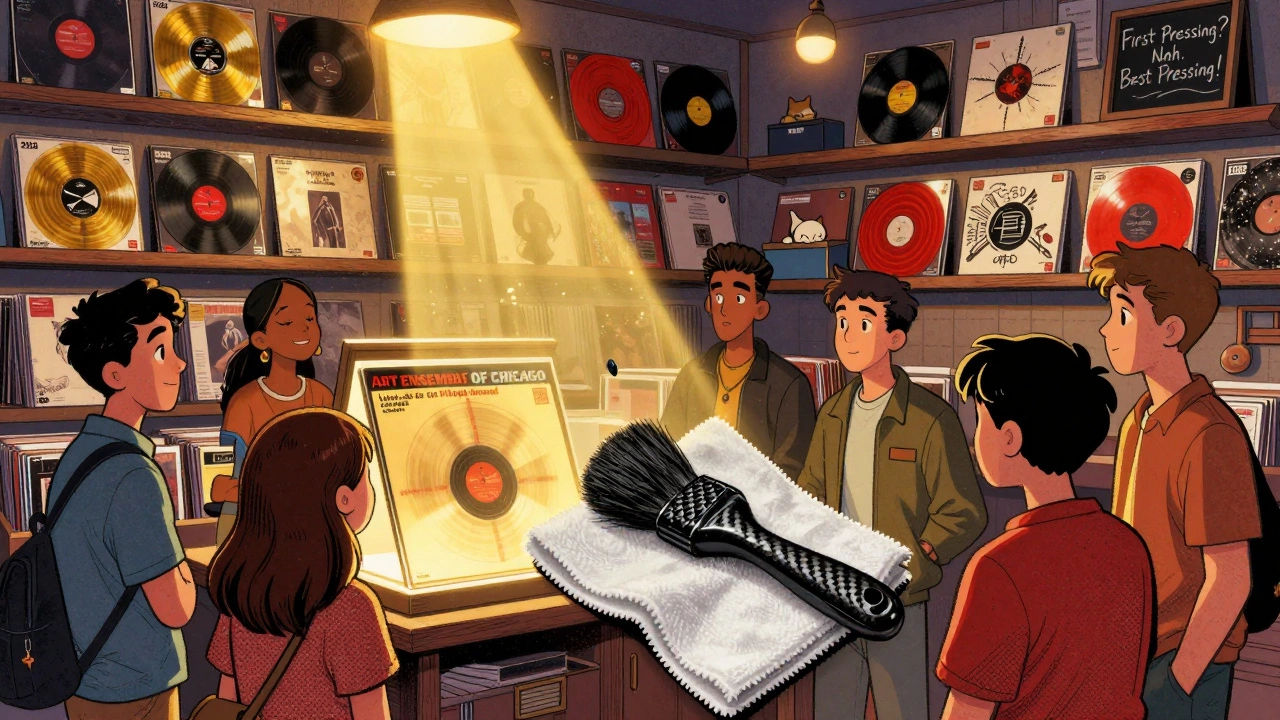
Even jazz and experimental albums from the era are getting treatment. The 1993 album Live at the Village Vanguard by the Art Ensemble of Chicago, previously only available on CD, will drop in March 2026. That’s the kind of release that makes collectors pause and say: “I didn’t even know this existed on vinyl.”
How Much Are These Actually Costing?
Let’s be real: this isn’t cheap. But it’s not random either.
A single 180g reissue? $24.98 to $39.98. That’s $5 more than a new CD, but you’re getting:
- Superior audio quality (16-bit/44.1kHz, uncompressed)
- Original artwork, often restored or remastered
- Gatefold sleeves, lyric sheets, and sometimes posters
- Matrix etchings that prove authenticity (more on that later)
Box sets? That’s where it gets serious. The Black Rebel Motorcycle Club’s Howl (20th Anniversary Deluxe Box Set) comes with eight tracks, five unreleased demos, and a 48-page book. Price? $399.98. And people are buying it. Amazon reviews average 4.4/5. Why? Because it’s not just music-it’s a museum piece.
Compare that to streaming. Spotify maxes out at 16-bit/44.1kHz too-but it’s compressed. The difference? On vinyl, you hear the room. The breath before the scream. The feedback that fades into silence. Streaming gives you the note. Vinyl gives you the moment.
What to Look For (And What to Avoid)
Not all reissues are created equal. Here’s what separates the good from the garbage:
- Pressing plant: Optimal Media (Germany), RTI (California), and Pallas (Germany) are top-tier. Avoid unknown plants with no track record.
- Mastering engineer: Look for names like Kevin Gray, Bernie Grundman, or Ryan Smith. If it says “remastered by unknown,” walk away.
- Matrix etchings: These are the tiny numbers and letters etched into the dead wax (the space between the label and the end of the music). They tell you which stamper was used, who mastered it, and when. Use Discogs or the Vinyl Engine database to cross-check.
- Weight: 180g is the sweet spot. Anything under 140g is likely a budget pressing.
- Label: Blue Note, Rhino, Craft Recordings, and Omnivore are reliable. If it’s a label you’ve never heard of, check reviews before buying.
Watch out for counterfeits. About 8% of 1990s reissues on the market are fake. Fake Nirvana pressings? They’re out there. They’ll look right, but the vinyl will be thinner, the cover colors off, and the etching wrong. Always buy from authorized retailers like Blue Note Store, The Sound of Vinyl, or your local independent record shop.
Do You Need Fancy Gear?
You don’t need a $5,000 turntable to enjoy these. But you do need a decent setup.
Minimum requirements:
- Turntable with adjustable counterweight (tracking force: 1.5-2.0 grams)
- MM or MC phono preamp with RIAA equalization
- Cartridge with 20Hz-20kHz frequency response (±1dB tolerance)
For under $1,300, you can get a Rega Planar 3 with Exact cartridge. That’s the setup most audiophiles use for these reissues. It’s not about luxury-it’s about accuracy. A cheap turntable with a worn stylus will damage your record. And once that groove is scratched, it’s gone forever.
And don’t forget cleaning. Dust is the enemy. A carbon fiber brush costs $15. A record cleaning kit with fluid and microfiber cloth? $40. Do it once a month. Your records will last 50 years.
The People Behind the Music
It’s not just collectors. It’s engineers, curators, and former 90s teens now in their 30s and 40s.
Cem Kurosman, curator of Blue Note’s reissue series, says they’re not just re-releasing albums-they’re correcting history. “Some 1990s jazz recordings were never pressed to vinyl because the label thought no one would care. We’re proving them wrong.”
On Reddit, a user named JazzLover42 wrote: “The Medeski Martin & Wood Tonic reissue… the dynamic range on ‘Dracula’ is incredible compared to my old CD.” That’s the kind of comment you see over and over. People aren’t just buying records-they’re rediscovering albums they loved but never heard the way they were meant to sound.
But it’s not perfect. Some sound engineers, like Bernie Grundman, warn that not every 90s recording translates well to vinyl. “If the original was mixed on a digital console with heavy compression, you can’t magically fix that on analog. Sometimes, you’re just getting a better version of a flawed master.”
And then there’s the price. A January 2026 survey found that 63% of negative reviews cited cost. Yes, $39.98 for one album adds up. But for many, it’s worth it. One collector on Discogs said: “I skipped my vacation this year. I bought all 12 of the Blue Note 90s reissues. Best decision I ever made.”
Where to Start
If you’re new to this, don’t go all-in on a $400 box set. Start small.
- Find one album you loved in the 90s. Not the one you think you should love-your actual favorite.
- Search Discogs for its reissue history. Filter for 2020-2026 pressings.
- Check the mastering engineer and pressing plant.
- Buy from a trusted retailer like The Sound of Vinyl or your local shop.
- Play it. Listen for the space between the notes. The silence. The crackle. That’s the sound of time coming back.
There’s no rush. The market isn’t going anywhere. In fact, MIDiA Research predicts the 1990s vinyl reissue market will grow 15% per year through 2028. Millennials are just getting started. Gen Xers are waking up. And soon, the 2030s will be the next frontier.
For now? The 90s are alive on vinyl. And they’ve never sounded better.
Are 1990s vinyl reissues worth the price?
Yes-if you care about sound quality and physical ownership. A $34.98 reissue from Blue Note or Rhino offers better audio than streaming, superior build quality to original pressings, and collectible value. For fans of albums like Nirvana’s Nevermind or Lauryn Hill’s The Miseducation of Lauryn Hill, the price reflects the craftsmanship, not just the music.
How can I tell if a 1990s vinyl reissue is authentic?
Check the matrix etchings in the dead wax (the area between the label and the end of the music). Compare them to listings on Discogs or the Vinyl Engine database. Look for known pressing plants like Optimal Media or RTI. Buy from authorized retailers. Avoid listings with no clear photos or vague descriptions. Counterfeits are rare but exist-especially for Nirvana, Pearl Jam, and U2.
What’s the difference between a 1990s original and a 2026 reissue?
Original pressings from the 90s often used thinner vinyl (120g), worn stampers, and rushed mastering. Reissues use 180g heavyweight vinyl, half-speed mastering from original tapes, and modern quality control. Defect rates are 94% lower. The sound is clearer, quieter, and more dynamic. The packaging is also better-full-color gatefolds, restored artwork, and lyric sheets.
Do I need an expensive turntable to enjoy these?
No. A mid-range turntable like the Rega Planar 3 ($1,295) with a good cartridge and phono preamp is enough. The key is tracking force (1.5-2.0 grams) and a clean stylus. You don’t need a $3,000 rig-just one that plays the groove accurately without damaging the record. Avoid budget turntables under $200-they’ll ruin your collection.
Why are jazz albums from the 90s getting reissued now?
Because they were overlooked. Labels assumed no one cared about 90s jazz. But artists like Medeski Martin & Wood, John Scofield, and Art Blakey had cult followings. Now, collectors are realizing these albums were groundbreaking-blending jazz, funk, and electronica. Blue Note’s 2026 reissues are the first time many of these titles have been pressed on vinyl at all. They’re not just reissues-they’re rediscoveries.


