
Silk Degrees isn’t just an album-it’s a time capsule of a moment when American rock stopped chasing British grit and started lounging in sun-drenched studios, wrapped in velvet basslines and smoky horns. Released on February 18, 1976, Boz Scaggs’ seventh studio record didn’t just climb the charts; it rewrote the rules of what adult-oriented rock could sound like. Five times platinum. 115 weeks on the Billboard 200. Five hit singles. And yet, it never felt like it was trying to be a hit. That’s the magic of Silk Degrees.
How a Struggling Artist Became a Superstar Overnight
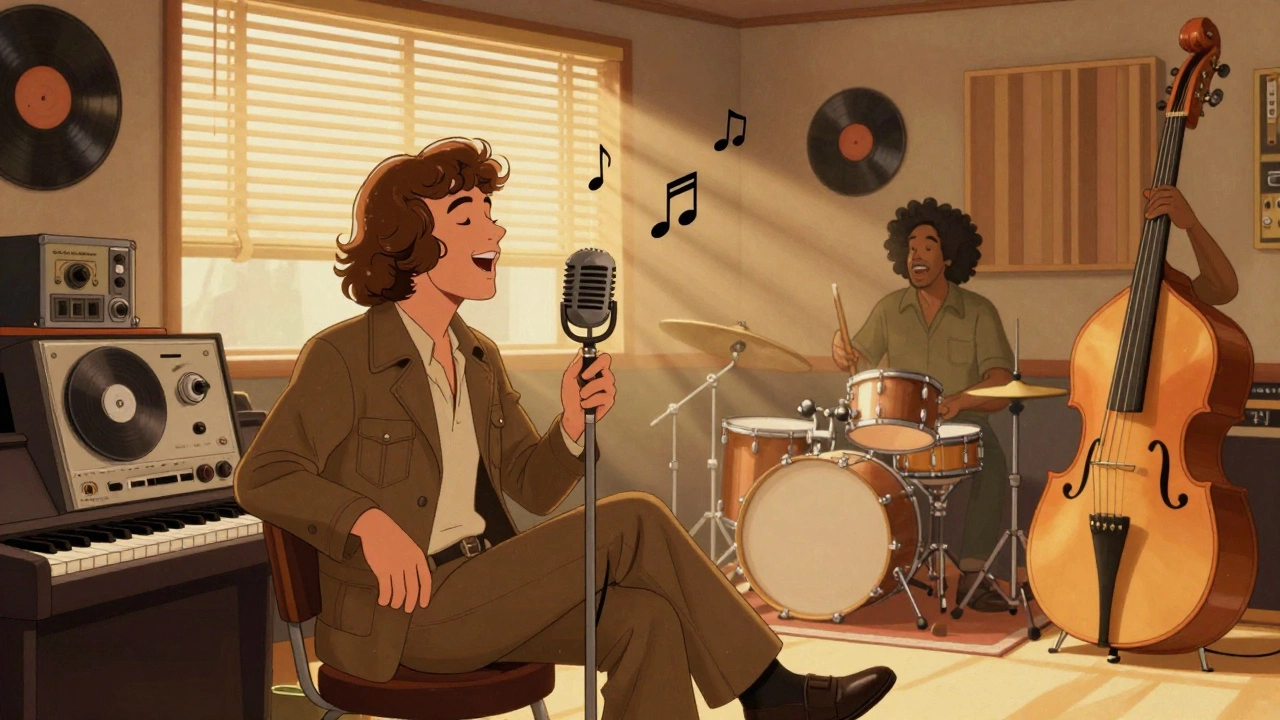
Before Silk Degrees, Boz Scaggs was the guy who played guitar for the Steve Miller Band but never quite broke out on his own. Six solo albums. Zero breakthroughs. Columbia Records stuck with him-not because he was selling out, but because they believed in his voice, his feel, his quiet confidence. Then came September 1975. Scaggs walked into a Hollywood studio with no grand plan, no manifesto. Just a handful of songs, a few trusted musicians, and a producer named Joe Wissert who knew how to capture the glow of analog tape.
Scaggs didn’t play much guitar on this record. He let the music breathe. He focused on his voice-smooth, controlled, sometimes whispering, sometimes soaring. His range? More dynamic than ever. Nasal one moment, tender the next. A growl on ‘Lowdown,’ a falsetto on ‘We’re All Alone.’ He wasn’t singing about revolution or heartbreak. He was singing about people-driving down Pacific Coast Highway, sipping whiskey at midnight, waiting for a call that never comes.
The Band That Built a Legend
The real secret weapon behind Silk Degrees wasn’t Scaggs. It was the room. The musicians. The same group of players who would soon form Toto. David Paich on keys. Jeff Porcaro on drums. David Hungate on bass. These weren’t session guys-they were architects of sound. And they built something that still sounds perfect 50 years later.
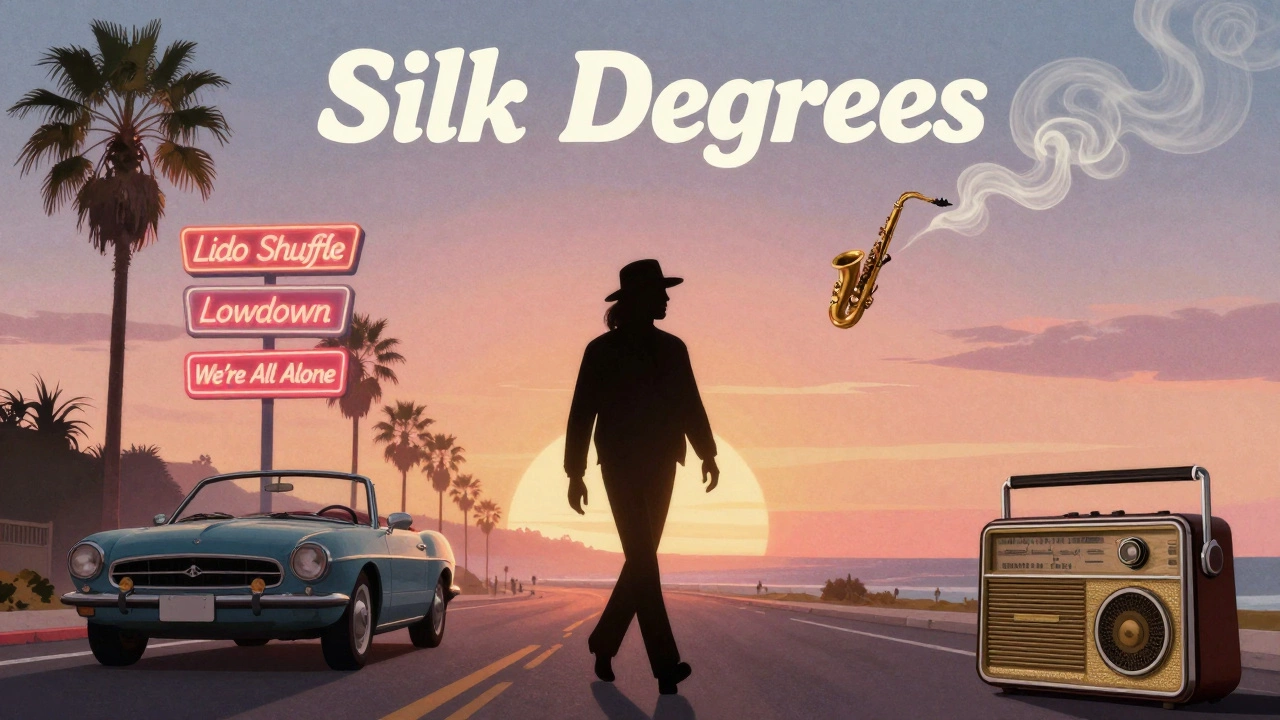
‘Lido Shuffle’ opens the album with a groove that feels like a warm breeze. It’s not a funk track. It’s not disco. It’s something in between-tight, swinging, with a rhythm section that locks in like a well-oiled machine. The horn stabs? Plas Johnson, the same sax player who played the iconic solo on ‘I’ve Got a Woman.’ The slide guitar on ‘Breakdown Dead Ahead’? Les Dudek, a name you might not know, but the sound? Instantly recognizable.
And then there’s ‘Lowdown.’ That bassline. That groove. That call-and-response between Scaggs and the background singers. It’s seductive without being cheap. It’s rhythmic without being danceable. Critics called it disco. Scaggs’ fans? They drew a line. ‘This is as close to disco as I ever want to get,’ wrote one reviewer in 2024. ‘THE LINE MUST BE DRAWN HERE. THIS FAR, NO FURTHER!’
The Sound That Defined a Generation
If you’ve ever heard a record that sounds like it was recorded inside a velvet box, that’s Silk Degrees. Joe Wissert didn’t use digital tricks. No autotune. No quantized drums. Just tape machines, tube preamps, and a deep understanding of space. The album has a warm sepia tint-like an old Polaroid you found in a drawer. The highs are smooth. The mids are rich. The lows? They don’t punch. They caress.
Compare it to Steely Dan’s Aja. Both are studio masterpieces. But Steely Dan was clinical. Precise. Almost cold. Scaggs? He let the humanity leak in. You hear a breath between phrases. A slight crack in his voice on ‘Georgia.’ A laugh after the final note of ‘What Can I Say.’ That’s why people still play this album on high-end turntables and $5,000 DACs. It’s not about technical perfection. It’s about emotional truth.
Why It Still Matters Today
In 2026, when music moves at the speed of TikTok trends, Silk Degrees feels like a quiet rebellion. No flashy visuals. No viral hooks. Just seven songs that last between three and four minutes each, each one carefully arranged, each note placed like a brick in a cathedral.
The album doesn’t demand attention. It earns it. Play it while you make coffee. Play it while you drive. Play it at 2 a.m. when the city’s quiet and you’re thinking about someone you haven’t seen in years. That’s when ‘We’re All Alone’ hits hardest. That’s when ‘Harbor Lights’ feels like a lullaby for grown-ups.
It’s not nostalgic. It’s timeless. The chord progressions on ‘Georgia’-mixing major ninths with minor sevenths-still sound fresh. The vocal harmonies on ‘Lido Shuffle’ still send chills. And the fact that this album came out the same year punk exploded in London? That’s the irony. While the UK was tearing down walls, America was building a new kind of music-one that didn’t need to scream to be heard.
How to Listen to It Right Now
There are dozens of versions of Silk Degrees. The 2007 remastered CD is easy to find. It sounds great. But if you want to hear what this album was meant to sound like? Hunt down the Mobile Fidelity Sound Lab version-MFSL UDCD 535. It’s out of print. Expensive. Worth every penny. That version has the warmth, the air, the slight tape hiss that makes you feel like you’re in the studio with them.
Streaming services? They’ll do. But only if you’re using high-res audio. Spotify’s standard stream? It flattens the dynamics. Apple Music’s lossless? Better. Tidal’s HiFi? Even better. But nothing beats the analog magic of the original tape. If you’ve got a turntable, find a clean vinyl copy. The album was pressed in multiple runs. Look for the original Columbia pressing with the black and gold label.
And don’t skip the sequencing. This album was designed to be played from start to finish. Side one ends with ‘Lido Shuffle’-upbeat, electric. Side two ends with ‘Harbor Lights’-slow, aching, perfect. That wasn’t accidental. That was intention.
The Legacy That Won’t Fade
Boz Scaggs never made another album like Silk Degrees. He tried. He came close. But nothing matched the alchemy of that moment-when a quiet singer, a brilliant producer, and a group of musicians who were just starting out, all came together without a plan, and made something that outlasted trends, genres, and even time.
It’s not just a soft rock album. It’s a masterclass in restraint. In groove. In emotional honesty disguised as cool. It’s the sound of California in 1976-sunset on the Pacific, a cocktail half-finished, the radio playing softly in the background. And for nearly 50 years, it’s been playing for anyone who’s willing to listen.
Is Silk Degrees considered a classic album?
Yes. Silk Degrees is widely regarded as one of the defining albums of 1970s soft rock. It spent 115 weeks on the Billboard 200, sold over five million copies in the U.S., and earned five-times platinum certification from the RIAA. Critics at the time gave it 4.5 out of 5 stars from Rolling Stone, and it continues to be praised by modern reviewers for its production, songwriting, and vocal performance.
What makes Silk Degrees different from other 1970s albums like Rumours or Aja?
While Fleetwood Mac’s Rumours thrived on emotional drama and Steely Dan’s Aja on technical precision, Silk Degrees stands apart with its relaxed, observational tone. Scaggs didn’t sing about breakups or betrayal-he sang about people living quiet, stylish lives. The arrangements are jazz-infused, not prog-rock. The production is warm, not clinical. It’s less about showing off and more about feeling right.
Did Toto members really play on Silk Degrees?
Yes. Future Toto members David Paich (keyboards), Jeff Porcaro (drums), and David Hungate (bass) all played on Silk Degrees. This album was essentially Toto’s unofficial debut. Their tight, polished playing helped define the ‘LA sound’ that dominated radio in the late 1970s. Porcaro’s drumming on ‘Lido Shuffle’ alone became a benchmark for session drummers.
What’s the best version of Silk Degrees to buy today?
For audiophiles, the Mobile Fidelity Sound Lab version (MFSL UDCD 535) is the gold standard. It was pressed from the original master tapes and retains the analog warmth that later remasters lost. If you can’t find it, the 2007 Columbia Legacy remaster is a solid alternative. Vinyl collectors should look for original 1976 pressings with the black and gold Columbia label. Streaming on Apple Music or Tidal in lossless format also does a good job of preserving the dynamics.
Why is Silk Degrees still popular among audiophiles?
Because it was engineered for sound. Producer Joe Wissert used top-tier studio gear-Studer tape machines, Neumann microphones, and analog consoles-to capture every nuance of the performance. The album’s sonic signature-slightly soft, warm, with a rich midrange-is ideal for high-end audio systems. It’s not just about the music; it’s about how the music was recorded. That’s why it was named Album of the Month by the dCS Community in January 2021.


