
What Exactly Is a Box Set, and Why Do People Pay So Much for It?
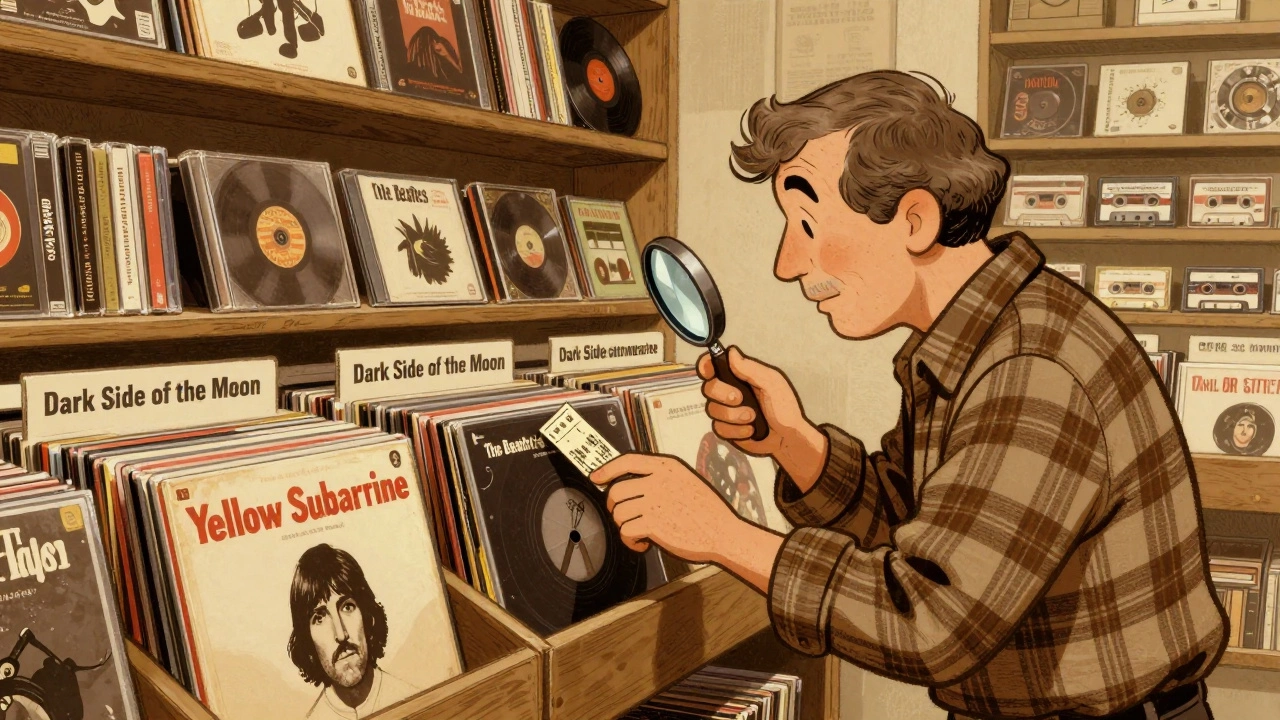
You walk into a record store and see a massive box on the shelf-thick, heavy, wrapped in cloth, with a 100-page book inside. It costs $130. Inside: four CDs, a vinyl record, a poster, a ticket stub replica, and a handful of unreleased demos. You already own the album on streaming. You bought it on CD in 2003. You even got the vinyl in 2018. So why does this exist? And why do people buy it?
Box sets aren’t just packaging. They’re time capsules. They’re museum exhibits you can hold. And in 2026, they’re more common than ever-even as streaming dominates music consumption. The industry made $287 million from deluxe reissues last year, according to Luminate Analytics. That’s not a fluke. It’s a strategy. And it’s working.
The Birth of the Box Set: From Beatles to CDs
The idea didn’t start with fancy packaging or Dolby Atmos. It started with The Beatles’ Yellow Submarine soundtrack in 1969. It was the first time a band bundled extra tracks, liner notes, and artwork into a single premium release. But it wasn’t until the 1980s, when CDs replaced vinyl as the default format, that the real boom began.
Record labels suddenly had a chance to sell the same albums again. Fans who had bought their favorite records on cassette or vinyl now had to upgrade. And they did. By the mid-90s, box sets were standard for legacy artists. The Rolling Stones’ Forty Licks in 2002, Bruce Springsteen’s Tracks in 1998, and Nirvana’s In Utero reissue in 2013 all followed the same pattern: remastered audio, live recordings, unreleased demos, and a book.
But here’s the twist: not every box set is created equal. Some are labor-of-love archival projects. Others are just repackaged old content with new plastic.
What Makes a Box Set Worth It?
Collectors don’t care about the box. They care about what’s inside. And they’ve learned to spot the difference.
A real archival excavation-like the 2023 27-disc Bob Dylan 1974 Live Recordings set-contains 417 previously unreleased tracks. That’s not marketing. That’s history. It’s the kind of release that changes how people understand an artist’s work. Same with The Dream Syndicate’s 2024 40th-anniversary box set. The album had been out of print for decades due to legal issues. The reissue didn’t just bring it back-it gave fans access to material that literally didn’t exist in any other form.
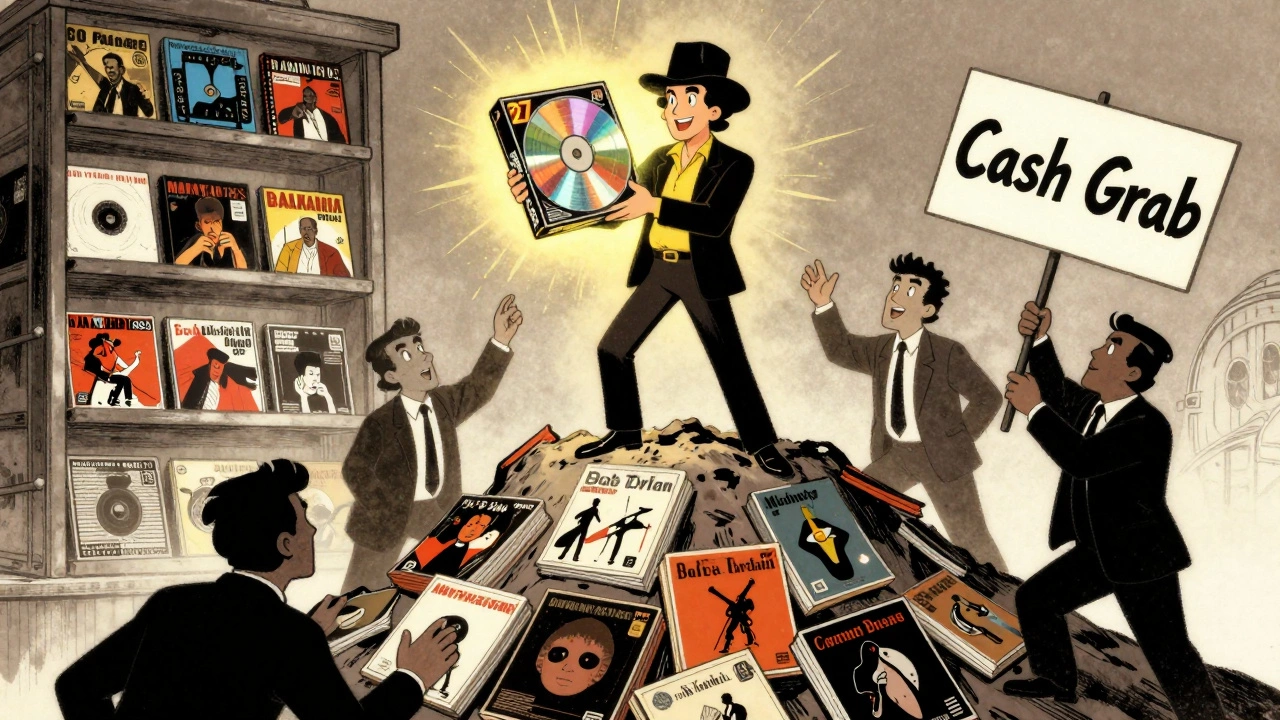
Compare that to Queen’s 2022 News of the World 40th Anniversary Edition. It had the same two bonus tracks as the 2011 version. Just new cover art. Fans called it a cash grab. And they were right.
The rule of thumb among serious collectors? If less than half the content is new, it’s probably not worth the price. One Reddit user spent $175 on WAR’s 2024 box set-not because it was pretty, but because it included three unreleased live shows from 1977. That’s value. That’s authenticity.
The Audio Revolution: SACD, Half-Speed Masters, and Dolby Atmos
It’s not just about extra tracks anymore. It’s about sound quality.
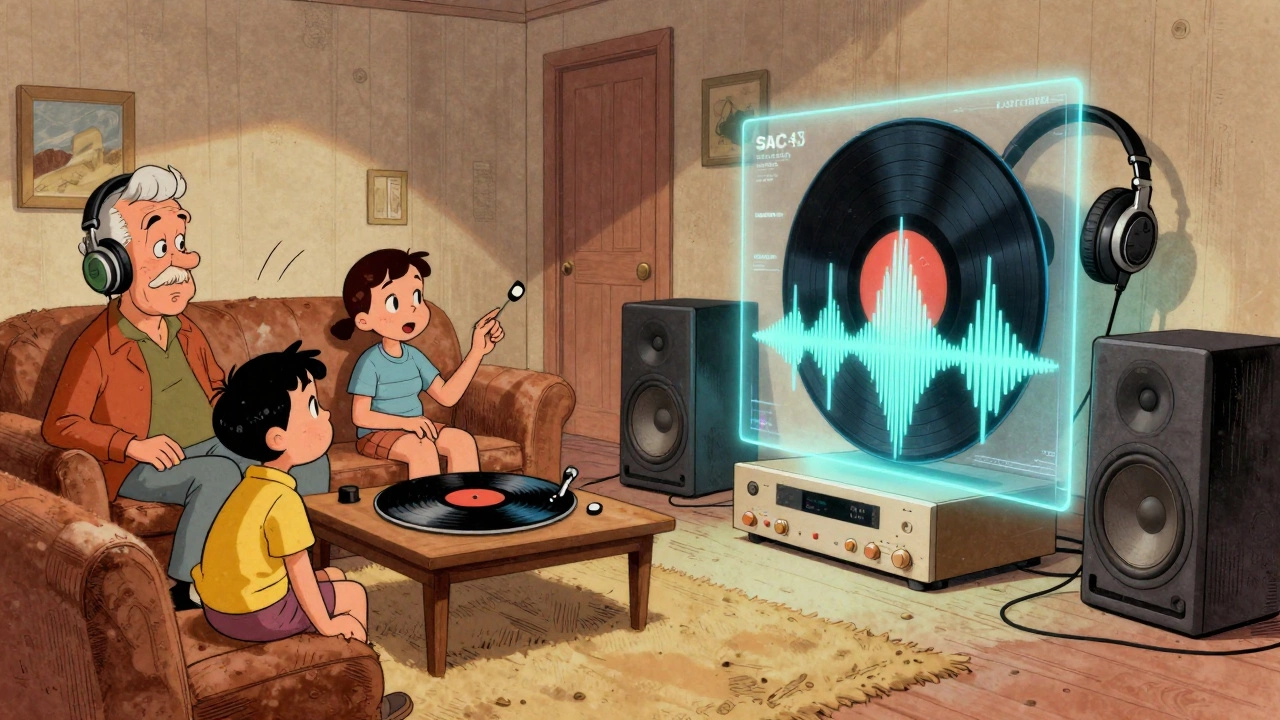
Modern box sets often use mastering techniques that weren’t even possible 20 years ago. Half-speed mastering, for example, cuts the original tape at half the normal speed, allowing the cutting lathe to capture more detail. Plangent Process restores analog tape hiss and phase issues. And Dolby Atmos turns a 1975 album into a 3D soundscape.
These aren’t gimmicks. They’re technical upgrades that change how you hear music. Audiophiles will tell you that the 2024 SACD reissue of Dark Side of the Moon sounds like you’re sitting in the studio during the recording. That’s not hyperbole. It’s measurable. The frequency response is wider. The separation between instruments is clearer. The bass doesn’t just rumble-it breathes.
But here’s the catch: you need the right gear. SACD players cost between $299 and $2,499. Dolby Atmos requires a compatible home theater system. For most people, streaming still sounds fine. But for collectors, this is the new frontier. The difference between a standard CD and a half-speed mastered SACD isn’t subtle. It’s transformative.
The Dark Side: Cash Cows and Double-Dipping
Not every reissue is noble. Some are pure exploitation.
Portishead’s Geoff Barrow called special editions “a dirty word” in 2011, and he wasn’t wrong. Labels have reissued the same albums-sometimes four or five times-under different names. The 2021 Led Zeppelin Houses of the Holy deluxe edition? One bonus track, originally released in 1995. That’s not archival. That’s recycling.
Even worse are the “anniversary editions” that just slap a new cover on an old release. The 10th Anniversary version of Titanic (yes, the movie soundtrack) was just the first two discs of the 2005 collector’s edition with new packaging. No new audio. No new content. Just a new price tag.
These releases frustrate fans. Amazon reviews are full of complaints: “I bought this in 2011. Now I’m being asked to buy it again?” “Same tracks. Same liner notes. Just a different box.”
And the industry knows it. That’s why they’ve started using limited editions to create artificial scarcity. “13,055 of 20,000” printed on the sleeve. A numbered certificate. A special color vinyl. These aren’t about rarity-they’re about psychology. They make you feel like you’re getting something exclusive, even if the music is exactly the same as last year’s version.
Who’s Buying These Things? And Why?
It’s not Gen Z. It’s not people who just want to hear a song.
Luminate Analytics found that 68% of premium box set buyers are between 35 and 54. These are people who grew up with vinyl, bought CDs in the 90s, and now have the money and space to collect. They’re not buying for convenience. They’re buying for connection.
One collector told Goldmine magazine: “I don’t just want to hear the album. I want to hold the moment. The liner notes. The photos. The ticket stub. It’s not music. It’s memory.”
And for some, it’s about legacy. Artists like Steve Wynn of The Dream Syndicate didn’t reissue their album just to make money. They did it because the rights had been locked up for decades. The album was lost. The reissue brought it back to life. That’s not a cash grab. That’s resurrection.
Even indie labels are getting in on it. Clone Records’ 2014 Drexciya reissues didn’t just press old tapes-they rebuilt the entire narrative around the music. New running orders. New artwork. New context. They turned obscure techno into something timeless.
Storage, Cost, and the Collector’s Burden
Box sets aren’t just expensive. They’re bulky.
A typical 4-CD box with a hardcover book measures 12.5 x 12.5 x 1.5 inches and weighs over two pounds. Collectors often spend $487 a year on them. Some own multiple versions of the same album-because each new release offers better sound, more tracks, or better packaging.
That means shelves. That means space. That means decisions. Do you keep the 2011 version if you buy the 2024 one? Do you sell the old one? Or do you keep both?
And then there’s the digital side. Nearly half of 2024’s deluxe editions include download codes. That’s smart. It means you get the physical artifact and the convenience of streaming. But it also blurs the line. Is this still a collector’s item if you just download it?
The Future: More Than Just Music
Box sets are evolving. They’re no longer just about albums. They’re about context.
Future releases will include QR codes linking to interviews, handwritten lyrics, studio footage, and even augmented reality experiences. Imagine holding a 1973 vinyl, scanning it with your phone, and watching the band record the song in real time.
Labels are also starting to reissue obscure albums from the 70s and 80s that never got attention-funk, prog rock, punk, and experimental jazz. Luaka Bop and Shadoks are already doing it. They’re digging through vaults, finding forgotten gems, and giving them new life.
That’s the future of box sets: not just rehashing the classics, but rescuing the forgotten.
So, Should You Buy One?
Ask yourself: Are you buying this because you love the music-or because you’re being sold a story?
If you’re a casual listener? Skip it. Streaming is cheaper, easier, and just as good.
If you’re a collector? Look for three things: new content, audio quality, and historical justification. If the set includes at least 50% unreleased material, uses high-end mastering, and solves a real problem (like an album being out of print for decades), then it’s worth it.
And if it’s just a new cover and two bonus tracks you already heard? Walk away. You’ve already paid for this music. Don’t pay for it again.


