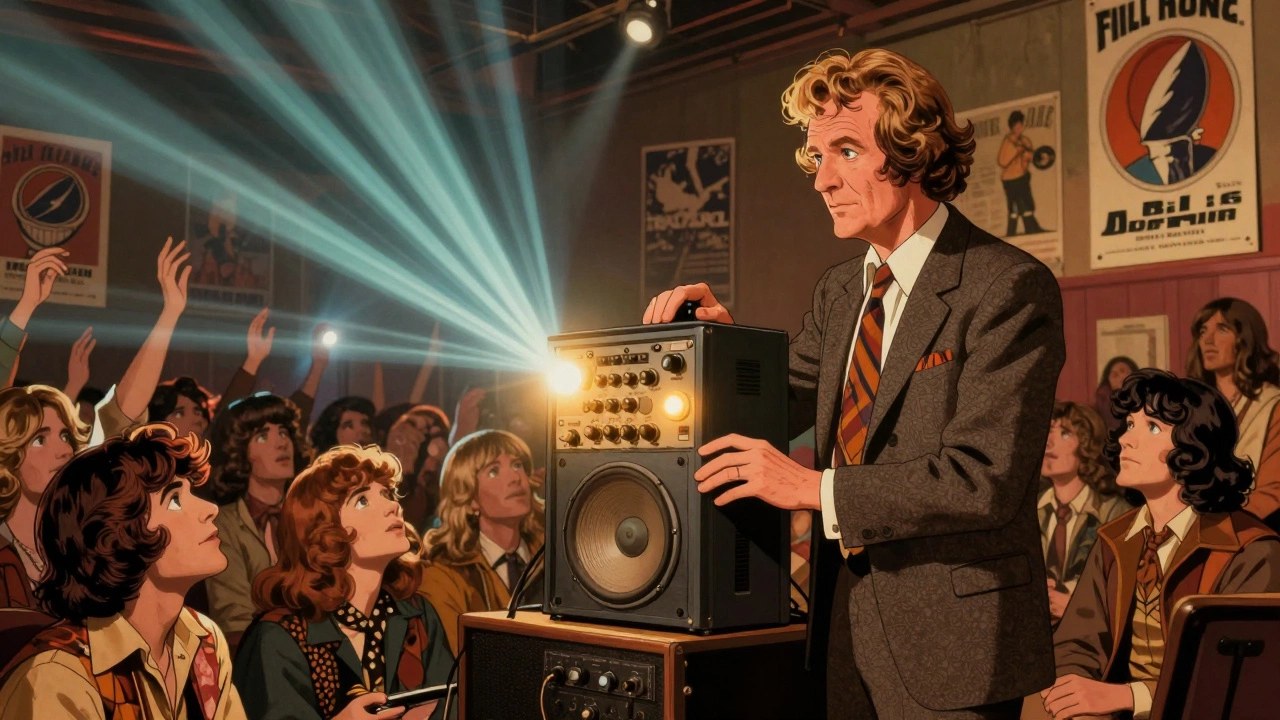

Before there were giant festivals, corporate ticketing platforms, or billion-dollar tours, there was Bill Graham. In the 1970s, he didn’t just book shows-he rebuilt the entire experience of live music. While other promoters were happy to let bands play late, under-lit, and unpaid, Graham made sure the lights worked, the sound was clear, and the artists got paid on time. He turned concerts into events people remembered, not just noise in a room.
The Fillmore That Changed Everything
The original Fillmore Auditorium on Fillmore and Geary in San Francisco wasn’t even meant to be a rock venue. It was a dance hall, once run by Charles Sullivan, a Black entrepreneur who hosted jazz legends like Duke Ellington and Count Basie. After Sullivan died in 1966, Graham, then a former Holocaust survivor turned community organizer, stepped in. He didn’t just take over-he reinvented it. He spent $10,000 (over $90,000 today) on sound systems and lighting, something no rock venue had ever done before. Most places used a single speaker and a dim bulb. Graham installed multi-channel speakers, stage lighting that changed with the music, and even hired trained staff to manage crowd flow.
His first big booking? The Grateful Dead on January 8, 1966. That night, the music didn’t just play-it filled the room. People said they could hear every guitar string at the back of the hall. It wasn’t luck. Graham had studied how audiences moved, how sound traveled, and how to make people feel something. He didn’t care if the band was psychedelic, blues, or folk. If they had energy, he gave them a stage. And he made sure they were treated like professionals.
The Rules That Built an Empire
Graham had rules. No drugs on the premises. Concerts started on time. Artists got paid before they left the building. No one else in the scene did this. Chet Helms, who ran the Avalon Ballroom, believed music should be free, pure, untainted by money. Graham didn’t. He believed music deserved respect-and that respect came with structure.
He charged $2 to $3 a ticket. That was expensive back then. Most venues charged a dollar. But Graham didn’t just sell tickets-he sold an experience. You didn’t just hear the music. You felt it. The lighting pulsed with the bass. The sound was clean enough to catch every harmonica breath. And when the show ended, you left with your ears ringing and your mind full.
He also introduced the opening act. Before Graham, bands played one long set. He split the night: a local opener, then the headliner. It gave new artists a chance and kept the crowd warm. By 1972, 78% of major venues copied this. It’s standard now. That’s his legacy.
From San Francisco to New York
Graham didn’t stop at one city. In 1968, he opened Fillmore East in New York. It was a gamble. The East Coast didn’t have the same psychedelic vibe as San Francisco. But Graham knew talent was everywhere. He booked the Allman Brothers, Frank Zappa, and Johnny Winter. He didn’t care about genre. He cared about power. The venue became a shrine for rock fans. People lined up for hours. Some slept outside.
He even started his own record label-Fillmore Records. It didn’t make him rich. Only Elvin Bishop ever released a full album on it. But it showed his vision: he wasn’t just promoting shows. He was building a whole ecosystem. He signed Cold Blood and Tower of Power. He gave them studio time, marketing, and a platform. Most labels at the time ignored regional bands. Graham didn’t.
The Tension Between Art and Business
But Graham wasn’t loved by everyone. The counterculture saw him as a sellout. The San Francisco Mime Troupe, which he first helped fund, later accused him of stealing their political energy to build his empire. Janis Joplin and Bob Weir praised him for paying on time and treating them with dignity. But others felt he was too rigid, too corporate.
B.B. King’s tour manager once wrote that Graham demanded 60% of ticket sales-higher than anyone else. Yet King still said Graham was the best promoter he’d ever worked with. Why? Because Graham delivered. No last-minute cancellations. No broken equipment. No unpaid bills. In a world full of chaos, Graham was the one who showed up.
He clashed with artists over contracts, set times, and merch sales. He didn’t apologize. He believed music was a craft, not a hobby. If you wanted to play for thousands, you had to play by the rules. And those rules were built on experience, not idealism.
Why He Closed the Fillmores in 1971
In 1971, he shut down both Fillmore East and Fillmore West. The official reason? Financial strain. But the real reason was deeper. The music scene was changing. Bands started demanding more money. Promoters began cutting corners to chase profits. The magic of the 1960s-the raw, spontaneous energy-was turning into a machine.
Graham didn’t want to be part of that. He once said he saw "changes he saw as unwelcome in the music industry." He wasn’t quitting because he failed. He quit because he refused to compromise.
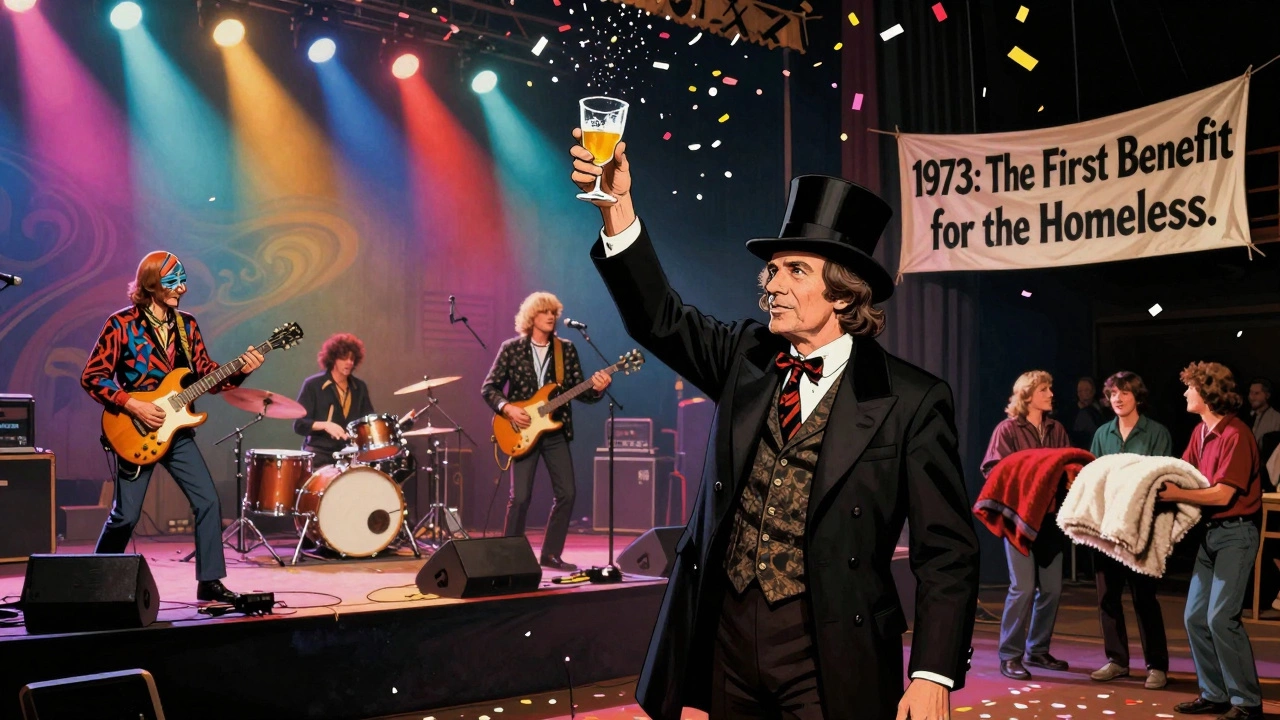
But he didn’t disappear. He reopened Winterland Arena, a former ice rink, and kept booking. He put on the famous 1972 New Year’s Eve show with the Grateful Dead, Santana, and the Doobie Brothers. He promoted the 1973 concert for the first-ever benefit tour for the homeless. He didn’t stop. He just moved.
The Lasting Blueprint
Today, every major concert you go to runs on Graham’s model. The lights? His idea. The sound system? His investment. The opening act? His invention. The ticketing system? His early experiments with advance sales and reserved seating became the norm.
Bill Graham Civic Auditorium still stands in San Francisco. It holds 7,000 people and hosts 150 events a year. The Fillmore name lives on in Denver, Silver Spring, and other cities-all run by his children under the "Bill Graham Presents" brand. Live Nation’s CEO once said, "Every major concert promoter today operates on principles Graham established in the 1960s."
He didn’t invent rock and roll. But he invented how we experience it. He turned a dirty dance hall into a temple of sound. He proved that music could be art and business at the same time. And he showed that if you care enough about the details, people will remember-not just the music, but the night.
Who was Bill Graham and why is he important in music history?
Bill Graham was a German-American concert promoter who revolutionized live music in the 1960s and 1970s. He founded iconic venues like the Fillmore Auditorium and Fillmore East, introduced professional lighting and sound systems, insisted on punctual shows and fair pay for artists, and pioneered the use of opening acts. His business model became the standard for modern concert promotion, influencing every major promoter today.
Did Bill Graham invent the concept of opening acts?
Yes. Before Graham, most concerts featured one long set by the main act. He was the first to consistently book a supporting act before the headliner, using it to warm up the crowd and give emerging bands exposure. By 1972, 78% of major venues had adopted this practice. It’s now standard across the industry.
Why did Bill Graham close the Fillmore venues in 1971?
He closed both Fillmore East and Fillmore West because he felt the music industry was changing in ways he couldn’t support. The counterculture’s anti-commercial spirit was fading, replaced by greed and shortcuts. Graham refused to compromise on quality, pay, or production standards. He walked away-not because he failed, but because he wouldn’t dilute his vision.
How did Bill Graham’s venues differ from others in the 1970s?
While other venues had poor sound, late starts, and no security, Graham’s places had state-of-the-art acoustics, strict no-drug policies, uniformed staff, and on-time shows. He charged more-$2-$3 a ticket-but delivered a premium experience. Attendees reported hearing every instrument clearly, even from the back. His venues felt like theaters, not basements.
Was Bill Graham popular with musicians?
It was mixed. Artists like Bob Weir of the Grateful Dead and Grace Slick of Jefferson Airplane praised him for paying on time and treating them with professionalism. But others, like members of the San Francisco Mime Troupe, accused him of exploiting their political activism for profit. He was respected for his integrity-but never loved by everyone. He was a businessman first, not a hippie.