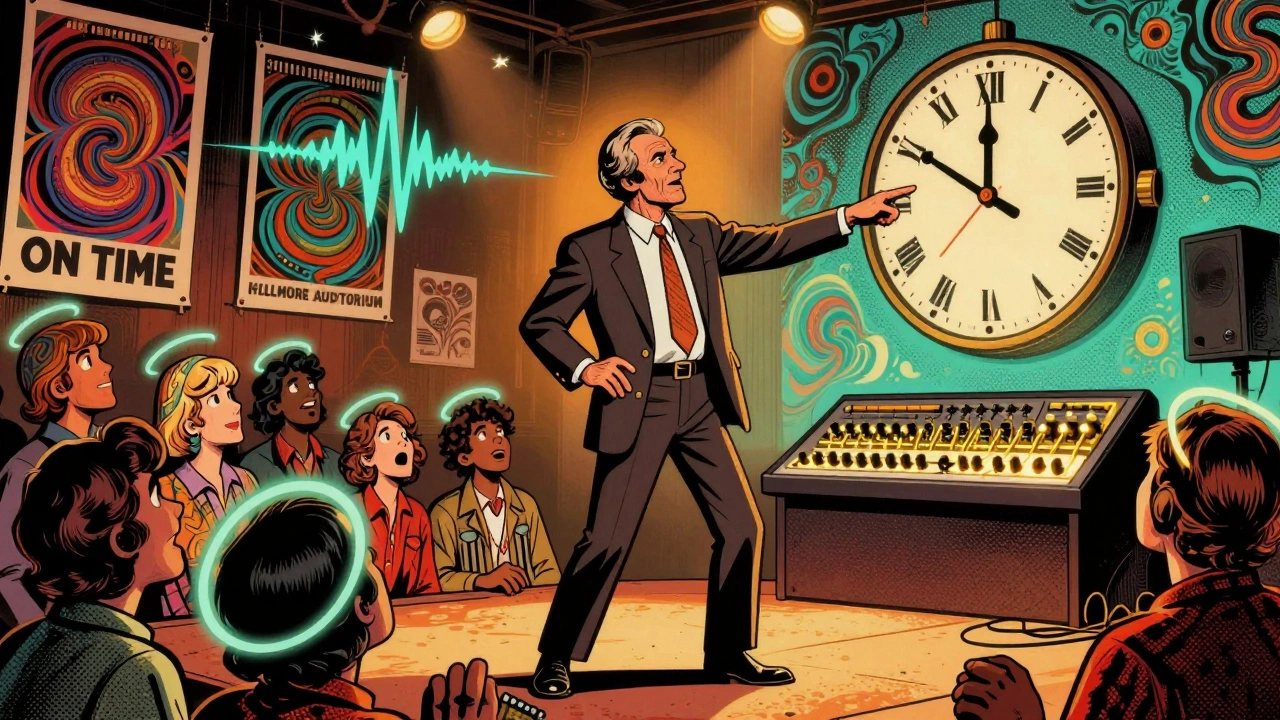

Before Bill Graham, a rock concert was often a messy, unpredictable affair. Sound systems sputtered. Lights flickered. Artists showed up late. Tickets were sold at the door, cash only. Fans didn’t know what to expect - and neither did the musicians. Then came Graham. He didn’t just book shows. He rebuilt the entire experience from the ground up. By the 1970s, he wasn’t just a promoter. He was the architect of modern live music.
The Fillmore That Changed Everything
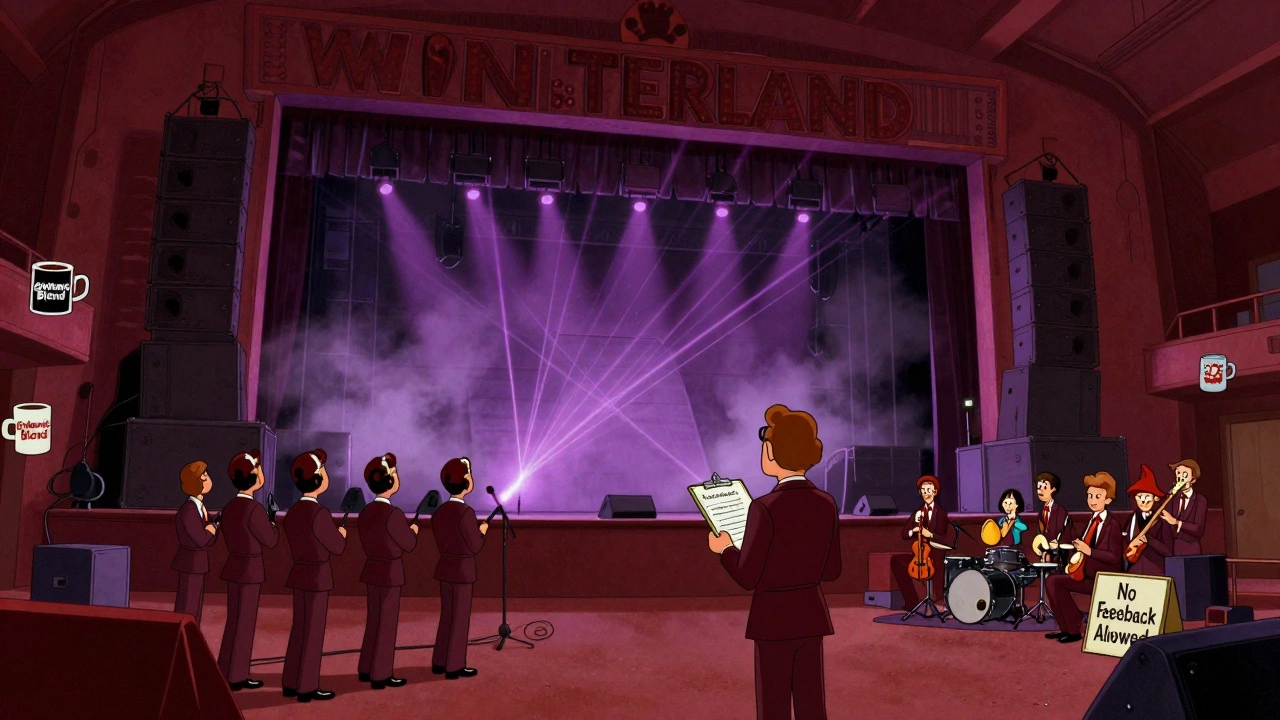
Bill Graham didn’t start in the 1970s - he was already a legend by then. His Fillmore Auditorium in San Francisco, opened in 1966, became the epicenter of the psychedelic scene. But by 1971, he shut down both Fillmore West and Fillmore East. Not because he failed, but because he outgrew them. He saw the future: bigger crowds, bigger stages, bigger demands. And he was ready to meet them.His move wasn’t an exit. It was a pivot. He shifted from intimate ballrooms to arenas and stadiums. Winterland Ballroom in San Francisco, with its 5,400-seat capacity, became his new home base. He didn’t just rent space - he took control. He installed custom sound systems that hit 120+ decibels with crystal clarity. No other promoter had that kind of tech. His company, FM Productions, didn’t just handle gear - it engineered the entire sonic experience. That meant no more muffled guitars or feedback howls. If you saw a show promoted by Graham, you heard it the way the artist intended.
The Business Behind the Music
Graham didn’t believe in winging it. He treated rock shows like precision operations. Every detail was scripted. Artists signed 14-point contracts that spelled out everything: stage size, lighting specs, dressing room temperature, even the brand of coffee backstage. He didn’t care if you were a hippie or a rock god - if you wanted to play, you followed the rules.That made him controversial. Bands like Quicksilver Messenger Service left his roster, calling him too commercial. Jerry Garcia of the Grateful Dead admitted Graham treated them like professionals - but sometimes, that felt like a slap in the face. "He was the first promoter who didn’t treat us like kids," Garcia said. "But he also didn’t give us any slack."
Yet for every artist who complained, there were ten who swore by him. Carlos Santana credited Graham for getting him on stage at Woodstock. "He fought for me when no one else would," Santana said. Grace Slick of Jefferson Airplane put it simply: "Bill got us paid. And he made sure we were treated right."
From Small Clubs to 50,000-Person Stadiums
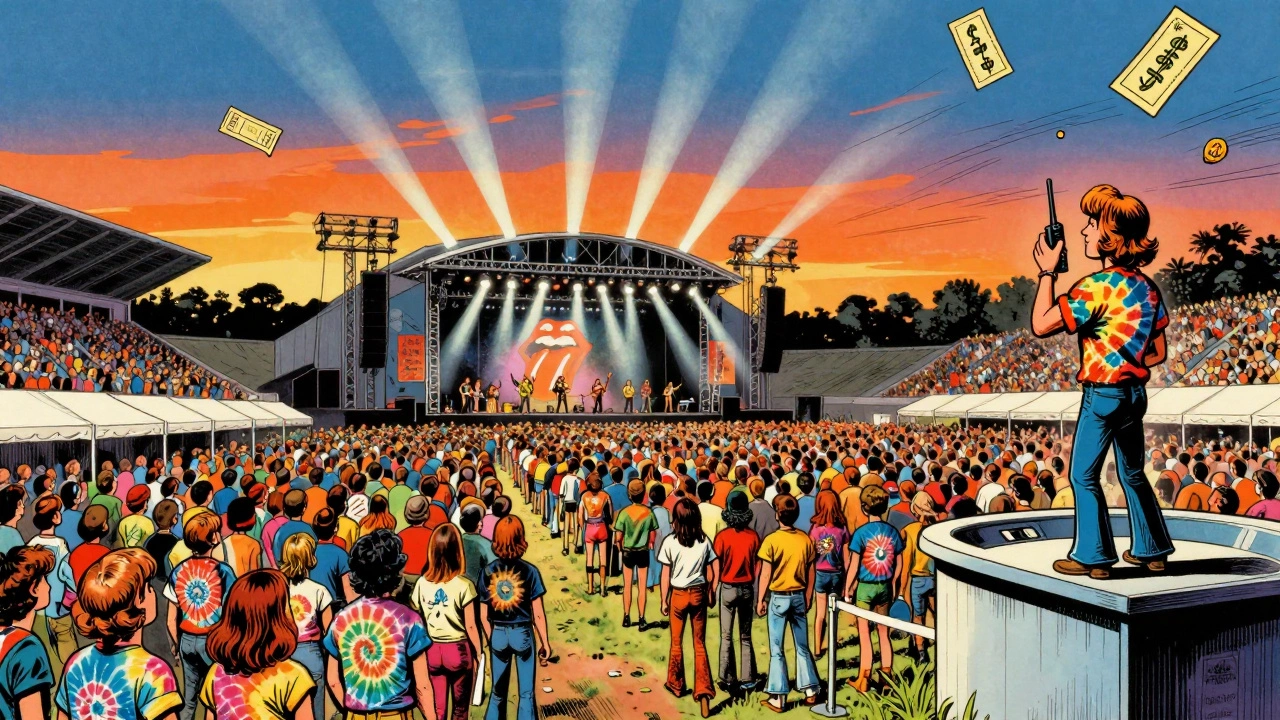
By 1973, Graham launched the "Day on the Green" series at Oakland Coliseum - a 53,000-seat venue. This wasn’t just a bigger show. It was a new model. He turned a baseball stadium into a rock festival without the chaos of Altamont. No free entry. No uncontrolled crowds. No security breakdowns. He hired trained staff. Used walkie-talkies. Set up medical tents. Installed barriers. He didn’t just sell tickets - he managed safety like a military operation.That year, Fleetwood Mac drew 45,000 fans. In 1975, The Rolling Stones sold out with 52,000. Eagles followed in 1976 with 48,000. These weren’t one-offs. They were annual events. And Graham made them profitable. By 1975, his company was processing over $5 million a year - that’s nearly $28 million today. No one else came close.
Why Graham Beat the Competition
Other promoters were doing shows too. Chet Helms at the Avalon Ballroom ran 57 concerts in two years. Graham ran over 350. Why? Because he didn’t just host events - he built systems.While others relied on volunteers and goodwill, Graham hired full-time crews. He had 15 salaried staff and over 50 part-time workers. He trained them for months. New hires spent 3 to 6 months learning his exact standards: how to load in gear, how to cue lights, how to handle an angry fan without losing control. He didn’t just want good shows - he wanted flawless ones.
He also understood pricing. In 1970, a ticket cost $3.50. By 1973, it was $6.50. That sounds cheap today - but back then, minimum wage was $1.60 an hour. A ticket was nearly four hours of work. Graham didn’t gouge. He priced based on value. You weren’t just paying for music. You were paying for sound that didn’t crack, lights that danced, and a show that started on time.
The Legacy That Still Lives
Graham died in a helicopter crash in 1991. But his fingerprints are everywhere. Today’s concert promoters don’t invent new systems - they use Graham’s.When you buy a ticket online and get a seat number? That’s Graham. When the sound engineer checks your gear before the show? That’s Graham. When the venue has a medical tent, security checkpoints, and backstage catering? That’s Graham. Even the way artists get paid - through contracts, not handshakes - came from him.
He turned music from a countercultural experiment into a billion-dollar industry. And he did it without losing the soul of the music. He didn’t water down the art. He elevated the experience.
The San Francisco Civic Auditorium was renamed the Bill Graham Civic Auditorium after his death. It’s not just a tribute. It’s a monument to the man who made sure rock didn’t just happen - it was produced.
What Made Him Different?
Most promoters in the 1970s saw concerts as temporary events. Graham saw them as ongoing businesses. He didn’t just book bands - he built careers. He didn’t just rent venues - he owned the production. He didn’t just sell tickets - he created demand.He was the first to realize that rock music wasn’t just about the sound. It was about the whole thing: the lights, the posters, the timing, the crowd flow, the merch, the safety, the payment, the follow-up. He treated every show like a movie premiere - because to him, it was.
He didn’t just change how concerts were run. He changed what people expected from them. And once you’ve seen a show done right, you can’t go back.