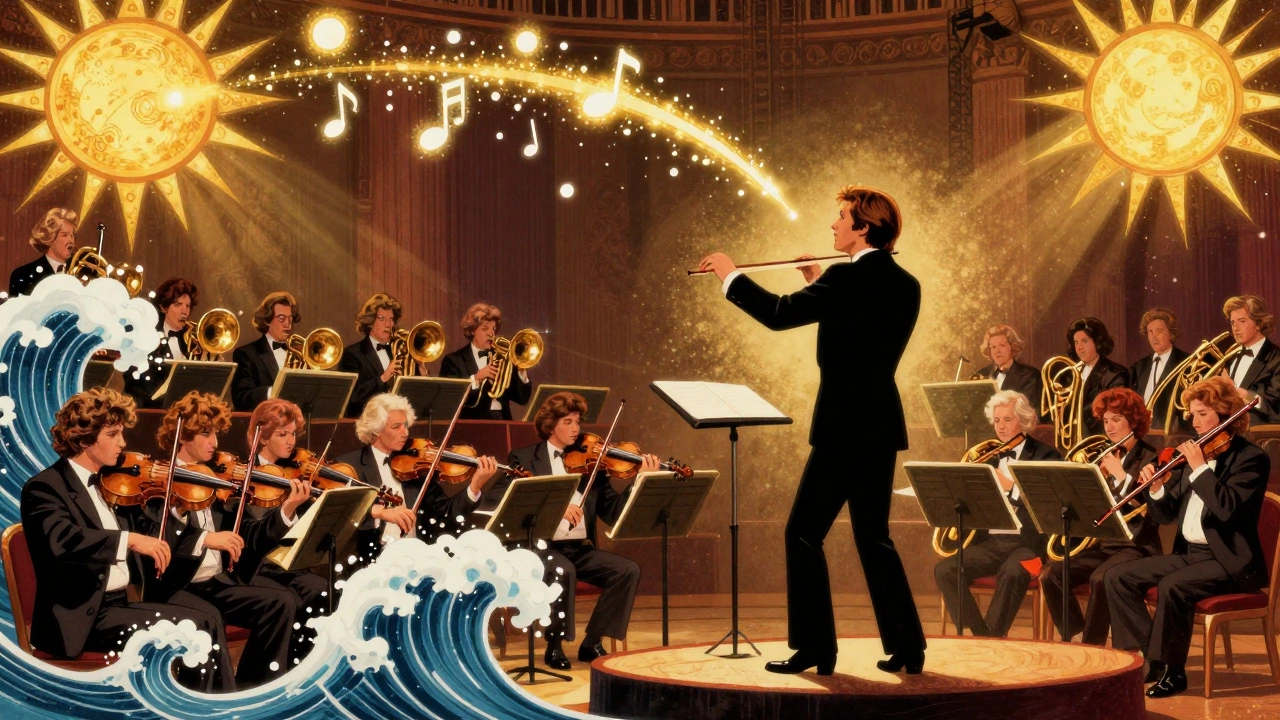

When you hear "Copacabana" played by a full orchestra, something shifts. The brass swells like a tide. The strings carry the story like a whispered secret. The percussion snaps like high heels on a dance floor. It’s no longer just a pop song-it becomes a movie in sound. That’s the power of Barry Manilow’s orchestral pop.
Manilow didn’t just write catchy tunes. He built emotional worlds inside them. Songs like "I Write the Songs," "Could It Be Magic," and "Mandy" had hooks you could hum on the way to work. But when he layered them with strings, woodwinds, and full orchestral dynamics, they turned into something deeper. These weren’t just covers. They were reinventions.
The Sound of a Pop Song Grown Up
Think of pop music in the 70s and 80s. Synthesizers were rising. Drum machines were starting to replace live percussion. But Manilow went the other way. He brought in violins, cellos, French horns, and timpani. He didn’t just add instruments-he added feeling.
Take "Could It Be Magic." The original version, with its piano and soft vocals, feels intimate. But in the orchestral version, the arrangement builds slowly, like a sunrise. The strings enter one by one, each layer adding warmth. By the time the full orchestra hits the chorus, you’re not just listening-you’re remembering. Maybe it’s your first kiss. Maybe it’s a summer night you’ll never forget. That’s the magic of orchestration: it doesn’t just accompany emotion. It unlocks it.
Live in London: The Royal Philharmonic Connection
In 2012, Manilow recorded Live in London with the Royal Philharmonic Concert Orchestra. It wasn’t his first time working with them, but it was the moment it clicked. The orchestra didn’t just play his songs-they interpreted them. The conductor didn’t treat them like pop tracks to be sanitized. They treated them like symphonies waiting to be uncovered.
On that album, "Copacabana" isn’t just a party anthem. It’s a dramatic narrative. The trumpets don’t just blare-they tell the story of Tony, the bartender, and Lola, the dancer. The strings don’t just swell-they echo the ache of lost love. The timpani don’t just pound-they mimic the heartbeat of a crowd holding its breath before the gunshot.
He did it again in 2022 with a new version of the same live album. The arrangements were tighter. The balance between voice and orchestra was more precise. You could hear the difference. Manilow had aged. The orchestra had matured. And together, they’d learned how to let silence speak as loudly as the music.
A Song for the Proms
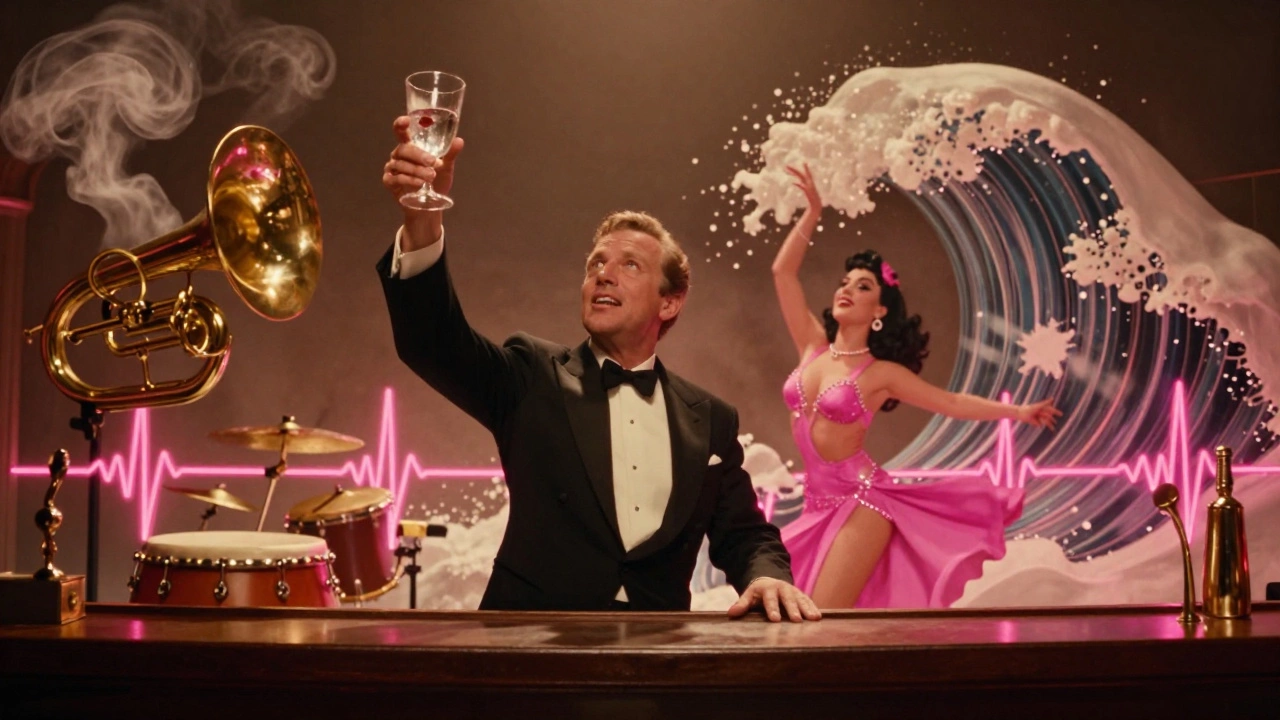
In 2019, Barry Manilow stood on the stage at Hyde Park during the Last Night of the Proms. It’s one of the most prestigious classical music events in the world. Thousands of people in the crowd, millions watching on BBC. He didn’t sing a Beethoven symphony. He sang "Copacabana."
And it worked.
The BBC called it a "dancefloor smash"-but that’s not the whole story. What made it unforgettable was how the orchestra handled the arrangement. The strings didn’t try to sound like a disco band. They played with the same precision and warmth you’d expect from a Tchaikovsky concerto. The brass didn’t shout. They soared. The percussion didn’t just keep time-it told the story.
That performance proved something: orchestral pop isn’t a gimmick. It’s a legitimate art form. And Manilow, with his knack for melody and emotional honesty, had helped define it.
Beyond the Studio: Student Arrangers and the Legacy of Adaptation
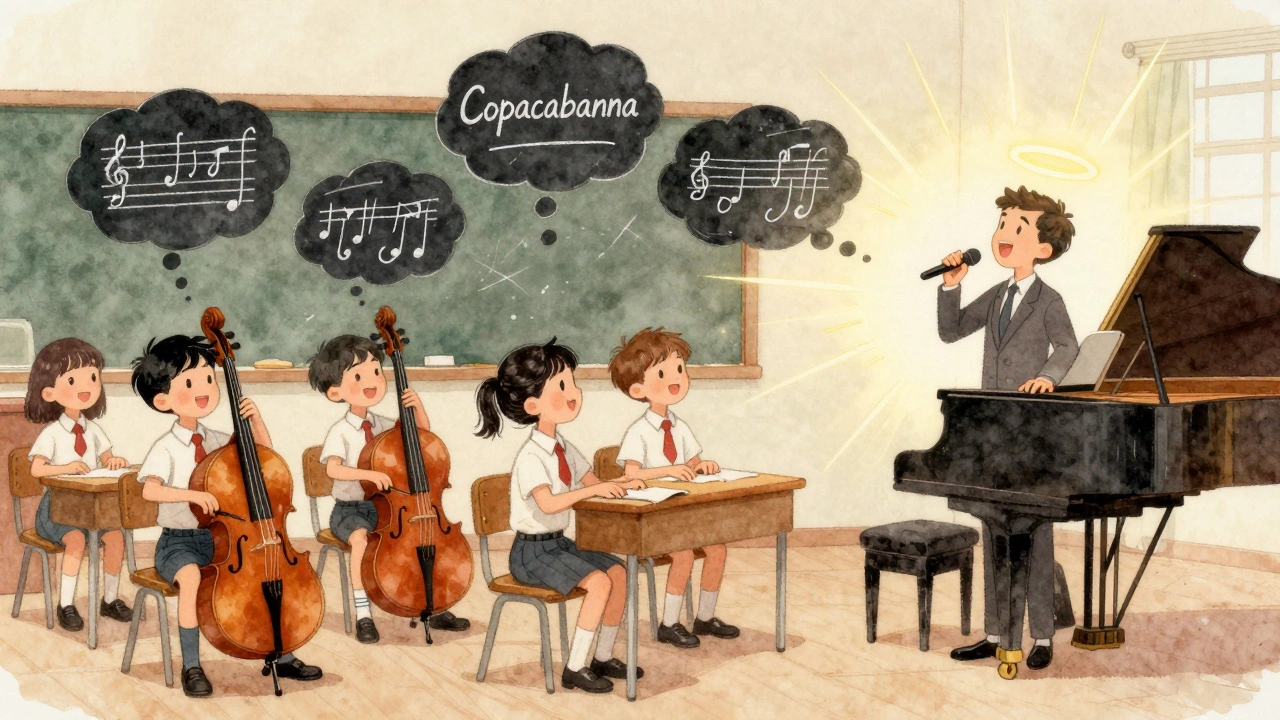
You don’t need a million-dollar budget to arrange a Manilow song for orchestra. In the Netherlands, a music student named Emma Wieriks did it with three 45-minute rehearsals. She arranged "Copacabana" for a student ensemble. No professional musicians. No studio. Just a piano, a few strings, and a singer named Job Uitgeest.
And it worked.
Her arrangement didn’t try to copy the Royal Philharmonic version. She simplified the brass. She let the cellos carry the rhythm. She gave space for the voice to breathe. And still, the emotion came through. Why? Because Manilow’s songs have a structure that survives translation. The melodies are strong. The harmonies are rich. The emotional arc is clear.
That’s why you can find sheet music for his songs on MuseScore and J.W. Pepper. High school bands play "Mandy." Community orchestras tackle "I Write the Songs." College choirs sing "It’s a Miracle." These aren’t just covers. They’re tributes. People don’t arrange his music because it’s easy. They do it because it’s worth it.
Why Orchestral Pop Endures
Manilow didn’t invent orchestral pop. Artists like Paul McCartney, Elton John, and even The Beatles had experimented with orchestras before him. But Manilow did something different. He didn’t treat orchestration as decoration. He treated it as storytelling.
His songs are full of characters. "Copacabana" has a plot. "Mandy" has a longing. "I Write the Songs" has a quiet pride. Orchestras don’t just play notes-they bring characters to life. A French horn can sound like a man trying to hold back tears. A solo violin can sound like a woman walking away.
That’s why his orchestral recordings still move people. They’re not nostalgia trips. They’re emotional time capsules. The arrangements are detailed. The performances are honest. And the songs? They’re built to last.
The Bigger Picture
Manilow’s orchestral work is part of a larger trend. Artists like Adele, Harry Styles, and even Taylor Swift have released live albums with orchestras. But Manilow was doing it decades before it became trendy. He didn’t wait for the moment. He created it.
And he never stopped. Even in his 70s, he was touring with full orchestras, adjusting arrangements, refining the balance between voice and strings. He didn’t see the orchestra as a luxury. He saw it as a tool-one that could make a love song feel like a cathedral, or a party anthem feel like a funeral march.
That’s the sophistication. Not the complexity of the notes. But the clarity of the feeling.


