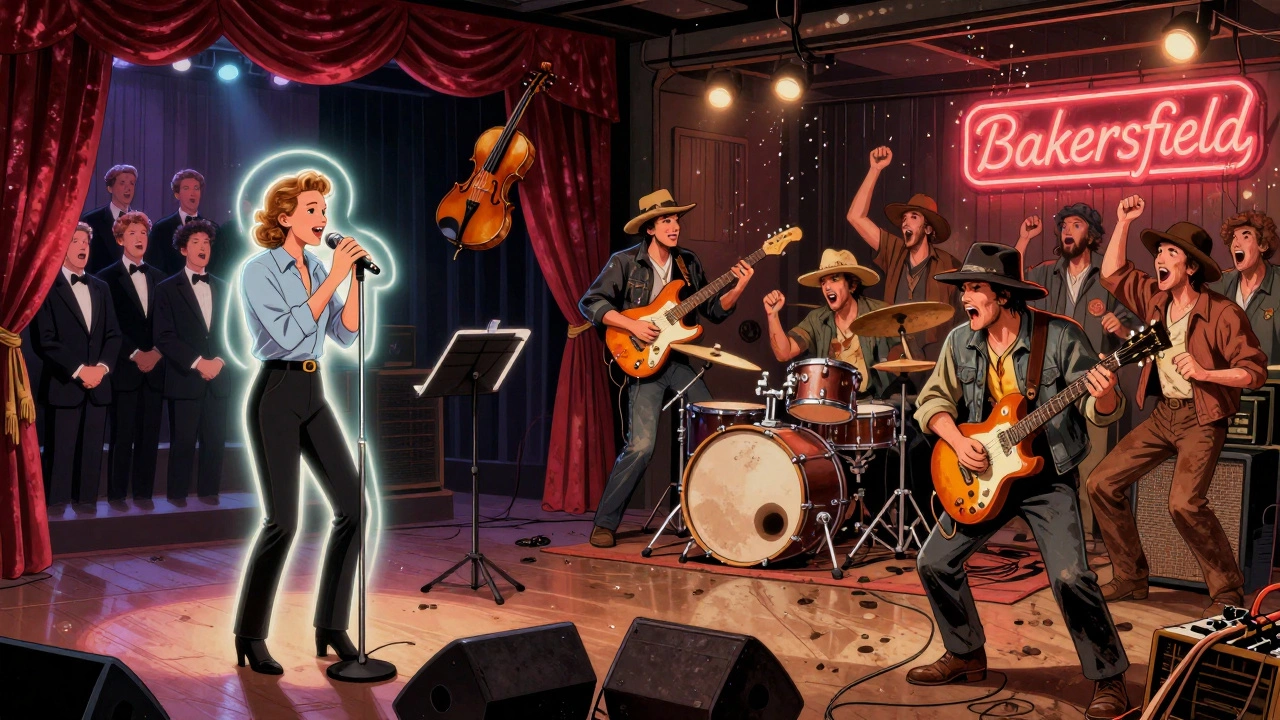

Country music isn’t one sound. It’s two. And if you’ve ever wondered why some country songs make you want to stomp your boots and others make you reach for a handkerchief, it’s because of a quiet war that happened in the backrooms of recording studios - not on stage, not in awards shows, but in the way guitars were tuned, drums were hit, and voices were shaped. At the center of it all? Bakersfield and Nashville.
The Nashville Sound: Polished, Perfect, and Too Sweet
Nashville didn’t set out to erase country music. It just wanted to make it bigger. In the 1950s, as rock and roll exploded and young listeners drifted away, Nashville producers like Owen Bradley and Chet Atkins saw a problem: country music was too rough, too loud, too real for mainstream radio. So they fixed it.
They added strings. Not just a few violins - full orchestras. They layered harmonies with choirs of backup singers. They smoothed out the twang in voices, turning gritty barroom croons into velvet crooning. Jim Reeves became the poster boy - his voice so soft, you could fall asleep listening to it. Songs like "He’ll Have to Go" didn’t tell stories about broken trucks or drunken nights. They told stories about lost love in a velvet curtain.
It worked. Radio stations across the U.S. started playing it. Sales went up. Nashville became the industry capital. But for every person who loved the polish, there were ten more who felt like they’d been sold a lie. Country music wasn’t supposed to sound like a symphony. It was supposed to sound like a Saturday night at the local joint - sweaty, loud, and unapologetic.
The Bakersfield Sound: Guitars, Drums, and No Apologies
Bakersfield, California, wasn’t on the map for music in 1950. It was a dusty town full of Dust Bowl refugees, oil workers, and truckers who’d moved west looking for a fresh start. And they brought their music with them - the kind that came from honky-tonks in Oklahoma and Texas, where the jukebox played Hank Williams and the barstools were sticky with beer.
When Buck Owens showed up in Bakersfield after being told by Nashville he was "too country," he didn’t go back to the drawing board. He went to the garage. He took his Fender Telecaster, cranked up the volume, and slapped a drum kit behind him. No strings. No choirs. Just electric guitar, steel guitar, bass, and drums - all pushed to the edge.
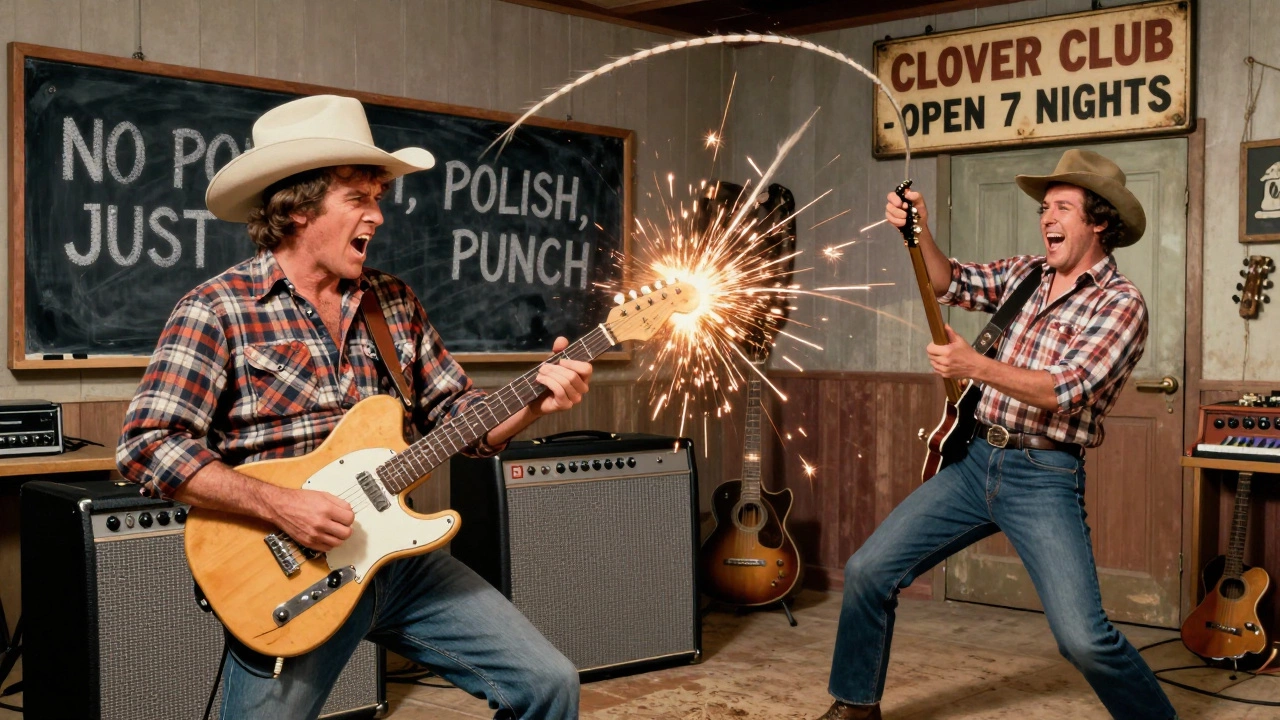
His guitarist, Don Rich, invented "chicken pickin’" - a sharp, staccato style that made the guitar sound like a snapping whip. The result? A sound that didn’t just play music - it hit you. "Act Naturally," "I’ve Got a Tiger By the Tail," "Together Again" - these weren’t ballads. They were dance floor bombs. You didn’t listen to them. You moved to them.
Then came Merle Haggard. A former convict, a son of migrant workers, a man who’d spent time in San Quentin. His voice didn’t smooth out pain - it dug into it. "Mama Tried," "Okie from Muskogee," "The Fightin’ Side of Me" - these weren’t songs about cowboys on horseback. They were songs about guys who worked double shifts, paid too much for gas, and still showed up at the bar on Friday night.
The Instruments That Divided a Genre
The difference between Nashville and Bakersfield wasn’t just attitude - it was hardware.
In Nashville, the studio was a cathedral. You’d find:
- Full string sections - violins, cellos, harps
- Background vocal choirs - sometimes 12 voices layered
- Soft, reverbed electric guitars - barely audible beneath the strings
- Minimal drums - if any at all
In Bakersfield, the studio was a garage. You’d find:
- Two Fender Telecasters - one for rhythm, one for lead
- A Fender Bassman amp cranked to 10
- A steel guitar with a bright, cutting tone - not sweet, not slow
- A full drum kit - snare, kick, hi-hat - pounding out a two-step beat
It wasn’t about what they added. It was about what they refused to use. Nashville wanted to sound like a radio commercial. Bakersfield wanted to sound like a live show at the Clover Club - where the lights flickered, the floor was sticky, and the crowd sang along louder than the singer.
Why the Beat Was Different
Nashville songs moved like a slow waltz. Even uptempo numbers had a gentle sway - designed for listening, not dancing. The tempo was controlled. The energy was contained. It was meant for your living room, your car radio, your Sunday afternoon.
Bakersfield? It moved like a freight train. The beat was tight, fast, and relentless. A four-on-the-floor kick drum. A snare on every 2 and 4. The guitar played off-beat stabs - not chords, but punches. This wasn’t background music. It was dance music. You didn’t just hear "I’ve Got a Tiger By the Tail" - you had to get up and move.
And that’s why the clubs in Bakersfield stayed open seven nights a week. The music didn’t just play - it pulled people in. You could smell the cigarette smoke and hear the clink of glass. The music didn’t pretend to be anything else. It was real. And people knew it.
Rock and Roll Didn’t Kill Country - Bakersfield Saved It
When Elvis showed up in the ’50s, Nashville panicked. They thought rock and roll would bury country music. So they doubled down on strings and choirs.
Bakersfield did something else. They embraced it.
Buck Owens didn’t see rockabilly as a threat. He saw it as a cousin. He took the energy of Jerry Lee Lewis, the drive of Carl Perkins, and the rawness of Elvis’s early Sun Records sessions - and fused it with Hank Williams’ storytelling. The result? A new kind of country that felt young, loud, and alive.
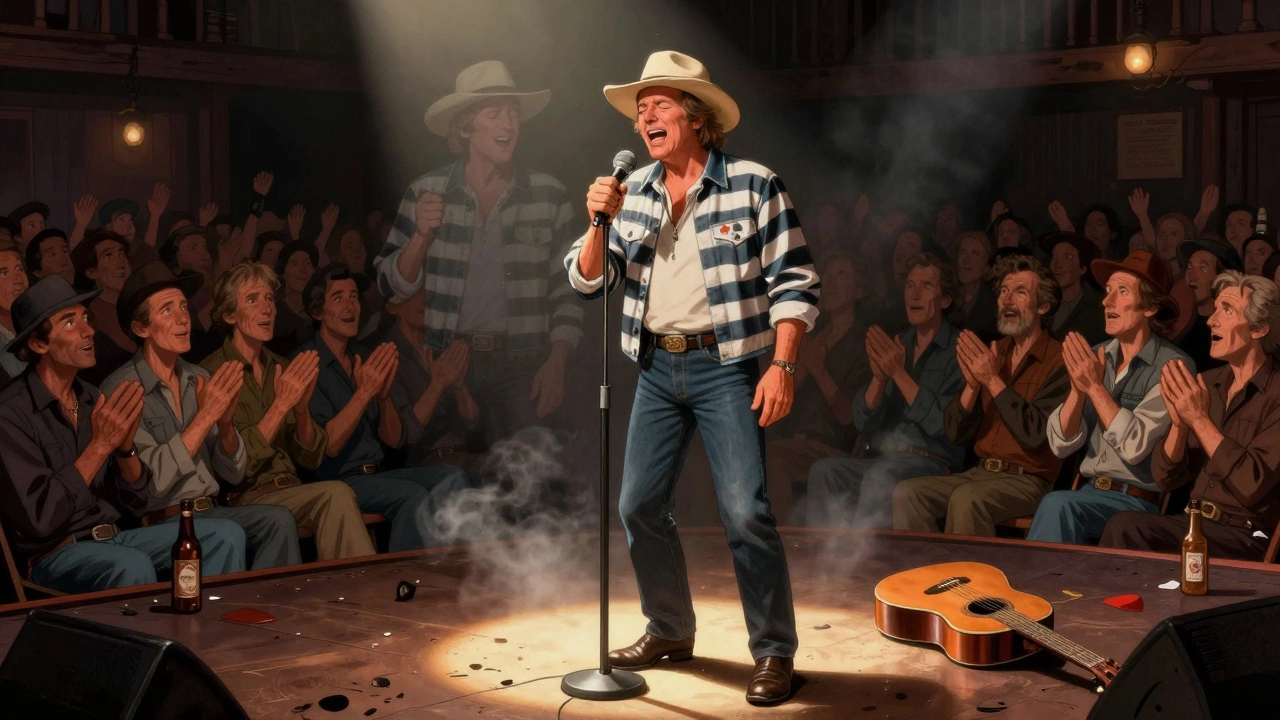
Merle Haggard didn’t just sing about working-class life - he sang like he’d lived it. And his band? They played like they’d been kicked out of every bar in California. That’s why kids who thought country was for their grandparents started listening. Because for the first time, country music had a pulse.
The Attitude That Changed Everything
Nashville saw itself as the gatekeeper. If you wanted to make it in country, you had to play by their rules: clean vocals, polished production, no swearing, no grit, no rebellion.
Bakersfield didn’t care about gates. They built their own stage - in a dusty lot behind a gas station. Their motto? "If you don’t like it, go to Nashville."
It wasn’t just about music. It was about pride. The people who flocked to Bakersfield didn’t want to be polished. They wanted to be heard. They wanted to see their lives reflected in the music - not romanticized, not softened, not turned into a TV commercial.
That’s why, by the late ’60s, sales charts started shifting. Buck Owens and Merle Haggard topped the country charts. More than once. They didn’t need strings. They didn’t need choirs. They just needed truth.
And that truth? It didn’t come from a studio in Tennessee. It came from a garage in California - where the amp was loud, the guitar was raw, and the singer didn’t apologize for being himself.
The Legacy That Still Echoes
Today, you can hear the Bakersfield Sound everywhere - even if you don’t realize it.
Chris Stapleton? That growl in his voice? Bakersfield. The hard-edged guitar in Eric Church’s songs? Bakersfield. The way Luke Combs’ band drives a beat like it’s got a deadline? Bakersfield.
Nashville still runs the industry. But the soul of modern country? It’s Bakersfield.
When you hear a country song that makes you feel something real - not pretty, not perfect, but raw and right - you’re hearing the ghost of Buck Owens, the echo of Don Rich, and the grit of Merle Haggard. They didn’t just make music. They made a stand.
And the world listened.
Is the Bakersfield Sound still alive today?
Absolutely. While Nashville still dominates radio and awards shows, the raw, guitar-driven energy of the Bakersfield Sound lives on in artists like Chris Stapleton, Eric Church, and Tyler Childers. Even modern bands like The Cadillac Three and Cody Johnson use the same formula - loud Telecasters, driving drums, no strings - because it works. The Bakersfield Sound didn’t fade. It just went underground… and came back louder.
Why did Nashville reject Buck Owens?
Nashville producers thought Owens was "too country" - meaning he didn’t sound polished enough. His music had drums, loud guitars, and no strings. To them, it felt too raw, too regional, too unrefined. They wanted crossover hits, not honky-tonk anthems. Owens didn’t change. He moved to California, built his own studio, and proved Nashville wrong by selling millions of records without ever softening his sound.
Did Merle Haggard invent the Bakersfield Sound?
No - Buck Owens did. Owens was the first to fully develop the electric guitar-driven, no-strings style in the late 1950s. But Haggard took it further. He added depth, emotion, and social commentary. Where Owens was upbeat and danceable, Haggard was introspective and gritty. Together, they became the twin pillars of the Bakersfield Sound - Owens with the rhythm, Haggard with the soul.
What’s the difference between honky-tonk and Bakersfield Sound?
Honky-tonk is the older style - think Hank Williams Sr. in the 1940s: fiddle, steel guitar, simple drums, and a twangy voice. The Bakersfield Sound is honky-tonk upgraded. It kept the fiddle and steel but added electric guitars, a full drum kit, and rock and roll energy. It wasn’t a replacement - it was a rebellion. Honky-tonk was the past. Bakersfield was the future.
Are there any Bakersfield clubs still open today?
Most of the original clubs - like The Blackboard Café and the Beardsley Ballroom - are gone. But Bakersfield still celebrates its legacy. The Buck Owens Crystal Palace, opened in 2007, is now the spiritual home of the Bakersfield Sound. It hosts live shows every weekend, features original memorabilia, and keeps the music alive. It’s not just a museum - it’s a working venue where the spirit of Owens and Haggard still echoes.


