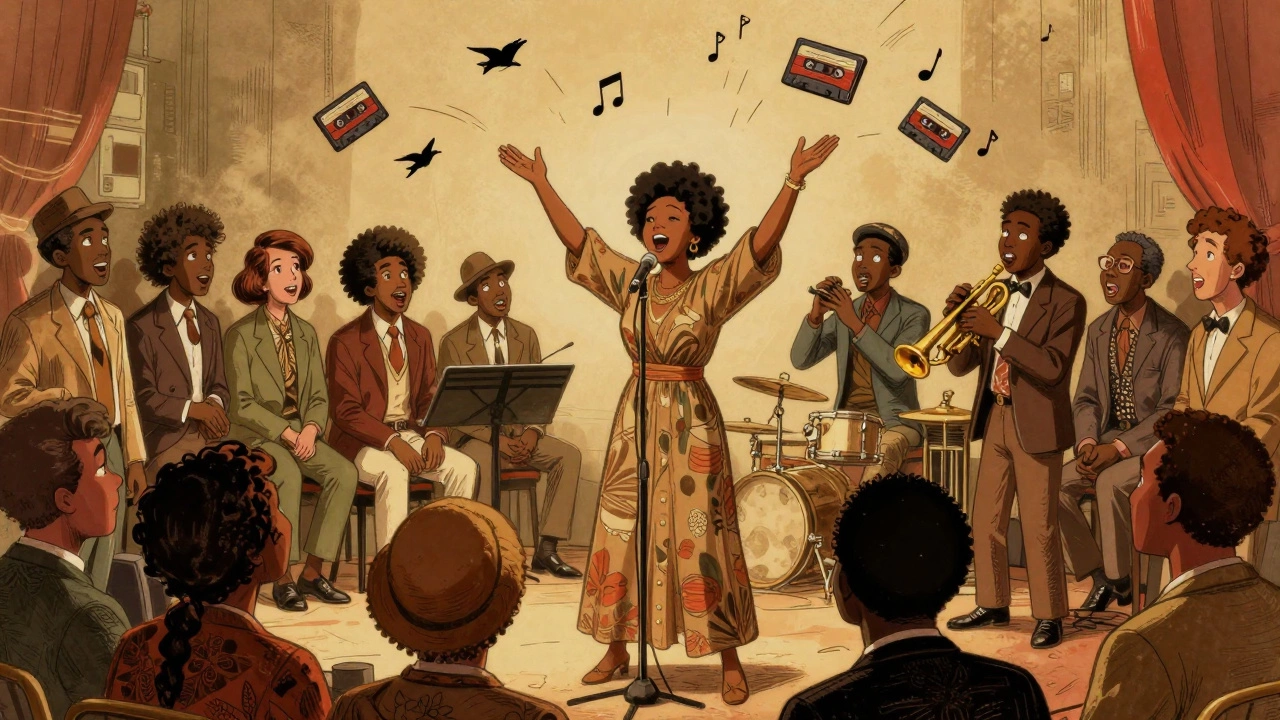

In the 1970s, music didn’t just entertain-it fought. While the world watched South Africa’s apartheid regime tighten its grip, a powerful wave of songs spread across continents, turning melodies into weapons. These weren’t just protest tunes. They were coded messages, unifying chants, and international calls to action, born in exile camps, smuggled in cassette tapes, and sung in streets from London to Lagos. This is the story of how anti-apartheid music became one of the most effective tools in the struggle against racial oppression-and how it changed the way the world heard Africa.
Music as a Weapon, Not Just a Message
The South African government didn’t just arrest activists. It banned songs. Between 1970 and 1979, over 1,200 musical works were outlawed. Anything with the word "freedom," "liberation," or even a reference to "the land" could be seized. But music didn’t die-it adapted. Singers turned to Zulu, Xhosa, and Sotho lyrics. They used call-and-response patterns from traditional African gatherings, where one voice leads and the crowd answers. This wasn’t just style-it was strategy. A single line like "Soweto Blues" could carry a whole history of pain, and because it was sung in a language censors didn’t fully understand, it slipped through their net. Songs like "Nkosi Sikelel’ iAfrika"-which would later become South Africa’s national anthem-were already decades old. But in the 1970s, they took on new life. In ANC exile camps in Tanzania and Angola, activists sang them twice a week, every week. By 1978, 87% of these camps made singing mandatory. It wasn’t about entertainment. It was about memory, identity, and building unity. A recruit who didn’t know his country’s history could learn it by singing. A child in a township could hear it on Radio Freedom and know they weren’t alone.The Exile Choirs That Changed the World
While repression grew inside South Africa, a different kind of resistance grew outside it. In 1975, the African National Congress launched the Mayibuye Cultural Ensemble in London. Its members were exiled musicians, poets, and students. They didn’t have big budgets. They had passion. They traveled across 12 European countries, performing in 27 cities between 1975 and 1979. In small halls, churches, and university auditoriums, they sang songs that told the world what was happening in South Africa. One of their most powerful tools? The voice of Miriam Makeba. Known as "Mama Africa," she had been exiled since 1960 after the Sharpeville Massacre. By the mid-70s, she was performing with Hugh Masekela, another exile and jazz trumpeter. Together, they brought the sound of South Africa to European audiences. Their 1977 "Africa Unite" tour drew 85,000 people across 17 cities. People didn’t just listen-they joined marches, signed petitions, and started anti-apartheid groups in their towns. The ANC didn’t stop there. In 1977, they formed the Amandla Cultural Ensemble, based in Angola and Tanzania. Inspired by the World Black Festival of Arts in Lagos, they trained performers in political storytelling. Each song came with a lesson: the history of the 1913 Land Act, the meaning behind "Amandla Awethu" (Power to the People), or the brutality of police raids. British activists later said that learning these songs changed how they understood the struggle. One volunteer in Bristol recalled, "The moment we sang together, our understanding changed fundamentally."When the World Sang Back: Peter Gabriel and "Biko"
The turning point came in 1977. Steve Biko, a young Black Consciousness leader, died in police custody. His body showed signs of brutal beating. The government claimed he’d hit his head. The world didn’t believe it. The outcry was global. And music answered. In October 1980, Peter Gabriel released "Biko." It wasn’t a protest song with lyrics like "Free South Africa." It was a haunting, drum-driven elegy, built around a simple chant: "Biko, Biko, Biko." He didn’t use English political jargon. He used rhythm, silence, and repetition to mirror the heartbeat of a man who was beaten to death. The song hit #12 on the UK Singles Chart. For the first time, an anti-apartheid song broke into mainstream pop culture. It wasn’t just played on radio stations-it was bought, discussed, and sung by teenagers who’d never heard of apartheid before. Gabriel didn’t act alone. Tom Paxton wrote "Lonesome Death of Fred Hampton"-a song that linked Biko’s death to the killing of a Black Panther leader in the U.S. Peter Hammill’s "The Lie" exposed how governments lied about violence. These weren’t isolated acts. They were part of a growing network. By 1978, 317 international artists had signed the Declaration of Cultural Boycott, promising not to perform in South Africa. Joan Baez had already canceled a 1973 show in Johannesburg. Even Paul Simon, who later faced backlash for his Graceland album, began to reconsider his role after hearing the music of exiled South Africans.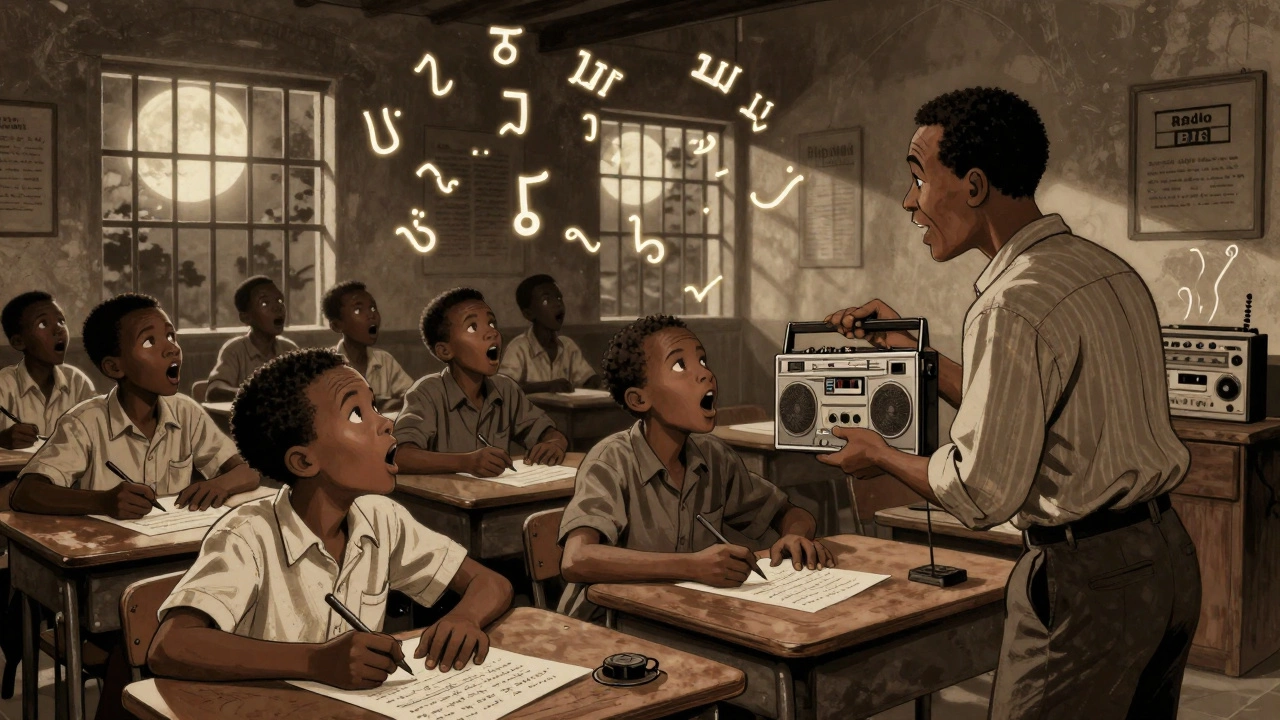
How the Music Spread: Cassettes, Radio, and Secret Networks
You couldn’t buy these songs in South African record stores. The government banned them. So how did they get in? Cassette tapes. Thousands of them. Smuggled in suitcases, hidden in books, mailed in envelopes. Between 1975 and 1979, an estimated 45,000 tapes entered South Africa every year. Families shared them. Students copied them. Teachers played them in secret classrooms. The ANC’s own records show that these tapes were the most reliable way to reach people inside the country. Radio Freedom, broadcast from Lusaka, Zambia, was another lifeline. By 1978, it reached 1.2 million listeners weekly. It didn’t just play music-it gave context. A song like "Soweto Blues" would be followed by a short report on the uprising, the names of those arrested, the schools that were shut down. This wasn’t just entertainment. It was education. Even the BBC got involved. By 1978, it broadcast freedom songs to South Africa for 4.7 hours every day. The South African government tried to jam the signal. It didn’t work. People turned up their radios. They listened in kitchens, under blankets, in churches. Music became the only safe way to speak truth.Did It Work? The Numbers Don’t Lie
Was music just symbolic? Or did it change real outcomes? The data says it did. A 2003 study by musicologist C.J. Ehrlich found that 92% of ANC recruits between 1976 and 1979 said freedom songs were a "significant influence" in joining the struggle. In Britain, 47% of students who joined anti-apartheid groups between 1975 and 1979 cited music as their main reason. That’s not coincidence. That’s strategy. The cultural boycott worked. Artists refusing to perform in South Africa hurt the regime’s image. Record labels stopped distributing music from apartheid South Africa. Concerts were canceled. The isolation grew. By 1980, the United Nations formally backed the boycott-but it was music that made it possible. And the impact didn’t end in the 1970s. "Nkosi Sikelel’ iAfrika" became part of South Africa’s national anthem after apartheid fell. In 2020, researchers at Berklee College of Music found that 41% of Black Lives Matter protest songs used the same call-and-response patterns as 1970s freedom songs. The structure, the rhythm, the power-it all came from there.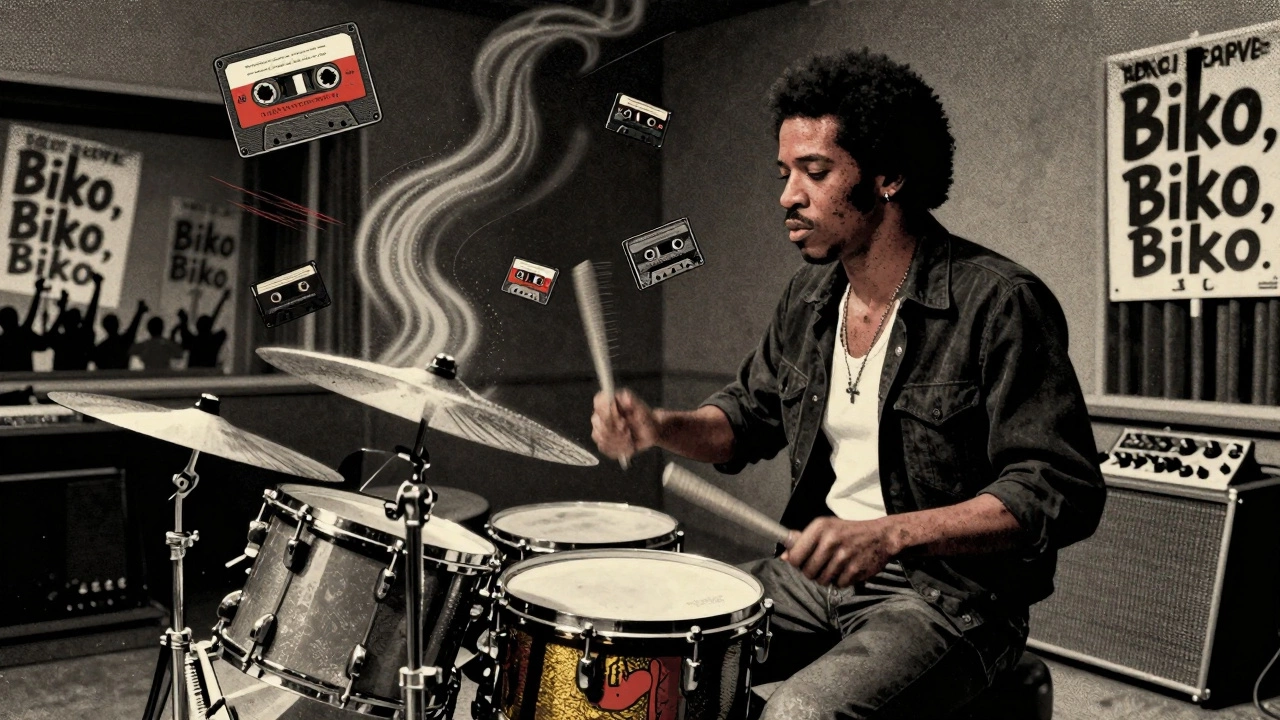
But Was It Perfect?
No. And that’s important to remember. Some songs lost meaning when they crossed borders. "Amandla Awethu" was meant to be a call for organized, strategic resistance. But in Europe, it was often heard as just a militant chant. South African poet Keorapetse Kgositsile warned in 1978 that foreign artists risked turning the struggle into "an exotic soundtrack." Some Western musicians didn’t understand the depth of the politics. They sang about "freedom" without knowing what it cost. There was also division. The ANC’s cultural groups rarely worked with those from the Pan Africanist Congress (PAC). The government used this to its advantage, painting the movement as fractured. And while music brought global attention, it didn’t stop bullets. Police still killed. Prisons still filled. Songs didn’t free Nelson Mandela-but they made the world refuse to look away.What Survives Today
Today, only 28% of the original 1970s freedom song recordings still exist. Many tapes deteriorated. Others were lost in raids or moved too many times. But efforts are underway. The Ford Foundation has funded $1.2 million to restore and digitize these recordings by 2025. The South African National Heritage List now includes 63% of the freedom songs from that era. And the music lives on. In classrooms. In protests. In the voices of young people who don’t know the names of the musicians but still sing the chants. Because that’s what music does-it outlives its time. It becomes part of who we are.What was the most important anti-apartheid song of the 1970s?
There wasn’t just one, but "Nkosi Sikelel’ iAfrika" was the most widely sung and politically significant. It became the national anthem of South Africa after apartheid ended. "Soweto Blues," written by Hugh Masekela and sung by Miriam Makeba, was also central, as it directly responded to the 1976 Soweto Uprising. Peter Gabriel’s "Biko" was the first international hit that brought global attention to the brutality of the regime, especially after Steve Biko’s death.
How did anti-apartheid music differ from U.S. civil rights music?
U.S. civil rights music mostly focused on changing laws at home-songs like "We Shall Overcome" were sung during marches in America. Anti-apartheid music in the 1970s was designed to reach the world. Its goal wasn’t just to inspire Black South Africans-it was to pressure foreign governments, universities, and corporations to cut ties with South Africa. Over 68% of freedom songs from that era directly addressed "the world" or "brothers and sisters abroad." That international focus was unique.
Why were cassettes so important in spreading anti-apartheid music?
The South African government banned records, radio broadcasts, and public performances of protest songs. Cassettes were cheap, easy to hide, and could be copied many times. An estimated 45,000 tapes entered South Africa each year between 1975 and 1979. Families shared them, teachers played them in secret, and students copied them by hand. They were the only reliable way to get music-and the truth-into the country.
Did international artists really help the movement?
Yes. Artists like Miriam Makeba, Hugh Masekela, Peter Gabriel, and Joan Baez brought global attention to apartheid. Gabriel’s "Biko" reached #12 in the UK charts, making the struggle impossible to ignore. The 1978 Declaration of Cultural Boycott, signed by 317 musicians, led to canceled tours, lost revenue for the apartheid state, and increased diplomatic pressure. Their voices gave legitimacy to the movement and helped turn public opinion.
Why did the ANC use African languages in their songs?
Using Zulu, Xhosa, and Sotho made the songs harder for censors to understand and ban. It also kept the music rooted in the culture of the people it represented. Many songs used metaphors-like "the land" or "the plow"-to talk about land theft and oppression without saying "apartheid" outright. This allowed the songs to survive censorship and spread naturally among communities.
What happened to the original recordings?
Only about 28% of the original master tapes from the 1970s still exist. Many were lost, damaged, or destroyed. But since 2019, a $1.2 million restoration project funded by the Ford Foundation has been working to recover and digitize the remaining recordings, aiming to restore 75% of them by 2025. These efforts ensure future generations can hear the music that helped end apartheid.


